
Many businesses invest in SEO, ads, and websites, but still struggle to generate consistent leads. Results improve for a short period and then drop, often without a clear reason.
This usually happens because marketing is treated as a fixed activity. Campaigns are planned, launched, and left unchanged while customer behavior, search trends, and competition continue to evolve.
Adaptive marketing offers a more reliable approach. It focuses on continuously improving your marketing based on real performance data, so your strategy stays aligned with what your audience needs and how they behave.
In this guide, you will learn what adaptive marketing is, how it works, and how it can help your business generate consistent leads over time.
Key highlights
- Continuous improvement using real-time data
- Consistent lead generation over time
- Strategies evolve with user behavior
- Improves traffic quality and conversions
What is adaptive marketing?
Adaptive marketing is a system where your marketing continuously improves based on real-time data, user behavior, and performance insights.
Instead of running fixed campaigns, you monitor what is working, identify gaps, and make ongoing adjustments to improve results.
This approach keeps your marketing aligned with changing customer needs, search intent, and market conditions.
In simple terms,
Adaptive marketing helps your business stay relevant and generate consistent leads over time.
Traditional marketing struggles to generate consistent leads
Many businesses still follow a fixed approach to marketing. Campaigns are planned, launched, and reviewed later, often after performance has already declined.
This creates a gap between what your audience needs and what your marketing delivers. As behavior, search intent, and competition change, static strategies fail to keep up.
As a result, businesses experience:
- Inconsistent lead flow
- Wasted marketing spend
- Missed growth opportunities
In a fast-changing digital environment, marketing needs to evolve continuously to maintain performance and drive steady results.
How adaptive marketing works
Adaptive marketing operates as a continuous system that improves performance over time. Instead of one-time changes, it focuses on ongoing refinement based on real data.
This system follows a simple, repeatable cycle:
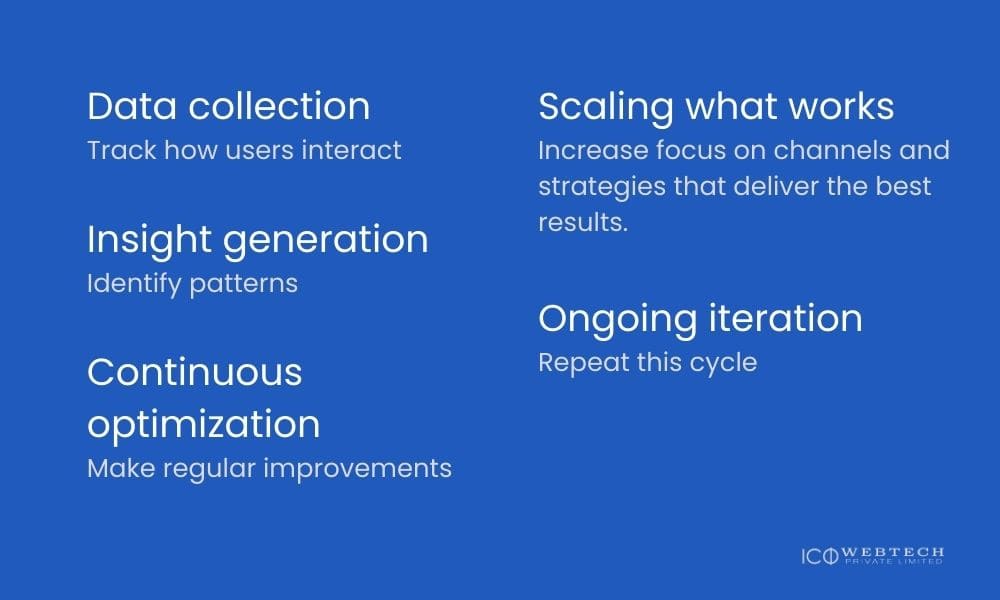
Data collection
Track how users interact with your website and campaigns. This includes traffic sources, pages visited, time spent, and conversions. The goal is to understand what users are doing, not just how many visitors you have.
Insight generation
Analyze the data to identify patterns. For example, you may find that certain pages attract high traffic but low conversions, or that specific keywords bring more qualified visitors.
Continuous optimization
Use these insights to make improvements. This can include updating content, refining keywords, improving landing pages, or adjusting messaging to better match user intent.
Scaling what works
Once you identify what performs well, increase focus on those areas. This could mean investing more in high-performing channels, expanding successful content, or doubling down on converting pages.
Ongoing iteration
This process continues regularly. By repeating this cycle, your marketing stays aligned with changing behavior and continues to improve over time.
How adaptive marketing helps you generate consistent leads
Adaptive marketing improves how your business attracts and converts users by keeping your strategy aligned with real user behavior.
Instead of relying on assumptions, you make decisions based on what is actually working. This leads to more stable and predictable performance over time.
Adaptive marketing helps improve targeting by focusing on attracting the right audience based on intent and behavior, which leads to higher-quality leads instead of just more traffic. It also increases conversion rates, as your pages, messaging, and offers are continuously refined to help more visitors take action. With regular updates, you can make faster improvements and respond quickly to performance changes without long delays. Over time, this approach creates more predictable growth, as your system improves steadily and generates consistent leads.
Adaptive marketing in SEO
SEO is one of the most effective channels for applying adaptive marketing. It allows you to improve performance continuously by aligning content with search intent and user behavior.
Instead of treating SEO as a one-time effort, an adaptive approach focuses on ongoing improvements that drive better rankings and conversions.
Content updates
Pages are updated regularly based on performance. This includes improving content depth, clarity, and relevance to match what users are searching for.
Keyword refinement
Keywords are adjusted over time as search intent evolves. This helps attract more qualified traffic instead of relying on outdated targeting.
Internal linking improvements
Links between pages are optimized based on how users navigate your website, helping improve both SEO performance and user experience.
Conversion-focused optimization
SEO efforts go beyond rankings by improving how pages convert visitors into leads or customers.
This approach turns SEO into a consistent growth channel rather than a slow, static process.
Adaptive marketing on your website
Your website plays a key role in converting visitors into leads or customers. An adaptive approach ensures that your website improves continuously based on how users interact with it.
Instead of keeping the same structure and messaging for long periods, you refine your website to better match user intent and behavior.
Improving user journeys
Analyze how users move through your website and simplify navigation to help them reach key pages more easily.
Testing messaging and layouts
Update headlines, content, and page structure to improve clarity and engagement based on user response.
Reducing friction
Identify and fix points where users drop off, such as complex forms or unclear calls to action.
Aligning with intent
Ensure each page matches what the visitor is looking for, increasing the chances of conversion.
This turns your website into a system that improves performance over time, helping you generate more leads or sales from the same traffic.
Adaptive marketing in digital campaigns
Adaptive marketing improves how your campaigns perform across channels by focusing on continuous optimization instead of fixed execution.
Rather than setting campaigns and leaving them unchanged, you adjust them regularly based on performance data.
Refining targeting
Audience targeting is updated based on which segments generate better engagement and conversions.
Improving creatives and messaging
Ad copy, visuals, and offers are tested and refined to improve response rates.
Optimizing budget allocation
Budget is shifted toward campaigns and channels that deliver stronger results, improving overall efficiency.
Enhancing performance over time
Regular adjustments help campaigns improve gradually instead of fluctuating in performance.
This approach helps you get better results from your campaigns while reducing wasted spend.
Who should use adaptive marketing?
Adaptive marketing works for businesses that want more consistent and predictable results from their marketing efforts.
It is especially useful for:
- Businesses with inconsistent leads
- Companies investing in SEO or ads without clear results
- Teams looking to improve conversions
- Businesses targeting both B2B and B2C audiences
- Marketers managing multiple channels
If your marketing performance varies significantly or lacks clear direction, an adaptive approach can help bring structure and consistency.
How to start with adaptive marketing
You do not need complex tools or systems to begin. Adaptive marketing starts with simple, structured actions that improve over time.
Track the right data
Focus on metrics that matter, such as conversions, user behavior, and traffic quality. This helps you understand what is actually driving results.
Review performance regularly
Analyze your data weekly or bi-weekly to identify trends early and avoid long gaps between improvements.
Prioritize key areas
Start with high-impact areas like high-traffic pages, important keywords, and major conversion points.
Test and improve
Make small changes, measure the impact, and continue refining your approach based on results.
Build a system
Over time, turn these actions into a structured process that continuously improves your marketing performance.
The shift from campaigns to systems
Adaptive marketing changes how you approach growth. Instead of focusing on individual campaigns, you build a system that improves continuously.
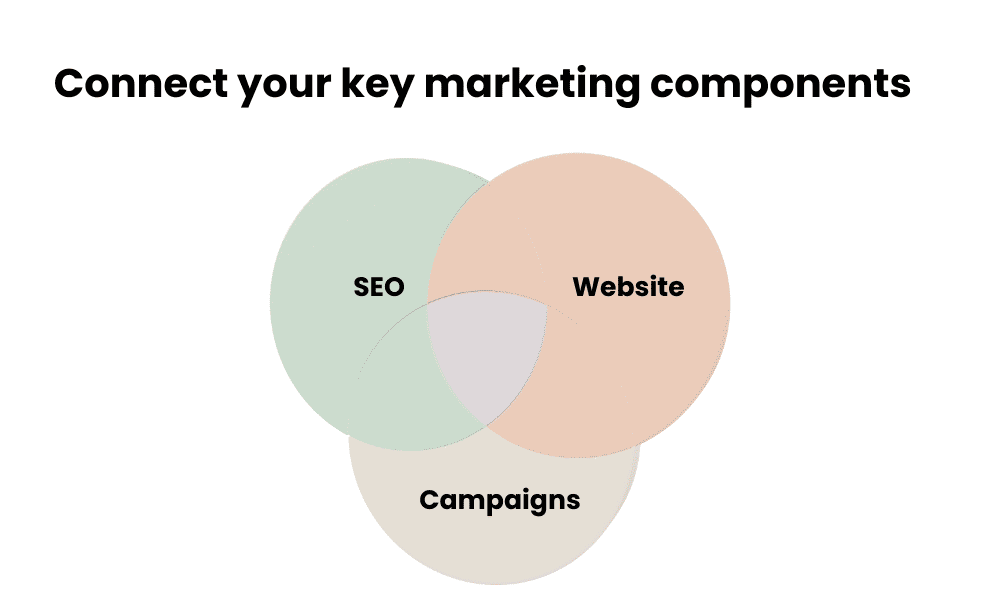
This system connects your key marketing components:
- SEO
- Website
- Campaigns
- User behavior data
Each part works together to improve overall performance. Insights from one area help refine the others, creating a more efficient and aligned strategy.
As this system evolves, your marketing becomes more stable, more predictable, and more effective at generating leads and revenue.
Conclusion
Adaptive marketing helps you move from inconsistent results to steady, predictable growth.
By continuously improving your strategy based on real data, you can attract the right audience, convert more visitors, and generate consistent leads over time.
Instead of relying on isolated efforts, you build a system that evolves with your business and the market.
This approach creates a stronger foundation for long-term growth across both B2B and B2C environments.


Related items

Some marketers call it science. Others call it psychology. But anyone who has stared at a
Imagine this: you own a physical store. You’re standing behind the counter, but instead of

Let’s be honest—getting noticed as a small business these days isn’t easy. The digital wor