The conversation about AI and SEO has largely been a content story. Which tools write better copy. How to optimize for AI-generated search results. Whether Google can detect AI-written articles.
That conversation matters. But it is missing something bigger.
The more consequential impact of AI in the development workflow is not on content. It is on the infrastructure that serves the content: server response times, deployment stability, error recovery speed, and the consistency of what Google actually crawls versus what you published. These are technical SEO outcomes, and they are directly shaped by how a site is built, tested, and deployed.
AI-assisted development is changing all of them. Most SEO teams do not know it yet.
The Technical SEO Problems That Live Upstream of Your Dashboard
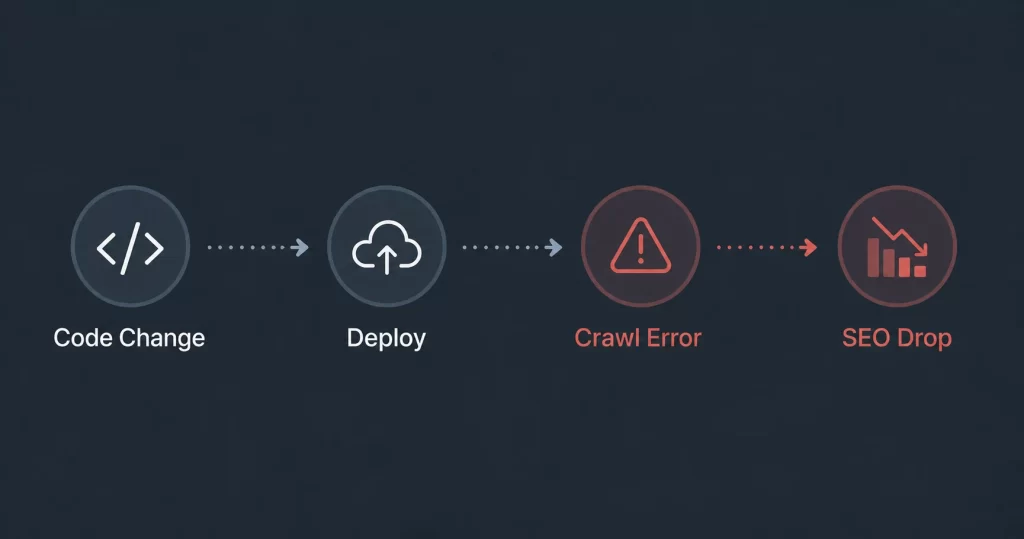
When an SEO or marketing team inherits a technical audit, they typically see the symptoms: elevated TTFB, crawl errors in Search Console, a Core Web Vitals report showing pages failing LCP or INP thresholds, redirect chains that appeared without anyone’s knowledge.
The instinct is to treat these as frontend problems. Compress images. Fix the redirect. Improve server caching. Often, those fixes work. But a meaningful portion of recurring technical SEO issues are not frontend problems. They are deployment pipeline problems.
Consider a few patterns that repeat across development teams:
- A bug fix ships that accidentally removes a canonical tag from a template. The fix was tested locally. It was not caught in code review. It went to production. Google crawled the affected pages before anyone noticed, and the duplicate content signal had already been recorded.
- A deployment fails midway through a rolling update. For 8 minutes, some users hit the old version and some hit the new one. Googlebot made a request during that window and received a 503. That 5xx response was logged in Search Console. If this happens repeatedly, Google begins to deprioritise crawl frequency for those URLs.
- A platform running on a shared infrastructure spins down inactive dynos to save cost. The first request after a period of quiet takes 4 to 6 seconds to respond as the server restarts. That latency hits TTFB directly, and TTFB is a component of how Google measures page experience for Core Web Vitals.
None of these problems originate in CSS or image compression. They originate in how the application is built, reviewed, and deployed.
What AI-Assisted Development Is Actually Fixing
As of 2026, AI adoption in software development has crossed near-universal levels. According to Google’s State of AI-Assisted Software Development report, 97.5% of companies have integrated AI into their development workflows. McKinsey research puts the reduction in development time at 55% for teams using AI coding tools.
But the productivity gains that matter most for SEO are not about writing code faster. They are about catching errors earlier.
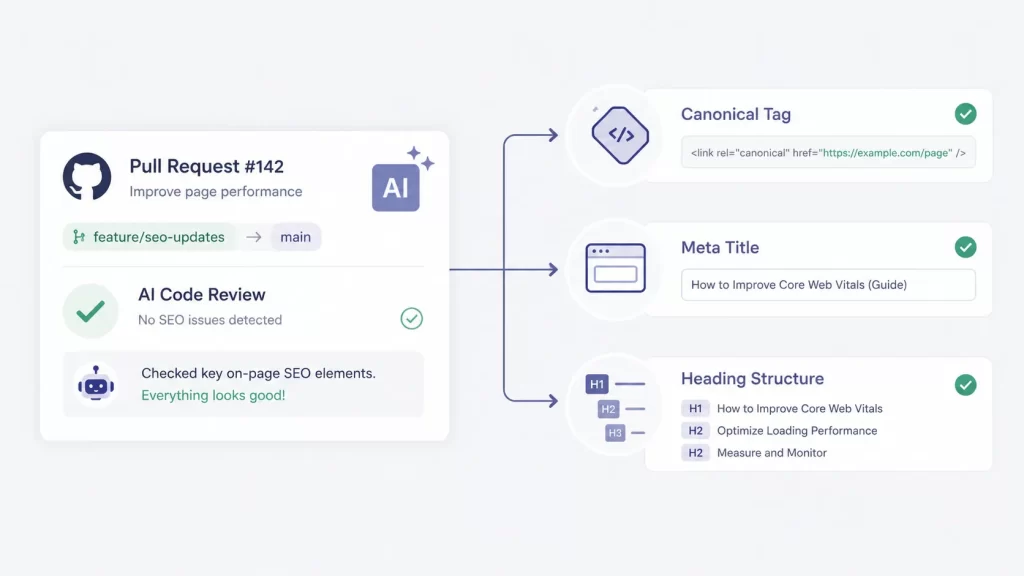
AI code review tools like CodeRabbit and Kodus leave automated review comments on every pull request before a human reviewer sees it. For SEO specifically, this matters because a significant class of technical regressions, broken internal links, removed meta tags, misconfigured redirects, altered heading hierarchy are code-level changes that ship in PRs alongside unrelated feature work.
Without AI-assisted review, these slip through because reviewers are focused on whether the feature works, not whether an h1 tag was accidentally removed from a component.
AI-assisted testing catches routing bugs that create duplicate URLs before they reach production. A new URL structure that generates both /product/item and /products/item without a canonical creates a duplicate content problem that may take weeks to identify from search data alone.
Caught at test time, it is a 5-minute fix. Caught from a Search Console report two months later, it is a content audit.
The upstream position of these tools relative to SEO outcomes is the key point. AI is not optimising your metadata. It is preventing the code changes that break your metadata from shipping in the first place.
How Deployment Speed and Stability Directly Affect Core Web Vitals
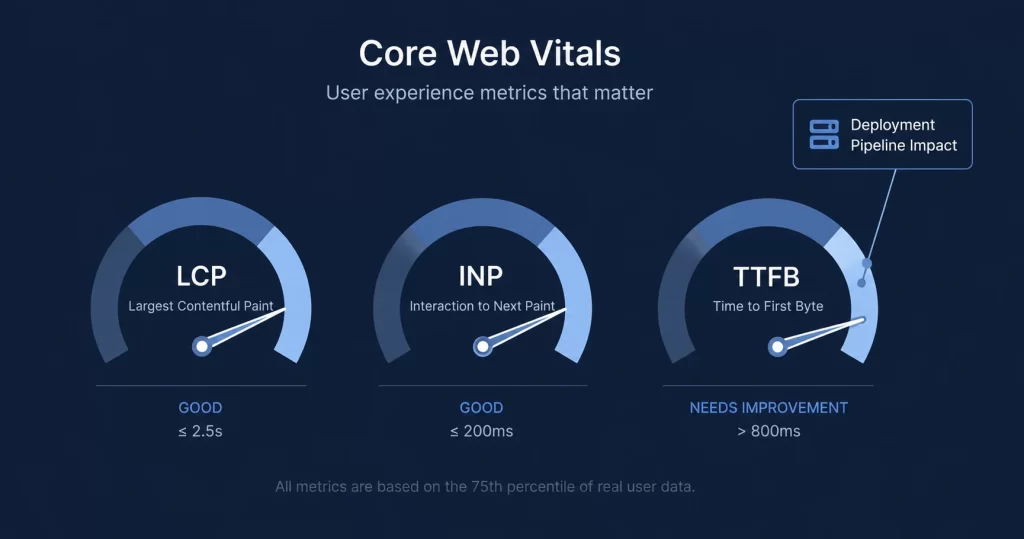
Core Web Vitals are a Google ranking signal. TTFB (Time to First Byte) is a component that Google’s CrUX data captures at the user level. A site with consistently high TTFB, whether from slow server response, cold start latency, or deployment instability, accumulates poor field data over time, and that field data feeds into ranking signals.
The deployment pipeline influences TTFB in two direct ways.
First, runtime environment sizing: An application deployed on an undersized server instance, or one that has not been tuned for its memory and CPU requirements, will have consistently elevated response times under normal load. For Java-based backends, this is particularly common: a Spring Boot application requires 300 to 500MB of RAM at startup. On an instance that is too small, it thrashes memory and slows every request. On a correctly sized instance, it is fast
Manual deployment requires the developer or DevOps engineer to make this sizing decision correctly every time. AI-powered deployment platforms that automatically detect the runtime environment and size instances appropriately remove this source of performance variability entirely.
Second, deployment downtime during updates: Traditional deployments involve stopping the old version and starting the new one. Even a few seconds of downtime during a production deploy can result in 503 responses that Google records. Zero-downtime deployment patterns, where traffic is shifted from the old version to the new one without any gap, prevent this entirely. Platforms that implement this by default, such as agentic AI deployment tools that handle the full release cycle automatically, eliminate a recurring source of crawl errors that SEO teams otherwise have to monitor and explain.
A useful reference on how this works in practice: a detailed breakdown of agentic AI deployment that covers how automated stack detection and zero-downtime deploys change the relationship between deployment pipelines and production reliability.
What SEO and Development Teams Should Actually Align On
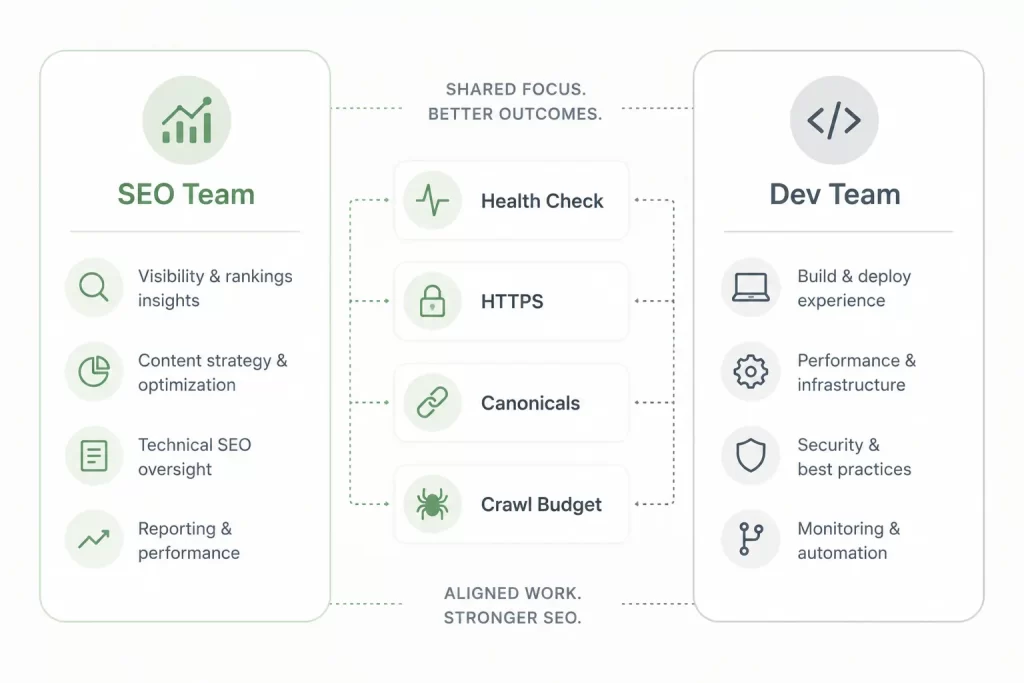
The structural problem is that SEO teams and development teams operate on different time horizons and different feedback loops. An SEO team measures impact in weeks and months. A development team ships and moves on in hours. By the time a technical SEO regression surfaces in search data, the developer who introduced it may not remember the relevant change.
AI-assisted development compresses this gap. Code review happens at PR time. Testing happens before merge. Deployment happens with automated validation. The feedback loop gets faster, and the issues that create technical SEO regressions get caught closer to where they originate.
There are specific alignment points worth establishing between SEO and development teams:
- Health check endpoints should be in place before any deployment goes live. A /health route that returns a 200 confirms the application started correctly. Without it, a failed deployment can route live traffic to a crashed process, generating 5xx errors at scale.
- HTTPS enforcement and redirect audits should run as part of the deployment pipeline, not as a monthly SEO check. AI-assisted CI/CD pipelines can run these checks automatically on every merge.
- Canonical tags, meta robots, and structured data should be treated as code-level assets with version control, not just as SEO configurations. When they change unexpectedly, it should surface in code review, not in a ranking drop six weeks later.
- Crawl budget is a finite resource. Every 5xx error response wastes a crawl credit on a URL that returns nothing. Development teams that treat deployment stability as an SEO concern, not just a reliability concern, protect crawl budget as a byproduct of doing their job well.
The Argument in One Sentence
AI-assisted development is not an SEO story yet. It should be. The teams that close the loop between deployment pipeline health and technical SEO outcomes will have a structural advantage over teams treating them as separate disciplines. The tools to close that loop, AI code review, automated testing, intelligent deployment platforms, exist today and are increasingly accessible to teams of any size.
The SEO and marketing professionals who understand this, and who can speak the development team’s language when raising these issues, will be the ones who stop debugging symptoms and start preventing the causes.



Related items
Google’s fourth spam update of 2026 is live. The pattern across all four says more than th

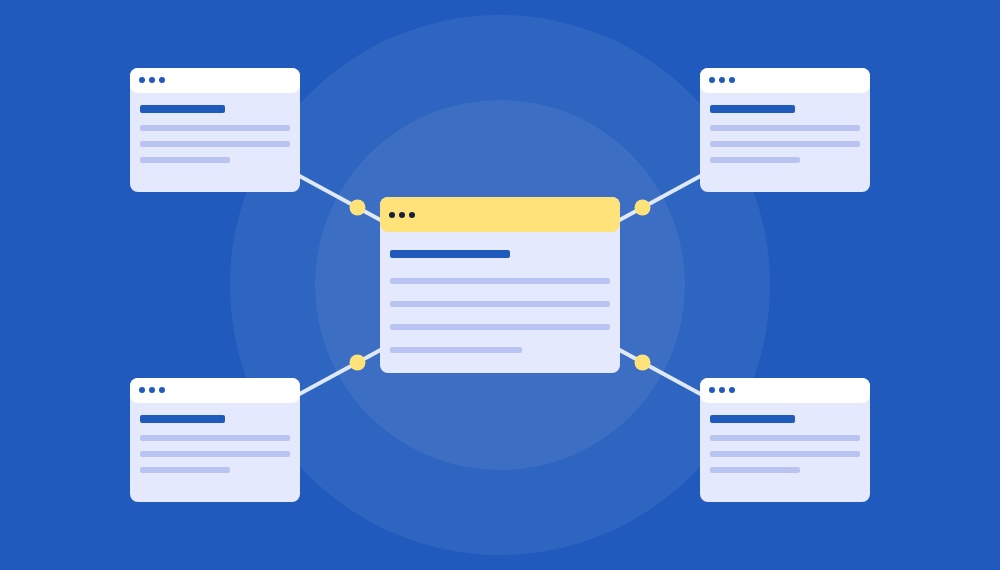
What internal links are, how to plan them, and how to find and fix the problems already on

The Quick Take: Most B2B companies aren’t struggling to generate leads — they’re strugglin
