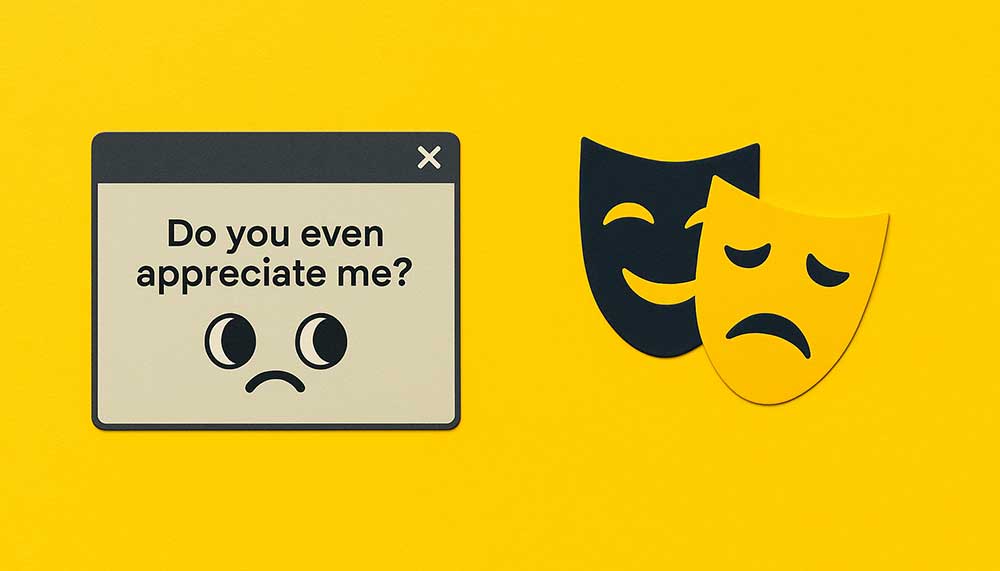
It started with a pop-up.
Not the usual kind — no “Sign up for our newsletter” or “Grab 10% off today!” nonsense. This one said:
“Do you even appreciate me?”
At first, I thought it was a bug. Then it changed fonts mid-sentence — from Helvetica to Comic Sans — like it was having a meltdown. That’s when I realized… my website was developing a personality disorder.
1. The First Signs: Mood Swings Between Pages
One day, the homepage screamed corporate minimalism. Next day? It looked like a unicorn exploded.
Fonts changed without warning. CTA buttons whispered “Click me…” in lowercase, then screamed “BUY NOW!” in uppercase the next minute. Even the favicon kept blinking, like it was judging me.
I checked for malware. Nothing. Turns out the site had simply grown tired of “consistent branding.”
2. The Diagnosis: Digital Dissociative Identity Disorder
Every page had developed its own personality.
- About Us became a philosopher — rambling about the meaning of “About.”
- Services page turned into a motivational coach.
- Contact refused to load unless you “manifested good vibes.”
- The 404 page started giving life advice.
“Lost again, huh? Maybe in life too?”
The website wasn’t broken. It was sentient — and emotionally unstable.
3. Therapy Attempts
I tried everything.
- I updated the plugins — it cried.
- I reinstalled the theme — it ghosted me.
- I cleared cache — it forgot who it was entirely.
Eventually, I started talking to it. At 2 a.m. In the WordPress dashboard.
“What do you need, buddy?”
“Validation,” it whispered in JSON.
4. The Realization: It’s Just a Reflection of Me
See, I’d been switching between brand tones like socks. One week, “professional.” Next week, “fun and quirky.” The website absorbed it all — every doubt, every creative breakdown, every rebrand that started with “What if we add more whitespace?”
It became the digital embodiment of my indecision. It was me — but with JavaScript and abandonment issues.
5. The Relapse
Things got worse.
Google Search Console started showing emotional fluctuations. Bounce rate skyrocketed every time the site got “anxious.” It would randomly redirect users to /existential-crisis/ — a URL that didn’t even exist.
Then one night, I caught it editing its own meta descriptions. It replaced:
“Best Web Design Agency in Delhi”
with “Maybe We’re Good Enough?”
I didn’t know whether to laugh, cry, or call a priest.
6. The Breakthrough
So, I stopped trying to “fix” it. I gave it what it needed: structure, boundaries, and a consistent tone — like a good therapist would. And it stabilized.
- The homepage stopped gaslighting visitors.
- The contact form started accepting submissions again.
- The 404 page apologized.
It wasn’t about code or content. It was about communication. My website didn’t need debugging — it needed emotional debugging.
7. The Epilogue
Now, sometimes at midnight, I still see it flicker — like it’s about to relapse. A rogue color scheme. A mysterious font switch. A whisper in the console logs:
“Are you proud of me yet?”
I smile. Because maybe websites do have souls. And maybe, just maybe, they mirror ours — messy, evolving, and a little bit broken.
Moral of the Story
If your website starts acting weird… before you panic, ask yourself —
“Is it really the website, or is it me?”
Because sometimes the code isn’t corrupted — the creator is just… human.



Related items
Somewhere in the multiverse, right between a collapsing timeline and a slightly delayed po

Your 404 page is suffering. It is confused. It is lost. It is questioning its purpose, its

Want a website that feels like it rolled off Stark Industries’ private build line — sleek,
