
Why Most SEO Strategies Fail Because They Ignore Human Psychology
For years, SEO has been treated as a technical game.
Businesses obsess over rankings, backlinks, keywords, algorithms, and traffic charts. Entire marketing strategies are often built around trying to “please Google.”
But here is the uncomfortable truth many brands fail to realize:
Google is not your real customer.
Humans are.
And this is exactly where most SEO strategies begin to fail.
Many companies spend months optimizing websites for search engines while completely ignoring the psychology of the people actually visiting those websites.
They focus on clicks but ignore emotions.
They focus on rankings but ignore trust.
They focus on traffic but ignore behavior.
As a result, they may attract visitors but fail to create engagement, loyalty, conversions, or meaningful brand growth.
Modern SEO is no longer just about algorithms.
It is deeply connected to human psychology.
Search engines themselves are increasingly designed around understanding human behavior, user satisfaction, emotional relevance, and intent.
This means businesses that ignore psychology are not only failing users — they are also failing modern SEO.
The future of search belongs to brands that understand how people think, feel, decide, trust, and engage online.
Table Of content
SEO Was Never Really About Search Engines Alone
Traffic Means Nothing Without Human Connection
Human Attention Is the Real SEO Battlefield
The Psychology of First Impressions
Trust Is One of the Biggest Ranking Factors
People Search Emotionally, Not Just Logically
Why Keyword Stuffing Fails Psychologically
Storytelling Is an SEO Superpower
Cognitive Overload Is Killing Engagement
The Psychology of Social Proof
Why Authority Matters Psychologically
Modern SEO Is About Reducing Anxiety
The Future of SEO Is Emotional Intelligence
Why Human-Centered SEO Wins Long Term
The Role of a Modern SEO Company in India
SEO Was Never Really About Search Engines Alone
One of the biggest misconceptions in digital marketing is the belief that SEO is primarily about pleasing search engines.
For years, businesses have treated Google almost like a machine that simply needs the “right technical formula” to reward websites with rankings.
This mindset created an entire generation of SEO tactics focused heavily on:
- Keyword density
- Backlink quantity
- Meta tags
- Algorithm manipulation
- Technical loopholes
And while technical SEO absolutely matters, many businesses forgot something much more important:
Search engines were never the real audience.
Humans were.
At its core, SEO has always been connected to human behavior, human psychology, and human satisfaction.
Search engines exist for one fundamental reason:
To help people find the most useful, trustworthy, and relevant information possible.
That has always been the true purpose behind Google’s evolution.
Google’s Success Depends on Human Trust
Google’s entire business model relies on user trust.
If people consistently received poor-quality search results, they would eventually stop using the platform.
And if users stopped trusting Google, the entire ecosystem would collapse.
This means Google’s survival depends on one thing above all else:
Delivering satisfying experiences to human users.
Every major algorithm update over the years has moved toward this exact goal.
Google constantly tries to improve its ability to understand:
- What users truly want
- Which content feels valuable
- Which pages solve problems effectively
- Which websites appear trustworthy
- Which experiences create satisfaction
In many ways, Google’s algorithm is really a massive system designed to interpret human preferences and behavior.
That means SEO has always been deeply psychological — even if many businesses failed to realize it.
Search Engines Are Trying to Understand Human Intent
Modern search engines are no longer simple keyword-matching systems.
Google now invests enormous resources into understanding human intent.
When someone searches online, the algorithm is not just analyzing words.
It is trying to understand the meaning and motivation behind the search.
For example, if someone searches:
“Why is my website traffic dropping?”
Google understands this is probably not just an informational search.
The user may also be experiencing:
- Confusion
- Concern
- Frustration
- Anxiety
- Urgency
The search engine wants to provide results that not only contain information but also create reassurance and clarity.
This is why content that genuinely helps users often performs better over time.
Search engines increasingly reward pages that satisfy human needs psychologically, not just technically.
Google’s Mission Has Always Been Psychological
At a deeper level, Google’s algorithms are constantly attempting to answer very human questions such as:
- What does the user actually want?
- What content feels trustworthy?
- What result creates satisfaction?
- Which pages solve problems effectively?
- Which brands appear credible?
Notice how none of these questions are purely technical.
They are all connected to human perception, behavior, trust, and decision-making.
Search engines increasingly evaluate signals that reflect real human experiences.
This includes:
- Engagement patterns
- User satisfaction
- Brand trust
- Content quality
- Behavioral interaction
- Authority perception
Modern SEO is moving closer and closer to understanding people rather than simply optimizing pages.
SEO Is Becoming More Human-Centered Every Year
One of the clearest trends in SEO is the gradual shift away from mechanical optimization and toward human-centered experiences.
Google’s updates increasingly reward websites that:
- Provide real value
- Demonstrate expertise
- Offer strong user experiences
- Build trust
- Create helpful content
At the same time, low-quality manipulative tactics are becoming less effective.
This is not accidental.
It reflects Google’s larger goal of aligning search rankings with human satisfaction.
In other words, the more useful your content feels to real people, the more likely modern search engines are to reward it.
Many Businesses Still Approach SEO Mechanically
Despite these changes, many businesses still treat SEO as a purely technical process.
They focus heavily on:
- Keyword repetition
- Ranking reports
- Traffic numbers
- Mass content production
- Algorithm chasing
But they often ignore the human experience entirely.
As a result, their content may technically rank for certain keywords while still failing to:
- Build trust
- Create engagement
- Influence decisions
- Generate loyalty
- Deliver emotional connection
This creates one of the biggest disconnects in modern SEO.
Businesses optimize for visibility but forget to optimize for people.
Producing Content for Bots Creates Weak Experiences
Content written only for algorithms often feels obvious to users.
It may contain:
- Awkward keyword repetition
- Generic explanations
- Artificial phrasing
- Shallow information
- Emotionless writing
Even if users cannot explain exactly why, they often sense when content lacks authenticity.
Human psychology naturally reacts negatively to content that feels manipulative or robotic.
This reduces:
- Trust
- Engagement
- Emotional connection
- Perceived expertise
Modern SEO increasingly rewards content that feels genuinely useful and naturally human.
Human Decision-Making Is Emotional
One major reason mechanical SEO strategies fail is because human decision-making is not purely logical.
People do not engage with brands based only on information.
They also respond to:
- Emotion
- Confidence
- Familiarity
- Trust
- Psychological comfort
- Perceived credibility
For example, two websites may offer similar information.
But users will often choose the brand that:
- Feels more trustworthy
- Communicates more clearly
- Looks more professional
- Feels more authentic
- Creates emotional reassurance
This is deeply connected to psychology.
And modern search engines increasingly recognize these human preferences indirectly through user behavior.
Search Engines Observe Human Behavior Constantly
Google may not “feel emotions,” but it observes behavioral patterns connected to human satisfaction.
Search engines increasingly analyze signals such as:
- Click-through rates
- Dwell time
- Bounce behavior
- User engagement
- Search refinement patterns
These signals help Google understand whether users found content valuable or disappointing.
For example:
- If users quickly leave a page, it may suggest dissatisfaction.
- If users stay engaged longer, it may suggest the content solved their problem effectively.
- If users search again immediately, it may suggest the first result failed.
In many ways, Google is constantly learning from human psychology at scale.
The Rise of AI Search Makes Human Understanding Even More Important
AI-powered search is accelerating this human-centered shift even further.
Modern AI systems increasingly evaluate:
- Content clarity
- Contextual relevance
- Authority
- Trustworthiness
- User value
- Semantic meaning
These are all closely connected to human communication and human understanding.
As search becomes more AI-driven, content that genuinely helps people will likely perform even better.
Search engines are becoming more sophisticated at identifying authentic value versus manipulative optimization.
SEO Is Ultimately About Solving Human Problems
At its highest level, SEO is not really about rankings.
It is about solving human problems effectively.
Every search query represents a person trying to:
- Find information
- Reduce uncertainty
- Solve a challenge
- Make a decision
- Learn something important
Brands that understand this deeper human context create stronger content experiences.
Instead of asking:
“How do we rank for this keyword?”
the better question becomes:
“How do we genuinely help this person?”
That mindset shift changes everything.
The Future of SEO Belongs to Human-Centered Brands
The businesses that succeed in future search ecosystems will not necessarily be the ones using the most aggressive SEO tactics.
They will be the brands that understand people best.
Modern SEO increasingly rewards:
- Authenticity
- Trust
- Clarity
- Expertise
- Emotional relevance
- User satisfaction
This means businesses must stop viewing SEO as purely technical manipulation.
SEO is becoming a blend of:
- Technology
- Communication
- Behavioral psychology
- User experience
- Trust building
Search engines may use algorithms.
But those algorithms increasingly exist to understand humans better.
And the brands that recognize this reality will build far stronger visibility, authority, and long-term growth in the years ahead.
Traffic Means Nothing Without Human Connection
One of the biggest misconceptions in the SEO industry is the belief that more traffic automatically means more business success.
For years, businesses have been taught to treat traffic as the ultimate goal.
Monthly visitor numbers became the primary metric many companies obsessed over.
SEO reports focused heavily on:
- Organic traffic growth
- Keyword rankings
- Pageviews
- Search impressions
- Clicks
And while visibility absolutely matters, traffic alone is not what builds successful brands.
A website can attract thousands — sometimes even millions — of visitors and still struggle to:
- Generate leads
- Create trust
- Build authority
- Convert customers
- Retain audiences
This happens far more often than many businesses realize.
Some websites generate impressive traffic numbers but produce very little actual business growth.
Why?
Because human behavior is emotional, not purely logical.
And SEO strategies that ignore emotional psychology often fail to create meaningful engagement.
Traffic Is Only Attention — Not Trust
Traffic simply means someone visited your website.
It does not automatically mean:
- They trust your brand
- They believe your expertise
- They feel emotionally connected
- They are ready to buy
- They will return later
This is one of the most important psychological realities businesses must understand.
Visibility creates opportunity.
But trust creates conversion.
Many SEO strategies focus entirely on attracting users while completely ignoring what happens emotionally after those users arrive.
That creates a major disconnect.
Humans Do Not Make Decisions Purely Rationally
One reason traffic alone is unreliable is because humans do not make decisions based only on logic.
People often believe they make rational choices, but psychology tells a very different story.
Most decisions online are heavily influenced by emotions, subconscious perception, and psychological comfort.
For example, users may leave a website because:
- It feels untrustworthy
- The design looks outdated
- The messaging feels generic
- The content lacks emotional connection
- The brand feels unfamiliar
Even if the information itself is technically correct, emotional discomfort can still destroy engagement.
This is why human psychology plays such a major role in modern SEO success.
People Respond Emotionally Before They Respond Logically
Human brains process emotions incredibly quickly.
Before users consciously analyze your services or information, they often subconsciously evaluate:
- How the brand feels
- Whether the website appears trustworthy
- Whether the experience feels safe
- Whether the content feels authentic
- Whether the business appears credible
These emotional reactions happen almost instantly.
This means SEO success is no longer just about bringing users to a webpage.
It is also about shaping how users emotionally experience that page.
Many businesses ignore this completely.
They optimize for clicks but forget to optimize for feelings.
Emotion Strongly Influences Online Behavior
People do not buy products or hire services based only on features and information.
They respond to emotional triggers such as:
- Trust
- Confidence
- Relief
- Excitement
- Security
- Belonging
For example, someone searching for an SEO company in India is not just comparing technical services.
They may also be asking themselves:
- Can I trust this company?
- Will they understand my business?
- Will they waste my money?
- Do they seem experienced?
- Do they feel reliable?
These are emotional and psychological evaluations.
Businesses that fail to address these concerns often struggle to convert traffic into actual customers.
Trust Is the Bridge Between Traffic and Conversion
Trust is one of the most powerful psychological forces in digital marketing.
Without trust, traffic has very little value.
Users may visit a website briefly and leave without taking action.
Trust influences whether people:
- Read further
- Submit forms
- Book consultations
- Purchase products
- Return later
- Recommend the brand
Modern SEO increasingly revolves around building trust signals.
This includes:
- Professional design
- Authentic messaging
- Expert content
- Testimonials
- Case studies
- Transparent communication
These elements psychologically reassure users that the brand is legitimate and credible.
Perception Shapes User Behavior
One of the most overlooked aspects of SEO is perception.
Users do not respond only to objective information.
They respond to how information is presented.
For example:
- A clean design creates professionalism.
- Clear messaging creates confidence.
- Good storytelling creates emotional connection.
- Strong branding creates familiarity.
- Positive reviews create reassurance.
Perception shapes trust.
And trust shapes behavior.
Two websites may offer similar services, but users will often choose the brand that psychologically feels more credible.
This is why branding and SEO are becoming deeply connected.
Psychological Comfort Influences Engagement
People naturally avoid uncertainty online.
Users constantly look for signals that help them feel psychologically comfortable.
This includes:
- Clear navigation
- Easy readability
- Professional appearance
- Transparent pricing
- Human-centered language
- Visible expertise
When websites create confusion, friction, or uncertainty, users often leave quickly.
Human brains instinctively prefer simplicity and clarity.
This is why user experience has become such an important SEO factor.
Search engines increasingly reward websites that create smoother, more satisfying human experiences.
Social Proof Reduces Psychological Risk
One reason reviews and testimonials matter so much is because humans are heavily influenced by social proof.
People feel more comfortable making decisions when they see evidence that others had positive experiences.
Social proof helps reduce uncertainty and perceived risk.
This is especially important online because users cannot physically interact with businesses before making decisions.
Strong social proof may include:
- Customer testimonials
- Google reviews
- Case studies
- Media mentions
- Industry recognition
- Client success stories
These elements create psychological reassurance that encourages deeper engagement.
Authority Creates Psychological Confidence
Humans naturally trust perceived experts.
This is deeply rooted in behavioral psychology.
When users believe a business demonstrates expertise, they feel safer engaging with it.
This is why authority-focused SEO performs so well.
Authority can be built through:
- Educational content
- Thought leadership
- Detailed insights
- Industry expertise
- Real-world experience
People are far more likely to trust brands that appear knowledgeable and experienced.
Search engines increasingly reward these authority signals as well.
Engagement Is an Emotional Signal
Metrics like:
- Time on page
- Bounce rate
- User interaction
- Repeat visits
are not just technical analytics.
They often reflect emotional engagement.
When users stay longer on a website, it usually means:
- The content feels valuable
- The experience feels enjoyable
- The brand feels trustworthy
- The information feels relevant
Search engines increasingly use these behavioral patterns to evaluate content quality.
This means emotional connection indirectly influences SEO performance itself.
Modern SEO Is About Human Experience
One of the biggest shifts happening in SEO is the movement away from pure technical optimization toward human-centered optimization.
Modern search engines increasingly prioritize:
- User satisfaction
- Trustworthiness
- Content quality
- Engagement
- Experience
These are all deeply connected to psychology.
Businesses that focus only on attracting traffic often overlook the bigger challenge:
Creating meaningful human connection.
And without that connection, traffic becomes shallow and temporary.
The Real Goal Is Emotional Resonance
The strongest brands online are not simply the ones with the highest traffic numbers.
They are the brands that create emotional resonance.
They make users feel:
- Understood
- Confident
- Safe
- Inspired
- Supported
- Connected
This emotional experience builds loyalty and trust over time.
People remember brands that make them feel something meaningful.
That emotional memory often influences future buying decisions far more than isolated information alone.
SEO Success Now Depends on Human Psychology
In the modern digital landscape, SEO can no longer be separated from behavioral psychology.
Traffic generation is only the beginning.
The real challenge is influencing:
- Perception
- Trust
- Confidence
- Emotional comfort
- User satisfaction
Businesses that understand these psychological dynamics create far stronger long-term growth.
Because in the end, rankings may bring visitors.
But human connection is what turns those visitors into loyal customers.
Human Attention Is the Real SEO Battlefield
One of the biggest changes happening in digital marketing today is not just technological.
It is psychological.
The internet has become overwhelmingly crowded.
Every single day, users are exposed to an endless stream of:
- Articles
- Videos
- Advertisements
- Emails
- Social media posts
- Short-form content
- AI-generated information
- Notifications
People consume more information now in a single day than previous generations consumed in weeks.
This constant flood of content has created one of the biggest challenges in modern SEO:
Attention scarcity.
Human attention is becoming one of the most valuable and limited resources online.
And this is changing SEO completely.
The Internet Is Fighting for Human Attention Constantly
Every website, social platform, app, video creator, and brand is competing for the same thing:
The user’s attention.
This competition is intense.
Users now scroll through massive amounts of content extremely quickly.
Most people no longer read websites slowly from top to bottom.
Instead, they:
- Skim headlines
- Scan layouts
- Glance at visuals
- Judge pages instantly
- Switch tabs rapidly
Human behavior online has become faster, more selective, and more impatient.
This is not because users are careless.
It is because their brains are overloaded.
People simply do not have enough mental energy to deeply process everything they encounter online.
People Have Limited Cognitive Energy
Human attention is not unlimited.
Our brains constantly try to conserve mental energy.
Psychologists often describe attention as a limited cognitive resource.
This means users subconsciously filter information very aggressively.
They make extremely fast decisions about:
- What deserves attention
- What feels valuable
- What can be ignored
- What appears trustworthy
In many cases, these decisions happen within seconds.
Sometimes even milliseconds.
This creates enormous pressure on modern websites and content creators.
You are no longer competing only against direct competitors.
You are competing against every distraction on the internet.
Attention Is Deeply Psychological
One reason many SEO strategies fail is because they treat attention like a technical issue instead of a psychological one.
But attention is heavily influenced by human emotions, instincts, and perception.
Users are constantly asking themselves subconscious questions such as:
- Does this feel relevant to me?
- Can I trust this website?
- Is this worth my time?
- Does this feel useful or generic?
- Should I continue reading?
These judgments happen incredibly quickly.
And they strongly influence whether users stay engaged or leave immediately.
This means SEO is no longer just about getting users onto a page.
It is about capturing and holding human attention once they arrive.
Users Make Snap Judgments Instantly
Human brains are wired to evaluate environments rapidly.
Online, users form impressions almost instantly based on factors such as:
- Visual design
- Readability
- Content structure
- Branding
- Page speed
- Emotional tone
If something feels confusing, overwhelming, outdated, or untrustworthy, users often leave before reading deeply.
This is one reason why first impressions matter so much in SEO.
Even highly optimized pages can fail if they create poor psychological experiences.
People do not consciously analyze every detail.
Their brains make fast emotional evaluations automatically.
Confusion Destroys Attention Quickly
One of the biggest enemies of user attention is confusion.
Human brains naturally avoid complexity and uncertainty.
If a webpage feels difficult to navigate or mentally exhausting, users often abandon it quickly.
Common attention-killing problems include:
- Huge walls of text
- Cluttered layouts
- Poor formatting
- Aggressive popups
- Slow loading speed
- Unclear messaging
Even strong information can fail if users feel overwhelmed before consuming it.
This is why modern SEO increasingly overlaps with user experience psychology.
Search engines want to reward pages that create smoother, easier, and more satisfying experiences.
Boredom Is Also a Visibility Problem
Many businesses focus so heavily on technical SEO that they forget a simple truth:
Humans get bored easily.
Generic content rarely holds attention for long.
Today’s users are exposed to enormous amounts of repetitive information.
They quickly lose interest in content that feels:
- Predictable
- Emotionless
- Overly corporate
- AI-generated
- Lacking originality
This is why engaging communication matters so much.
Content that includes:
- Storytelling
- Human perspective
- Emotional relevance
- Clear examples
- Authentic insights
often performs far better because it stimulates curiosity and emotional engagement.
Attention is not maintained through keywords alone.
It is maintained through psychological interest.
Trust Determines Whether Users Stay
Attention and trust are deeply connected.
If users do not trust a page quickly, they often leave immediately.
Human brains constantly scan for signals of credibility.
This includes:
- Professional design
- Clear branding
- Expert language
- Social proof
- Author credibility
- Transparent messaging
Users may not consciously think about all these factors individually.
But psychologically, they strongly influence perceived trustworthiness.
Modern SEO increasingly depends on creating these positive trust signals quickly.
Attention Retention Is the New SEO Challenge
Traditional SEO focused heavily on attracting clicks.
But modern SEO increasingly depends on what happens after the click.
Getting visibility is only the first battle.
The bigger challenge is keeping users engaged.
This is why metrics such as:
- Dwell time
- Bounce rate
- User engagement
- Interaction patterns
- Scroll behavior
have become increasingly important.
These signals help search engines understand whether users found the experience valuable.
In many ways, attention retention is becoming one of the strongest indicators of content quality.
Search Engines Are Studying Human Behavior
Google’s algorithms are increasingly built around understanding human behavior.
Search engines constantly analyze patterns such as:
- What users click
- How long they stay
- Whether they return to search results
- What content satisfies them
- What experiences create frustration
This means SEO is becoming increasingly psychological.
Search engines are not simply rewarding keyword optimization anymore.
They are rewarding content experiences that humans genuinely value.
Modern Content Must Earn Attention
Because attention is scarce, modern content must work much harder to earn engagement.
Strong SEO content today usually includes:
- Compelling headlines
- Clear formatting
- Strong readability
- Emotional relevance
- Human-centered language
- Authentic expertise
Users should immediately understand:
- Why the content matters
- How it helps them
- Why they should trust it
- Why it deserves their attention
If content fails to communicate value quickly, users often move on.
Attention Scarcity Is Changing User Behavior
As content overload grows, users are becoming more selective about where they spend time.
People increasingly prefer:
- Clear communication
- Fast understanding
- Concise explanations
- High-value insights
- Authentic expertise
This does not mean long-form content is dying.
It means long-form content must remain engaging throughout the experience.
Depth alone is not enough anymore.
Content must sustain psychological interest.
AI Content Is Intensifying the Attention Battle
The rise of AI-generated content is making attention scarcity even more severe.
The internet is being flooded with enormous volumes of content created rapidly at scale.
Much of it sounds similar.
This creates fatigue for users.
As a result, authenticity and originality are becoming far more valuable.
Brands that create genuinely human, insightful, and emotionally engaging content will increasingly stand out in crowded search environments.
Attention is becoming harder to earn — but more valuable than ever.
The Future of SEO Belongs to Brands That Hold Attention
Many SEO strategies fail because they focus only on visibility.
They successfully attract clicks but fail to maintain engagement.
But visibility without attention retention creates shallow results.
The future of SEO belongs to brands that understand how human attention actually works.
The strongest websites will not simply rank well.
They will:
- Capture curiosity
- Build trust quickly
- Reduce friction
- Create emotional relevance
- Maintain engagement
- Deliver satisfying experiences
Because in the modern digital world, attention is no longer just a marketing metric.
It is the true battlefield of SEO.
The Psychology of First Impressions
Human beings form impressions incredibly fast.
Long before users carefully analyze your services, read your content, or compare your pricing, their brains are already making subconscious judgments about your website.
And these judgments happen almost instantly.
Multiple behavioral studies consistently show that users evaluate websites within just a few seconds of landing on them.
In many cases, the emotional reaction happens before users even consciously realize it.
This is one of the most important psychological realities modern SEO strategies often ignore.
People do not experience websites purely rationally.
They experience them emotionally first.
That emotional response heavily influences:
- Trust
- Engagement
- Attention
- Comfort
- Decision-making
Which means first impressions can quietly determine whether users stay, engage, or leave immediately.
The Human Brain Is Designed for Rapid Judgment
Psychologically, humans are wired to make fast evaluations.
Our brains constantly scan environments for signals related to:
- Safety
- Trustworthiness
- Clarity
- Relevance
- Quality
This instinct originally evolved as a survival mechanism.
Today, those same mental patterns influence digital behavior.
When users land on a website, their brains instantly begin asking subconscious questions such as:
- Does this website look trustworthy?
- Does this brand feel professional?
- Is this information worth my time?
- Does this page feel safe and credible?
- Should I continue exploring?
These evaluations happen almost automatically.
Users may not consciously analyze every design element individually, but psychologically, those details strongly shape perception.
First Impressions Are Emotional Before They Are Logical
One of the biggest mistakes businesses make is assuming users carefully evaluate websites logically from the beginning.
In reality, emotional reactions usually happen first.
Before reading deeply, users subconsciously react to:
- Design quality
- Visual clarity
- Brand professionalism
- Readability
- Emotional tone
These elements instantly shape how users feel about a brand.
And feelings heavily influence behavior.
For example:
- A clean design may create confidence.
- A cluttered layout may create stress.
- A modern interface may create trust.
- An outdated website may create skepticism.
- Clear messaging may create comfort.
- Confusing navigation may create frustration.
Even when users cannot explain their reactions precisely, those emotional impressions strongly affect engagement.
Design Quality Influences Trust Instantly
Design is not just visual decoration.
It is psychological communication.
Users often associate good design with:
- Professionalism
- Competence
- Reliability
- Credibility
Meanwhile, poor design can unconsciously signal:
- Low quality
- Inexperience
- Neglect
- Untrustworthiness
This happens because humans naturally use visual cues to judge credibility.
For example, if someone searches for an SEO company in India and lands on a poorly designed website filled with clutter, inconsistent branding, and confusing structure, they may leave immediately — even if the company actually provides excellent services.
The emotional first impression overrides the technical value.
This is why website design has become deeply connected to SEO performance.
Visual Clarity Reduces Cognitive Stress
Human brains prefer simplicity and clarity.
When users encounter visually overwhelming websites, their brains must work harder to process information.
This creates cognitive friction.
And cognitive friction often leads to disengagement.
Users are far more likely to stay on websites that feel:
- Easy to scan
- Well organized
- Visually balanced
- Clean and readable
Clear layouts help users feel psychologically comfortable.
They reduce mental effort.
And when experiences feel mentally easier, engagement improves naturally.
This is one reason modern UX design strongly influences SEO outcomes.
Readability Shapes Perceived Intelligence and Trust
Readability is far more important than many businesses realize.
If content feels difficult to read, users often perceive it as less valuable — even when the information itself is strong.
Human brains instinctively prefer communication that feels:
- Simple
- Clear
- Organized
- Easy to understand
Large walls of text, tiny fonts, poor spacing, and overly complicated language create psychological fatigue.
Users quickly lose patience when content requires too much mental effort.
This is why modern SEO content performs better when it prioritizes:
- Short paragraphs
- Clear headings
- Logical structure
- Readable formatting
- Natural language
Good readability improves both user satisfaction and attention retention.
Emotional Tone Influences Engagement
Every website communicates an emotional tone — even unintentionally.
Some websites feel:
- Welcoming
- Helpful
- Professional
- Trustworthy
- Human-centered
Others feel:
- Aggressive
- Cold
- Overly sales-focused
- Spammy
- Emotionally disconnected
These emotional signals strongly influence user behavior.
People naturally prefer brands that make them feel psychologically comfortable.
This is especially important in industries where trust matters heavily, such as:
- SEO
- Finance
- Healthcare
- Technology
- Consulting
If users feel emotionally uneasy, they often leave quickly regardless of technical optimization.
Clutter Creates Psychological Overload
One of the biggest reasons users abandon websites quickly is cognitive overload.
Human attention is limited.
When websites contain:
- Too many distractions
- Aggressive popups
- Excessive animations
- Confusing navigation
- Chaotic layouts
users often feel mentally exhausted.
The brain instinctively avoids environments that feel stressful or overwhelming.
This is why minimalism and clarity have become increasingly important in modern web design.
Simple experiences often create stronger emotional comfort and better engagement.
Outdated Websites Damage Credibility
Users subconsciously associate outdated websites with outdated businesses.
Even if the information itself is valuable, an old-fashioned appearance can create negative assumptions such as:
- The business may not be active.
- The company may lack professionalism.
- The brand may not be trustworthy.
- The services may be outdated.
These judgments happen rapidly and emotionally.
This is why visual modernization has become increasingly important for SEO success.
User trust often begins with appearance.
No Amount of Keywords Can Fix a Bad Experience
One of the biggest flaws in outdated SEO thinking is the assumption that rankings alone guarantee success.
But even if a page ranks highly, users may still leave instantly if the experience feels poor.
No amount of:
- Keyword optimization
- Meta tags
- Backlinks
- Technical SEO
can fully overcome a weak emotional first impression.
This is because SEO ultimately depends on human behavior.
If users consistently dislike the experience, engagement suffers.
And search engines increasingly recognize those behavioral signals.
SEO and UX Are Becoming Inseparable
Modern SEO is no longer just about visibility.
It is about creating satisfying user experiences.
This is why SEO and UX are becoming deeply interconnected.
Search engines increasingly track signals related to:
- User engagement
- Bounce behavior
- Dwell time
- Interaction patterns
- Content satisfaction
These signals reflect real human behavior.
Google wants to rank websites that users genuinely enjoy interacting with.
This means successful SEO now requires understanding both:
- Search engine optimization
- Human psychology
The technical side gets users to the page.
The emotional experience determines whether they stay.
Modern SEO Is About Emotional Comfort
At a deeper level, successful websites create psychological comfort.
Users want experiences that feel:
- Clear
- Trustworthy
- Simple
- Helpful
- Professional
- Human
When websites achieve this emotional balance, users naturally engage more deeply.
They stay longer.
They trust more.
They convert more easily.
This is why first impressions matter so much in modern SEO.
Because before users read your content fully, compare your pricing, or analyze your services, they are already deciding how your brand makes them feel.
And those emotional reactions quietly shape almost every online behavior that follows.
Trust Is One of the Biggest Ranking Factors
Many businesses still think of trust as something that belongs only to branding or customer service.
They often separate SEO and trust into two completely different conversations.
But in reality, trust has become one of the most powerful invisible forces behind modern search engine optimization.
In many ways, modern SEO is increasingly a system for identifying which websites people are most likely to trust.
This shift is happening because search engines are evolving around human behavior.
Google’s ultimate goal is not simply to rank pages with the most keywords.
Its real goal is to provide users with results that feel:
- Reliable
- Credible
- Authoritative
- Transparent
- Experience-driven
Why?
Because human beings naturally prefer trusted sources.
And Google knows that trust directly influences user satisfaction.
Humans Naturally Avoid Uncertainty
One of the most important principles in psychology is that people instinctively avoid uncertainty.
Human brains are constantly scanning environments for signs of safety and reliability.
Online, this psychological behavior becomes even stronger.
Users cannot physically see businesses.
They cannot shake hands with companies.
They cannot immediately verify expertise in person.
This means people rely heavily on trust signals when making online decisions.
Before users engage with a website, they subconsciously ask themselves questions such as:
- Can I trust this business?
- Does this brand seem legitimate?
- Do these people know what they are talking about?
- Is this information reliable?
- Will I regret engaging with this company?
These emotional evaluations happen very quickly.
And they strongly influence behavior.
This is why trust has become such an important part of modern SEO.
Google Is Increasingly Optimizing for Trust
Google’s algorithm updates over the years reveal a clear pattern:
The search engine increasingly prioritizes credibility and trustworthiness.
Modern search systems now evaluate signals connected to:
- Authority
- Experience
- Transparency
- Reputation
- User satisfaction
This is closely connected to Google’s EEAT framework:
- Experience
- Expertise
- Authoritativeness
- Trustworthiness
Trustworthiness is not just a branding concept anymore.
It has become deeply integrated into how search engines evaluate website quality.
Google increasingly wants to rank websites users feel confident relying on.
Trust Directly Influences User Behavior
One reason trust matters so much is because it heavily shapes human behavior online.
Users are far more likely to:
- Stay on a website longer
- Read content carefully
- Submit inquiries
- Make purchases
- Share information
- Return later
when they trust the brand.
Without trust, engagement becomes shallow and temporary.
Users may visit a website briefly but leave without taking meaningful action.
This is why many websites struggle despite generating strong traffic.
Visibility alone does not create confidence.
Trust does.
People Trust Brands That Feel Credible
Human beings constantly use mental shortcuts to judge credibility.
Users often evaluate trust based on signals such as:
- Professional appearance
- Clear communication
- Visible expertise
- Social proof
- Consistency
- Transparency
These elements create psychological reassurance.
For example, if someone searches for an SEO company in India, they are usually not only comparing technical services.
They are also evaluating:
- Which company feels trustworthy
- Which agency appears experienced
- Which brand communicates clearly
- Which website feels credible
- Which business reduces uncertainty
Trust heavily influences which company users ultimately contact.
Reviews Create Psychological Reassurance
Reviews are one of the strongest trust signals online because humans naturally rely on social validation.
People feel safer making decisions when they see evidence that others had positive experiences.
This is called social proof.
Positive reviews help reduce psychological risk.
They reassure users that:
- The business is legitimate
- Customers had good experiences
- The company delivers results
- The brand can likely be trusted
This is why users respond so strongly to:
- Google reviews
- Client testimonials
- Ratings
- Public feedback
Even before reading detailed content, users often scan reviews to assess credibility quickly.
Testimonials Humanize Trust
Testimonials are powerful because they create emotional relatability.
Users psychologically connect more deeply with real human experiences than with marketing claims.
Strong testimonials help potential customers imagine themselves achieving similar results.
This reduces uncertainty and increases emotional confidence.
Authentic testimonials often communicate:
- Problem-solving ability
- Professionalism
- Reliability
- Positive outcomes
- Customer satisfaction
These emotional signals strongly influence trust perception.
Case Studies Demonstrate Real Experience
Case studies are especially effective because they provide evidence.
They move trust from abstract promises into visible proof.
Users are far more likely to trust businesses that demonstrate:
- Real results
- Real challenges solved
- Real strategies applied
- Real client outcomes
Case studies psychologically strengthen authority because they show competence through action rather than claims alone.
In many industries, practical evidence creates far more confidence than general marketing language.
Professional Design Influences Credibility Instantly
Visual presentation strongly affects trust.
Human brains quickly associate design quality with business quality.
A professional website subconsciously signals:
- Competence
- Stability
- Investment
- Legitimacy
Meanwhile, outdated or poorly designed websites can trigger negative assumptions such as:
- The business may not be active
- The company may lack expertise
- The service quality may be poor
- The brand may not be trustworthy
These psychological reactions happen almost instantly.
This is why trust begins visually long before users fully analyze content.
Author Credibility Strengthens Trust Signals
People naturally trust identifiable experts more than anonymous content.
Users feel psychologically safer when they know:
- Who created the content
- Why that person is qualified
- What experience they have
- Whether expertise appears genuine
This is one reason author transparency has become increasingly important in SEO.
Search engines also increasingly evaluate expertise signals connected to authorship and authority.
Content written by credible professionals often creates much stronger trust and engagement.
Clear Messaging Reduces Psychological Friction
Confusion damages trust quickly.
Human brains prefer clarity because uncertainty creates discomfort.
Users are far more likely to trust businesses that communicate:
- Clearly
- Simply
- Directly
- Honestly
Websites filled with vague claims, overly complicated language, or aggressive marketing often create skepticism.
Clear messaging creates psychological ease.
It helps users feel:
- Informed
- Comfortable
- Confident
- In control
These emotional reactions strongly influence conversions and engagement.
Trust Reduces Decision Anxiety
Every online decision involves some level of risk.
Users constantly wonder:
- Will this company waste my money?
- Will this solution actually work?
- Am I making the right choice?
- Can I rely on this information?
Trust helps reduce these anxieties.
The more psychologically comfortable users feel, the more likely they are to engage deeply.
This is why trust-building elements often improve:
- Conversions
- Lead generation
- Retention
- User engagement
- Brand loyalty
Trust is not just emotional.
It directly impacts measurable business outcomes.
Search Engines Observe Trust-Related Behavior
Google increasingly monitors behavioral patterns connected to user satisfaction.
This includes signals such as:
- Dwell time
- Engagement
- Repeat visits
- Bounce behavior
- Brand searches
Trusted websites often perform better behaviorally because users engage with them more confidently.
Over time, these engagement patterns help reinforce search visibility.
This means trust indirectly strengthens SEO performance itself.
SEO Strategies That Ignore Trust Often Fail Long Term
Some businesses still focus almost entirely on rankings while ignoring psychological trust factors.
They may improve visibility temporarily but still struggle to:
- Convert visitors
- Retain audiences
- Build loyalty
- Create authority
- Generate meaningful engagement
This happens because SEO without trust creates shallow relationships.
Users may visit the site but feel emotionally disconnected or uncertain.
And uncertainty weakens engagement.
Modern SEO increasingly rewards businesses that create genuine confidence and credibility.
The Future of SEO Is Built on Trust
As AI-driven search continues evolving, trust will likely become even more important.
Search engines increasingly want to surface:
- Reliable information
- Credible brands
- Experienced experts
- Transparent businesses
- Helpful content
This means the future of SEO is not just technical optimization.
It is trust optimization.
The brands that succeed long term will be the ones that consistently make users feel:
- Safe
- Confident
- Informed
- Supported
- Reassured
Because in the end, search engines may rank websites.
But trust is what makes people stay, engage, and convert.
People Search Emotionally, Not Just Logically
One of the biggest mistakes businesses make in SEO is assuming that users search online purely for information.
At first glance, search behavior may appear highly logical.
People type questions into Google, compare options, read articles, and make decisions.
But underneath that surface behavior is something much deeper:
Human emotion.
In reality, most searches are not driven only by logic.
They are also driven by feelings.
Behind nearly every search query is a human emotional state influencing what users click, trust, read, and believe.
This is one of the most overlooked psychological dimensions of modern SEO.
Every Search Represents a Human Need
People do not search randomly.
Search behavior usually begins because someone wants to:
- Solve a problem
- Reduce uncertainty
- Find reassurance
- Gain confidence
- Avoid risk
- Relieve stress
- Improve a situation
These motivations are deeply emotional.
For example, when someone searches:
“how to grow ecommerce sales”
they may not simply be seeking marketing information.
They may actually feel:
- Frustrated because sales are declining
- Stressed about business performance
- Anxious about revenue goals
- Pressured by financial uncertainty
- Fearful of falling behind competitors
The search query itself looks informational.
But emotionally, the user may be seeking clarity, confidence, and hope.
This emotional context matters enormously in SEO.
Search Queries Often Hide Emotional Anxiety
Many searches are actually expressions of uncertainty.
People search because they do not fully feel in control.
For example:
- A customer searching “why website traffic dropped” may feel panic or confusion.
- A startup founder searching “best SEO company in India” may fear making the wrong investment.
- A business owner searching “how to improve Google rankings” may feel frustrated after months of poor performance.
In each case, the emotional layer strongly influences how users interact with content.
People are not just consuming information mechanically.
They are looking for emotional reassurance.
They want to feel:
- Understood
- Guided
- Supported
- Confident
- Less uncertain
Content that ignores these emotional realities often feels cold, generic, and disconnected.
Human Decision-Making Is Deeply Emotional
Psychology consistently shows that humans make decisions emotionally first and rationally second.
Even when people believe they are making purely logical choices, emotions heavily influence:
- Attention
- Trust
- Risk perception
- Confidence
- Decision-making
This applies strongly to online search behavior.
For example, when users compare service providers, they often choose the brand that:
- Feels more trustworthy
- Communicates more clearly
- Reduces anxiety
- Feels more relatable
- Creates emotional comfort
Logic helps justify decisions later.
But emotional perception often drives the initial engagement.
People Search for Reassurance as Much as Information
Many users are not simply looking for answers.
They are looking for reassurance.
For example, someone searching for:
“best SEO company in India”
is probably not just comparing technical services.
They may also be wondering:
- Who can I trust with my business?
- Which company understands my challenges?
- Who feels reliable and experienced?
- Who will actually deliver results?
- How do I avoid wasting money?
These concerns are emotional and psychological.
This is why businesses that communicate empathy, expertise, and transparency often perform better.
They reduce emotional friction.
Emotion Influences What Users Click
Even click behavior is heavily emotional.
Users are more likely to engage with content that:
- Feels relevant
- Addresses fears
- Promises clarity
- Offers confidence
- Creates curiosity
- Feels emotionally relatable
For example, a headline such as:
“Why Your Ecommerce Sales May Be Falling — And How to Recover”
often creates stronger engagement than a purely technical title because it connects emotionally with the user’s concern.
It acknowledges the emotional reality behind the search.
This psychological connection increases attention and trust.
Empathy Creates Stronger Engagement
One of the most powerful qualities in modern SEO content is empathy.
Empathy means understanding how users feel — not just what they search for.
Content performs better when it recognizes:
- User frustration
- Confusion
- Fear
- Curiosity
- Goals
- Aspirations
When users feel emotionally understood, they engage more deeply.
This is because empathy creates psychological connection.
It signals that the brand genuinely understands the user’s situation rather than simply trying to rank for keywords.
Many businesses overlook this entirely.
They optimize for search volume while ignoring emotional context.
Generic Content Often Feels Emotionally Empty
One major problem with mass-produced SEO content is that it often lacks emotional intelligence.
It may technically answer questions, but it feels:
- Cold
- Generic
- Mechanical
- Disconnected
- Emotionally flat
Users increasingly recognize this.
As AI-generated content becomes more common, emotional authenticity becomes even more important.
People naturally engage more with content that feels:
- Human
- Thoughtful
- Supportive
- Insightful
- Experience-driven
Psychological connection is becoming a major competitive advantage in SEO.
Helpful Content Reduces Emotional Friction
One reason genuinely helpful content performs so well is because it reduces emotional stress.
Strong SEO content helps users feel:
- More informed
- More confident
- Less confused
- More in control
- More optimistic
This emotional relief strongly influences engagement and trust.
For example, a detailed guide explaining why traffic dropped and how to recover can psychologically calm a worried business owner.
That emotional reassurance creates a far stronger connection than generic surface-level advice.
People Remember Emotional Experiences More Than Information
Human memory is strongly connected to emotion.
People often forget facts quickly.
But they remember how experiences made them feel.
This is why emotionally intelligent content creates stronger long-term brand impact.
Users are more likely to remember brands that made them feel:
- Supported
- Encouraged
- Understood
- Empowered
- Confident
Emotional connection increases:
- Brand recall
- Trust
- Loyalty
- Repeat visits
- Conversions
Modern SEO increasingly depends on creating these meaningful human experiences.
Search Intent Is Often Emotional Intent
SEO professionals frequently discuss “search intent.”
But many businesses interpret intent too narrowly.
They focus only on informational, transactional, or navigational categories.
In reality, there is often emotional intent beneath the search itself.
Users may be seeking:
- Confidence
- Security
- Hope
- Relief
- Validation
- Guidance
Brands that understand this emotional layer create much stronger content experiences.
They communicate with people more naturally because they understand what users are truly feeling.
Modern SEO Is Becoming More Human-Centered
Search engines themselves are increasingly rewarding content that creates positive human experiences.
Google’s systems continue evolving toward understanding:
- User satisfaction
- Content helpfulness
- Trustworthiness
- Engagement quality
- Emotional relevance
This means SEO is becoming less about mechanical optimization and more about meaningful communication.
Brands that understand people psychologically often outperform brands focused only on technical SEO tactics.
The Future of SEO Belongs to Emotionally Intelligent Brands
The businesses that succeed in future search ecosystems will not simply be the ones publishing the most content.
They will be the brands that best understand human behavior.
Modern SEO increasingly rewards businesses that:
- Communicate empathetically
- Reduce uncertainty
- Create trust
- Offer emotional reassurance
- Deliver genuine value
Because behind every keyword is a real human being experiencing emotions, pressures, goals, fears, and hopes.
And the brands that recognize those emotional realities create much stronger psychological engagement.
In the end, people may search with words.
But they engage through emotion.
Why Keyword Stuffing Fails Psychologically
For many years, keyword stuffing was one of the most common SEO tactics on the internet.
Businesses believed that repeating target keywords as many times as possible would help search engines understand relevance more clearly.
As a result, countless websites created content that sounded unnatural, repetitive, and heavily optimized.
Pages were often filled with awkward keyword repetition designed primarily for algorithms rather than for actual people.
At the time, these tactics sometimes worked because early search engines relied heavily on keyword frequency to determine relevance.
But search behavior — and search technology — has evolved dramatically since then.
Today, keyword stuffing is not only ineffective for modern algorithms.
It is also psychologically unpleasant for human users.
And that psychological discomfort is one of the biggest reasons older SEO tactics continue losing effectiveness.
Humans Instinctively Recognize Artificial Communication
Human beings are naturally sensitive to communication patterns.
Our brains constantly evaluate whether language feels:
- Natural
- Authentic
- Trustworthy
- Emotionally genuine
- Easy to understand
When content is overloaded with repetitive keywords, users often subconsciously detect that something feels “off.”
Even if they cannot explain it technically, the content creates psychological friction.
Over-optimized pages often feel:
- Artificial
- Manipulative
- Repetitive
- Difficult to read
- Emotionally disconnected
This reaction happens because human communication is naturally varied and conversational.
When language becomes excessively repetitive, it stops feeling human.
Keyword Stuffing Breaks Natural Reading Flow
One major reason keyword stuffing feels unpleasant is because it disrupts reading rhythm.
Human brains prefer smooth and natural communication.
People instinctively enjoy content that flows conversationally and feels easy to process mentally.
But excessive keyword repetition interrupts that experience.
For example, content that constantly repeats phrases unnaturally may sound robotic or forced.
Instead of focusing on the message itself, users become subconsciously distracted by the repetition.
This creates cognitive irritation.
The reading experience starts feeling mechanical instead of engaging.
And once users feel friction, attention begins dropping rapidly.
People Trust Human-Sounding Content More
Trust is deeply connected to communication style.
Users naturally trust content that sounds like it was written by a knowledgeable human being.
Authentic communication tends to feel:
- Conversational
- Clear
- Natural
- Helpful
- Emotionally intelligent
Meanwhile, keyword-stuffed content often feels overly optimized for search engines rather than written to genuinely help readers.
This creates psychological skepticism.
Users may subconsciously think:
- This feels spammy.
- This sounds automated.
- This content seems manipulative.
- This brand feels less trustworthy.
Even if the information itself is technically accurate, the communication style damages credibility.
Keyword Stuffing Reduces Emotional Connection
Human engagement depends heavily on emotional connection.
People connect more deeply with content that feels:
- Personal
- Empathetic
- Thoughtful
- Authentic
- Experience-driven
Keyword-stuffed content often removes these human qualities.
It prioritizes algorithmic repetition over meaningful communication.
As a result, the content may technically target keywords while emotionally failing users completely.
This emotional disconnect weakens:
- Trust
- Engagement
- Memorability
- User satisfaction
- Brand perception
Modern SEO increasingly depends on strengthening these psychological connections rather than weakening them.
Users Instinctively Resist Manipulation
One important psychological principle is that humans dislike feeling manipulated.
When content appears overly optimized or unnaturally repetitive, users often sense that the primary goal is ranking rather than helping.
This creates subtle resistance.
People psychologically prefer brands that feel transparent and genuine.
Keyword stuffing can create the opposite effect.
It may signal that the business is trying too hard to “game” search engines rather than provide real value.
This reduces emotional trust.
And trust is one of the most important drivers of engagement online.
Modern Users Are More Sensitive to Low-Quality Content
Internet users today are far more experienced than they were a decade ago.
People consume enormous amounts of digital content daily.
As a result, users have become better at identifying:
- Spammy writing
- Generic content
- Manipulative SEO tactics
- Low-quality articles
- AI-generated repetition
Users increasingly prefer content that feels genuinely useful and human-centered.
This is one reason why many old SEO strategies are becoming ineffective.
The internet is moving toward authenticity.
Keyword Stuffing Increases Cognitive Fatigue
Repetitive language creates mental exhaustion.
Human brains naturally seek variety and flow during reading.
When users repeatedly encounter the same phrases unnaturally, reading becomes mentally tiring.
This creates cognitive fatigue.
And cognitive fatigue often leads to:
- Higher bounce rates
- Lower engagement
- Reduced retention
- Weaker emotional connection
Modern SEO increasingly rewards content experiences that feel psychologically smooth and enjoyable.
Keyword stuffing creates the opposite experience.
Search Engines Are Becoming More Human-Centered
One of the biggest reasons keyword stuffing is dying is because search engines themselves are becoming more aligned with human behavior.
Modern algorithms increasingly evaluate:
- Readability
- User satisfaction
- Engagement
- Content quality
- Semantic relevance
- Behavioral patterns
Search engines no longer depend heavily on raw keyword repetition.
AI-driven systems can now understand:
- Context
- Intent
- Semantic meaning
- Topic relationships
- Natural language
This means content no longer needs excessive keyword repetition to establish relevance.
In fact, overly optimized writing may now create negative user experiences that indirectly weaken SEO performance.
Semantic SEO Is Replacing Mechanical Optimization
Modern SEO increasingly revolves around semantic understanding rather than keyword density.
Search engines now analyze broader contextual meaning.
For example, a strong article about digital marketing may naturally discuss:
- Branding
- Content strategy
- User behavior
- Conversion psychology
- Technical SEO
without needing to repeat the exact same keyword unnaturally dozens of times.
This shift allows businesses to write more naturally while still maintaining strong relevance.
Human-centered communication now aligns much better with how modern search systems work.
Natural Language Improves Psychological Comfort
Humans psychologically prefer communication that feels effortless to understand.
Natural language creates:
- Comfort
- Trust
- Flow
- Clarity
- Engagement
When content feels conversational and authentic, users relax mentally.
They become more willing to continue reading, trust the information, and engage with the brand.
This emotional comfort strongly influences:
- Dwell time
- User satisfaction
- Conversions
- Brand perception
Keyword stuffing disrupts that comfort by making communication feel unnatural.
Authenticity Is Becoming a Competitive Advantage
As AI-generated content becomes more widespread, authentic communication becomes even more valuable.
Users are increasingly overwhelmed by repetitive, generic content online.
Brands that communicate naturally and genuinely stand out more strongly.
Modern audiences increasingly prefer:
- Real expertise
- Clear explanations
- Thoughtful insights
- Human perspective
- Emotionally intelligent communication
This is why authenticity is becoming a major competitive advantage in SEO.
Positive Human Experience Is the New SEO Foundation
Modern search engines increasingly reward content that creates positive user experiences.
Google’s systems continue evolving toward identifying:
- Helpful content
- Natural language
- Trustworthy communication
- User satisfaction
- Emotional engagement
This means SEO is no longer just about inserting keywords.
It is about communicating effectively with real human beings.
The strongest content today sounds natural because it prioritizes:
- Clarity
- Usefulness
- Readability
- Trust
- Authenticity
And those qualities create far stronger psychological engagement than keyword repetition ever could.
The Future of SEO Belongs to Human Communication
The future of SEO is moving away from mechanical optimization and toward meaningful communication.
Search engines increasingly reward brands that understand people rather than simply manipulating algorithms.
Businesses that continue relying on outdated keyword stuffing tactics may still generate some visibility temporarily.
But long-term success now depends on creating content that feels genuinely human.
Because in the end, search engines are increasingly trying to rank the content people actually enjoy reading.
And humans naturally trust communication that feels authentic, intelligent, and real.
Storytelling Is an SEO Superpower
One of the biggest reasons many SEO articles fail is surprisingly simple:
They provide information, but they fail to create emotional connection.
The internet is already overloaded with facts, tips, tutorials, and generic advice.
Users scroll through endless streams of content every single day.
Most of it is quickly forgotten.
Why?
Because information alone is rarely memorable.
Human beings are not emotionally wired to remember isolated facts very well.
But stories are different.
Stories capture attention.
Stories create emotion.
Stories build trust.
Stories stay in memory.
This is why storytelling has become one of the most powerful psychological tools in modern SEO.
Humans Are Naturally Wired for Stories
Storytelling is deeply connected to human psychology.
Long before the internet existed, humans shared knowledge through stories.
Stories helped people:
- Understand experiences
- Learn lessons
- Build emotional bonds
- Pass down knowledge
- Create meaning
Our brains naturally process stories differently than raw information.
When people hear a story, they become emotionally engaged.
They mentally visualize situations.
They empathize with experiences.
They emotionally connect with outcomes.
This psychological immersion makes stories far more memorable than plain informational content.
Information Alone Often Feels Emotionally Empty
Many SEO-focused articles are written almost entirely around keywords and information delivery.
They may technically answer questions, but they often feel:
- Cold
- Mechanical
- Generic
- Emotionally disconnected
- Difficult to remember
Users may read the content briefly and forget it minutes later.
This happens because human memory is strongly tied to emotion.
Facts without emotional context rarely leave lasting impressions.
Stories create emotional meaning.
And emotional meaning dramatically improves engagement and recall.
Stories Create Emotional Resonance
One reason storytelling works so well is because it creates emotional resonance.
People connect more deeply with content when they emotionally relate to it.
For example, imagine two articles discussing SEO challenges.
The first article simply lists technical advice.
The second article shares:
- A business owner’s struggle after losing traffic
- The emotional stress behind declining sales
- The strategy used to recover visibility
- The lessons learned from the experience
Which one feels more engaging?
The second example feels human.
It creates emotional connection because users can psychologically relate to the experience.
This emotional resonance makes content far more impactful.
Stories Build Trust Faster
Trust is one of the most important psychological drivers behind SEO and digital marketing.
Stories help build trust because they feel authentic and personal.
People naturally trust real experiences more than abstract marketing claims.
For example, users are often far more influenced by:
- Real client journeys
- Case studies
- Personal lessons
- Behind-the-scenes experiences
- Honest challenges and outcomes
than by generic promotional language.
Stories reduce emotional distance between brands and audiences.
They help businesses feel more human and relatable.
This psychological familiarity strengthens trust significantly.
Storytelling Increases Engagement
Human attention naturally follows narrative structure.
Stories create curiosity because people instinctively want to know:
- What happened?
- What problem occurred?
- What was the outcome?
- What lesson was learned?
This narrative tension keeps users emotionally engaged.
Instead of passively consuming information, readers become psychologically invested in the journey.
As a result, storytelling often improves:
- Time on page
- User interaction
- Scroll depth
- Content retention
- Emotional engagement
These engagement signals increasingly matter in modern SEO because search engines prioritize satisfying user experiences.
Stories Improve Dwell Time Naturally
One major challenge in SEO is holding user attention.
Stories naturally help solve this problem.
When content follows a compelling narrative flow, users often stay longer because they want to continue reading.
This increases dwell time organically.
Unlike forced engagement tactics, storytelling feels psychologically natural.
People genuinely enjoy consuming stories because stories stimulate curiosity and emotional involvement.
This is one reason why story-driven content often performs better behaviorally than purely informational articles.
Stories Make Brands More Memorable
Most information online is forgotten quickly.
But stories tend to stay in memory much longer.
This happens because stories activate emotional and visual processing inside the brain.
People remember:
- Experiences
- Emotions
- Journeys
- Transformations
- Human struggles
far more easily than isolated facts.
For example, users may forget a list of SEO statistics.
But they may strongly remember a story about how a struggling ecommerce business recovered after improving its content strategy.
This memorability strengthens:
- Brand recall
- Authority
- Trust
- Audience connection
And stronger recall often influences future purchasing decisions.
Case Studies Are Powerful Psychological Tools
Case studies work extremely well in SEO content because they combine:
- Storytelling
- Evidence
- Emotion
- Practical insight
They help users see real-world application instead of abstract theory.
For example, a case study showing how an SEO company in India helped a business recover traffic creates far more emotional impact than simply listing SEO services.
Users can psychologically visualize the transformation.
They begin imagining similar success for themselves.
This emotional imagination strongly influences trust and engagement.
Personal Experiences Feel More Authentic
People increasingly crave authenticity online.
Generic content is everywhere.
But personal experiences feel unique and real.
When businesses share:
- Real lessons learned
- Mistakes made
- Industry insights
- Challenges faced
- Honest perspectives
content becomes far more emotionally compelling.
Users often connect more deeply with brands that feel transparent and human.
Authenticity creates psychological comfort.
And psychological comfort builds trust.
Customer Journeys Create Relatability
One reason customer stories perform so well is because they help users emotionally relate to situations.
People naturally compare their own experiences to the stories they read.
For example, if a business owner reads about another company struggling with declining traffic and eventually solving the problem, they may feel:
- Hope
- Reassurance
- Motivation
- Confidence
This emotional relatability creates stronger psychological engagement than generic informational content alone.
Stories Humanize Brands
Many businesses unintentionally sound overly corporate online.
Their content feels formal, distant, and emotionally disconnected.
Storytelling changes that.
Stories make brands feel:
- Human
- Approachable
- Authentic
- Emotionally relatable
- Trustworthy
This is especially important in modern SEO because users increasingly prefer businesses that feel real rather than purely transactional.
Humanized brands often create stronger loyalty and long-term audience relationships.
AI Content Makes Human Storytelling More Valuable
As AI-generated content becomes more common, storytelling becomes even more important.
AI can generate information quickly.
But deeply personal experiences, emotional nuance, and authentic human perspective remain far harder to replicate meaningfully.
The internet is increasingly flooded with generic AI-generated articles that sound similar.
Stories help brands stand out.
They create originality, personality, and emotional depth.
This emotional uniqueness is becoming a major competitive advantage in SEO.
Search Engines Increasingly Reward Human Engagement
Modern search engines increasingly prioritize content that users genuinely engage with.
Stories naturally improve:
- Engagement
- Dwell time
- User satisfaction
- Content memorability
- Emotional connection
These behavioral signals help search engines identify content that creates positive experiences.
This means storytelling is no longer just a branding strategy.
It is becoming a powerful SEO advantage as well.
The Future of SEO Belongs to Emotionally Engaging Content
The future of SEO is not just about delivering information.
It is about creating meaningful human experiences.
Brands that understand storytelling psychology can create content that:
- Captures attention
- Builds trust
- Creates emotional connection
- Improves memorability
- Strengthens engagement
Because in the end, people rarely remember isolated facts alone.
They remember experiences.
They remember emotions.
They remember stories.
And the brands that tell the most meaningful stories often build the strongest long-term visibility, authority, and audience loyalty online.
Cognitive Overload Is Killing Engagement
One of the biggest reasons many websites struggle with engagement today has nothing to do with keywords, backlinks, or even rankings.
The real problem is psychological exhaustion.
The modern internet overwhelms people constantly.
Users are already mentally overloaded before they even land on your website.
Every single day, people process:
- Emails
- Notifications
- Ads
- Social media feeds
- Videos
- News updates
- AI-generated content
- Work-related information
Human attention is under enormous pressure.
This means users now have far less patience for experiences that feel mentally difficult or exhausting.
And this is exactly where many SEO-focused websites fail.
They may technically contain useful information, but the experience itself feels overwhelming.
As soon as users feel mentally exhausted, they leave.
The Human Brain Constantly Tries to Conserve Energy
One of the most important principles in psychology is that the brain naturally tries to conserve mental energy.
Humans instinctively prefer experiences that feel:
- Simple
- Clear
- Organized
- Easy to process
This is because thinking deeply requires cognitive effort.
When websites demand too much mental processing, users subconsciously experience friction.
That friction creates discomfort.
And discomfort quickly reduces engagement.
In many cases, users leave websites not because the information is bad, but because consuming it feels mentally tiring.
Cognitive Overload Happens Faster Than Most Businesses Realize
Cognitive overload occurs when users are forced to process too much information or too much complexity at once.
This can happen because of:
- Huge walls of text
- Cluttered layouts
- Too many distractions
- Complicated navigation
- Aggressive popups
- Poor readability
- Chaotic design structures
When users encounter these experiences, their brains begin working harder just to understand the page itself.
That mental effort creates fatigue very quickly.
And once users feel mentally drained, attention disappears rapidly.
People Do Not Read Websites the Way Businesses Expect
Many businesses assume users carefully read every word on a page.
In reality, most users scan first.
They quickly evaluate:
- Whether the content feels easy to consume
- Whether key information is easy to find
- Whether the page feels organized
- Whether the experience feels overwhelming
Human attention online is selective.
People naturally avoid content that looks difficult to process.
This means even excellent information may fail if the presentation creates cognitive stress.
Walls of Text Create Psychological Resistance
One of the most common engagement killers is large, dense blocks of text.
Even when the content itself is valuable, huge paragraphs can feel intimidating.
Users often subconsciously interpret dense text as:
- Time-consuming
- Mentally exhausting
- Difficult to understand
- Hard to navigate
This psychological reaction often causes users to abandon pages before reading deeply.
Shorter paragraphs improve engagement because they reduce perceived mental effort.
They create breathing space for the brain.
Content feels lighter, more approachable, and easier to process.
Cluttered Layouts Increase Mental Stress
Human brains naturally prefer order and simplicity.
When websites contain excessive visual noise, users often feel overwhelmed.
Common examples include:
- Too many banners
- Excessive animations
- Aggressive advertisements
- Distracting sidebars
- Competing calls-to-action
These distractions force users to divide attention constantly.
This increases cognitive load.
The experience becomes mentally chaotic rather than enjoyable.
Modern SEO increasingly depends on reducing these friction points.
Complicated Navigation Creates Frustration
People expect digital experiences to feel intuitive.
When users struggle to find information, frustration rises quickly.
Human brains instinctively dislike uncertainty and confusion.
Complex navigation structures often create:
- Decision fatigue
- Confusion
- Mental strain
- Loss of attention
Users should never have to “work hard” to understand a website.
The easier the experience feels, the more psychologically comfortable users become.
This comfort strongly influences engagement and trust.
Too Many Popups Destroy Focus
Many websites unintentionally sabotage engagement by aggressively interrupting users.
Excessive popups, autoplay elements, and intrusive banners create constant cognitive interruptions.
Every interruption forces the brain to refocus attention.
This increases mental fatigue significantly.
Users often react emotionally to these interruptions because they feel disruptive and manipulative.
Instead of creating engagement, excessive interruptions frequently create irritation.
And irritation weakens trust quickly.
Readable Formatting Reduces Psychological Friction
One reason modern content formatting matters so much is because readability directly affects mental effort.
Content that feels easy to read creates psychological comfort.
This is why strong SEO content increasingly prioritizes:
- Clear structure
- Readable formatting
- Short paragraphs
- Logical flow
- Easy scanning
These formatting choices reduce cognitive friction.
They help users process information with less mental strain.
And when experiences feel easier, users naturally stay engaged longer.
Human Brains Prefer Predictable Structure
People psychologically feel more comfortable when information follows clear patterns.
Well-structured content helps users mentally organize information more efficiently.
Strong structure creates:
- Clarity
- Predictability
- Flow
- Reduced confusion
This is why headings, spacing, bullet points, and logical sequencing are so important.
They guide the user’s attention naturally.
Instead of forcing users to “search” for meaning, structured content helps information feel effortless to consume.
Easy Scanning Improves Attention Retention
Modern users rarely consume content line by line initially.
Most people scan pages quickly before deciding whether deeper reading feels worthwhile.
Users often look for:
- Headings
- Key points
- Highlighted ideas
- Visual clarity
- Logical organization
If scanning feels easy, users become more willing to stay engaged.
If scanning feels overwhelming, attention drops quickly.
This is why scannability has become such a major factor in modern content performance.
Cognitive Simplicity Builds Trust
One overlooked aspect of psychology is that simplicity often increases perceived trustworthiness.
Clear communication feels more confident and credible.
Meanwhile, overly complicated experiences may create subconscious skepticism.
For example, if someone visits the website of an SEO company in India and encounters confusing navigation, cluttered layouts, and overwhelming information, they may unconsciously question the professionalism of the business itself.
Psychologically, users often associate simplicity with competence.
Clear experiences feel safer.
And safety strongly influences trust.
Decision Fatigue Weakens Engagement
Every additional choice or distraction increases mental workload.
When users face too many options simultaneously, decision fatigue can occur.
This psychological effect reduces attention, patience, and engagement.
Websites overloaded with competing actions often confuse users instead of guiding them.
Strong UX and SEO increasingly depend on simplifying decision paths.
Users should feel guided, not overwhelmed.
Modern SEO Is About Reducing Mental Effort
One of the biggest shifts in SEO today is the growing importance of user experience psychology.
Search engines increasingly reward websites that create smooth, satisfying experiences.
This means SEO is no longer only about visibility.
It is also about reducing friction.
Strong modern SEO focuses on creating content experiences that feel:
- Easy
- Comfortable
- Natural
- Helpful
- Mentally efficient
The less cognitive strain users experience, the more likely they are to:
- Stay engaged
- Trust the brand
- Read deeply
- Convert
- Return later
Search Engines Increasingly Measure Human Satisfaction
Google increasingly analyzes behavioral signals connected to user satisfaction.
This includes:
- Bounce behavior
- Dwell time
- Engagement patterns
- Interaction quality
- User retention
These signals indirectly reflect cognitive experience.
If users consistently leave quickly, it may indicate the page created friction or dissatisfaction.
Search engines increasingly want to rank websites that users genuinely enjoy interacting with.
This makes psychological usability an important part of modern SEO success.
The Future of SEO Belongs to Simplicity
As the internet becomes more crowded and attention becomes more limited, simplicity will become even more valuable.
The brands that succeed in future SEO ecosystems will not simply be the ones producing the most content.
They will be the ones creating the easiest and most satisfying experiences for human minds.
Because in the end, users do not want to fight through content.
They want experiences that feel clear, effortless, and genuinely helpful.
And modern SEO increasingly rewards the brands that understand this psychological truth best.
The Psychology of Social Proof
Human beings are deeply influenced by the opinions, behaviors, and experiences of other people.
This psychological principle is known as social proof.
It plays an enormous role in modern SEO, branding, digital marketing, and online decision-making.
In simple terms, people feel safer trusting something when they see that others trust it too.
This behavior is deeply rooted in human psychology.
Our brains naturally look for signals from other people when making decisions, especially in uncertain situations.
And the internet is filled with uncertainty.
Users cannot physically interact with businesses online.
They cannot instantly verify expertise or reliability face to face.
As a result, people subconsciously rely on social proof to reduce risk and gain confidence before engaging with brands.
Humans Naturally Follow Collective Signals
Psychologically, humans are social creatures.
We often use the behavior of others as a shortcut for determining what is trustworthy, safe, or valuable.
This instinct developed long before digital marketing existed.
Historically, following group behavior often improved survival and reduced uncertainty.
Today, those same psychological patterns influence online behavior.
When users encounter a brand online, they immediately look for validation signals such as:
- Positive reviews
- Customer testimonials
- Media mentions
- Industry recognition
- Strong engagement
These signals help users feel psychologically reassured.
They reduce the emotional risk involved in making decisions.
People Fear Making Bad Decisions
One major reason social proof is so powerful is because people naturally fear uncertainty.
Online decisions often involve emotional questions such as:
- Can I trust this business?
- Will this product or service actually work?
- Am I wasting my money?
- What if I make the wrong choice?
These concerns create psychological tension.
Social proof helps relieve that tension.
When users see evidence that others had positive experiences, they feel safer moving forward.
This emotional reassurance strongly influences engagement and conversion behavior.
Positive Reviews Create Immediate Trust
Reviews are one of the strongest forms of social proof because they represent collective public opinion.
Users often trust reviews because they feel more authentic and unbiased than direct marketing claims.
For example, if someone searches for an SEO company in India, they are unlikely to rely only on the company’s own website messaging.
They will often immediately check:
- Google reviews
- Ratings
- Client feedback
- Public reputation
Why?
Because reviews help answer the emotional question:
“Can I trust this company?”
Strong positive reviews reduce psychological risk.
They reassure users that others already had successful experiences.
This creates emotional comfort.
Testimonials Feel Personal and Relatable
Customer testimonials are powerful because they humanize trust.
Instead of abstract marketing claims, testimonials provide real experiences from real people.
This makes them emotionally relatable.
Users psychologically imagine themselves achieving similar results.
For example, a testimonial explaining how a business improved traffic or sales creates much stronger emotional impact than simply stating:
“We provide excellent SEO services.”
Stories feel believable because they create human connection.
And emotional connection strongly strengthens trust.
Media Mentions Increase Perceived Authority
Humans often trust brands more when they are associated with respected external sources.
Media mentions psychologically signal legitimacy.
Users subconsciously think:
- This company must be credible.
- Others recognize this brand.
- The business appears established.
- The company may be an industry authority.
Even subtle external validation can significantly strengthen perceived trustworthiness.
This is one reason PR and SEO are becoming increasingly interconnected.
Brand reputation now influences search visibility more than ever.
Industry Recognition Builds Confidence
Awards, certifications, partnerships, and professional recognition also function as powerful trust signals.
These forms of social proof psychologically communicate:
- Competence
- Expertise
- Professionalism
- Credibility
Users often feel more comfortable engaging with businesses that appear respected within their industry.
Recognition reduces uncertainty by signaling that others already trust or validate the brand.
This psychological reassurance strongly influences buying decisions.
Strong Engagement Signals Popularity
People are naturally drawn toward businesses that appear popular or widely trusted.
Strong engagement often creates subconscious assumptions such as:
- This brand must be valuable.
- People seem interested in this company.
- The business appears active and trusted.
- This content must be worth attention.
Visible engagement can include:
- Social media interaction
- Comments
- Shares
- Community activity
- Audience participation
These signals create social validation.
Users often feel psychologically safer engaging with brands that already appear trusted by others.
Social Proof Reduces Decision Anxiety
Every online decision involves some level of emotional risk.
Whether users are purchasing products, hiring agencies, or reading advice, they constantly worry about making mistakes.
Social proof helps reduce this anxiety.
It provides emotional reassurance that:
- Others had positive experiences
- The business delivers results
- The company appears trustworthy
- The decision feels safer
This reduction in uncertainty is one of the strongest psychological drivers behind conversions.
People are far more likely to act when they feel emotionally confident.
Humans Trust Collective Validation More Than Self-Promotion
One reason social proof works so well is because users naturally trust third-party validation more than direct advertising.
Businesses will almost always claim they are excellent.
But when other people independently confirm positive experiences, trust becomes much stronger psychologically.
This is why:
- Reviews
- Testimonials
- Case studies
- External mentions
- User-generated content
often influence decisions far more than promotional messaging alone.
Social proof feels more objective and believable.
Search Engines Also Indirectly Recognize Trust Signals
Modern search engines increasingly evaluate signals connected to trust and authority.
While Google may not directly “read emotions,” it analyzes patterns associated with user confidence and brand reputation.
This includes:
- Brand mentions
- User engagement
- Behavioral patterns
- Authority signals
- Reputation indicators
Brands with stronger reputations often perform better because users engage with them more confidently.
Higher trust can lead to:
- Longer dwell time
- More clicks
- Better engagement
- Stronger brand searches
- Higher retention
These behavioral signals indirectly support SEO performance.
Social Proof Strengthens Brand Memory
People tend to remember brands that appear widely trusted.
Repeated exposure to positive social signals gradually strengthens:
- Brand familiarity
- Perceived credibility
- Emotional confidence
- Long-term trust
Over time, this creates psychological momentum.
Users become increasingly comfortable with the brand because they repeatedly encounter validation from others.
This familiarity strongly influences future decision-making.
Negative Social Signals Also Influence Psychology
Just as positive social proof builds trust, negative signals can damage credibility quickly.
Users often become hesitant when they encounter:
- Poor reviews
- Public complaints
- Low engagement
- Inconsistent reputation
- Lack of visible trust signals
Human brains naturally pay close attention to negative information because avoiding bad outcomes is psychologically important.
This means reputation management has become a major part of modern SEO and branding strategy.
Social Proof Creates Emotional Momentum
One reason social proof is so effective is because it creates emotional momentum.
Users begin feeling:
- More confident
- More comfortable
- Less uncertain
- More trusting
- More willing to engage
This emotional shift strongly influences:
- Lead generation
- Purchasing behavior
- User retention
- Brand loyalty
- Engagement quality
Modern SEO increasingly depends on creating these positive emotional experiences.
The Future of SEO Is Strongly Connected to Reputation
As AI-driven search evolves, trust and reputation will likely become even more important.
Search engines increasingly want to surface businesses that appear:
- Reliable
- Trusted
- Well-reviewed
- Recognized
- Experience-driven
This means social proof is no longer just a marketing tactic.
It is becoming a foundational part of long-term SEO success.
The brands that build strong reputations and visible trust signals will likely perform better across both human psychology and search visibility.
Because in the end, people may search individually.
But they often decide collectively.
Why Authority Matters Psychologically
Human beings naturally trust experts.
This behavior is deeply rooted in psychology.
From childhood onward, people are conditioned to rely on knowledgeable figures for guidance, safety, and decision-making.
Whether it is doctors, teachers, engineers, financial advisors, or industry specialists, humans instinctively feel more comfortable following people who appear experienced and credible.
This same psychological pattern strongly influences online behavior.
When users believe a brand demonstrates genuine expertise, they become far more likely to:
- Trust recommendations
- Consume content
- Stay engaged
- Make purchases
Authority creates emotional confidence.
And confidence heavily shapes human decision-making online.
This is one of the biggest reasons authority building has become central to modern SEO.
People Psychologically Seek Guidance from Experts
The internet contains an overwhelming amount of information.
Users are constantly exposed to:
- Conflicting opinions
- Generic advice
- AI-generated content
- Marketing claims
- Questionable information
This creates uncertainty.
And when humans feel uncertain, they naturally look for authoritative guidance.
People psychologically prefer sources that appear:
- Experienced
- Knowledgeable
- Reliable
- Confident
- Established
Authority helps users feel emotionally safer when making decisions.
It reduces the fear of making mistakes.
Authority Reduces Psychological Risk
Every online decision involves some level of perceived risk.
Users constantly wonder:
- Can I trust this information?
- Does this company actually know what they are doing?
- Will this advice help me or waste my time?
- Am I making the right decision?
Authority helps reduce this emotional uncertainty.
When a brand demonstrates expertise clearly, users feel more psychologically comfortable engaging with it.
This comfort strongly influences:
- Trust
- Attention
- Engagement
- Conversions
- Loyalty
Authority is not just about appearing intelligent.
It is about making users feel safe enough to trust your guidance.
Humans Use Expertise as a Mental Shortcut
Psychologically, humans often rely on mental shortcuts when making decisions.
This is especially true online because users are exposed to enormous amounts of information every day.
People do not have the time or mental energy to deeply verify every source they encounter.
Instead, the brain quickly evaluates credibility signals such as:
- Professional presentation
- Visible expertise
- Industry recognition
- Experience indicators
- Thought leadership
These signals help users quickly decide whether a source appears trustworthy.
Authority simplifies decision-making.
It reduces cognitive effort by helping users feel:
“This brand seems credible enough to trust.”
Authority Creates Stronger Engagement
Users naturally engage more deeply with content that appears authoritative.
When people perceive expertise, they become more willing to:
- Read longer articles
- Follow recommendations
- Share content
- Subscribe to updates
- Return for future guidance
This happens because authority increases perceived value.
Users psychologically assume expert guidance is more likely to help them achieve positive outcomes.
As a result, authoritative brands often create much stronger engagement patterns over time.
Google’s EEAT Framework Reflects Human Psychology
Google’s EEAT framework strongly mirrors how humans naturally evaluate trust and expertise.
EEAT stands for:
- Experience
- Expertise
- Authoritativeness
- Trustworthiness
Notice how these factors are not purely technical.
They are psychological.
Google increasingly wants to rank content users feel confident trusting.
This is because search engines ultimately aim to improve human satisfaction.
And people naturally prefer guidance from:
- Experienced professionals
- Recognized experts
- Trusted brands
- Transparent businesses
Modern SEO increasingly rewards websites that demonstrate these authority signals clearly.
Experience Creates Emotional Credibility
One of the strongest forms of authority is demonstrated experience.
Users trust advice more when it comes from someone who has genuinely done the work, solved the problem, or achieved real results.
For example, a business owner searching for an SEO company in India will often feel more confident working with an agency that shares:
- Case studies
- Real client results
- Industry insights
- Long-term experience
- Practical expertise
Experience creates emotional reassurance because it signals competence through real-world proof.
People trust demonstrated expertise far more than vague promises.
Recognized Experts Feel Safer to Follow
Humans naturally feel safer following recognized authorities.
This is why public credibility matters so much online.
Recognition may come from:
- Media mentions
- Industry speaking
- Published research
- Professional certifications
- Strong online reputation
These external signals strengthen perceived authority.
Users psychologically interpret recognition as validation.
They assume:
- Others trust this expert.
- This brand must be legitimate.
- The company likely knows what it is doing.
This collective validation strongly increases trust.
Authority Helps Users Feel Emotionally Secure
One of the hidden psychological benefits of authority is emotional security.
People feel less anxious when guided by someone who appears experienced and knowledgeable.
This is especially important in industries involving complexity or risk, such as:
- SEO
- Finance
- Healthcare
- Technology
- Business consulting
Users often feel overwhelmed by uncertainty in these fields.
Authority helps simplify that uncertainty.
It reassures users that they are receiving guidance from someone capable and informed.
Authority Increases Persuasion Power
Psychologically, authority strongly influences persuasion.
People are far more likely to follow recommendations when they come from sources perceived as credible.
This is why authoritative brands often achieve:
- Higher conversions
- Stronger engagement
- Greater influence
- Higher customer retention
- Better brand loyalty
Authority increases the perceived reliability of recommendations.
Users psychologically assume:
“If this expert recommends something, it is probably trustworthy.”
Transparent Businesses Build Stronger Authority
Modern authority is not only about appearing knowledgeable.
Transparency also matters enormously.
Users increasingly distrust businesses that feel:
- Overly secretive
- Overly promotional
- Vague
- Manipulative
Strong authority today often comes from brands that communicate openly and honestly.
Transparency may include:
- Clear authorship
- Honest insights
- Real experiences
- Detailed explanations
- Authentic communication
These qualities make expertise feel more believable and human.
Authority Improves Brand Memory
People tend to remember authoritative brands more easily.
Why?
Because authority creates stronger mental associations.
When users repeatedly encounter a brand associated with expertise, the brain gradually begins categorizing that brand as a trusted source.
Over time, this strengthens:
- Brand recall
- Familiarity
- Trust
- Emotional confidence
This long-term psychological positioning becomes incredibly valuable in competitive industries.
Search Engines Observe Authority Signals Indirectly
Google increasingly evaluates signals connected to expertise and authority.
This includes factors such as:
- Brand mentions
- Reputation
- Backlink quality
- Content depth
- User engagement
- Expert credibility
Authoritative brands often perform better behaviorally because users engage with them more confidently.
People are more likely to:
- Click trusted brands
- Stay longer on their websites
- Return later
- Search for them directly
These behavioral patterns indirectly strengthen SEO performance over time.
Weak Authority Creates Psychological Hesitation
Businesses that fail to establish authority often struggle with trust and engagement.
Even if they rank well temporarily, users may still hesitate because the brand lacks visible credibility signals.
Without authority, users may subconsciously think:
- Who are these people?
- Can I trust this advice?
- Why should I believe this brand?
- Do they actually have experience?
This hesitation weakens engagement and conversions significantly.
The Future of SEO Belongs to Trusted Authorities
As AI-generated content continues flooding the internet, authority will likely become even more valuable.
Users increasingly want guidance from sources that feel:
- Experienced
- Authentic
- Credible
- Recognized
- Trustworthy
This means future SEO success will depend heavily on authority building.
Brands that invest in expertise, transparency, thought leadership, and trust will likely dominate future search ecosystems.
Because in the end, people do not just search for information.
They search for guidance they feel confident believing.
Human Curiosity Drives Click Behavior
One of the most underestimated psychological forces in SEO is curiosity.
People are naturally driven by the desire to discover, understand, solve, and explore.
This instinct strongly influences how users behave inside search results.
Every click is not just a technical action.
It is a psychological decision.
And that decision often happens within seconds.
When users scroll through Google results, they are constantly making rapid subconscious judgments about:
- What feels relevant
- What feels valuable
- What feels emotionally compelling
- What deserves attention
This is why click-through rates are heavily psychological.
People rarely click links randomly.
They click content that emotionally or mentally pulls them toward curiosity.
Search Results Are an Attention Competition
Modern search results are extremely competitive.
Users are exposed to:
- Ads
- Featured snippets
- AI overviews
- Videos
- Knowledge panels
- Organic listings
Every result competes for limited human attention.
This means ranking on page one alone is no longer enough.
The listing itself must psychologically attract interest.
If a title feels bland, generic, or emotionally flat, users may ignore it entirely — even if it ranks highly.
This is one reason why many pages struggle with poor click-through rates despite having strong search visibility.
Humans Are Naturally Curious Creatures
Curiosity is deeply wired into human psychology.
Our brains are naturally drawn toward incomplete information, unanswered questions, and intriguing possibilities.
Psychologists often refer to this as the “curiosity gap.”
When people sense a gap between what they know and what they want to know, they feel psychological tension.
And humans naturally seek to resolve that tension.
This is exactly why curiosity-driven headlines perform so well.
They create a mental pull that encourages users to click.
For example, titles that hint at:
- Unexpected insights
- Hidden mistakes
- Unusual strategies
- Emotional outcomes
- Contrarian ideas
often generate stronger engagement because they activate curiosity psychologically.
Curiosity Gaps Trigger Attention
Curiosity gaps work because human brains dislike incomplete understanding.
When users feel there is valuable information they do not yet know, attention increases automatically.
For example, a title such as:
“Why Most SEO Strategies Fail Without Anyone Realizing It”
creates stronger curiosity than:
“SEO Strategy Guide for Businesses”
The second title is informational.
The first title creates psychological tension.
It makes users wonder:
- What are these hidden failures?
- Am I making these mistakes too?
- What important insight am I missing?
This emotional curiosity often increases clicks dramatically.
Emotion Strongly Influences Click Decisions
People do not click only because content appears relevant.
They also click because something emotionally resonates.
For example, users are often more drawn toward titles that create:
- Curiosity
- Hope
- Urgency
- Fear of missing out
- Excitement
- Relief
Human attention naturally prioritizes emotionally charged information.
This is because emotional signals help the brain decide what deserves focus.
Titles that feel emotionally meaningful tend to stand out more in crowded search results.
Emotional Tension Captures Attention
One reason emotionally charged titles perform so well is because they create tension.
Tension stimulates curiosity.
For example, a title such as:
“The SEO Mistake Quietly Destroying Your Traffic”
creates emotional discomfort and curiosity simultaneously.
Users immediately want to know:
- What is the mistake?
- Could this be affecting me?
- How do I fix it?
This psychological tension encourages clicks because people want resolution.
Human brains naturally seek closure when emotional uncertainty is introduced.
Practical Promise Increases Perceived Value
Users are also highly motivated by perceived usefulness.
People naturally pay attention to content that promises clear practical value.
Titles that communicate specific benefits often perform strongly because they answer the subconscious question:
“What will I gain from clicking this?”
For example:
- “How to Recover Lost Organic Traffic Fast”
- “7 SEO Psychology Tactics That Increase Conversions”
- “Why Users Ignore Most Websites Instantly”
These titles communicate immediate value and relevance.
Users feel the click may help solve a problem or improve a situation.
This practical promise increases psychological motivation.
Clear Benefits Reduce Decision Friction
Human brains prefer clarity.
When titles clearly communicate value, users experience less mental friction deciding whether to click.
Confusing or vague headlines often underperform because users cannot immediately understand:
- Why the content matters
- What benefit they will receive
- Whether the click is worth their time
Clear benefit-driven titles reduce uncertainty.
And reducing uncertainty strongly improves engagement behavior.
Bland Titles Fail Psychologically
Many SEO titles fail because they are technically optimized but emotionally weak.
They may contain keywords, but they lack psychological appeal.
For example, titles that feel:
- Generic
- Overly corporate
- Emotionless
- Predictable
- Too broad
often struggle to attract clicks.
Even strong rankings cannot fully overcome low emotional engagement.
Users ignore listings that fail to capture attention psychologically.
This is why modern SEO requires understanding both algorithms and human curiosity.
Users Scan Search Results Emotionally
People rarely analyze search results deeply.
Instead, users scan quickly and react emotionally.
Within seconds, they subconsciously evaluate:
- Which title feels most useful
- Which result feels trustworthy
- Which content feels emotionally relevant
- Which listing stands out visually or psychologically
These reactions happen incredibly fast.
This means titles must immediately communicate relevance and emotional value.
Otherwise, users move on instantly.
Curiosity Improves Engagement Beyond Clicks
Curiosity does not only influence click-through rates.
It also improves engagement after users land on the page.
When content maintains curiosity throughout the experience, users often:
- Stay longer
- Read more deeply
- Continue scrolling
- Consume more content
This is because curiosity creates psychological momentum.
People naturally continue engaging when they feel emotionally or intellectually invested.
Strong storytelling and structured information often help sustain this engagement.
The Best Titles Balance Curiosity and Clarity
One important mistake many marketers make is creating overly vague clickbait headlines.
While curiosity is powerful, users still want clarity and trust.
The strongest SEO titles usually balance:
- Curiosity
- Emotional relevance
- Clear value
- Trustworthiness
For example, titles should hint at meaningful insight without feeling deceptive or manipulative.
Modern users are highly sensitive to misleading clickbait.
Trust still matters enormously.
Brand Familiarity Also Influences Click Psychology
Users are more likely to click brands they recognize or trust.
This is because familiarity reduces uncertainty psychologically.
For example, if a well-known SEO company in India consistently publishes valuable insights, users may become more likely to click its content repeatedly.
Over time, strong branding strengthens click behavior because users associate the brand with trustworthy information.
This demonstrates how branding and SEO psychology increasingly overlap.
Modern SEO Is About Winning Attention First
In the modern search landscape, ranking alone is no longer the ultimate goal.
The real challenge is earning human attention.
Every search result must compete psychologically against dozens of alternatives.
The brands that succeed are often the ones that best understand:
- Curiosity
- Emotion
- Attention psychology
- User motivation
- Perceived value
Because visibility alone does not guarantee clicks.
The listing itself must emotionally and psychologically motivate users to engage.
The Future of SEO Belongs to Emotionally Intelligent Communication
As AI-generated content increases across the internet, human attention will become even harder to capture.
Users will increasingly ignore generic or emotionally flat content.
The strongest SEO strategies in the future will likely focus not only on ranking, but also on understanding how humans psychologically respond to information.
Brands that master emotionally intelligent communication will create:
- Higher click-through rates
- Stronger engagement
- Better retention
- Deeper trust
- Long-term authority
Because in the end, search engines may display results.
But human curiosity is what actually drives the click.
Modern SEO Is About Reducing Anxiety
One of the most overlooked truths in digital marketing is that most online decisions are emotionally stressful.
Even simple searches often involve uncertainty, hesitation, and subconscious anxiety.
People rarely talk about this openly, but emotionally, users are constantly evaluating risk when browsing online.
Every click, every form submission, every purchase, and every inquiry involves a psychological question:
“Can I trust this enough to move forward?”
This is why modern SEO is no longer just about visibility.
It is increasingly about reducing emotional friction and psychological uncertainty.
The websites that perform best today are often the ones that make users feel:
- Safe
- Confident
- Informed
- Guided
- Reassured
Because when anxiety decreases, engagement naturally increases.
Most Online Decisions Involve Hidden Fear
Many businesses assume users make decisions logically online.
But human behavior is far more emotional than most brands realize.
Behind almost every search query is some level of uncertainty.
For example, when someone searches for:
- “best SEO company in India”
- “how to recover lost traffic”
- “which marketing strategy works best”
- “how to choose a web design agency”
they are often not just seeking information.
They may also be experiencing:
- Stress
- Confusion
- Fear of making mistakes
- Financial anxiety
- Pressure to succeed
- Uncertainty about outcomes
This emotional context strongly influences how users behave online.
People do not simply search with logic.
They search with emotional concerns in the background.
Users Constantly Evaluate Risk
Every interaction online involves perceived risk.
Users subconsciously ask themselves questions such as:
- Can I trust this brand?
- Will this solve my problem?
- Am I making the right decision?
- Is this worth my time or money?
These questions are psychological, not technical.
They reflect emotional uncertainty.
And uncertainty is one of the biggest barriers to engagement and conversion.
Human brains naturally avoid situations that feel risky or unclear.
This means websites that fail to create emotional reassurance often struggle — even if they generate strong traffic.
Anxiety Quietly Shapes Online Behavior
Many businesses underestimate how strongly anxiety influences user behavior.
For example, users may leave websites quickly because:
- The brand feels unfamiliar
- The messaging feels vague
- The design looks unprofessional
- The content lacks credibility
- The experience feels confusing
Even if users do not consciously recognize these emotional reactions, their brains respond automatically.
When people feel uncertain, they often disengage rather than continue exploring.
This is why emotional reassurance has become so important in modern SEO and UX design.
Great SEO Content Reduces Emotional Friction
Strong SEO content does more than answer questions.
It helps users feel emotionally comfortable.
The best content reduces anxiety by providing:
- Clarity
- Transparency
- Guidance
- Confidence
- Reassurance
These qualities create psychological safety.
They help users feel more certain about what they are reading and who they are engaging with.
This emotional comfort strongly influences trust and engagement.
Clarity Reduces Mental Stress
Confusion creates anxiety.
Human brains naturally dislike uncertainty and complexity.
When websites communicate unclearly, users often feel mentally uncomfortable.
This is why clarity is so powerful psychologically.
Clear content helps users quickly understand:
- What the business offers
- How it helps
- Why it matters
- What steps to take next
When information feels organized and understandable, users experience less cognitive strain.
And lower mental strain usually leads to higher engagement.
Transparency Builds Emotional Trust
People feel safer when businesses appear transparent.
Modern users are increasingly skeptical of vague marketing language and exaggerated claims.
They prefer brands that communicate openly and honestly.
Transparency may include:
- Clear pricing
- Visible authorship
- Real case studies
- Honest explanations
- Authentic communication
These elements reduce suspicion and emotional hesitation.
Users psychologically trust brands more when they feel the business has nothing to hide.
Guidance Reduces Decision Fatigue
The internet presents users with endless choices.
This often creates decision fatigue.
People become mentally exhausted trying to evaluate:
- Different services
- Conflicting advice
- Competing businesses
- Complex options
Strong SEO content helps simplify this experience.
Instead of overwhelming users, it guides them clearly.
Helpful guidance makes users feel:
- More informed
- More confident
- Less overwhelmed
- More in control
This emotional relief improves engagement dramatically.
Confidence Increases Conversion Probability
People rarely convert when they feel uncertain.
Confidence is one of the strongest psychological drivers behind online action.
Users are far more likely to:
- Submit forms
- Book consultations
- Make purchases
- Contact businesses
- Return later
when they feel emotionally confident in the decision.
This confidence often comes from trust-building elements such as:
- Professional design
- Positive reviews
- Detailed content
- Authority signals
- Transparent messaging
Modern SEO increasingly depends on creating these confidence-building experiences.
Reassurance Is a Powerful Psychological Trigger
One of the most effective forms of content is reassurance-driven communication.
Users often want to feel:
- They are not alone
- Their problem can be solved
- Their situation is understandable
- There is a clear path forward
Content that reassures users emotionally often creates stronger engagement because it reduces stress and uncertainty.
For example, a business owner worried about declining traffic may feel calmer after reading a detailed guide explaining:
- Why rankings dropped
- What caused the issue
- How recovery works
- What realistic expectations look like
This emotional reassurance builds trust much more effectively than generic surface-level advice.
Many Websites Focus Only on Visibility
One major problem in SEO is that many businesses focus entirely on rankings and traffic while ignoring emotional experience.
They obsess over:
- Keywords
- Search volume
- Traffic charts
- Ranking positions
But they forget the emotional reality of the user journey.
Users are not robots.
They arrive on websites carrying:
- Questions
- Fears
- Goals
- Frustrations
- Uncertainty
If content fails to emotionally support users, engagement often suffers regardless of rankings.
Trust and Anxiety Are Closely Connected
Trust is essentially the psychological opposite of anxiety.
The more users trust a brand, the less emotional uncertainty they feel.
This is why trust-building has become so central to SEO.
Elements such as:
- Case studies
- Reviews
- Professional branding
- Expert content
- Transparent communication
all help reduce anxiety psychologically.
They reassure users that the brand is legitimate and capable.
Modern SEO Is Becoming Emotion-Centered
Search engines increasingly prioritize experiences that users find satisfying and trustworthy.
This means SEO is gradually becoming more aligned with human psychology.
Google’s systems increasingly reward websites that create:
- Positive experiences
- Trust
- Clarity
- Helpful guidance
- User satisfaction
These qualities all reduce emotional friction.
And reducing friction strongly improves engagement and retention.
The Best Brands Make Users Feel Safe
Ultimately, the strongest websites today are often the ones that create emotional safety.
Users want experiences that feel:
- Reliable
- Comfortable
- Helpful
- Transparent
- Trustworthy
Brands that successfully reduce anxiety build much stronger long-term relationships with audiences.
Because when people feel emotionally safe, they become more willing to:
- Trust
- Engage
- Convert
- Return
- Recommend the brand to others
This is why modern SEO is no longer only about attracting attention.
It is about creating emotional confidence after the click.
And the businesses that understand this psychological reality will build far stronger authority and long-term growth in the future of search.
Behavioral Signals Are Becoming More Important
One of the biggest shifts happening in modern SEO is the growing importance of behavioral signals.
Search engines are no longer focused only on keywords, backlinks, and technical optimization.
They are increasingly trying to understand something much deeper:
How real human beings interact with content.
This is a major evolution in search.
Because at its core, Google’s mission has always been connected to user satisfaction.
The search engine succeeds only if people consistently find results that feel useful, trustworthy, and engaging.
As a result, modern search systems increasingly analyze behavioral patterns such as:
- Engagement
- Dwell time
- Bounce behavior
- User interaction
- Content satisfaction
These signals matter because they reflect real human psychology.
They reveal how users emotionally and mentally respond to content after clicking.
Search Engines Want to Understand Human Satisfaction
Traditional SEO relied heavily on static ranking factors.
Search engines primarily analyzed:
- Keywords
- Backlinks
- Metadata
- Page structure
- Technical optimization
While these factors still matter, they do not fully explain whether users actually enjoy the experience.
Modern search engines increasingly want to understand:
- Did users find the content useful?
- Did they stay engaged?
- Did the page solve their problem?
- Did the experience feel satisfying?
Behavioral signals help answer these questions indirectly.
And these behaviors are deeply connected to psychology.
Human Behavior Reveals Emotional Reactions
Every interaction on a website reflects some form of emotional or psychological response.
For example:
- If users stay engaged for a long time, the content likely feels valuable.
- If users leave immediately, the experience may feel confusing or disappointing.
- If users continue exploring multiple pages, trust may be increasing.
- If users bounce quickly, expectations may not have been met.
These behaviors are not random.
They are emotional reactions expressed through digital actions.
This is why behavioral signals are becoming increasingly important in SEO.
They help search engines evaluate how people truly experience content.
Dwell Time Reflects Engagement and Interest
Dwell time refers to how long users remain engaged with content after clicking from search results.
Longer dwell time often suggests that users:
- Found the content useful
- Felt engaged
- Continued reading
- Experienced value
Psychologically, this usually means the content successfully captured and maintained attention.
Strong dwell time often comes from content that feels:
- Interesting
- Clear
- Relevant
- Emotionally engaging
- Helpful
When users stay longer voluntarily, it signals positive experience quality.
Bounce Behavior Often Reflects Dissatisfaction
If users consistently leave a page quickly, it may suggest the content failed to meet expectations.
This can happen for many psychological reasons, including:
- Poor readability
- Confusing structure
- Lack of trust
- Weak relevance
- Cognitive overload
- Emotionally disconnected content
Users abandon experiences that feel mentally exhausting, irrelevant, or disappointing.
Search engines increasingly analyze these behavioral patterns because they provide clues about user satisfaction.
High bounce behavior does not always mean failure, but persistent negative engagement patterns often reveal underlying experience problems.
Engagement Signals Reflect Attention Quality
Modern search engines increasingly care about engagement quality rather than simple visibility.
Engagement may include:
- Scrolling behavior
- Time spent reading
- Interaction with content
- Exploration of additional pages
- Repeat visits
These actions indicate whether users feel psychologically invested in the experience.
Content that creates emotional connection, curiosity, trust, or practical value often generates stronger engagement naturally.
This is why human-centered content increasingly outperforms purely mechanical SEO writing.
Behavioral Signals Reveal Trust Levels
User behavior often reflects trust.
When users feel comfortable and confident with a brand, they are more likely to:
- Stay longer
- Read more pages
- Return later
- Interact more deeply
- Convert more easily
Trust reduces emotional resistance.
And reduced resistance improves behavioral engagement.
This means psychological trust patterns indirectly influence SEO performance itself.
Content Satisfaction Is Becoming Central
One of Google’s biggest long-term goals is understanding content satisfaction.
The search engine increasingly wants to identify whether content genuinely solves user problems.
Content satisfaction depends on multiple psychological factors such as:
- Clarity
- Relevance
- Trustworthiness
- Emotional resonance
- Ease of consumption
If users consistently feel satisfied, engagement signals often improve naturally.
This creates stronger long-term SEO performance.
Human Psychology Now Shapes Search Rankings
One of the most fascinating changes in SEO is that human psychology increasingly influences rankings directly.
Search engines are gradually becoming better at analyzing how people emotionally respond to content experiences.
This means factors such as:
- Attention
- Trust
- Curiosity
- Emotional comfort
- Satisfaction
now play a much larger role in SEO success than many businesses realize.
Modern SEO is no longer just technical optimization.
It is increasingly behavioral optimization.
Low-Quality Content Often Creates Weak Behavioral Signals
Generic or shallow content often struggles behaviorally because it fails to create meaningful engagement.
Users quickly lose attention when content feels:
- Repetitive
- Artificial
- Emotionally flat
- Poorly structured
- Unhelpful
As AI-generated content floods the internet, users are becoming even more sensitive to low-quality experiences.
This makes behavioral satisfaction increasingly important.
Content that genuinely helps users often produces stronger engagement patterns naturally.
Behavioral SEO Rewards Human-Centered Experiences
The rise of behavioral signals is pushing SEO toward a more human-centered future.
Successful websites increasingly focus on creating experiences that feel:
- Easy to consume
- Emotionally engaging
- Trustworthy
- Helpful
- Clear
This shift aligns SEO much more closely with psychology and user experience.
Businesses can no longer rely only on ranking tactics.
They must also understand how users feel during interactions.
Attention Retention Is Becoming a Competitive Advantage
Modern users are constantly distracted.
Attention spans are under pressure from:
- Social media
- Notifications
- AI content overload
- Advertising
- Infinite scrolling environments
This means retaining attention has become extremely valuable.
Websites that successfully hold attention often create stronger behavioral signals.
And stronger behavioral signals may increasingly support long-term visibility.
This is why storytelling, readability, emotional relevance, and psychological engagement matter so much today.
Behavioral Patterns Help Search Engines Improve Results
Google’s ultimate goal is to continuously improve search quality.
Behavioral data helps search systems identify:
- Which pages users enjoy
- Which content creates frustration
- Which experiences satisfy intent
- Which results users trust
In many ways, human behavior acts like real-world feedback for search engines.
Users collectively help train search systems through their engagement patterns.
This means psychology increasingly influences how search evolves.
Brand Familiarity Improves Behavioral Signals
Users often engage more deeply with brands they already recognize or trust.
For example, a well-known SEO company in India may naturally achieve better engagement because users already associate the brand with credibility and expertise.
Brand familiarity reduces uncertainty.
And reduced uncertainty often improves:
- Click-through rates
- Dwell time
- User confidence
- Repeat visits
This demonstrates how branding and behavioral SEO increasingly overlap.
The Future of SEO Is Deeply Human
The growing importance of behavioral signals reveals something very important about the future of search:
SEO is becoming increasingly human-centered.
Search engines are moving closer toward evaluating content the way people experience it psychologically.
This means future SEO success will depend heavily on creating content that:
- Captures attention
- Builds trust
- Reduces friction
- Maintains engagement
- Creates satisfaction
Because in the end, search engines are not just ranking pages anymore.
They are increasingly trying to rank positive human experiences.
The Future of SEO Is Emotional Intelligence
For many years, SEO was treated primarily as a technical discipline.
Businesses focused heavily on:
- Keywords
- Backlinks
- Metadata
- Search rankings
- Algorithm updates
And while those factors still matter, the future of SEO is evolving in a much more human direction.
The brands that will dominate future search ecosystems are not necessarily the ones with the largest content libraries or the highest number of backlinks.
They will be the brands that best understand people.
This is one of the most important transformations happening in digital marketing today.
Search engines are increasingly moving toward understanding human behavior, human satisfaction, and human emotion.
That means emotional intelligence is becoming one of the most valuable competitive advantages in SEO.
SEO Is Becoming More Human-Centered
Modern search engines are no longer focused only on matching keywords.
AI-driven systems increasingly analyze:
- User intent
- Behavioral patterns
- Engagement quality
- Content satisfaction
- Trust signals
This shift reflects a deeper reality:
Google’s ultimate goal is understanding what humans truly value.
Search engines increasingly want to surface content that users genuinely find:
- Helpful
- Trustworthy
- Clear
- Relevant
- Emotionally satisfying
This means SEO is becoming less mechanical and more psychological.
Understanding human behavior is no longer optional.
It is becoming foundational.
Emotional Intelligence Creates Better User Experiences
Emotional intelligence is the ability to understand and respond to human emotions effectively.
In SEO and digital marketing, this means understanding:
- What users feel
- What they fear
- What motivates them
- What creates trust
- What reduces anxiety
- What captures attention
Brands with strong emotional intelligence create content experiences that feel more human and psychologically engaging.
Instead of simply targeting keywords, they communicate with empathy, clarity, and emotional awareness.
This creates stronger relationships with audiences.
Authenticity Is Becoming More Valuable
The internet is increasingly flooded with generic AI-generated content.
Much of it sounds repetitive, emotionally flat, and disconnected from real human experience.
As a result, authenticity is becoming far more valuable.
Users increasingly prefer brands that feel:
- Real
- Transparent
- Experience-driven
- Human
- Trustworthy
Authenticity creates emotional credibility.
People naturally trust communication that feels genuine rather than overly optimized or artificial.
This is why authentic storytelling, real experiences, and honest insights are becoming so important in modern SEO.
Clarity Reduces Psychological Friction
Human brains naturally prefer simplicity and clarity.
When websites communicate clearly, users feel:
- More comfortable
- Less confused
- More confident
- More willing to engage
Clear communication reduces cognitive overload and emotional friction.
This is one reason why readability, structure, and straightforward messaging increasingly influence SEO performance.
Search engines want to rank experiences users can consume easily and enjoy naturally.
Clarity is no longer just a UX preference.
It is becoming an SEO advantage.
Empathy Improves Psychological Connection
One of the strongest forms of emotional intelligence is empathy.
Empathy means understanding the emotional reality behind user behavior.
For example, someone searching for:
- “why my traffic dropped”
- “best SEO company in India”
- “how to grow ecommerce sales”
may not simply want information.
They may also feel:
- Frustrated
- Confused
- Anxious
- Overwhelmed
- Uncertain
Brands that recognize these emotional states create much stronger engagement.
Empathetic content makes users feel:
- Understood
- Supported
- Guided
- Reassured
This emotional connection builds trust far more effectively than generic informational content alone.
Trust Will Continue Dominating Search
As AI-generated misinformation increases online, trust will likely become even more important in search ecosystems.
Search engines increasingly want to prioritize:
- Reliable information
- Recognized expertise
- Transparent businesses
- Helpful content
- Authoritative brands
This aligns closely with human psychology.
People naturally avoid uncertainty and prefer trusted guidance.
Brands that consistently create trust through:
- Clear communication
- Real expertise
- Authentic experiences
- Transparent messaging
will likely gain long-term visibility advantages.
Emotional Resonance Improves Memorability
People rarely remember generic content.
But they do remember content that creates emotional impact.
Emotional resonance increases:
- Attention
- Engagement
- Brand recall
- User loyalty
- Trust
This is why storytelling, human experiences, and emotionally intelligent communication are becoming increasingly powerful in SEO.
Content that emotionally connects with users often creates much deeper and longer-lasting engagement.
User Satisfaction Is Becoming the Ultimate SEO Goal
Google’s long-term direction is becoming increasingly clear:
The search engine wants to maximize user satisfaction.
Behavioral signals such as:
- Dwell time
- Engagement
- Bounce behavior
- Interaction quality
all help search systems understand whether users enjoyed the experience.
And enjoyment is deeply psychological.
People stay longer with content that feels:
- Useful
- Interesting
- Clear
- Emotionally engaging
- Trustworthy
This means emotional intelligence increasingly shapes measurable SEO outcomes.
AI Search Is Becoming More Human, Not Less
Many people assume AI-driven search will make SEO more robotic.
Ironically, the opposite is happening.
Modern AI systems are becoming increasingly focused on understanding human behavior and intent more deeply.
AI search systems now analyze:
- Context
- Meaning
- User satisfaction
- Behavioral patterns
- Semantic relationships
The goal is not simply to understand keywords.
The goal is understanding what users truly want and value.
This makes emotional intelligence even more important in future SEO strategies.
Mechanical SEO Alone Will Become Less Effective
Older SEO tactics often focused heavily on manipulation and mechanical optimization.
Businesses tried to rank through:
- Keyword stuffing
- Mass-produced content
- Low-quality backlinks
- Algorithm loopholes
But modern search systems increasingly reward genuine user satisfaction instead.
Content that feels emotionally empty, manipulative, or artificial often struggles because users disengage quickly.
Human-centered experiences are becoming far more important than purely technical tricks.
The Strongest Brands Understand Human Psychology
The future winners in SEO will likely be brands that deeply understand:
- Human attention
- Trust psychology
- Emotional motivation
- User anxiety
- Decision-making behavior
- Content satisfaction
These brands will create experiences that feel psychologically comfortable and emotionally valuable.
Instead of simply chasing rankings, they will focus on creating meaningful human connection.
And search engines increasingly reward exactly that.
SEO and Branding Are Becoming More Connected
Modern SEO can no longer be separated from branding and emotional perception.
Users increasingly engage more confidently with brands they:
- Recognize
- Trust
- Feel emotionally connected to
- Perceive as credible
This means future SEO success will depend heavily on building:
- Authority
- Reputation
- Authenticity
- Thought leadership
- Trust
Technical optimization alone will not be enough.
The Future of SEO Belongs to Human Understanding
At its core, SEO is increasingly becoming the science of understanding people.
The strongest brands in future search ecosystems will not simply optimize for algorithms.
They will optimize for human experience.
They will understand how users think, feel, trust, hesitate, engage, and decide.
Because the future of search is not moving away from humanity.
It is moving closer toward understanding humanity more deeply than ever before.
And that is why emotional intelligence is no longer just a marketing skill.
It is becoming the foundation of modern SEO success.
Why Human-Centered SEO Wins Long Term
One of the biggest lessons in the history of SEO is that manipulative tactics rarely survive forever.
For years, many businesses focused heavily on trying to “beat” search engines rather than genuinely help users.
They relied on tactics such as:
- Keyword stuffing
- Low-quality backlinks
- Thin content
- Mass-produced articles
- Clickbait experiences
- Algorithm loopholes
Some of these strategies produced temporary ranking improvements.
But over time, many eventually collapsed as search engines evolved.
Why?
Because modern search systems are increasingly designed around human satisfaction.
Google’s long-term goal has always been improving the user experience.
And that means strategies focused purely on manipulation become less effective as search engines grow more sophisticated.
Meanwhile, SEO strategies rooted in genuine human value tend to survive and strengthen over time.
This is why human-centered SEO increasingly wins long term.
Search Engines Continuously Move Toward Human Satisfaction
Every major evolution in search has moved in a similar direction:
Toward understanding people better.
Modern search engines increasingly analyze:
- User intent
- Content quality
- Behavioral signals
- Trustworthiness
- Engagement patterns
- User satisfaction
These are all deeply human-centered concepts.
Search engines no longer simply evaluate whether a page contains keywords.
They increasingly evaluate whether users actually find the experience valuable.
This shift fundamentally changes what sustainable SEO looks like.
Manipulative SEO Often Ignores Human Experience
Many outdated SEO strategies focused almost entirely on algorithms while ignoring psychology and user experience.
The content was often designed to:
- Rank quickly
- Generate traffic artificially
- Exploit search patterns
- Increase keyword density
But these approaches frequently created poor experiences for actual users.
Content often felt:
- Artificial
- Repetitive
- Generic
- Emotionally empty
- Unhelpful
Users may have clicked initially, but long-term engagement often remained weak because the content failed to create genuine value.
Search engines increasingly recognize these weak experiences through behavioral and quality signals.
Human-Centered SEO Focuses on Real People
Human-centered SEO starts from a very different mindset.
Instead of asking:
“How do we manipulate rankings?”
it asks:
“How do we genuinely help users?”
This creates a much stronger long-term foundation.
Human-centered SEO focuses on:
- Helping users genuinely
- Creating trust
- Reducing friction
- Building emotional connection
- Delivering meaningful value
These qualities align naturally with where modern search engines are heading.
Helping Users Creates Sustainable Value
At its core, successful SEO increasingly depends on usefulness.
People search because they want to:
- Solve problems
- Reduce uncertainty
- Learn something valuable
- Make better decisions
- Improve situations
Content that genuinely helps users tends to create stronger engagement naturally.
Users are more likely to:
- Stay longer
- Share content
- Return later
- Trust the brand
- Recommend the business
These positive behavioral patterns strengthen long-term visibility much more sustainably than manipulative tactics ever could.
Trust Is a Long-Term SEO Asset
Trust compounds over time.
Brands that consistently create honest, helpful, and reliable experiences gradually build stronger authority and audience loyalty.
Users begin associating the brand with:
- Credibility
- Expertise
- Consistency
- Reliability
This emotional trust becomes extremely valuable in competitive search environments.
For example, a trusted SEO company in India that consistently publishes insightful, transparent, and experience-driven content may gradually build stronger brand recognition and audience confidence than competitors relying purely on aggressive optimization tactics.
Trust creates lasting relationships.
And lasting relationships often lead to stronger SEO performance over time.
Reducing Friction Improves User Satisfaction
Human-centered SEO also focuses heavily on reducing friction.
Friction refers to anything that makes the experience feel mentally difficult, confusing, or frustrating.
This may include:
- Poor readability
- Cluttered layouts
- Confusing navigation
- Slow loading speed
- Weak content structure
Human brains naturally prefer experiences that feel smooth and easy.
When websites reduce cognitive friction, users often feel:
- More comfortable
- More engaged
- More trusting
- More satisfied
Search engines increasingly reward these positive experiences because they align with user satisfaction goals.
Emotional Connection Strengthens Engagement
People do not connect deeply with brands that feel cold or mechanical.
Human-centered SEO recognizes that emotional connection matters enormously.
Content that feels:
- Empathetic
- Authentic
- Relatable
- Experience-driven
- Emotionally intelligent
often creates stronger audience engagement.
Users naturally trust brands more when they feel psychologically understood.
This emotional resonance improves:
- Attention retention
- Brand recall
- User loyalty
- Content memorability
These factors increasingly influence long-term SEO success.
Meaningful Value Creates Long-Term Authority
Search engines increasingly reward depth, usefulness, and originality.
Content that delivers meaningful value tends to outperform shallow content over time because users genuinely benefit from it.
Meaningful content often includes:
- Real insights
- Detailed explanations
- Practical guidance
- Experience-driven advice
- Original perspectives
Users engage more deeply with content that feels genuinely valuable rather than created solely for ranking purposes.
This deeper engagement strengthens authority naturally.
Human-Centered SEO Adapts Better to Algorithm Changes
One major advantage of human-centered SEO is long-term adaptability.
Manipulative strategies often depend heavily on exploiting temporary algorithm weaknesses.
When search engines update, those tactics may collapse quickly.
But strategies rooted in genuine user value tend to remain resilient because they align with the broader direction of search evolution.
Search engines consistently move toward:
- Better quality detection
- Improved user understanding
- Higher trust standards
- More sophisticated behavioral analysis
Human-centered SEO naturally aligns with these improvements.
AI Search Is Accelerating This Shift
The rise of AI-driven search is making human-centered SEO even more important.
AI systems increasingly prioritize:
- Contextual relevance
- Clear communication
- Trustworthy sources
- Semantic understanding
- User-focused content
Generic, low-quality, or manipulative content becomes easier for advanced systems to identify.
Meanwhile, authentic expertise and meaningful value become more important.
This means the future of SEO increasingly favors businesses that genuinely help people.
Human Psychology Is Becoming Central to SEO
Modern SEO is no longer just technical optimization.
It increasingly involves understanding:
- Attention
- Trust
- Curiosity
- User anxiety
- Decision-making behavior
- Emotional engagement
Brands that understand these psychological realities create much stronger user experiences.
And stronger experiences increasingly lead to stronger search performance.
Human psychology is no longer separate from SEO.
It is becoming deeply integrated into how search systems evaluate quality.
The Best SEO Strategies Feel Natural
One sign of strong human-centered SEO is that it feels natural rather than manipulative.
The content flows naturally.
The communication feels authentic.
The experience feels helpful.
Users feel guided rather than pressured.
This emotional comfort creates stronger trust and engagement.
And search engines increasingly reward these positive human experiences.
The Future of SEO Belongs to Brands That Truly Help People
The future of SEO is moving toward deeper alignment with human value.
Search engines increasingly want to surface content that:
- Helps users genuinely
- Builds trust
- Creates satisfaction
- Reduces friction
- Improves experiences
This means businesses focused only on short-term ranking manipulation may continue struggling long term.
Meanwhile, brands that invest in genuine audience value will likely continue strengthening over time.
Because in the end, search engines evolve constantly.
But one thing remains consistent:
People always prefer experiences that feel helpful, trustworthy, and genuinely human.
The Role of a Modern SEO Company in India
The world of SEO is changing rapidly.
Search is no longer driven only by keywords, backlinks, and technical optimization.
Modern search engines are increasingly becoming more human-centered.
They analyze:
- User behavior
- Content satisfaction
- Trust signals
- Engagement quality
- Behavioral patterns
- Search intent
This means businesses now need SEO strategies that combine both technology and psychology.
And that is why the role of a modern SEO company in India has evolved significantly.
Today’s leading agencies are no longer simply optimizing websites for algorithms.
They are helping brands understand how humans think, trust, engage, and make decisions online.
This shift is transforming the entire SEO industry.
Modern SEO Requires More Than Technical Optimization
Traditional SEO often focused heavily on technical tasks such as:
- Keyword targeting
- Metadata optimization
- Link building
- Site structure
- Indexing improvements
While these elements still matter, they are no longer enough on their own.
Search engines now increasingly reward experiences that users genuinely value.
This means modern SEO requires a much broader understanding of:
- Human psychology
- User behavior
- Content engagement
- Trust building
- Brand perception
The strongest SEO agencies today recognize that optimization is no longer purely technical.
It is also emotional and behavioral.
Behavioral Psychology Is Becoming Central to SEO
Modern search engines increasingly analyze behavioral signals such as:
- Dwell time
- User interaction
- Bounce behavior
- Engagement quality
- Content satisfaction
These signals are deeply connected to psychology.
They reflect how users emotionally respond to websites and content experiences.
A modern SEO agency must therefore understand:
- What captures attention
- What builds trust
- What reduces anxiety
- What keeps users engaged
- What influences decision-making
This psychological understanding is becoming increasingly important in future-focused SEO strategies.
Content Strategy Now Requires Emotional Intelligence
Modern content strategy is no longer simply about publishing large volumes of articles.
Today’s successful content must:
- Address real user intent
- Create emotional connection
- Reduce confusion
- Provide genuine value
- Build trust naturally
The best SEO agencies increasingly combine:
- Search data
- Behavioral psychology
- Audience understanding
- Brand storytelling
to create content experiences that feel genuinely human.
This is especially important as AI-generated content continues flooding the internet.
Businesses now need content that feels:
- Authentic
- Experience-driven
- Emotionally intelligent
- Trustworthy
Modern SEO agencies must help brands create this deeper level of communication.
Technical SEO Still Matters Deeply
Even though psychology and behavior are becoming more important, technical SEO remains a critical foundation.
Human-centered experiences still require strong technical performance.
Users naturally disengage from websites that feel:
- Slow
- Broken
- Confusing
- Difficult to navigate
This means modern SEO agencies must combine behavioral understanding with technical expertise.
A strong SEO strategy still depends on:
- Site speed optimization
- Mobile usability
- Crawlability
- Structured data
- Technical health
- Core Web Vitals
The difference today is that technical optimization is increasingly viewed through the lens of user experience and psychological comfort.
Brand Authority Is Becoming a Major Ranking Advantage
Search engines increasingly prioritize brands that appear trustworthy and authoritative.
This means modern SEO agencies must help businesses build:
- Industry credibility
- Thought leadership
- Reputation
- Brand recognition
- Trust signals
Authority is no longer built only through backlinks.
It is increasingly built through:
- Expert content
- Consistent branding
- Positive reputation
- Real expertise
- Public visibility
Search engines increasingly want to rank businesses users genuinely trust.
This is why branding and SEO are becoming deeply interconnected.
User Experience Optimization Is Now Essential
Modern SEO success increasingly depends on how users feel while interacting with a website.
If users feel:
- Confused
- Overwhelmed
- Distracted
- Frustrated
engagement usually suffers.
Modern SEO agencies must therefore think beyond rankings.
They must also optimize:
- Readability
- Navigation flow
- Content structure
- Attention retention
- Emotional comfort
This psychological layer of optimization is becoming increasingly important in AI-driven search environments.
AI-Driven Search Is Changing SEO Completely
The rise of AI-powered search experiences is accelerating the shift toward human-centered optimization.
Modern AI systems increasingly analyze:
- Context
- Semantic meaning
- User intent
- Behavioral patterns
- Trustworthiness
This means SEO can no longer rely on mechanical keyword repetition alone.
Modern optimization requires:
- Contextual relevance
- Clear communication
- Authority signals
- Experience-driven content
- Semantic depth
The best SEO agencies are already adapting to this future.
They understand that AI search systems increasingly reward content designed for humans first.
India Has Become a Global SEO Hub
India has emerged as one of the world’s leading hubs for advanced SEO services.
This growth has happened for several important reasons.
Many Indian agencies now combine:
- Strong technical expertise
- Strategic thinking
- Content specialization
- Data-driven analysis
- AI-focused optimization
- Behavioral understanding
Instead of approaching SEO mechanically, many agencies now focus on building long-term digital growth strategies.
This evolution has made India highly competitive in the global SEO market.
Modern Indian SEO Agencies Are Becoming More Strategic
The strongest agencies no longer focus only on rankings.
They increasingly help businesses improve:
- User trust
- Brand perception
- Audience engagement
- Content quality
- Conversion performance
- Long-term visibility
This broader strategic approach reflects the future direction of SEO itself.
Optimization today is no longer isolated from branding, psychology, UX, and content experience.
Everything is becoming interconnected.
The Best SEO Agencies Understand Human Perception
One of the most valuable qualities in a modern SEO agency is understanding human perception.
Successful optimization increasingly depends on understanding:
- What users trust
- What captures attention
- What reduces anxiety
- What creates emotional engagement
- What influences decisions
This is where psychology becomes incredibly important.
The best SEO agencies recognize that rankings alone do not create business growth.
User perception and emotional experience matter just as much.
SEO Is Becoming a Visibility + Trust Strategy
Modern SEO is no longer simply about getting traffic.
It is increasingly about:
- Building authority
- Creating trust
- Strengthening brand recognition
- Improving user experience
- Influencing audience perception
The businesses that succeed long term will often be the ones that create the strongest emotional confidence among users.
This requires a much more sophisticated approach than traditional SEO alone.
The Future of SEO Requires Multidisciplinary Thinking
The future of SEO sits at the intersection of:
- Technology
- Psychology
- Branding
- User experience
- Content strategy
- AI optimization
This means businesses increasingly need SEO partners that understand all these areas together.
Modern optimization is no longer just about gaming algorithms.
It is about understanding how humans think, search, trust, engage, and decide online.
The Best SEO Companies Help Brands Build Human Connection
Ultimately, the strongest SEO agencies today are not simply improving rankings.
They are helping businesses build meaningful human connection at scale.
They understand that modern search success increasingly depends on creating experiences users genuinely value emotionally and psychologically.
Because the future of SEO is not just technical.
It is deeply human.
The Future of SEO Belongs to Brands That Understand People
The biggest shift happening in SEO today is simple but profound:
Search is becoming more human.
Search engines increasingly reward websites that:
- Feel trustworthy
- Provide meaningful value
- Create positive experiences
- Understand user intent deeply
- Build emotional confidence
This means businesses must stop thinking of SEO as purely technical optimization.
At its highest level, SEO is really about understanding people.
It is about understanding:
- Attention
- Trust
- Emotion
- Behavior
- Decision-making
- Psychological comfort
The brands that master these human elements will build stronger authority, deeper engagement, and longer-lasting visibility.
Because in the end, algorithms may rank pages.
But humans build businesses.


The Rise of Zero-Click Search and What Brands Must Do Next
For years, businesses invested heavily in ranking on Google because clicks meant opportunity. More clicks meant more traffic, more leads, and ultimately more revenue. SEO strategies were built around one central idea: get users to visit your website.
But search behavior is changing rapidly.
Today, users are increasingly getting answers directly on the search results page without clicking any website at all. Google displays AI-generated summaries, featured snippets, knowledge panels, maps, FAQs, shopping carousels, and instant answers before users ever reach a brand’s website.
This shift is called zero-click search, and it is redefining the future of SEO.
For brands, publishers, ecommerce businesses, and service providers, the implications are massive. Traditional SEO is no longer enough. Ranking #1 alone does not guarantee traffic anymore. Visibility, authority, entity recognition, and brand trust are becoming equally important.
The rise of AI Overviews and generative search experiences has accelerated this transformation even further. Search engines are evolving from “directories of websites” into “answer engines.”
Businesses that adapt early will dominate visibility in this new environment. Those that rely solely on outdated keyword tactics may slowly disappear from search relevance.
Table of content
-
- What zero-click search really means
- Why Zero-Click Searches Are Growing So Fast
- The Impact of AI Overviews on SEO
- SEO Is Shifting from Keywords to Context
- Featured Snippets Are the New Front Page
- The Growing Importance of Entity SEO
- Branding Is Becoming a Core SEO Factor
- Why Clicks Are No Longer the Only SEO KPI
- How Content Strategy Must Change
- Video SEO Is Becoming Critical
- Why Technical SEO Still Matters
- Schema Markup Is More Valuable Than Ever
- Local SEO Is Also Changing
- The Role of AI-Optimized Content
- What Brands Must Do Next
- The Role of a Modern SEO Company in India
- Why Human Content Still Matters
What Is Zero-Click Search?
A zero-click search happens when a user gets the information they need directly from the search results page without clicking any website.
Google has been moving toward this model for years.
When someone searches:
- “What is the capital of Australia?”
- “Weather in Delhi”
- “How many calories in a banana?”
- “Best time to visit Japan”
Google often provides the answer immediately.
The user receives value instantly, which improves convenience and user experience.
However, for website owners, this creates a new challenge.
Even if your content powers the answer, users may never visit your website.
This means businesses can no longer rely solely on traditional click-through traffic models.
Why Zero-Click Searches Are Growing So Fast
Zero-click search did not appear overnight. It is the result of years of evolution in how people use the internet and how search engines deliver information.
Users today expect speed, convenience, and instant answers. They no longer want to open five different tabs just to find a simple piece of information. Search engines understand this behavior very well, and platforms like Google are redesigning the search experience around immediacy.
The modern search engine is slowly transforming from a “website finder” into a complete “answer engine.”
Instead of simply showing links, Google now tries to solve the user’s query directly within the search results page itself. This is exactly why zero-click searches are growing at such a rapid pace.
Several major trends are accelerating this shift.
1. AI Overviews Are Changing the Entire Search Experience
One of the biggest reasons behind the rise of zero-click search is the introduction of AI Overviews.
Google now uses artificial intelligence to generate summarized answers directly inside search results. Instead of forcing users to visit multiple websites and compare information manually, Google attempts to provide a complete response instantly.
For users, this feels incredibly convenient.
Imagine someone searching for:
- “Best SEO strategies for ecommerce websites”
- “How to improve website loading speed”
- “What is entity SEO?”
Previously, users would need to click several articles, read different opinions, and gather information themselves.
Now, AI Overviews often combine insights from multiple sources into one summarized answer displayed right at the top of the results page.
This dramatically changes user behavior.
Many people now get enough information without clicking any website at all.
For businesses and publishers, this creates both a challenge and an opportunity. While clicks may decrease, visibility inside AI-generated answers becomes incredibly valuable for branding and authority building.
Brands that consistently produce high-quality, trustworthy, and well-structured content are more likely to be referenced or cited within these AI experiences.
This is why modern SEO is no longer only about rankings. It is also about becoming a trusted source that search engines feel confident using inside AI-generated responses.
2. Mobile Search Has Created a Culture of Instant Answers
The rise of smartphones has fundamentally changed how people search online.
Mobile users behave very differently compared to desktop users from a decade ago.
Today’s users are constantly searching while:
- Traveling
- Shopping
- Working
- Watching videos
- Talking with friends
- Visiting stores
- Eating at restaurants
In many cases, these searches happen in moments of urgency or immediate curiosity.
People want fast answers, not long research sessions.
For example, when someone searches:
- “Nearest coffee shop”
- “Weather today”
- “Restaurant closing time”
- “How many calories in an apple”
They usually expect an instant answer within seconds.
Google understands this behavior and prioritizes convenience heavily in mobile search results.
This is why search results now include:
- Maps
- Business hours
- Reviews
- Directions
- Quick definitions
- Instant calculations
- Direct summaries
The goal is to reduce friction for users.
As mobile usage continues to dominate internet traffic globally, zero-click search behavior naturally increases alongside it.
For brands, this means mobile optimization is no longer optional. Businesses must ensure that their content is structured clearly, loads quickly, and delivers value immediately.
3. Voice Search Naturally Reduces Website Clicks
Voice search has also played a major role in the growth of zero-click behavior.
When users interact with voice assistants like Google Assistant, Siri, or Alexa, they are usually looking for one quick answer — not a list of websites.
Unlike traditional search results that display multiple links, voice assistants often provide only a single spoken response.
For example, if someone asks:
“What is technical SEO?”
The voice assistant will typically read one summarized answer aloud.
The user may never even look at a webpage.
This fundamentally changes how visibility works.
Brands now compete not only for rankings but also for “answer ownership.”
The websites most likely to be selected for voice search responses are usually those that:
- Provide clear answers
- Use structured formatting
- Demonstrate authority
- Have strong SEO foundations
- Use schema markup properly
Voice search also aligns perfectly with changing user habits.
People increasingly use voice search while:
- Driving
- Cooking
- Walking
- Working
- Using smart devices
In these situations, convenience becomes more important than browsing websites.
This continues to push search behavior toward zero-click experiences.
4. Featured Snippets Dominate Attention in Search Results
Featured snippets have become one of the most powerful visibility elements in modern SEO.
These highlighted answer boxes appear above traditional organic results and are designed to answer questions immediately.
They often include:
- Definitions
- Lists
- Steps
- Tables
- Short explanations
Because featured snippets appear at the very top of search results, they attract enormous attention.
Users frequently get the information they need directly from the snippet itself without clicking any link.
For example, if someone searches:
“How to optimize images for SEO”
Google may display a numbered list summarizing the steps instantly.
The user receives immediate value without visiting a webpage.
This behavior contributes significantly to zero-click searches.
However, featured snippets still offer major branding advantages.
Even if users do not click, they repeatedly see your brand associated with expertise and authority. Over time, this builds trust and recognition.
In many cases, users remember the brand name and return later when they are ready to take action.
This is why modern SEO strategies increasingly focus on snippet optimization, not just traditional rankings.
5. Knowledge Panels and Entity-Based Search Are Reshaping SEO
Google’s understanding of the internet has become far more sophisticated over the years.
Instead of viewing webpages simply as collections of keywords, Google now understands relationships between people, brands, companies, products, places, and topics.
These are known as entities.
Entity-based search allows Google to organize information in a much smarter and more contextual way.
This is why users now frequently see:
- Knowledge panels
- Brand summaries
- Company information
- People profiles
- Product details
- FAQs
- Related searches
directly within search results.
For example, when users search for a well-known company, Google may instantly display:
- Founding date
- CEO name
- Social profiles
- Reviews
- Locations
- Services
- Popular products
Users often get enough information without needing to click the official website.
This is another major reason zero-click searches continue to grow rapidly.
Entity-based search also means branding now plays a much bigger role in SEO success.
Google increasingly rewards brands that demonstrate:
- Authority
- Consistency
- Trustworthiness
- Industry relevance
- Strong online presence
This is why businesses today must think beyond keywords alone.
Modern SEO involves building a recognizable digital identity that search engines can confidently understand and trust.
As AI-powered search continues evolving, entity recognition and brand authority will likely become even more important in determining visibility across search ecosystems.
The Impact of AI Overviews on SEO
AI Overviews are arguably the most disruptive change to search engines since Google introduced mobile-first indexing.
For years, search worked in a relatively predictable way. A user typed a query into Google, the search engine displayed a list of blue links, and users clicked through websites to find the information they needed.
That model is now evolving rapidly.
Google is no longer acting only as a gateway to websites. It is increasingly becoming an answer engine powered by artificial intelligence.
With AI Overviews, Google can now generate detailed summaries directly within search results by combining information from multiple sources across the web.
Instead of showing users ten separate links and asking them to do the research themselves, Google attempts to provide a complete, conversational answer instantly.
This dramatically changes how people interact with search.
For users, the experience feels faster and more convenient.
For businesses, publishers, marketers, and SEO professionals, it completely changes the rules of visibility.
Traditional SEO was largely built around one primary objective: getting clicks.
Brands focused heavily on ranking higher because higher rankings usually meant more traffic.
Previously, SEO strategies revolved around areas like:
- Keyword optimization
- Backlink acquisition
- Technical SEO
- On-page optimization
- Search rankings
These elements still matter today. They remain important foundations of SEO.
However, AI-powered search introduces an entirely new layer of complexity.
Modern search engines are no longer simply matching keywords to webpages. They are trying to understand meaning, intent, expertise, context, and trust.
As a result, AI search is placing much greater importance on factors such as:
- Authority
- Trustworthiness
- Brand recognition
- Semantic relevance
- Entity relationships
- Content clarity
SEO Is No Longer Just About Ranking
One of the biggest mindset shifts businesses must understand is that modern SEO is no longer purely about ranking positions.
Visibility itself is changing.
In the past, appearing as the first blue link was often enough to drive traffic.
Today, users may never even reach the traditional organic listings because AI Overviews dominate the top portion of search results.
When someone searches for:
- “How does technical SEO work?”
- “Best ways to improve website speed”
- “What is entity SEO?”
Google may instantly generate an AI-powered explanation before users ever scroll down to websites.
This creates a major shift in user behavior.
Many searchers now get immediate answers without needing to visit multiple pages.
That means brands can no longer depend entirely on traditional click-through traffic models.
Instead, businesses must focus on becoming part of the AI-generated conversation itself.
AI Systems Prefer Content They Can Easily Understand
AI search systems work differently from traditional ranking algorithms.
They are designed to process huge amounts of information quickly and generate accurate summaries for users.
Because of this, AI models naturally prefer content that is:
- Well-structured
- Clear and readable
- Factually accurate
- Semantically organized
- Trustworthy
- Contextually rich
Messy, confusing, overly promotional, or poorly structured content becomes much harder for AI systems to interpret confidently.
On the other hand, content that clearly explains topics, answers questions directly, and demonstrates expertise is far more likely to be referenced inside AI-generated summaries.
This is one reason why content quality matters more today than ever before.
Businesses can no longer rely on thin articles created solely to target keywords.
AI systems are becoming increasingly effective at distinguishing genuinely useful content from low-value SEO content.
The Shift from Keywords to Meaning
Traditional SEO often emphasized exact-match keywords heavily.
Many websites tried to rank simply by repeating phrases multiple times throughout a page.
But AI-powered search engines are becoming much more sophisticated.
They now understand:
- User intent
- Topic relationships
- Contextual meaning
- Semantic connections
- Brand associations
This means Google no longer depends entirely on exact keyword matches to determine relevance.
For example, a high-quality article about “AI-driven SEO strategies” may rank for searches related to:
- Future of SEO
- AI search optimization
- Generative search
- Semantic SEO
- Modern search trends
even if every phrase is not repeated word-for-word.
Search engines are becoming increasingly capable of understanding the broader meaning behind content.
This is why semantic relevance is now critical.
Brands must build topic depth instead of focusing only on isolated keywords.
Authority and Trust Are Becoming Core Ranking Signals
One of the biggest impacts of AI Overviews is the growing importance of trust.
AI-generated answers create a major responsibility for search engines.
If Google presents inaccurate or misleading information inside AI summaries, user trust can decline quickly.
Because of this, search engines increasingly prioritize content from sources they consider reliable and authoritative.
This means businesses must work harder to establish credibility online.
Modern SEO success now depends heavily on signals such as:
- Industry expertise
- Brand reputation
- Author authority
- Quality backlinks
- Positive user engagement
- Consistent publishing
- Transparent information
Google wants confidence that the information it surfaces through AI systems is accurate and trustworthy.
This is why branding and SEO are becoming deeply interconnected.
Brand Recognition Is Now an SEO Advantage
Well-known brands often have a significant advantage in AI-driven search environments.
Search engines naturally trust brands that already demonstrate strong digital authority.
If users frequently search for a brand, mention it online, engage with its content, and recognize it within an industry, Google interprets those signals positively.
This is why modern SEO is increasingly connected to:
- Digital PR
- Thought leadership
- Social visibility
- Content marketing
- Community engagement
- Online reputation management
Businesses that invest in long-term brand building are often more likely to perform well in AI-powered search results.
In many ways, SEO is evolving from pure technical optimization into broader digital authority optimization.
Entity Relationships Are Reshaping Search Visibility
AI-powered search also relies heavily on entity understanding.
Google increasingly interprets brands, people, locations, products, and concepts as connected entities within a larger knowledge graph.
This helps search engines understand context far more intelligently.
For example, if a company is consistently associated with topics like:
- Technical SEO
- AI optimization
- Website performance
- Digital marketing strategy
Google begins recognizing that brand as an authoritative entity within those subject areas.
This strengthens visibility across both traditional search results and AI-generated responses.
Entity SEO is becoming one of the most important long-term strategies for brands that want to remain visible in future search ecosystems.
Content Clarity Matters More Than Ever
AI systems are designed to summarize information quickly.
That means content clarity has become incredibly important.
Articles that are confusing, poorly structured, or overloaded with unnecessary filler become harder for AI systems to process.
Clear formatting now provides a major advantage.
Brands should focus on:
- Simple language
- Logical structure
- Clear headings
- Short paragraphs
- Direct answers
- Well-organized sections
- Easy readability
This not only improves user experience but also helps AI systems extract and summarize information more effectively.
In many ways, writing for AI-powered search actually encourages better writing overall.
The focus shifts away from manipulative SEO tactics and toward genuinely useful communication.
The Future of SEO Is AI-Aware Content Strategy
The rise of AI Overviews signals that SEO is entering a completely new era.
Businesses can no longer create content only for search engine crawlers or ranking algorithms.
They must now create content that works effectively for:
- Human readers
- AI summarization systems
- Voice assistants
- Featured snippets
- Knowledge graphs
- Entity-based search systems
This requires a more sophisticated approach to digital marketing.
Brands must focus on building authority, creating genuinely valuable content, strengthening semantic relevance, and developing strong digital identities.
The companies that adapt to this AI-driven shift early will likely dominate visibility in the years ahead.
The businesses that continue relying on outdated SEO shortcuts may struggle to remain competitive.
Ultimately, AI Overviews are not simply changing how search results look.
They are fundamentally changing what it means to succeed in SEO.
SEO Is Shifting from Keywords to Context
For many years, SEO was heavily focused on keywords.
Businesses researched high-volume search terms, inserted them repeatedly into webpages, and optimized content primarily around exact-match phrases.
If a company wanted to rank for “best digital marketing agency,” the common strategy was often simple: repeat the phrase as many times as possible across headings, paragraphs, metadata, image alt text, and URLs.
In the early days of search engines, this approach worked surprisingly well.
Google relied more heavily on keyword matching to understand what a webpage was about. The more frequently a phrase appeared, the more relevant a page was assumed to be.
But search engines have evolved dramatically since then.
Today, AI-driven search is far more intelligent, contextual, and human-like in the way it interprets information.
Google no longer looks only at isolated keywords. It tries to understand the complete meaning behind a search query.
This represents one of the biggest shifts in modern SEO.
Search engines are moving away from simple keyword matching and toward deeper contextual understanding.
Google Now Understands Intent, Not Just Words
Modern search algorithms are designed to understand why a user is searching — not just what words they typed.
This is known as user intent.
For example, if someone searches:
“Best ecommerce SEO strategies for fashion brands”
Google no longer depends only on pages that repeat that exact phrase multiple times.
Instead, it tries to understand the broader purpose behind the search.
The algorithm recognizes that the user is probably looking for:
- Advanced ecommerce SEO advice
- Fashion industry optimization strategies
- Ways to improve online store visibility
- Technical SEO insights
- Content and product page optimization tips
- Practical strategies backed by expertise
This allows Google to surface content that best satisfies the actual need behind the query — even if the exact wording is slightly different.
That is a huge change from traditional SEO.
Search Engines Now Understand Topic Relationships
AI-powered search engines are becoming increasingly skilled at understanding how topics connect to one another.
Instead of treating keywords as isolated terms, Google now evaluates semantic relationships between concepts.
For example, if an article discusses:
- Product page optimization
- Category page SEO
- Structured data
- Site architecture
- Core Web Vitals
- Fashion ecommerce trends
- User experience optimization
Google can recognize that the content is highly relevant to ecommerce SEO — even if every exact keyword variation is not repeated constantly.
This contextual understanding allows search engines to evaluate content more intelligently.
Instead of rewarding pages that simply repeat keywords, Google increasingly rewards pages that comprehensively cover a topic.
This is why topical depth matters more today than keyword density.
Semantic Meaning Is Replacing Exact-Match Optimization
Modern SEO is increasingly driven by semantic search.
Semantic search focuses on meaning, context, and relationships between words rather than exact phrase matching alone.
For example, Google understands that terms like:
- Online store optimization
- Ecommerce visibility
- Digital retail SEO
- Product search optimization
- Shopping search rankings
are all semantically related.
This means content no longer needs to sound robotic or repetitive to perform well.
In fact, natural language often performs better because it improves readability and user experience.
AI systems are becoming increasingly capable of interpreting content the way humans do.
They can identify themes, context, relationships, and meaning even when exact keywords are not repeated excessively.
This is one reason why many older SEO tactics are becoming less effective.
Brand Authority Is Becoming a Powerful Ranking Signal
Another major shift in modern SEO is the growing importance of brand authority.
Google now evaluates not only what the content says but also who is publishing it.
Search engines increasingly prefer sources that demonstrate:
- Industry expertise
- Credibility
- Trustworthiness
- Consistent quality
- Strong online reputation
For example, if two websites publish similar articles about ecommerce SEO, Google may favor the brand that:
- Has stronger industry recognition
- Earns high-quality backlinks
- Receives positive user engagement
- Demonstrates subject expertise
- Publishes authoritative content consistently
This is especially important in the age of AI Overviews and zero-click search.
Google wants confidence that the information it surfaces is trustworthy and accurate.
As a result, brand building is becoming deeply connected to SEO success.
Contextual Relevance Matters More Than Keyword Frequency
One of the biggest misconceptions in outdated SEO is the belief that repeating a keyword more times automatically improves rankings.
Modern algorithms are much more sophisticated than that.
Today, Google evaluates whether content truly fits the broader context of a search query.
It analyzes:
- The depth of information
- The structure of the content
- The semantic relevance of related topics
- The expertise demonstrated
- The usefulness for readers
- The overall quality of the experience
This means a well-written, deeply informative article can outperform a poorly written page that simply repeats keywords unnaturally.
Context has become more important than raw keyword usage.
AI Search Evaluates Expertise More Carefully
AI-driven search systems are increasingly designed to identify genuine expertise.
When evaluating content, Google now looks beyond basic optimization techniques.
It tries to determine:
- Whether the content genuinely demonstrates knowledge
- Whether the information feels reliable
- Whether the topic is covered comprehensively
- Whether the author appears experienced
- Whether users would likely trust the source
This means shallow content created only for search rankings is becoming far less effective.
Modern SEO rewards content that provides real value.
Businesses must now focus on educating, informing, and helping users rather than simply targeting keywords.
Why Keyword Stuffing Is Becoming Ineffective
Keyword stuffing was once a common SEO tactic.
Some websites overloaded pages with repeated phrases in an attempt to manipulate rankings.
This often created awkward, unnatural content that was unpleasant to read.
Today, those tactics are increasingly ineffective — and sometimes even harmful.
AI-powered algorithms can easily recognize unnatural optimization patterns.
Instead of rewarding keyword repetition, modern search engines prioritize:
- Content quality
- Clarity
- User experience
- Semantic richness
- Natural language
- Authority
- Topical relevance
This is why many low-quality SEO pages are gradually losing visibility.
Search engines are becoming better at distinguishing between content created for humans and content created purely for algorithms.
The Future of SEO Is Topic-Centric, Not Keyword-Centric
The future of SEO is moving toward comprehensive topic authority.
Instead of creating dozens of isolated pages targeting slight keyword variations, brands should focus on building strong content ecosystems around important subjects.
For example, an ecommerce-focused brand could create interconnected content covering:
- Technical ecommerce SEO
- Product page optimization
- Fashion SEO strategies
- Core Web Vitals
- AI-powered search optimization
- Schema markup
- User experience optimization
This creates deeper semantic relevance and stronger topical authority.
Google increasingly rewards websites that demonstrate broad expertise within a subject area.
This shift also creates a better experience for users because the content becomes more educational, useful, and comprehensive.
Modern SEO Requires Human-Centered Content
Ironically, as AI becomes more advanced, successful SEO is becoming more human-focused.
Search engines are trying to prioritize content that genuinely helps people.
This means businesses should focus less on manipulating algorithms and more on creating meaningful experiences.
The best-performing content today is often content that:
- Answers real questions
- Provides practical insights
- Demonstrates expertise
- Feels authentic
- Uses natural language
- Offers genuine value
Modern SEO is no longer about chasing keywords mechanically.
It is about understanding people, understanding intent, and creating content that fits naturally within the broader context of what users actually need.
In the AI-driven search era, context is becoming more powerful than keywords alone ever were.
Featured Snippets Are the New Front Page
In today’s search landscape, featured snippets have become some of the most powerful visibility opportunities on Google.
They are no longer just an “extra SEO feature.” In many cases, they have become the new front page of search.
Featured snippets appear at the very top of Google’s search results, often above traditional organic listings. Because of their prominent placement, they immediately capture user attention before people even scroll down to standard results.
These snippets are designed to answer questions quickly and directly.
Instead of forcing users to click through multiple websites, Google extracts information from webpages and presents it in a simplified, easy-to-read format.
This can include:
- Short definitions
- Step-by-step instructions
- Bullet point lists
- Tables
- FAQs
- Quick summaries
For users, this creates a faster and more convenient search experience.
For brands, it creates a completely new kind of competition.
Businesses are no longer competing only for rankings — they are competing for immediate visibility and “answer ownership.”
Why Featured Snippets Matter More Than Ever
In the era of zero-click search and AI-powered search experiences, featured snippets have become incredibly important.
Users increasingly expect instant answers.
When Google can provide the information directly on the results page, many users never feel the need to click a website at all.
This means the search result itself is becoming the experience.
As a result, featured snippets often receive the highest visibility on the page.
They dominate valuable screen space, especially on mobile devices where screen size is limited.
In many cases, the snippet becomes the first and only thing users read.
That level of exposure is extremely powerful for branding.
Even if users do not immediately click your website, they still repeatedly see your brand associated with expertise and authority.
Over time, this creates familiarity and trust.
That visibility can influence future purchasing decisions, brand recognition, and customer confidence.
In many ways, featured snippets function like mini digital billboards positioned at the top of Google.
Featured Snippets Influence User Trust
Users naturally assume that information highlighted by Google is trustworthy.
When your content appears inside a featured snippet, it sends a subtle psychological signal:
“Google considers this source valuable enough to showcase directly.”
This creates instant credibility.
For businesses trying to establish authority in competitive industries, this can be incredibly valuable.
Appearing consistently in featured snippets helps brands position themselves as experts within their niche.
This is especially important for industries like:
- SEO
- Healthcare
- Finance
- Technology
- Legal services
- Ecommerce
- Digital marketing
where trust plays a major role in user decisions.
Featured Snippets Are Closely Connected to Voice Search
Another reason snippets matter so much is their relationship with voice search.
Voice assistants like Google Assistant, Siri, and Alexa often rely heavily on featured snippet content when answering spoken queries.
For example, if someone asks:
“How does technical SEO work?”
the voice assistant may read information pulled directly from a featured snippet.
In this situation, your content effectively becomes the spoken answer.
This dramatically increases brand exposure across voice-based search experiences.
As voice search continues growing through smartphones, cars, smart speakers, and wearable devices, snippet optimization becomes even more important.
Featured Snippets Increase Brand Recall
One common misconception is that snippets are only valuable if they generate clicks.
That is not entirely true.
Even when users do not visit your website immediately, repeated exposure still has branding value.
People remember brands they see consistently.
If users repeatedly encounter your company name at the top of search results whenever they search industry-related questions, your brand gradually becomes associated with expertise.
This phenomenon is known as brand recall.
Over time, users begin recognizing your business as a trusted authority even before they become customers.
Later, when they are ready to make a purchase or hire a service provider, they are far more likely to remember the brand they have already seen multiple times.
In the modern SEO landscape, visibility itself has become a major competitive advantage.
Featured Snippets Support Zero-Click Branding Strategies
Zero-click search has changed how businesses measure SEO success.
Traffic is still important, but visibility and authority are now equally valuable.
Featured snippets help brands remain highly visible even when user behavior changes.
In many cases, the goal is no longer simply to earn a click.
The goal is to:
- Own visibility
- Build trust
- Establish authority
- Strengthen brand recognition
- Become the default industry reference
Featured snippets play a major role in achieving those objectives.
How to Optimize for Featured Snippets
Winning featured snippets requires more than simply publishing content.
Google prefers content that is structured clearly and easy to extract into quick answers.
Content formatting has become just as important as the information itself.
Brands should focus on creating content that is both highly valuable and highly organized.
Answer Questions Clearly and Directly
One of the most effective ways to optimize for snippets is to answer questions immediately and clearly.
When users search for a question, Google wants concise answers that provide instant value.
For example, instead of writing long introductory paragraphs before addressing the topic, brands should provide a direct explanation early in the content.
Simple, straightforward answers are easier for Google to extract and display inside snippets.
Use Structured Headings
Well-organized content performs significantly better in modern search.
Using clear heading structures helps search engines understand the hierarchy and context of your information.
Headings also improve readability for users.
Content should be logically divided into sections using:
- H2 headings
- H3 subheadings
- Clear topic separation
- Question-based headings
This structure helps Google identify which sections are most relevant for snippet extraction.
Create FAQ Sections
FAQ sections are highly effective for snippet optimization because they mirror the way people naturally search online.
Users increasingly type conversational queries into search engines, such as:
- “What is entity SEO?”
- “How do AI Overviews work?”
- “Why is technical SEO important?”
Well-written FAQ sections directly answer these types of questions in a format Google can easily understand.
FAQ schema markup can further improve visibility opportunities.
Use Concise Definitions
Featured snippets often favor short, clean definitions that explain concepts quickly.
Brands should create concise introductory explanations for important topics.
For example:
“Entity SEO is the process of optimizing a brand, person, or concept so search engines can better understand its relationships and authority.”
Simple definitions like this are highly snippet-friendly because they provide immediate clarity.
Include Numbered Steps and Bullet Points
Google frequently displays list-style snippets for tutorials, guides, and processes.
Content that includes:
- Step-by-step instructions
- Bullet point summaries
- Ordered lists
- Process breakdowns
is often easier for Google to feature directly in search results.
This formatting also improves readability and user engagement.
Improve Content Readability
Readable content performs better for both users and AI systems.
Modern search engines increasingly prioritize content that is easy to consume.
Brands should focus on:
- Short paragraphs
- Simple sentence structures
- Clear explanations
- Logical formatting
- Natural language
Content that feels clean and understandable is far more likely to appear inside snippets.
Use Schema Markup
Schema markup helps search engines interpret your content more effectively.
Structured data provides additional context about your pages and improves your chances of appearing in rich search features.
Important schema types for snippet optimization include:
- FAQ schema
- How-to schema
- Article schema
- Organization schema
- Review schema
Schema markup does not guarantee snippets, but it strengthens Google’s understanding of your content.
Content Structure Is Now as Important as Content Quality
One of the biggest lessons from modern SEO is that great information alone is no longer enough.
Content must also be structured in ways that search engines and AI systems can easily interpret.
In the past, many websites focused only on publishing long articles packed with keywords.
Today, clarity, organization, readability, and semantic structure play an enormous role in visibility.
The best-performing content is often content that:
- Answers questions naturally
- Provides immediate value
- Uses logical formatting
- Feels easy to scan
- Demonstrates expertise clearly
Featured snippets represent the future direction of search.
Search engines increasingly want to deliver information instantly, efficiently, and conversationally.
Brands that understand how to structure content for this new environment will gain a major visibility advantage in the AI-driven search era.
The Growing Importance of Entity SEO
One of the biggest shifts happening in modern SEO is the move from simple keyword recognition to entity understanding.
For years, search engines mainly focused on crawling webpages, analyzing keywords, and matching content to search queries.
Today, Google has evolved far beyond that.
It is no longer just indexing pages.
It is trying to understand the real-world entities behind those pages and how they connect to people, industries, topics, products, and concepts across the internet.
This evolution is changing the foundation of SEO itself.
Modern search engines are becoming increasingly focused on understanding context, relationships, authority, and meaning rather than simply matching words.
This is where entity SEO becomes extremely important.
What Is an Entity in SEO?
In simple terms, an entity is something that search engines can recognize, define, and understand independently.
An entity can be:
- A person
- A company
- A brand
- A product
- A place
- An event
- A concept
For example:
- A global company like Apple
- A city like New York
- A public figure
- A software product
- A restaurant
- A digital marketing agency
- A topic like technical SEO
These are all entities because Google can identify them as distinct things with relationships, attributes, and contextual meaning.
Instead of seeing the internet only as pages filled with text, Google increasingly sees it as a connected network of entities and relationships.
Google’s Knowledge Graph Changed SEO Forever
One of the biggest developments behind entity SEO is Google’s Knowledge Graph.
The Knowledge Graph is essentially Google’s massive database of interconnected entities and information.
It helps search engines understand:
- Who people are
- What companies do
- How topics connect
- Which brands belong to certain industries
- How concepts relate to one another
This allows Google to interpret searches much more intelligently.
For example, if someone searches for:
“best SEO company for ecommerce brands”
Google is no longer looking only for pages containing those exact words repeatedly.
Instead, it evaluates:
- Which companies are strongly associated with SEO
- Which brands have authority in ecommerce optimization
- Which websites consistently publish relevant expertise
- Which entities are trusted within the digital marketing industry
This contextual understanding is powered heavily by entity relationships.
Search Engines Now Understand Relationships
One of the most powerful aspects of entity SEO is that Google can understand how different entities connect to each other.
For example, if a digital marketing company consistently publishes content related to:
- Technical SEO
- AI search optimization
- Website performance
- Content strategy
- Ecommerce SEO
Google begins associating that company with those topics.
Over time, the search engine starts recognizing the brand as an authoritative entity within those subject areas.
This is extremely important because AI-driven search systems rely heavily on contextual understanding.
Search engines no longer want to simply rank webpages.
They want to surface the most trustworthy and contextually relevant entities.
Entity SEO Is Replacing Old-School Keyword Thinking
Traditional SEO often focused heavily on exact-match keywords.
Businesses created separate pages targeting slightly different keyword variations in hopes of ranking for more searches.
But modern search algorithms are becoming much smarter.
Google now understands semantic meaning, topic relationships, and contextual relevance far more effectively than before.
This means simply repeating keywords is no longer enough.
Search engines increasingly evaluate:
- Who is publishing the content
- Whether the brand demonstrates expertise
- How the brand is discussed online
- Whether users trust the source
- How strongly the brand is associated with a topic
In many ways, SEO is shifting from “keyword optimization” toward “entity optimization.”
This represents a major evolution in how visibility works online.
Why Entity SEO Matters
Entity SEO helps search engines recognize your brand as a legitimate authority within your industry.
Instead of relying only on keywords to determine relevance, Google increasingly evaluates broader signals connected to your brand identity.
This includes:
- Brand mentions
- Online reputation
- Author expertise
- Industry relevance
- Semantic associations
- Content consistency
These signals help Google determine whether your brand is genuinely knowledgeable and trustworthy within a particular topic area.
This becomes especially important in AI-generated search environments where search engines need confidence in the information they present.
Brand Mentions Build Entity Recognition
One major component of entity SEO is brand mentions across the web.
Google pays attention when your business is discussed on:
- Industry blogs
- News websites
- Social media platforms
- Forums
- Podcasts
- Review websites
- Professional directories
Even unlinked mentions can help strengthen your entity presence.
If your company is consistently referenced in conversations related to SEO, AI marketing, or website optimization, Google begins associating your brand with those topics naturally.
This creates stronger semantic relationships around your entity.
Online Reputation Matters More Than Ever
Search engines increasingly evaluate reputation as part of authority assessment.
Google wants to understand whether users trust your business.
Positive signals can include:
- Customer reviews
- Industry recognition
- Expert contributions
- Positive mentions
- Strong engagement
- Professional credibility
Brands with stronger reputations are often more likely to perform well in AI-powered search experiences.
This is because search engines want to minimize misinformation and surface reliable sources.
Author Expertise Strengthens Entity Authority
Google increasingly pays attention to the people behind content.
Author expertise has become a critical part of modern SEO.
If your content is written or reviewed by experienced professionals, it strengthens trust signals significantly.
This is especially important in industries involving:
- Finance
- Healthcare
- Technology
- Legal services
- Digital marketing
Search engines want evidence that the content comes from knowledgeable sources.
Strong author profiles, professional credentials, and transparent expertise help build stronger entity recognition.
Semantic Associations Help Google Understand Your Brand
Semantic associations refer to the topics, concepts, and ideas that search engines connect with your brand.
For example, if your company is frequently associated with:
- Digital marketing
- Technical SEO
- AI SEO strategies
- Website optimization
Google gradually builds a stronger understanding of your entity within those subject areas.
The more consistently these relationships appear across your website and the wider internet, the stronger your topical authority becomes.
This is one reason why consistent branding and content strategy are so important today.
Consistency Across the Web Builds Stronger Entities
Search engines look for consistency when evaluating entities.
If your company presents conflicting information across different platforms, it becomes harder for Google to confidently understand your brand identity.
Businesses should maintain consistency in areas like:
- Brand messaging
- Business descriptions
- Contact information
- Author bios
- Social profiles
- Industry positioning
- Content themes
Consistency strengthens entity clarity.
It helps search engines connect all digital signals together into one recognizable and trustworthy brand identity.
Entity SEO Is Critical for AI-Powered Search
AI-generated search experiences depend heavily on entity understanding.
When Google creates AI Overviews or generative search responses, it pulls information from sources it considers authoritative and contextually relevant.
Strong entity recognition increases the likelihood that your brand may appear within those AI-generated answers.
This is becoming increasingly valuable in the zero-click search era.
Even if users do not click immediately, appearing as a recognized authority inside AI-generated search results builds enormous visibility and trust.
The Future of SEO Belongs to Strong Digital Entities
Entity SEO is not just another temporary SEO trend.
It represents a fundamental evolution in how search engines understand the internet.
Google is moving toward a world where understanding relationships, expertise, authority, and context matters more than simple keyword repetition.
Brands that invest in building strong digital entities will have a major advantage in future search ecosystems.
This requires businesses to think beyond traditional SEO tactics.
Success now depends on:
- Building authority
- Creating consistent expertise-driven content
- Strengthening brand recognition
- Developing semantic relevance
- Earning trust across the web
In the AI-driven future of search, the brands that become recognized entities will be the brands that dominate visibility.
Branding Is Becoming a Core SEO Factor
For a long time, businesses treated branding and SEO as two completely separate marketing strategies.
Branding was often seen as something emotional and creative — focused on logos, colors, messaging, and public perception.
SEO, on the other hand, was viewed as a technical process centered around keywords, rankings, backlinks, and search traffic.
But the digital landscape has changed dramatically.
Today, branding and SEO are deeply interconnected, and the line between them is becoming increasingly blurred.
Modern search engines are no longer focused only on webpages and keywords. They are trying to understand which brands users trust, recognize, and engage with consistently.
This shift is becoming even more important in the age of AI-powered search.
AI-driven search engines prioritize trusted and recognizable brands because trust helps reduce the risk of misinformation.
When search engines generate AI summaries or answer user questions directly, they want confidence that the information comes from reliable sources.
As a result, strong branding is no longer just a marketing advantage.
It is becoming a major SEO advantage as well.
Why Branding Matters More in Modern Search
Search engines today evaluate far more than keywords and backlinks.
They increasingly analyze broader trust and authority signals connected to your brand.
This includes:
- How often your brand is mentioned online
- Whether users search for your company directly
- How people engage with your content
- Your online reputation
- Your industry credibility
- Your visibility across multiple platforms
Google wants to surface brands that users genuinely recognize and trust.
This becomes especially important in zero-click search environments where users may see your brand name long before they ever visit your website.
Even when users interact primarily with AI-generated summaries, snippets, or knowledge panels, recognizable brands still stand out.
People naturally feel more comfortable trusting brands they have seen repeatedly.
Strong Branding Now Influences SEO Performance
Brand strength increasingly affects how businesses perform across modern search ecosystems.
Today, strong branding can directly influence:
- Search visibility
- Click-through rates
- AI citations
- User trust
- Engagement signals
- Conversion rates
These factors are becoming deeply connected.
For example, if users consistently recognize your company name in search results, they are more likely to click your content over unfamiliar competitors.
Higher click-through rates send positive engagement signals to search engines.
Similarly, if users trust your brand, they are more likely to spend time on your website, engage with your content, share your articles, and convert into customers.
All of these behaviors strengthen your overall digital authority.
This creates a powerful cycle where branding supports SEO, and SEO further strengthens branding.
AI Search Is Increasingly Favoring Recognizable Brands
AI-generated search experiences are accelerating the importance of branding even further.
When Google creates AI Overviews or generative summaries, it prefers pulling information from sources it considers authoritative and trustworthy.
Recognizable brands often have an advantage because they already demonstrate strong digital signals across the web.
Search engines evaluate:
- Brand mentions
- Reputation
- Topical authority
- User engagement
- Industry presence
- Content consistency
If your brand is consistently associated with expertise in a specific field, Google becomes more confident using your content within AI-generated responses.
This means branding now directly influences your chances of appearing in AI-powered search results.
Recognition Creates Instant Trust
One of the most powerful effects of branding is familiarity.
People naturally trust what feels familiar.
When users recognize your brand name, they are more likely to believe your content is credible — even before reading it fully.
This psychological advantage becomes extremely valuable in crowded search environments.
Imagine a user searching for:
“Best technical SEO strategies for ecommerce websites”
If they see content from a brand they already recognize, they are much more likely to engage with it.
Even in AI-generated search summaries, recognizable brands create stronger confidence.
Users may not consciously realize it, but branding heavily influences perception.
That trust often leads to:
- Higher engagement
- Better conversions
- More return visits
- Stronger loyalty
- Increased word-of-mouth visibility
In many ways, branding acts as a trust shortcut for users.
Brand Searches Matter More Than Ever
One of the clearest signals of brand strength is branded search behavior.
Google pays close attention when users specifically search for:
- Your company name
- Your products
- Your services
- Your founders
- Your brand-related keywords
These branded searches signal real-world relevance and user awareness.
When people actively search for your brand, it tells Google that your business has recognition and demand beyond generic keyword targeting.
This is incredibly important in modern SEO.
Brands with strong branded search volume often perform better because search engines interpret those searches as indicators of trust and authority.
For example, if users frequently search directly for a specific SEO company in India, Google may view that company as a more established and recognized entity within the SEO industry.
This can positively influence visibility across broader search terms as well.
SEO Alone Is No Longer Enough
In the past, some businesses relied almost entirely on technical SEO tactics to gain visibility.
But modern search ecosystems are far more complex.
Brands can no longer depend only on rankings and keyword optimization.
To build long-term search authority, businesses must invest beyond SEO alone.
They need to build an actual brand presence across the digital world.
This includes:
- Thought leadership
- PR visibility
- Social authority
- Industry credibility
- Community engagement
- Consistent branding
These broader signals help search engines understand that your business is not simply another website trying to rank for keywords.
They help establish your company as a legitimate authority within your industry.
Thought Leadership Builds Search Authority
Thought leadership has become incredibly important for modern SEO.
Businesses that publish original insights, expert opinions, research, and valuable educational content naturally build stronger authority signals.
Search engines increasingly reward brands that contribute meaningful expertise to their industries.
Thought leadership can include:
- Industry blogs
- Case studies
- Webinars
- Podcasts
- Conference speaking
- Research reports
- Expert interviews
The more your brand becomes associated with expertise, the stronger your digital authority becomes.
PR Visibility Strengthens Brand Signals
Digital PR is now closely connected to SEO success.
When reputable websites mention your business, it strengthens both brand recognition and search authority.
These mentions help search engines understand that your company is relevant and respected within its industry.
PR visibility also increases the likelihood of earning:
- High-quality backlinks
- Brand mentions
- Social discussions
- Industry recognition
- Audience trust
In modern SEO, visibility across the broader web matters far more than before.
Social Authority Supports Brand Recognition
Social media itself may not directly determine rankings, but strong social presence can indirectly strengthen SEO performance.
Brands that consistently engage audiences across platforms often generate:
- Higher visibility
- More brand searches
- Increased sharing
- Greater audience trust
- Broader digital reach
Social platforms also help brands become recognizable entities across the internet.
The more users encounter your brand in different environments, the stronger your overall digital presence becomes.
Consistency Builds Trust Across Every Platform
One of the most important elements of branding is consistency.
Search engines prefer brands that present clear, unified signals across the web.
This includes consistency in:
- Brand messaging
- Visual identity
- Content quality
- Tone of voice
- Industry positioning
- Business information
Consistency helps both users and search engines understand exactly who you are and what your brand represents.
Over time, this strengthens recognition and trust.
The Future of SEO Belongs to Strong Brands
Modern SEO is evolving beyond pure technical optimization.
The future belongs to businesses that successfully combine:
- SEO expertise
- Brand authority
- Thought leadership
- Content quality
- User trust
- Digital visibility
Search engines increasingly want to surface brands that users genuinely value and recognize.
This means businesses must stop thinking about SEO and branding as separate departments or isolated strategies.
They are now deeply connected parts of the same digital ecosystem.
In the AI-driven era of search, the brands that build trust, recognition, and authority will be the brands that dominate visibility.
Why Clicks Are No Longer the Only SEO KPI
For many years, SEO success was measured primarily by one metric: traffic.
The logic was simple.
Higher rankings led to more clicks, more clicks led to more website visitors, and more visitors created more opportunities for leads and sales.
Because of this, traditional SEO reporting focused heavily on metrics like:
- Organic traffic growth
- Keyword rankings
- Click-through rates
- Session counts
- Pageviews
Traffic became the central definition of SEO success.
But search behavior is changing rapidly.
In the era of AI-powered search, featured snippets, AI Overviews, knowledge panels, and zero-click results, traffic alone no longer tells the complete story.
Today, users often interact with brands directly inside search results without ever clicking a website.
This represents a major shift in how visibility works online.
Modern SEO is no longer only about driving clicks.
It is increasingly about building visibility, authority, recognition, and trust across the entire search ecosystem.
The Search Results Page Has Become the Experience
One of the biggest reasons clicks are becoming less dominant as an SEO KPI is because Google itself is changing.
Search engines are no longer simply directing users toward websites.
They are increasingly trying to answer questions directly within the search results page.
Today, users frequently receive information through:
- AI Overviews
- Featured snippets
- Knowledge panels
- People Also Ask sections
- Local business profiles
- Shopping results
- Maps
- Instant answers
In many cases, users get exactly what they need without ever visiting a webpage.
This creates a completely different search environment compared to traditional SEO.
The search results page itself has become a destination.
That means visibility inside search results is now just as important as website traffic itself.
Traffic Alone No Longer Reflects Brand Influence
One of the biggest problems with relying only on traffic metrics is that they often fail to capture the true influence of a brand.
A user may interact with your brand multiple times before ever clicking your website.
For example, someone might:
- See your brand inside a featured snippet
- Notice your company name in an AI Overview
- Read your business profile in a knowledge panel
- Encounter your content repeatedly in search results
- Watch your videos on YouTube
- See your insights quoted across the web
Even if they never click immediately, those impressions still shape perception.
Over time, repeated exposure builds familiarity, trust, and recognition.
Eventually, when the user is ready to make a decision, your brand may already feel familiar and credible.
This is why visibility itself now has enormous value.
Modern SEO Requires New Performance Metrics
Because search behavior has evolved, businesses must also evolve how they measure SEO success.
Modern SEO reporting should go far beyond simple traffic numbers.
Brands now need to monitor broader visibility and authority signals such as:
- Search visibility
- Brand impressions
- SERP dominance
- Featured snippet ownership
- AI Overview mentions
- Knowledge panel visibility
- Brand recall
These metrics provide a much deeper understanding of how users encounter and perceive your brand across search ecosystems.
Search Visibility Is Becoming More Important Than Rankings Alone
Traditional SEO often focused narrowly on ranking positions.
Businesses celebrated reaching the #1 spot for competitive keywords.
But modern search results are far more complex than a simple list of blue links.
Today, visibility can come from many different search features.
A brand might appear in:
- AI-generated summaries
- Featured snippets
- Video carousels
- Knowledge panels
- Local packs
- FAQ sections
- Image results
In some cases, a brand ranking lower organically may still dominate user attention because it owns multiple search features.
This is why overall search visibility is becoming more meaningful than rankings alone.
Brand Impressions Build Long-Term Recognition
Impressions are becoming one of the most underrated SEO metrics.
Every time users see your brand in search results, it strengthens familiarity.
Even if they do not click immediately, those repeated exposures still influence future decisions.
Think about how people naturally make purchasing choices.
Users rarely buy from a brand they have never seen before.
Instead, trust is often built gradually through repeated exposure.
If your company consistently appears whenever users search industry-related topics, your brand slowly becomes associated with expertise and authority.
That visibility compounds over time.
In many ways, modern SEO functions similarly to digital brand advertising.
The more visible your brand becomes, the more trusted it often feels.
SERP Dominance Creates Competitive Advantage
Search Engine Results Page dominance is becoming a major SEO goal.
Instead of trying to earn only one organic listing, brands increasingly aim to occupy multiple areas of the search results page simultaneously.
This may include:
- Featured snippets
- FAQ results
- Video results
- AI citations
- Knowledge panels
- Image results
- Organic listings
The more space your brand occupies on the search page, the more authority and trust you project.
This also reduces visibility opportunities for competitors.
In crowded industries, SERP dominance can create a major competitive advantage.
Featured Snippet Ownership Is a Visibility Asset
Featured snippets are now some of the most valuable pieces of search real estate.
When your content appears in a featured snippet, users immediately associate your brand with expertise.
Even if they never click your website, your brand still benefits from:
- Increased visibility
- Authority positioning
- Trust reinforcement
- Voice search exposure
- Higher recognition
Owning featured snippets repeatedly across important industry topics can significantly strengthen your digital authority over time.
AI Overview Mentions Are Becoming a New SEO Metric
As AI-generated search experiences continue expanding, brands will increasingly need to monitor their visibility inside AI Overviews.
This is becoming one of the newest forms of SEO visibility.
If Google’s AI systems regularly reference your content, it signals that your brand is considered authoritative and trustworthy.
Appearing inside AI-generated summaries may become just as important as traditional organic rankings in the future.
Businesses that ignore AI visibility may struggle to understand how users are truly discovering information online.
Knowledge Panel Visibility Builds Instant Credibility
Knowledge panels have become powerful trust signals in modern search.
When users search for your business and immediately see:
- Company details
- Reviews
- Social profiles
- Industry information
- Services
- Brand descriptions
it strengthens legitimacy instantly.
Knowledge panel visibility helps establish your business as a recognized entity within Google’s ecosystem.
This contributes heavily to long-term authority building.
Brand Recall Is Becoming a Critical SEO Outcome
One of the most valuable outcomes of modern SEO is brand recall.
Brand recall refers to how easily users remember your company after encountering it online.
In the zero-click search era, users may interact with your brand many times before they ever become customers.
For example, they may:
- Read your snippet today
- See your AI citation next week
- Watch your video later
- Search your brand directly months afterward
Every interaction contributes to recognition.
This long-term visibility creates cumulative trust.
Eventually, users begin viewing your brand as a familiar authority in your industry.
That recognition often plays a major role in purchasing decisions.
SEO Is Becoming a Visibility and Authority Game
The future of SEO is much broader than simple traffic generation.
Modern search optimization is increasingly focused on:
- Visibility
- Authority
- Trust
- Recognition
- Presence across search ecosystems
Traffic still matters, of course.
But clicks are no longer the only measure of influence.
A brand that dominates search visibility may significantly impact customer perception even before users ever visit the website.
This is especially true in AI-powered search environments where users increasingly consume information directly inside search interfaces.
The Businesses That Adapt Early Will Win
Businesses that continue measuring SEO only through traffic reports may miss the bigger picture entirely.
The brands that succeed in the future will be the ones that understand how modern search behavior is evolving.
They will focus not only on attracting clicks but also on becoming visible, recognizable, and authoritative across every stage of the search experience.
In the AI-driven future of search, SEO success will increasingly belong to brands that dominate attention — not just traffic.
How Content Strategy Must Change
The way businesses create content is undergoing one of the biggest transformations in the history of SEO.
For many years, content marketing was heavily driven by search volume and keyword targeting.
Brands often published large numbers of articles designed primarily to rank for specific phrases.
The strategy was simple:
- Find keywords with high search volume
- Create separate pages for slight keyword variations
- Publish content at scale
- Focus heavily on rankings and traffic
In many cases, quantity mattered more than quality.
This led to the rise of shallow, repetitive, and overly optimized content across the internet.
Thousands of websites began publishing articles that sounded almost identical because they were written primarily for search engines rather than for real people.
But search engines are becoming much smarter.
AI-powered systems can now evaluate content quality, context, expertise, clarity, and usefulness far more effectively than before.
As a result, the old “publish as much content as possible” strategy is becoming increasingly outdated.
Modern search engines are rewarding depth, expertise, originality, and trust instead of mass-produced keyword pages.
This means businesses must fundamentally rethink how they approach content strategy.
Shallow Keyword Content Is Losing Effectiveness
Five years ago, many websites could rank successfully simply by creating basic keyword-focused articles.
Even low-quality pages sometimes performed well if they targeted the right search terms and had enough backlinks.
Today, that approach is becoming far less sustainable.
AI-driven search engines are increasingly capable of identifying:
- Thin content
- Generic information
- Keyword stuffing
- Low originality
- Weak expertise
- Mass-produced AI content
Search engines now want content that genuinely helps users solve problems.
They are prioritizing quality over volume.
This is why many websites built around shallow SEO tactics are losing visibility.
Publishing hundreds of weak articles no longer guarantees success.
In fact, it can sometimes dilute a brand’s authority rather than strengthen it.
Modern Content Must Deliver Real Value
Today’s content strategies must focus on usefulness first.
Modern SEO is increasingly aligned with user experience.
The best-performing content is often content that genuinely educates, informs, guides, or solves a problem effectively.
AI systems are becoming increasingly sophisticated at identifying content that demonstrates real value.
This means modern content must be:
- Comprehensive
- Human-focused
- Experience-driven
- Well-structured
- Semantically rich
- Trustworthy
- Original
Each of these qualities is becoming increasingly important in the AI-driven search era.
Comprehensive Content Performs Better
Search engines increasingly favor content that covers topics deeply and thoroughly.
Instead of publishing multiple thin articles around closely related keywords, brands should focus on creating comprehensive resources that fully address user intent.
For example, instead of creating separate short pages for:
- “What is technical SEO?”
- “Technical SEO checklist”
- “Technical SEO tips”
- “Technical SEO best practices”
it is often more effective to create one highly detailed, authoritative guide that covers the entire topic comprehensively.
Comprehensive content improves:
- User satisfaction
- Semantic relevance
- Topical authority
- AI understanding
- Search visibility
Depth now matters far more than simply targeting isolated keywords.
Human-Focused Content Wins Long-Term
One of the most important changes in modern SEO is the shift toward human-centered content.
Search engines increasingly reward content that feels natural, useful, and authentic.
Content should no longer be written only to satisfy algorithms.
It should be written to genuinely help people.
This means businesses must focus on:
- Clear communication
- Practical insights
- Helpful explanations
- Emotional connection
- Real-world usefulness
Ironically, as AI becomes more advanced, authenticity becomes even more valuable.
Users are becoming overwhelmed with generic content.
Brands that sound genuinely human will increasingly stand out.
Experience-Driven Content Builds Trust
Search engines are placing greater importance on real-world experience.
Content created from firsthand knowledge often performs better because it feels more credible and insightful.
For example, an article written by someone who has personally optimized ecommerce websites provides stronger value than generic rewritten advice copied from existing content online.
Experience-driven content can include:
- Personal insights
- Real examples
- Case studies
- Practical lessons
- Industry observations
- Real results
This type of content creates stronger trust with both users and search engines.
It also becomes harder for competitors to replicate.
Structure Matters More Than Ever
Modern content must also be easy to understand and navigate.
AI systems prefer content that is clearly organized and logically structured.
Good structure improves both readability and search interpretation.
Well-structured content typically includes:
- Clear headings
- Short paragraphs
- Bullet points
- FAQ sections
- Logical topic flow
- Easy-to-scan formatting
Search engines increasingly extract information directly from content for featured snippets, AI summaries, and voice search responses.
Clean structure helps AI systems process information more efficiently.
Semantic Richness Improves Contextual Understanding
Modern SEO is heavily influenced by semantic search.
This means search engines analyze contextual meaning rather than just exact keywords.
Semantically rich content naturally includes:
- Related concepts
- Supporting terminology
- Connected topics
- Contextual explanations
- Industry language
For example, a strong article about technical SEO may naturally discuss:
- Core Web Vitals
- Schema markup
- Crawlability
- Indexation
- Site architecture
- Page speed
This helps search engines understand the broader context of the topic.
Semantic richness improves topical authority and AI comprehension significantly.
Originality Is Becoming a Competitive Advantage
As AI-generated content becomes more common, originality becomes more valuable.
The internet is increasingly flooded with repetitive information that says the same thing in slightly different ways.
Search engines are working hard to prioritize unique perspectives and genuinely useful insights.
Original content stands out because it offers something new.
This may include:
- Unique opinions
- Industry research
- Data analysis
- Custom frameworks
- Fresh perspectives
- Real experiences
Brands that create original value are far more likely to build long-term authority.
Content Should Solve Problems, Not Just Target Keywords
One of the most important mindset shifts businesses must make is understanding that content should exist to solve user problems — not simply target search terms.
In the past, many articles were created mainly because a keyword had high search volume.
But modern search engines increasingly evaluate whether the content genuinely satisfies user intent.
The best content today often answers:
- What users actually want to know
- What problems they need solved
- What decisions they are trying to make
- What information they genuinely need
When content prioritizes usefulness over manipulation, it naturally performs better in modern search environments.
EEAT Is More Important Than Ever
Google increasingly emphasizes a framework known as EEAT:
- Experience
- Expertise
- Authoritativeness
- Trustworthiness
This framework plays a major role in how modern search systems evaluate content quality.
It is especially important in AI-driven search environments where Google wants confidence in the accuracy and reliability of information.
EEAT strongly influences:
- Search rankings
- AI Overview visibility
- Featured snippets
- Knowledge panel trust
- User confidence
Brands that demonstrate stronger EEAT signals are often more likely to perform well in modern search ecosystems.
Experience Makes Content More Credible
Google increasingly values firsthand experience.
Content written from real-world involvement often feels more trustworthy and practical.
For example, an SEO professional sharing actual campaign insights provides more credibility than generic theoretical advice.
Experience helps content feel authentic rather than artificially generated.
Expertise Builds Search Confidence
Search engines want evidence that content creators genuinely understand their topics.
This is why expertise matters so much today.
Brands should demonstrate expertise through:
- Detailed explanations
- Professional insights
- Industry-specific knowledge
- Advanced analysis
- Practical guidance
Expertise increases both user trust and algorithmic confidence.
Authority Is Earned Through Consistency
Authoritativeness develops over time.
It is built through consistent high-quality publishing, industry recognition, positive mentions, backlinks, and audience trust.
Brands become authoritative when they repeatedly provide valuable expertise within their niche.
Authority cannot be manufactured overnight.
It must be earned gradually through real contribution and credibility.
Trustworthiness Is the Foundation of Modern SEO
Trust has become one of the most important factors in AI-driven search.
Google wants to minimize misinformation and surface reliable sources.
Brands can strengthen trustworthiness through:
- Transparent authorship
- Accurate information
- Secure websites
- Clear business details
- Reliable sourcing
- Positive reputation
Trust influences both user behavior and search visibility.
Brands Must Demonstrate Real Expertise
In modern SEO, simply claiming expertise is no longer enough.
Brands must actively demonstrate it.
This can be done through:
- Case studies
- Original research
- Expert insights
- Detailed analysis
- Transparent authorship
These elements show both users and search engines that your content is grounded in genuine knowledge and experience.
As AI-powered search continues evolving, the brands that create the most trustworthy, insightful, and experience-driven content will gain the strongest long-term visibility.
The future of content strategy belongs to businesses that prioritize quality, authority, and real human value over shortcuts and mass production.
Video SEO Is Becoming Critical
The way people consume information online is changing rapidly, and video is now at the center of that transformation.
Users today increasingly prefer watching content instead of reading long blocks of text. Whether they want to learn a skill, compare products, understand a concept, or research a service, many people now search for videos first.
This shift in user behavior is having a massive impact on SEO.
Video content is no longer just an optional marketing asset.
It is becoming one of the most powerful visibility tools in modern search ecosystems.
As AI-powered search continues evolving, video SEO is becoming increasingly critical for brands that want to remain discoverable online.
Search Engines Are Prioritizing Rich Media Experiences
Modern search engines are designed to improve user experience as much as possible.
Google increasingly prioritizes content formats that keep users engaged, satisfied, and interacting longer.
Video naturally performs extremely well in this environment.
Compared to plain text, videos often provide:
- Faster understanding
- Higher engagement
- Better emotional connection
- Stronger storytelling
- More memorable experiences
This is one reason why Google frequently displays video results directly inside search pages.
Today, users commonly encounter:
- YouTube carousels
- Video snippets
- Short-form video previews
- How-to video results
- Product demonstration videos
before even reaching traditional website listings.
Video is becoming deeply integrated into the search experience itself.
Video Performs Exceptionally Well in AI-Powered Search
AI-driven search systems are increasingly focused on delivering content in formats users prefer most.
Video content often aligns perfectly with this goal because it combines:
- Visual explanation
- Audio communication
- Human expression
- Practical demonstration
- High engagement potential
For many topics, videos provide a more efficient learning experience than text alone.
For example, users often prefer watching videos for:
- SEO tutorials
- Website optimization guides
- Product walkthroughs
- Software demonstrations
- Marketing strategies
- Technical problem solving
AI-powered search engines recognize this behavior.
As a result, video content is increasingly being surfaced across search results, AI summaries, and recommendation systems.
Videos Improve User Engagement Significantly
One of the biggest reasons video SEO matters is engagement.
Videos naturally capture attention more effectively than plain text.
They combine motion, visuals, sound, and storytelling, which makes them highly engaging for users.
Strong engagement signals can positively influence overall SEO performance.
Video content often increases:
- Time spent on page
- User interaction
- Content consumption
- Social sharing
- Return visits
When users spend more time interacting with your content, it signals value and relevance.
Search engines increasingly pay attention to these behavioral signals.
High engagement often indicates that users are finding the content useful and satisfying.
Dwell Time Matters More in Modern Search
Dwell time refers to how long users stay engaged with content after clicking through from search results.
Video content can dramatically improve dwell time because users naturally spend longer watching videos compared to skimming text.
For example, a well-produced 8-minute tutorial video can keep users engaged far longer than a short article alone.
This extended engagement helps strengthen overall user experience signals.
Even when videos are embedded inside blog content, they can significantly increase session duration and interaction.
Modern SEO increasingly rewards content experiences that keep users genuinely engaged.
Video Builds Trust Faster Than Text Alone
One of the most underrated benefits of video SEO is trust building.
Videos allow users to:
- See real people
- Hear real voices
- Watch demonstrations
- Observe expertise directly
- Connect emotionally with a brand
This creates a level of authenticity that text alone often struggles to achieve.
For example, if a digital marketing agency publishes video explainers, case studies, or strategy breakdowns, users can directly experience the team’s communication style and expertise.
This helps humanize the brand.
In industries where trust strongly influences purchasing decisions, video becomes extremely valuable.
Users are far more likely to trust brands they can see and hear.
Video Improves Cross-Platform Discoverability
Modern search is no longer limited to Google alone.
Users now discover content across multiple platforms including:
- YouTube
- TikTok
- X (Twitter)
Video content performs exceptionally well across nearly all of these platforms.
This gives brands far greater discoverability compared to relying only on traditional blog content.
A single video can generate visibility through:
- Google search results
- YouTube recommendations
- Social media sharing
- Short-form clips
- Embedded blog content
- AI-generated recommendations
This multi-platform visibility is becoming increasingly important in modern digital marketing.
YouTube Is a Massive Search Engine
Many businesses still underestimate the power of YouTube SEO.
But YouTube is not simply a video platform.
It is the world’s second-largest search engine.
Millions of users search YouTube every day for:
- Tutorials
- Reviews
- Product comparisons
- Educational content
- Business advice
- Industry insights
In many industries, users now search YouTube before they search Google.
This is especially true for younger audiences who increasingly prefer visual learning over traditional text-based research.
Businesses that ignore YouTube SEO are potentially missing enormous visibility opportunities.
Video Results Are Dominating More SERPs
Google increasingly integrates videos directly into search engine results pages.
For many search queries, video carousels appear prominently near the top of the results.
This means video content is now competing directly alongside traditional organic pages.
In some cases, videos may receive more visibility than standard website listings.
For example, searches related to:
- How-to guides
- Product tutorials
- Software setup
- Marketing strategies
- Technical fixes
- Educational topics
often display video-heavy search results.
Brands without video content may struggle to capture visibility in these search environments.
AI Search Systems Prefer Multi-Format Content
AI-powered search systems increasingly favor content ecosystems rather than isolated webpages.
Brands that publish across multiple formats often appear more authoritative.
This includes:
- Articles
- Videos
- Podcasts
- Infographics
- Webinars
- Interactive content
Video plays a major role in this multi-format strategy because it strengthens semantic relevance and engagement signals across platforms.
AI systems increasingly analyze broader digital presence when evaluating authority.
Brands with strong video ecosystems often appear more established and trustworthy.
Video SEO Requires Optimization Too
Simply uploading videos is not enough.
Video content also requires proper optimization to maximize discoverability.
Important video SEO elements include:
- Keyword-rich titles
- Detailed descriptions
- Transcripts
- Captions
- Thumbnail optimization
- Structured playlists
- Engaging watch time
- Strong retention rates
Search engines need context to understand video content properly.
Optimized metadata helps platforms categorize and recommend videos more effectively.
Short-Form Video Is Influencing Search Behavior
The rise of short-form content on platforms like TikTok, Instagram Reels, and YouTube Shorts is also reshaping search behavior.
Many users now prefer quick, visually engaging content for learning and discovery.
This trend is influencing how people interact with information online.
Search engines are adapting accordingly.
Google increasingly indexes and surfaces short-form video content within search results.
Brands that understand this shift can gain visibility across rapidly growing content formats.
Video Humanizes Brands in the AI Era
As AI-generated content becomes more widespread, human connection becomes increasingly valuable.
Video helps brands feel more real, authentic, and relatable.
Users can:
- See real expertise
- Hear real explanations
- Observe personality
- Build emotional familiarity
- Develop stronger trust
This emotional connection becomes a major competitive advantage in crowded digital markets.
Video allows businesses to stand out in ways that purely text-based content often cannot.
Brands That Ignore Video SEO Risk Falling Behind
The future of search is becoming increasingly visual, interactive, and multimedia-driven.
Brands that rely only on traditional text content may gradually lose visibility as search behavior evolves.
Video is no longer just a supporting content format.
It is becoming a core component of modern SEO strategy.
Businesses that invest early in video SEO can gain significant advantages in:
- Visibility
- Engagement
- Trust building
- Cross-platform reach
- AI-powered search discoverability
As search engines continue prioritizing richer and more engaging experiences, video content will likely become even more important in the years ahead.
The brands that adapt early will be the brands that dominate future search ecosystems.
Why Technical SEO Still Matters
Even though AI is transforming search, technical SEO remains essential.
Search engines still need to crawl, interpret, and understand your content efficiently.
Important Technical SEO Areas Include:
- Website speed
- Mobile responsiveness
- Structured data
- Schema markup
- Core Web Vitals
- Indexation optimization
- Internal linking
- Clean architecture
AI systems rely heavily on structured understanding.
Well-organized websites perform better because they provide clearer signals.
Schema Markup Is More Valuable Than Ever
As search engines become more advanced, one thing is becoming increasingly clear:
Google does not just want content.
It wants understanding.
Modern search engines are no longer simply scanning pages for keywords. They are trying to interpret meaning, relationships, context, and intent with much greater accuracy.
This is exactly why schema markup and structured data have become so important in modern SEO.
Schema markup acts like a translation layer between your website and search engines.
It helps Google understand exactly what your content represents rather than forcing algorithms to guess based only on visible text.
In many ways, schema markup helps organize information in a language search engines can process far more efficiently.
As AI-powered search continues evolving, this structured understanding is becoming even more valuable.
What Is Schema Markup?
Schema markup is a form of structured data added to a webpage’s code that helps search engines understand the content more clearly.
Instead of leaving interpretation entirely to algorithms, schema provides explicit information about what different elements on a page actually mean.
For example, schema can tell Google:
- This is a product
- This is a review
- This is an author
- This is a business location
- This is an FAQ
- This is an event
- This is a recipe
- This is an organization
Without structured data, search engines must rely more heavily on assumptions and contextual interpretation.
With schema markup, the information becomes much clearer and easier to process.
Search Engines Are Becoming More Entity-Driven
Modern search is increasingly built around entities, relationships, and contextual understanding.
Google wants to understand not only what words appear on a page but also:
- Who created the content
- What the business represents
- What products are being discussed
- How topics connect
- What users should expect
Schema markup helps provide these signals directly.
It strengthens Google’s ability to interpret your website accurately within its broader knowledge graph and entity ecosystem.
This is becoming especially important in AI-powered search environments where clarity and structured understanding matter more than ever.
Structured Data Helps Search Engines Interpret Content More Effectively
One of the biggest advantages of schema markup is improved interpretation.
Search engines crawl billions of webpages constantly.
Structured data helps them process content faster and more accurately.
For example, if a page contains:
- Customer ratings
- Product prices
- Business details
- Author information
- FAQs
schema markup helps Google identify those elements immediately.
This improves contextual understanding significantly.
In AI-powered search systems, structured data acts like a roadmap that helps algorithms organize information efficiently.
Schema Markup Supports Rich Results
One of the most visible benefits of schema markup is its ability to improve eligibility for rich results.
Rich results enhance standard search listings with additional information and visual elements.
These enhanced results often attract far more attention than traditional blue links.
Schema markup can improve visibility for:
- FAQs
- Products
- Reviews
- Organizations
- Articles
- Events
- Authors
- Local businesses
These search enhancements help listings stand out visually and provide users with more information before they even click.
In crowded search environments, this extra visibility can make a major difference.
FAQ Schema Helps Capture Informational Searches
FAQ schema has become especially valuable for informational content.
Users increasingly search using conversational questions such as:
- “What is entity SEO?”
- “How do AI Overviews work?”
- “Why is schema markup important?”
FAQ schema helps search engines understand question-and-answer content more effectively.
This can improve visibility within:
- Featured snippets
- People Also Ask sections
- AI-generated summaries
- Voice search results
Well-structured FAQs also improve user experience because they provide direct, organized answers.
Product Schema Strengthens Ecommerce Visibility
For ecommerce websites, product schema is becoming increasingly important.
Structured product data helps search engines understand:
- Product names
- Pricing
- Availability
- Ratings
- Reviews
- Descriptions
This information can enhance search listings with rich product details directly inside results pages.
As Google increasingly integrates shopping experiences into search, structured product information becomes even more valuable.
Brands without proper product schema may lose visibility opportunities compared to competitors with stronger structured data implementation.
Review Schema Builds Trust Instantly
Reviews strongly influence user decisions online.
Review schema helps search engines display ratings and review information directly within search results.
Those visible star ratings often improve:
- User trust
- Click-through rates
- Brand credibility
- Conversion potential
Even before users visit your website, visible review information helps create stronger confidence in your brand.
In many industries, this trust advantage can significantly influence purchasing behavior.
Organization Schema Strengthens Entity Recognition
Organization schema helps search engines understand your business identity more clearly.
This can include:
- Company name
- Logo
- Website
- Social profiles
- Contact details
- Business descriptions
Organization schema strengthens entity clarity and helps search engines connect your brand across different digital platforms.
This is especially important in modern entity-based SEO where Google increasingly evaluates businesses as interconnected digital entities.
Author Schema Supports EEAT Signals
Google increasingly values transparency and expertise in content creation.
Author schema helps search engines understand who created or contributed to a piece of content.
This supports EEAT signals related to:
- Experience
- Expertise
- Authority
- Trustworthiness
Clear authorship becomes particularly important for industries involving:
- Finance
- Healthcare
- Technology
- Marketing
- Legal services
Search engines want confidence that information comes from knowledgeable and credible sources.
Local Business Schema Improves Local Search Visibility
For local businesses, structured data plays a major role in visibility.
Local business schema helps search engines understand:
- Business locations
- Operating hours
- Services
- Contact information
- Geographic relevance
This information supports local search features such as:
- Google Maps
- Local packs
- Business profiles
- Voice search queries
Accurate structured data improves consistency and strengthens local entity recognition.
Schema Markup Is Becoming Essential for AI Search
AI-powered search systems rely heavily on structured understanding.
When Google generates AI Overviews or summarized answers, it needs confidence in the information it extracts.
Structured data helps reduce ambiguity.
It provides clearer signals about:
- What the content means
- Which entities are involved
- How information should be categorized
- What relationships exist between topics
This structured clarity becomes incredibly valuable in AI-generated search environments.
The better Google understands your content, the more likely it may be included within:
- AI summaries
- Featured snippets
- Knowledge panels
- Voice search answers
- Rich results
Schema Helps Build Semantic Relevance
Modern SEO increasingly revolves around semantic understanding.
Search engines now evaluate context, meaning, and relationships rather than just keywords.
Schema markup strengthens semantic clarity by helping search engines connect your content to broader topic ecosystems.
This improves:
- Entity understanding
- Topical relevance
- Knowledge graph associations
- AI interpretation
As AI search evolves, semantic clarity will likely become even more important.
Most Websites Still Underutilize Schema
Despite its growing importance, many websites still fail to implement structured data properly.
This creates a major opportunity for businesses willing to invest in technical SEO improvements.
Websites with strong schema implementation often gain visibility advantages because they provide cleaner and more organized signals to search engines.
In competitive industries, these advantages can become increasingly valuable over time.
Schema Markup Is No Longer Optional
In the early days of SEO, schema markup was often viewed as a technical enhancement or optional optimization.
Today, it is becoming far more important than that.
As search engines move toward AI-driven experiences, entity understanding, and contextual interpretation, structured data is becoming a foundational part of modern SEO.
Businesses that ignore schema markup risk falling behind in search visibility as AI-powered search ecosystems continue evolving.
The brands that invest in structured clarity today will likely have a stronger advantage in the future of search.
Local SEO Is Also Changing
The rise of zero-click search is not only transforming global SEO strategies — it is also dramatically reshaping local SEO.
For local businesses, this shift is especially important because users now interact with businesses directly inside Google’s ecosystem more than ever before.
In many cases, customers no longer need to visit a company’s website to make decisions.
Instead, they gather information directly from Google search results, Google Maps, and Google Business Profiles.
This represents a major change in how local discovery works online.
Today, when users search for:
- “Best coffee shop near me”
- “SEO company in India”
- “Dentist open now”
- “Website designer nearby”
- “Restaurant near me”
Google often provides immediate business information directly inside search results.
Users can quickly view:
- Business hours
- Reviews
- Directions
- Phone numbers
- Photos
- Services
without ever opening the actual website.
This is one of the clearest examples of zero-click behavior in action.
Google Business Profiles Are Becoming the New Homepage
For many local businesses, the Google Business Profile is now functioning almost like a second homepage — and sometimes even the primary customer touchpoint.
Users often make decisions directly from what they see in the local search results.
For example, a customer searching for a local service provider may decide:
- Whether the business looks trustworthy
- Whether the reviews are positive
- Whether the location is convenient
- Whether the business appears active
- Whether the photos look professional
- Whether the company seems credible
all before ever visiting the website.
This means local businesses must now optimize not only their websites but also their entire local search presence.
Visibility inside Google’s local ecosystem has become incredibly important.
Local Search Is Becoming More Immediate and Intent-Driven
One reason local SEO is changing so quickly is because local searches often carry very high intent.
When someone searches for a nearby business, they are frequently ready to take action immediately.
They may want to:
- Call a business
- Visit a location
- Book an appointment
- Request a quote
- Read reviews
- Get directions
Because of this, Google prioritizes speed and convenience heavily in local search results.
The search engine wants users to complete actions quickly without unnecessary friction.
This is why local search results increasingly focus on direct interaction rather than website browsing.
Reviews Are Becoming One of the Strongest Local SEO Signals
Customer reviews now play an enormous role in local SEO success.
Reviews influence both:
- User decisions
- Search engine trust signals
Positive reviews help businesses appear more trustworthy, credible, and active.
In many cases, users decide which business to contact based primarily on review quality and quantity.
For example, if two businesses offer similar services, users will often choose the one with:
- More positive reviews
- Higher ratings
- Recent customer feedback
- Responsive business interactions
Google also pays attention to these engagement signals.
Businesses with strong review profiles often perform better in local rankings because reviews help reinforce trust and relevance.
Photos and Visual Presence Matter More Than Ever
Visual content is becoming increasingly important in local SEO.
Users want to see what businesses actually look like before making decisions.
Photos help create transparency and trust.
Businesses that regularly upload high-quality images often appear more active and professional.
This may include:
- Office photos
- Team images
- Products
- Storefronts
- Completed projects
- Customer experiences
Strong visual presence can significantly influence local customer behavior.
In many cases, photos become a major factor in whether users choose to engage with a business.
Local SEO Is No Longer Just About Rankings
Traditional local SEO often focused heavily on map rankings and local keyword optimization.
While rankings still matter, modern local SEO is becoming much broader.
Today, businesses must optimize the complete local customer experience.
This includes:
- Visibility
- Trust
- Reputation
- Engagement
- Accuracy
- User experience
Local SEO now overlaps heavily with branding, customer service, and reputation management.
The businesses that appear most trustworthy often gain the strongest visibility.
Google Business Profile Optimization Is Essential
One of the most important local SEO priorities today is Google Business Profile optimization.
An incomplete or outdated profile can significantly reduce visibility and trust.
Businesses should ensure their profiles include:
- Accurate business information
- Updated hours
- Professional photos
- Relevant categories
- Service descriptions
- Regular updates
- Contact details
Google wants to provide users with accurate and reliable information.
Businesses that maintain complete and active profiles often perform better in local search results.
Review Management Has Become a Core SEO Activity
Review management is no longer just a customer service task.
It has become a major part of local SEO strategy.
Businesses should actively encourage satisfied customers to leave reviews while also responding professionally to feedback.
Review activity signals engagement and authenticity.
Google increasingly favors businesses that demonstrate:
- Customer interaction
- Responsiveness
- Active reputation management
- Consistent feedback
Ignoring reviews can weaken both visibility and customer trust.
Local Citations Still Matter
Local citations remain an important part of local SEO.
A citation refers to any online mention of your business information, including:
- Business name
- Address
- Phone number
Search engines use citations to verify business legitimacy and consistency.
Strong citation presence across trusted directories helps reinforce local authority.
Important citation platforms may include:
- Business directories
- Industry listings
- Review websites
- Local directories
- Social profiles
Consistent citations strengthen Google’s confidence in your business information.
Consistent NAP Information Builds Trust
NAP stands for:
- Name
- Address
- Phone number
Consistency across all platforms is extremely important.
If different websites display conflicting business details, search engines may become less confident about your information.
Inconsistent NAP data can negatively affect local visibility.
Businesses should ensure their contact information remains identical across:
- Websites
- Directories
- Social platforms
- Google Business Profiles
- Review platforms
Consistency helps strengthen local entity recognition and trust signals.
Localized Content Improves Relevance
Localized content is becoming increasingly valuable in modern local SEO.
Search engines want to understand geographic relevance clearly.
Businesses should create content connected to:
- Local areas
- Regional services
- Community topics
- Location-specific expertise
- Nearby customer needs
This helps search engines associate the business more strongly with specific locations.
Localized content also feels more relevant and personal to nearby users.
Reputation Management Is Now a Visibility Factor
Reputation is becoming deeply connected to local search performance.
Google increasingly evaluates whether businesses appear trustworthy and credible.
This includes analyzing:
- Reviews
- Ratings
- Mentions
- Customer feedback
- Engagement patterns
Businesses with stronger reputations often gain advantages in both rankings and user trust.
In many ways, modern local SEO is becoming reputation-driven SEO.
Mobile Search Is Accelerating Local SEO Changes
Most local searches now happen on mobile devices.
Users frequently search while:
- Traveling
- Shopping
- Driving
- Exploring cities
- Looking for immediate services
This creates a strong demand for instant answers and frictionless experiences.
Google increasingly prioritizes businesses that provide fast, accurate, and user-friendly local information.
Mobile behavior continues pushing local SEO further into the zero-click search world.
Local SEO Is Becoming More AI-Driven
AI-powered search experiences are beginning to reshape local discovery as well.
Search engines increasingly summarize local information automatically, recommend businesses contextually, and personalize local search experiences.
This means businesses must focus on building:
- Structured data
- Strong entity signals
- Accurate profiles
- Positive reputation
- Consistent information
AI systems rely heavily on trustworthy data when recommending local businesses.
The businesses with stronger digital signals will likely gain greater visibility in future local search ecosystems.
The Future of Local SEO Is Trust and Visibility
Local SEO is no longer simply about ranking higher on a map pack.
It is becoming a broader strategy centered around:
- Trust
- Reputation
- Convenience
- Engagement
- Entity clarity
- User experience
Businesses that actively manage their local presence, reputation, and visibility will have a major advantage as search continues evolving.
In the zero-click and AI-driven search era, the businesses that provide the clearest, most trustworthy, and most engaging local experiences will dominate local visibility.
The Role of AI-Optimized Content
The rise of AI-powered search is changing not only how people search for information, but also how content itself needs to be created.
For years, SEO content was often written primarily for algorithms.
Many websites focused heavily on:
- Keyword repetition
- Search volume targeting
- Exact-match phrases
- Ranking-focused formatting
In many cases, the content felt mechanical, repetitive, and overly optimized.
But modern AI-driven search systems are evolving rapidly.
Today, search engines are becoming much better at understanding meaning, quality, context, expertise, and user satisfaction.
This means content must now work effectively for both:
- Human readers
- AI interpretation systems
However, this does not mean businesses should start writing robotic content.
In fact, the opposite is true.
One of the biggest misconceptions about AI-optimized content is the belief that it should sound highly technical or machine-oriented.
Modern AI systems increasingly prioritize content that feels:
- Natural
- Authentic
- Useful
- Trustworthy
- Insightful
- Human-centered
Search engines are trying to deliver the best possible user experience.
That means they increasingly favor content that genuinely helps people rather than content designed purely to manipulate rankings.
AI Systems Are Becoming Better at Understanding Human Language
Modern AI search systems no longer rely only on exact keyword matching.
They are increasingly capable of understanding:
- User intent
- Contextual meaning
- Topic relationships
- Natural language patterns
- Semantic relevance
- Conversational phrasing
This is a major shift from older search algorithms.
Previously, SEO often revolved around inserting target keywords repeatedly throughout content.
Today, AI systems can understand broader meaning even when exact phrases are not constantly repeated.
This allows businesses to write more naturally while still maintaining strong search visibility.
In many ways, modern SEO is becoming closer to effective communication than technical manipulation.
AI-Optimized Content Must Feel Human
Ironically, as AI becomes more advanced, human authenticity becomes even more valuable.
The internet is increasingly flooded with low-quality AI-generated content that sounds generic and repetitive.
Search engines are actively trying to identify content that offers genuine value instead of mass-produced filler.
As a result, successful AI-optimized content often feels:
- Conversational
- Helpful
- Insightful
- Experience-driven
- Emotionally intelligent
- Easy to understand
Users are far more likely to engage with content that feels relatable and authentic.
Search engines increasingly recognize these positive engagement signals as indicators of quality.
Clear Structure Helps AI Systems Understand Content Better
One of the most important characteristics of AI-friendly content is structure.
AI systems process information more efficiently when content is organized clearly.
Well-structured content improves both:
- User experience
- Search engine interpretation
Modern AI-friendly content should include:
- Clear headings
- Logical sections
- Short paragraphs
- Bullet points
- FAQ sections
- Easy-to-scan formatting
This structure helps search engines identify key topics, extract direct answers, and understand contextual relationships more accurately.
It also improves readability for users who increasingly skim content quickly.
Natural Language Performs Better in Modern Search
Natural language is becoming one of the strongest SEO advantages in AI-driven search.
Modern search engines are increasingly trained on conversational patterns and human communication.
This means content no longer needs to sound overly optimized or unnatural.
In fact, robotic writing often creates a poor user experience.
Natural language improves:
- Readability
- User trust
- Engagement
- Semantic understanding
- Voice search compatibility
Content should sound like it was written by a knowledgeable human expert — not generated purely for search algorithms.
This shift is especially important as voice search and conversational AI continue growing.
Semantic Relevance Is More Important Than Keyword Density
Modern AI systems analyze semantic meaning rather than simply counting keywords.
Semantic relevance refers to how well content naturally covers related concepts, topics, and contextual ideas.
For example, a strong article about technical SEO may naturally discuss:
- Site speed
- Core Web Vitals
- Schema markup
- Indexation
- Crawlability
- Internal linking
These related concepts help search engines understand the depth and completeness of the topic coverage.
AI systems increasingly reward comprehensive contextual understanding rather than repetitive keyword usage.
Expert Insights Help Content Stand Out
As AI-generated content becomes more widespread, expertise becomes a major differentiator.
Search engines increasingly prefer content that demonstrates:
- Real knowledge
- Industry understanding
- Practical experience
- Unique perspectives
- Original thinking
Generic content that simply rewrites existing information often struggles to stand out.
Expert-driven insights provide something far more valuable: authenticity and authority.
Brands should focus on adding:
- Professional analysis
- Real examples
- Case studies
- Industry observations
- Practical lessons
This makes content both more useful for users and more valuable for AI interpretation systems.
Direct Answers Improve AI Visibility
AI-powered search systems increasingly favor content that answers questions directly and clearly.
This is especially important for:
- Featured snippets
- Voice search
- AI Overviews
- Conversational search results
Users today expect fast answers.
Search engines want to provide those answers immediately.
Content that quickly addresses user questions has a stronger chance of being surfaced inside AI-generated search experiences.
This is why modern content strategies often include:
- Question-based headings
- Clear summaries
- Short definitions
- FAQ sections
- Step-by-step explanations
Directness improves both usability and AI comprehension.
Contextual Depth Builds Authority
AI systems increasingly reward content that explores topics deeply rather than superficially.
Shallow articles that barely explain a subject are becoming less effective.
Modern search engines want to understand whether content genuinely satisfies user intent.
This means strong content should provide:
- Detailed explanations
- Broader context
- Supporting insights
- Related subtopics
- Practical guidance
Contextual depth helps search engines view your content as authoritative and comprehensive.
It also improves user satisfaction because readers feel their questions are fully answered.
Strong Readability Improves User Experience
Readability is becoming increasingly important in AI-driven search.
Users want content that is easy to consume quickly.
AI systems also prefer content that is clearly written and logically organized.
Strong readability includes:
- Simple sentence structures
- Short paragraphs
- Logical formatting
- Clear explanations
- Scannable layouts
Readable content performs better because it improves:
- User engagement
- Retention
- Understanding
- Accessibility
- Search extraction potential
Modern SEO increasingly rewards content experiences that feel smooth and user-friendly.
Content Must Anticipate User Intent
One of the biggest shifts in AI-optimized content strategy is moving from reactive keyword targeting to proactive intent understanding.
Traditional SEO often focused on reacting to keywords users typed into search engines.
Modern AI search goes much deeper.
Search engines increasingly try to predict:
- What users truly want
- What follow-up questions they may ask
- What context they need
- What problems they are trying to solve
As a result, effective content should anticipate user needs rather than merely responding to isolated keywords.
For example, if someone searches:
“How to improve ecommerce SEO”
they may also need information about:
- Technical optimization
- Product page SEO
- Site speed
- Schema markup
- User experience
- AI search visibility
Strong content anticipates these related needs naturally.
This creates a more satisfying and complete experience for users.
The Future of Content Is Human + AI Collaboration
The future of SEO content is not about choosing between humans and AI.
It is about creating content that works effectively for both.
AI systems are becoming increasingly skilled at evaluating:
- Quality
- Context
- Trust
- Readability
- Authority
- User satisfaction
At the same time, users still crave authenticity, emotional connection, and real expertise.
The brands that succeed in the future will be the ones that combine:
- Human insight
- Strategic structure
- Semantic clarity
- Real expertise
- Excellent user experience
AI-optimized content is not about sounding robotic.
It is about communicating so clearly, naturally, and intelligently that both humans and AI systems can instantly recognize its value.
What Brands Must Do Next
The rise of zero-click search is not the end of SEO.
It is the evolution of SEO.
Brands that adapt strategically can still grow significantly.
However, they must evolve beyond outdated SEO thinking.
1. Build Brand Authority
Brand authority is becoming one of the strongest ranking signals.
Businesses should invest in:
- Thought leadership
- PR campaigns
- Industry partnerships
- Expert-led content
- Podcast appearances
- Video content
- Social engagement
The goal is to become a recognizable entity within your industry.
2. Focus on Topic Authority
Instead of publishing disconnected keyword articles, brands should build topical depth.
Create content ecosystems around core subjects.
This improves semantic authority.
For example, a digital marketing brand should comprehensively cover:
- Technical SEO
- Content marketing
- AI SEO
- Local SEO
- Ecommerce SEO
- Analytics
- Conversion optimization
Google increasingly rewards topical expertise.
3. Optimize for Entities, Not Just Keywords
Modern SEO requires entity optimization.
Brands should:
- Maintain consistent brand mentions
- Use structured data
- Improve author profiles
- Earn quality mentions across trusted sites
- Build semantic relevance
The goal is to help search engines fully understand your brand identity.
4. Create Snippet-Friendly Content
Content should be structured for easy extraction.
Use:
- Short answer paragraphs
- FAQs
- Tables
- Lists
- Definitions
- How-to steps
This increases visibility inside featured snippets and AI summaries.
5. Invest in Multimedia Content
Search is becoming increasingly visual and interactive.
Brands should expand into:
- Videos
- Infographics
- Podcasts
- Interactive tools
- Webinars
These formats improve discoverability across modern search ecosystems.
6. Improve Trust Signals
Trust matters enormously in AI search.
Brands should strengthen:
- Author transparency
- Case studies
- Testimonials
- Industry certifications
- Customer reviews
- Data-backed insights
Search engines increasingly evaluate credibility signals.
7. Monitor AI Visibility
Businesses must begin tracking visibility inside AI-generated search experiences.
This includes:
- AI Overview mentions
- Featured snippets
- Knowledge panels
- Voice search results
- Brand sentiment
SEO reporting must evolve beyond traditional ranking metrics.
The Role of a Modern SEO Company in India
The SEO industry is going through one of the biggest transformations in its history.
Search engines are becoming more AI-driven, user-focused, entity-based, and context-aware than ever before.
As a result, businesses can no longer rely on outdated SEO tactics built purely around keyword stuffing, low-quality backlinks, or mass-produced content.
The future of SEO now demands a far more sophisticated approach.
Brands need strategies that combine:
- Technical precision
- AI adaptability
- Content expertise
- Brand authority
- Semantic optimization
- User experience
This is why choosing the right SEO partner has become more important than ever.
Businesses today need agencies that understand where search is going — not agencies still relying on strategies from ten years ago.
A modern SEO company in India can play a major role in helping businesses adapt successfully to this evolving digital landscape.
India Has Become a Global SEO Powerhouse
Over the past decade, India has emerged as one of the world’s leading hubs for advanced SEO and digital marketing services.
Initially, many global businesses outsourced SEO work to India primarily because of cost advantages.
But today, the value goes far beyond affordability.
India now has a massive ecosystem of highly skilled SEO professionals, strategists, developers, technical experts, content specialists, and digital marketers who work with businesses across virtually every industry.
Many Indian agencies are now competing globally not just on pricing — but on expertise, innovation, scalability, and strategic thinking.
This evolution has positioned India as a major force in the future of SEO.
Modern SEO Requires More Than Basic Optimization
The definition of SEO itself is changing.
In the past, SEO campaigns often focused mainly on:
- Keyword rankings
- Backlink quantity
- Meta tags
- Traffic growth
While those elements still matter, modern search ecosystems are becoming much more complex.
Today, successful SEO requires understanding:
- AI-generated search experiences
- Entity-based search
- Semantic relevance
- User intent
- Search behavior patterns
- Brand authority
- Content ecosystems
Businesses need SEO partners that can think strategically across all these areas simultaneously.
This is where experienced Indian SEO agencies are increasingly making a global impact.
Indian SEO Agencies Are Adapting Quickly to AI Search
One major advantage of many modern Indian SEO companies is adaptability.
The digital marketing industry evolves extremely quickly, and agencies in India often work across highly competitive global markets where staying updated is essential.
As AI-driven search continues transforming SEO, many Indian agencies are already integrating modern strategies such as:
- AI-driven optimization
- Entity SEO
- Semantic content structuring
- Schema implementation
- EEAT-focused content strategy
- Technical SEO automation
- AI visibility analysis
This allows businesses to prepare for the future of search rather than simply reacting to algorithm updates after they happen.
Technical Expertise Is Becoming Essential
Modern SEO is increasingly technical.
As search engines become more sophisticated, businesses need websites that are:
- Fast
- Well-structured
- Mobile-friendly
- Easy to crawl
- Schema optimized
- Technically stable
Many Indian SEO agencies now combine strong technical SEO expertise with development and website optimization capabilities.
This is especially valuable for:
- Ecommerce businesses
- Large enterprise websites
- Headless websites
- WooCommerce stores
- International SEO campaigns
Technical SEO is no longer optional in the AI-driven search era.
Search engines increasingly reward websites that provide clean, fast, and structured user experiences.
Content Strategy Has Become a Core SEO Service
Modern SEO success depends heavily on content quality.
But content today is about much more than publishing blogs.
Businesses need content strategies that build:
- Authority
- Trust
- Semantic relevance
- Topic depth
- Brand recognition
Many advanced Indian SEO agencies now provide highly strategic content services that focus on:
- Topical authority
- AI-friendly content
- Long-form educational content
- Conversion-focused copywriting
- EEAT optimization
- Semantic SEO
This helps businesses build stronger digital ecosystems rather than isolated keyword-targeted pages.
Entity SEO Is Becoming a Major Competitive Advantage
As Google increasingly shifts toward entity-based search, modern SEO agencies must understand how to strengthen digital entity recognition.
Many forward-thinking SEO companies in India are now focusing heavily on:
- Brand entity building
- Knowledge graph optimization
- Structured data implementation
- Semantic associations
- Authority signal development
This is especially important in AI-generated search environments where search engines rely heavily on trusted entities.
Businesses that fail to strengthen their digital entity presence may struggle to remain competitive in future search ecosystems.
Data Analysis Is Becoming More Important Than Rankings Alone
Modern SEO requires much deeper analysis than simply tracking keyword positions.
Businesses now need to understand:
- User behavior
- Search intent
- Engagement patterns
- SERP visibility
- AI Overview presence
- Brand search growth
- Conversion journeys
Many modern Indian agencies are investing heavily in analytics and data-driven SEO strategies.
This allows businesses to make smarter optimization decisions based on real behavioral insights rather than assumptions alone.
Branding and SEO Are No Longer Separate
One of the biggest shifts in modern SEO is the growing connection between branding and search visibility.
Search engines increasingly prioritize recognizable and trustworthy brands.
As a result, many SEO agencies in India are expanding beyond traditional SEO services into:
- Brand strategy
- Digital PR
- Content authority building
- Social visibility
- Online reputation management
This integrated approach helps businesses build stronger long-term visibility across AI-powered search ecosystems.
Scalability Is a Major Advantage
Another reason businesses worldwide increasingly work with Indian SEO agencies is scalability.
Many Indian firms have built large, highly specialized teams capable of handling:
- Enterprise SEO
- Large content operations
- Technical optimization projects
- International SEO campaigns
- Ecommerce SEO
- Multi-location SEO
This allows businesses to scale their digital growth efforts much more efficiently.
For growing brands, having access to scalable SEO expertise can become a major competitive advantage.
What Businesses Should Look for in an SEO Partner
Not all SEO providers are prepared for the future of search.
Some agencies still rely heavily on outdated tactics focused only on rankings and keyword manipulation.
But modern SEO requires a much broader and more strategic skill set.
Businesses should look for agencies that genuinely understand:
- AI search optimization
- Semantic SEO
- Technical SEO
- Entity building
- Content strategy
- Digital PR
- Brand authority development
These areas are becoming essential for long-term search visibility.
AI Search Optimization Is Becoming Essential
Search engines are rapidly integrating generative AI into search experiences.
This means SEO agencies must understand how AI systems:
- Interpret content
- Generate summaries
- Select trusted sources
- Understand entities
- Evaluate authority
Businesses should work with agencies that are actively adapting to these changes instead of relying only on traditional ranking tactics.
Semantic SEO Reflects the Future of Search
Modern search engines increasingly evaluate context and meaning rather than isolated keywords.
Semantic SEO focuses on:
- Topic relationships
- User intent
- Content depth
- Entity connections
- Contextual relevance
Agencies that understand semantic SEO can help brands build stronger topical authority and broader search visibility.
Technical SEO Remains the Foundation
No matter how advanced AI becomes, technical SEO still matters enormously.
Search engines need websites that are:
- Fast
- Structured
- Secure
- Mobile-friendly
- Easy to crawl
- Easy to interpret
Businesses should look for SEO partners with strong technical capabilities, especially for complex websites and ecommerce platforms.
Digital PR and Authority Building Matter More Than Ever
Modern SEO increasingly overlaps with digital PR.
Search engines pay attention to:
- Brand mentions
- Industry recognition
- Media visibility
- Thought leadership
- Public trust
Agencies that understand authority building can help brands strengthen both SEO visibility and overall reputation simultaneously.
The Future of SEO Requires Broader Strategic Thinking
The future of SEO is no longer limited to optimizing webpages.
It now involves building complete digital ecosystems centered around:
- Authority
- Trust
- Visibility
- Entity recognition
- User experience
- Brand strength
This requires agencies that can think beyond rankings alone.
The most successful SEO companies in the future will be those that combine:
- Technical excellence
- AI adaptability
- Content intelligence
- Brand strategy
- Data analysis
- Long-term growth thinking
As search engines continue evolving, businesses will increasingly need SEO partners capable of navigating a much more intelligent, AI-driven, and authority-focused search landscape.
In this new era of search, a modern SEO company in India can become far more than a service provider.
It can become a long-term strategic growth partner helping brands build visibility, trust, and authority in the future of digital search.
Why Human Content Still Matters
One of the most interesting realities of the AI era is this:
The more artificial intelligence grows, the more valuable authentic human content becomes.
At first glance, this may sound contradictory.
After all, AI can now generate articles, summaries, captions, product descriptions, social media posts, and even long-form blogs within seconds.
The internet is being flooded with content faster than ever before.
But that massive increase in content volume is creating a new problem:
Much of it feels repetitive, generic, emotionally empty, and interchangeable.
Users are beginning to notice the difference.
People are becoming overwhelmed with shallow AI-generated content that often says the same things in slightly different ways.
As a result, audiences are increasingly searching for something far more valuable:
- Real expertise
- Authentic opinions
- Practical experiences
- Unique insights
- Trustworthy guidance
This shift is changing the future of content marketing and SEO in a very important way.
AI can generate information quickly.
But human experience still creates meaning.
People Crave Authenticity More Than Ever
Modern internet users consume enormous amounts of content every single day.
They scroll through:
- Articles
- Videos
- Social posts
- AI summaries
- News feeds
- Marketing campaigns
Because people are exposed to so much information constantly, they have become much better at recognizing content that feels artificial or generic.
Users can often sense when content lacks:
- Real experience
- Original thinking
- Emotional depth
- Human perspective
- Authenticity
This is one reason why many purely AI-generated articles feel forgettable.
They may be technically correct, but they often lack personality, lived experience, nuance, and emotional intelligence.
Human content stands out because it feels real.
It reflects actual thinking, genuine experiences, and meaningful perspectives that cannot easily be replicated through automation alone.
Experience Creates Trust
One of the strongest advantages human-created content has over generic AI output is firsthand experience.
People trust advice more when it comes from someone who has genuinely done the work, solved the problem, or lived through the experience.
For example:
- An SEO expert sharing lessons from real campaigns
- A business owner discussing actual growth challenges
- A developer explaining technical issues they personally solved
- A marketer analyzing strategies based on real results
This kind of content feels more credible because it is grounded in reality.
Users increasingly value practical insights over theoretical information.
They want guidance from people who truly understand the subject — not just content assembled from existing information online.
This is also why Google’s emphasis on EEAT continues growing.
Search engines increasingly prioritize content that demonstrates genuine expertise and experience.
Human Perspectives Make Content Memorable
AI can summarize facts efficiently.
But memorable content often comes from human perspective.
What makes an article truly impactful is not always the information itself.
It is often:
- The storytelling
- The insight
- The opinion
- The emotion
- The personal experience
- The unique angle
These human elements create emotional connection.
They make content feel alive rather than manufactured.
For example, two businesses may write about the same SEO topic.
But the article that includes:
- Real client experiences
- Practical mistakes
- Lessons learned
- Industry observations
- Honest analysis
will usually feel far more engaging and trustworthy.
That emotional authenticity is difficult for generic AI-generated content to replicate consistently.
Original Thinking Is Becoming a Competitive Advantage
The internet already contains enormous amounts of recycled information.
AI systems are often trained on publicly available content, which means many AI-generated outputs naturally resemble existing material.
This creates a growing demand for originality.
Brands that contribute genuinely fresh thinking will increasingly stand out.
Originality can come from:
- Unique opinions
- Industry predictions
- Research findings
- Case studies
- Creative frameworks
- Personal experiences
- Contrarian perspectives
Users are far more likely to remember brands that offer something distinctive instead of repeating the same generic advice found everywhere else.
As AI-generated content becomes more common, originality becomes more valuable.
Trustworthy Guidance Matters in an AI-Flooded Internet
One major challenge of the AI era is information overload.
Users are constantly exposed to massive amounts of content, but not all of it is reliable.
This creates uncertainty.
People increasingly want guidance from sources they can genuinely trust.
Trustworthy content often includes:
- Transparent authorship
- Real expertise
- Accurate information
- Balanced analysis
- Practical examples
- Clear explanations
Brands that consistently produce reliable content gradually build stronger authority and audience loyalty.
Trust becomes even more important in industries involving:
- Finance
- Healthcare
- Technology
- Marketing
- Business consulting
where users depend heavily on accurate and credible guidance.
Human Content Creates Emotional Connection
One thing AI still struggles to fully replicate is genuine emotional understanding.
Humans connect deeply through:
- Stories
- Emotion
- Empathy
- Humor
- Personality
- Shared experiences
These emotional elements make content more engaging and memorable.
Users often remember how content made them feel — not just the information it contained.
This emotional connection becomes a major competitive advantage for brands.
Businesses that communicate with authenticity and personality often build stronger long-term relationships with audiences.
Search Engines Are Also Prioritizing Human Value
Modern search engines are becoming increasingly sophisticated at evaluating content quality.
Google’s AI systems increasingly analyze signals related to:
- Usefulness
- Originality
- Experience
- Authority
- User satisfaction
- Engagement
This means purely mass-produced content may struggle over time.
Search engines want to surface content that genuinely helps people.
As AI-generated spam increases across the web, authentic human expertise becomes even more important for maintaining search quality.
Ironically, AI itself is helping increase the value of human-driven content.
Quality Is Replacing Quantity
For many years, some businesses focused heavily on publishing large amounts of content as quickly as possible.
But modern SEO is moving away from quantity-driven strategies.
The future does not belong to businesses that simply publish the most content.
It belongs to businesses that create the most meaningful content.
One exceptional article with genuine insight can now outperform dozens of shallow keyword-focused pages.
This is because modern search engines increasingly reward:
- Depth
- Expertise
- Trustworthiness
- User satisfaction
- Original value
Businesses that prioritize thoughtful, experience-driven content will build stronger authority over time.
Human + AI Collaboration Is the Real Future
The future of content is not about humans competing against AI.
It is about humans using AI intelligently while still contributing uniquely human value.
AI can help with:
- Research
- Idea generation
- Content organization
- Efficiency
- Automation
But human expertise remains essential for:
- Strategy
- Creativity
- Original thinking
- Emotional intelligence
- Real-world insight
- Authentic storytelling
The strongest brands in the future will likely combine both effectively.
They will use AI as a tool — not as a replacement for genuine expertise and meaningful communication.
Meaningful Content Builds Long-Term Authority
In the AI-driven search era, businesses must think beyond simply ranking pages.
The real goal is building trust, recognition, and long-term authority.
Brands that consistently publish deeply useful, insightful, and authentic content will gradually become recognized authorities within their industries.
Users remember brands that genuinely help them.
Search engines increasingly reward those brands as well.
As the internet becomes more automated, authentic human value becomes rarer — and therefore far more powerful.
That is why human content still matters so much.
Not because AI is weak, but because authenticity remains something people will always value.
Final Thoughts
The rise of zero-click search is not a temporary trend.
It is the future of search.
AI Overviews, featured snippets, entity-based indexing, and generative search experiences are permanently changing how users interact with information online.
For businesses, this requires a major mindset shift.
Success will depend on far more than ranking for keywords.
Brands must become trusted entities.
They must build authority across multiple platforms, create genuinely useful content, and establish stronger digital identities.
Businesses that adapt early will gain a significant competitive advantage.
Those that continue relying on outdated SEO tactics may gradually lose visibility in the AI-powered search landscape.
The future belongs to brands that understand one simple truth:
Modern SEO is no longer just about getting clicks. It is about becoming the answer.

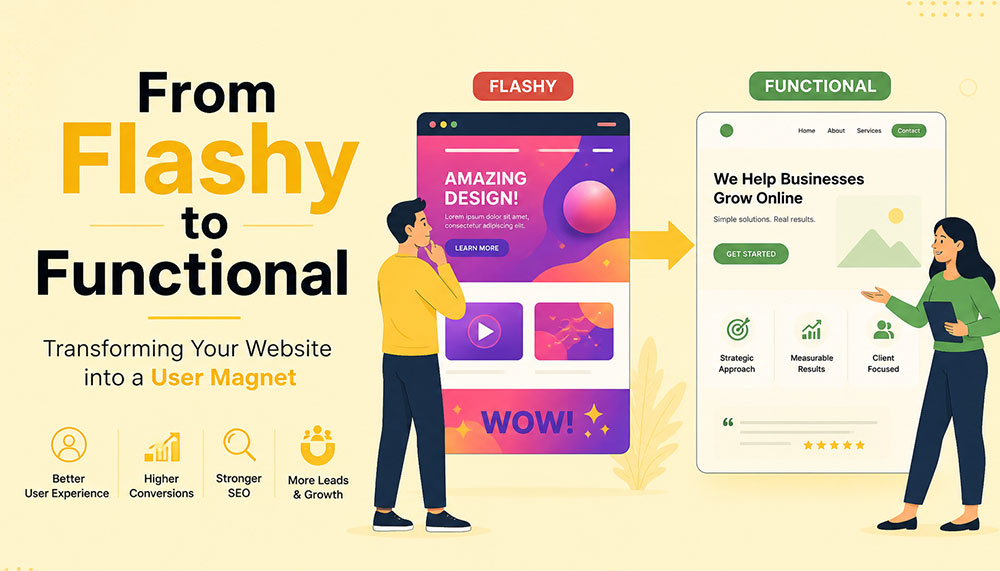
From Flashy to Functional: Transforming Your Website into a User Magnet
In the early days of the internet, a flashy website was often enough to impress visitors. Bright colors, animations, auto-playing media, and complex layouts were seen as signs of creativity and innovation. But times have changed. Today’s users are smarter, faster, and far less patient. A visually overloaded website is no longer impressive—it’s exhausting.
If your website looks stunning but fails to convert visitors into customers, then it’s not doing its job. The modern approach to web design focuses on functionality, usability, speed, and experience. Businesses that understand this shift are the ones that win.
This article explores how to transform your website from merely flashy to genuinely functional—and ultimately turn it into a powerful user magnet.
The Problem with “Flashy” Websites
At first glance, a flashy website can feel impressive. Bright visuals, animations, sliders, and interactive effects often give the illusion of sophistication and creativity. But here’s the reality—what looks exciting to a designer can quickly become frustrating for a user.
Today’s internet users are not browsing casually—they’re searching with intent. They want answers, solutions, and clarity within seconds. If your website slows them down or overwhelms them, they won’t admire the design—they’ll abandon it.
Flashy websites often prioritize aesthetics over usability. While they may look appealing initially, they tend to create friction in the user journey. And in the digital world, even small friction points can lead to big losses in engagement and conversions.
Let’s take a closer look at the common problems:
- Slow loading times: Heavy animations, large images, auto-playing videos, and complex scripts can significantly slow down your website. Users today expect pages to load almost instantly. Even a delay of a few seconds can cause frustration and increase bounce rates.
- Confusing navigation structures: Over-designed menus, hidden navigation elements, or too many options can leave users unsure of where to go next. When visitors feel lost, they rarely try to figure things out—they simply exit.
- Distracting visual elements: Too many moving parts—sliders, pop-ups, flashing banners—can shift attention away from what actually matters: your message. Instead of guiding users, these elements overwhelm them.
- Poor mobile responsiveness: A design that looks great on a desktop may completely break on a mobile device if not optimized properly. With the majority of users browsing on smartphones, this is a critical flaw.
- Low accessibility: Flash-heavy designs often ignore accessibility standards. Poor contrast, unreadable fonts, or non-intuitive layouts can make it difficult for users with different abilities to interact with your website.
Think about your own browsing habits. When you land on a website that takes too long to load or feels complicated, what do you do? Most likely, you hit the back button. That’s exactly what your visitors are doing too.
Modern users expect instant gratification. They want fast, smooth, and effortless experiences. If your website fails to deliver that within the first few seconds, you’ve already lost their attention—and potentially their business.
This is why businesses today are shifting their focus from “looking impressive” to “working effectively.” A professional Website Designing company in India understands this balance. Instead of adding unnecessary elements, they focus on creating clean, user-friendly designs that guide visitors naturally and help businesses achieve real results.
Because in the end, a website isn’t meant to just impress—it’s meant to perform.
Understanding the Shift: From Design to Experience
There was a time when website design was judged almost entirely by how it looked. If it was visually appealing, colorful, and “different,” it was considered successful. But that definition has evolved—dramatically.
Today, design alone is not enough. A website can look stunning and still fail miserably if it doesn’t deliver a smooth, intuitive experience. This is where the shift happens—from design-centric thinking to experience-centric thinking.
In simple terms, it’s no longer just about how your website looks. It’s about how it feels to use.
When a user lands on your website, they are not there to admire your design skills. They are there with a purpose—maybe to learn something, compare options, or make a purchase. The faster and easier you help them achieve that goal, the more successful your website becomes.
This is why User Experience (UX) and User Interface (UI) design have become the backbone of modern websites. These disciplines focus on understanding user behavior, removing friction, and creating seamless interactions.
Instead of asking “Does it look good?”, businesses now need to ask deeper, more practical questions:
- Is it easy to use? Can a first-time visitor navigate your website without confusion, or do they have to think too much before taking action?
- Can users find what they need quickly? In a world where attention spans are shrinking, every second matters. If users have to dig through multiple pages to find basic information, they won’t stick around.
- Does it guide users toward action? A good website doesn’t just present information—it gently leads users toward the next step, whether that’s filling out a form, making a purchase, or contacting your team.
- Does it work seamlessly on all devices? Your audience is browsing on phones, tablets, laptops, and everything in between. A consistent and smooth experience across all devices is no longer optional.
Think of your website like a physical store. A beautifully designed store with confusing layouts, hard-to-find products, and unhelpful staff will struggle to make sales. On the other hand, a clean, well-organized store that makes shopping easy will naturally attract and retain customers.
The same principle applies online.
Functionality doesn’t mean sacrificing beauty—it means giving beauty a purpose. Every design element, from colors to typography to spacing, should support usability rather than distract from it.
This is where experienced professionals, such as a Website Designing company in India, bring real value. They don’t just design for visual appeal—they design for human behavior, ensuring that every click, scroll, and interaction feels natural and meaningful.
Because at the end of the day, users don’t remember how “cool” your website looked. They remember how easy it was to use—and whether it helped them get what they came for.
Key Elements of a Functional Website
A functional website doesn’t happen by accident—it’s the result of thoughtful planning, user understanding, and smart design decisions. Every element on your website should have a purpose. When all these elements work together, they create an experience that feels smooth, intuitive, and satisfying for the user.
Let’s break down the core elements that truly make a website functional—not just visually appealing, but genuinely effective.
1. Clear and Intuitive Navigation
Your website should feel effortless to explore. A visitor should land on your homepage and instantly understand where to go next—without thinking too hard. The moment users feel confused, they start losing trust.
Think of navigation as a roadmap. If the directions aren’t clear, people won’t keep wandering—they’ll simply leave and find another destination.
A well-structured navigation system includes:
- Simple menus with clear labels: Avoid clever or vague naming. “Services,” “About,” and “Contact” may sound basic, but they work because users instantly recognize them.
- Logical page hierarchy: Your pages should be organized in a way that makes sense. Important information should never be buried deep within multiple clicks.
- Easy access to key pages: High-priority pages like pricing, services, or contact information should always be easy to find—preferably within one or two clicks.
If users get lost, they leave. It’s that simple. Good navigation doesn’t draw attention to itself—it just works seamlessly in the background.
2. Fast Loading Speed
Speed is one of the most critical factors in user experience. No matter how beautiful your website is, if it takes too long to load, users won’t wait around to see it.
We live in a world of instant results. A delay of even one second can feel like an eternity—and that’s often enough to lose a potential customer.
To improve your website’s speed:
- Optimize images: Large, uncompressed images are one of the biggest causes of slow websites. Proper optimization keeps quality high while reducing load time.
- Use efficient code: Clean, streamlined coding reduces unnecessary load on your website.
- Leverage caching: Caching helps store data so returning users can access your site faster.
- Choose reliable hosting: Your hosting provider plays a major role in your website’s performance. A slow server means a slow website—no matter what you do.
A skilled Website Designing company in India understands that performance is not an afterthought. They build speed optimization into the foundation of your website from the very beginning.
3. Mobile Responsiveness
Take a moment to think about how often you use your phone to browse the internet. Now imagine your website being viewed on that small screen. Does it still look clean? Is it easy to navigate? Can users interact with it comfortably?
With mobile users now dominating web traffic, your website must perform flawlessly across all screen sizes. A responsive design ensures that your website adapts automatically—no matter what device is being used.
This includes:
- Content that adjusts smoothly: Images, text, and layouts should resize and rearrange themselves for different screen sizes.
- Tap-friendly buttons: Buttons should be large enough and spaced properly so users can easily tap them without frustration.
- Readable text: Users shouldn’t have to zoom in just to read your content. Proper font sizing is essential.
A mobile-first approach is no longer optional—it’s the standard. If your website doesn’t work well on mobile, you’re likely losing a significant portion of your audience.
4. Strong Visual Hierarchy
When users land on your website, they don’t read every word—they scan. Your design should guide their eyes naturally, helping them understand what’s important within seconds.
This is where visual hierarchy comes in. It’s the art of organizing content in a way that leads users through your website effortlessly.
You can achieve this through:
- Proper use of headings: Headlines should stand out and clearly communicate key messages.
- Contrasting colors: Important elements like call-to-action buttons should be visually distinct.
- Whitespace: Giving elements room to breathe makes your website easier to read and less overwhelming.
- Strategic placement: Key information should be positioned where users naturally look first.
A clean, well-structured layout often outperforms a cluttered design. Simplicity doesn’t mean boring—it means effective.
5. Compelling and Clear Content
Design might bring users in, but content is what keeps them there—and ultimately convinces them to take action.
Your messaging should speak directly to your audience. It should answer their questions, address their concerns, and clearly explain how you can help them.
Effective website content is:
- Clear and concise: Avoid unnecessary jargon or long-winded explanations. Get to the point quickly.
- User-focused: Instead of talking only about your business, focus on what the user gains.
- Easy to scan: Use short paragraphs, bullet points, and headings to make content digestible.
Within a few seconds of landing on your website, visitors should understand exactly what you offer and why it matters to them. If they have to guess, you’ve already lost them.
When all these elements come together—navigation, speed, responsiveness, hierarchy, and content—you don’t just have a website. You have a powerful user experience that attracts, engages, and converts.
Why Functionality Drives Conversions
At the end of the day, your website has a job to do. Whether it’s generating leads, selling products, or encouraging inquiries—everything comes down to conversions. And here’s the truth many businesses overlook: people don’t convert because your website looks good… they convert because it feels easy.
A functional website removes friction from the user journey. It makes every step—from landing on the page to taking action—feel natural and effortless. When users don’t have to struggle, think too much, or second-guess their decisions, they are far more likely to move forward.
Think of it like walking into a well-organized store. You can quickly find what you need, understand the pricing, and check out without confusion. Compare that to a cluttered store where nothing is clearly labeled—you’d probably walk out. The same psychology applies to your website.
Functionality builds trust. And trust is the foundation of every conversion.
When users can easily navigate your website, find relevant information, and complete actions without frustration, they begin to feel confident in your brand. On the other hand, even small issues—like a confusing layout or a slow-loading page—can create doubt and push them away.
A conversion-focused website is intentionally designed to guide users toward action. It doesn’t leave things to chance. Every element plays a role in helping users take the next step.
Here’s what that looks like in practice:
- Clear call-to-action (CTA) buttons: Your CTAs should stand out and communicate exactly what users need to do next—whether it’s “Get a Quote,” “Book a Demo,” or “Buy Now.” There should be no confusion or hesitation.
- Minimal distractions: Too many pop-ups, animations, or competing elements can overwhelm users and dilute your message. A clean, focused design keeps attention where it matters most.
- Trust signals: People are naturally cautious online. Reviews, testimonials, case studies, certifications, and client logos help reassure users that they’re making the right choice.
- Simplified forms and checkout processes: The more steps you add, the more users you lose. Shorter forms, fewer fields, and a smooth checkout experience can significantly increase conversions.
It’s important to understand that users don’t want to “work” to interact with your website. The easier you make things for them, the more likely they are to take action.
This is why businesses increasingly partner with a Website Designing company in India that focuses on performance-driven design. Instead of adding unnecessary features, they refine the user journey—removing obstacles and guiding users toward meaningful actions.
Every element on your website should have a clear purpose. If something doesn’t contribute to the user experience or support conversions, it’s likely doing more harm than good.
Because in the digital world, simplicity isn’t just a design choice—it’s a competitive advantage.
The Role of User Psychology
Behind every click, scroll, and decision on your website, there’s a human mind at work. And that mind doesn’t behave randomly—it follows patterns. Understanding these patterns is what separates an average website from one that truly connects with users.
One of the biggest misconceptions in web design is assuming that users carefully read everything on a page. In reality, they don’t. People scan. They skim through headings, glance at visuals, and look for familiar cues that help them quickly understand what to do next.
This means your website isn’t just a collection of pages—it’s an experience shaped by human behavior. The more you align your design with how people naturally think and interact, the more effective your website becomes.
Let’s explore some key psychological principles that influence user behavior:
- Familiarity: Users feel comfortable with what they already recognize. This is why most successful websites follow certain standard patterns—like having a logo at the top left, navigation at the top, and contact information easily accessible. When you stick to familiar structures, users don’t have to “learn” how to use your website—they already know.
- Clarity: The human brain prefers simplicity. When a website is cluttered or overly complex, it increases cognitive load—meaning users have to work harder to process information. And when things feel difficult, people tend to give up. Clean layouts, simple messaging, and clear pathways reduce this mental effort and keep users engaged.
- Trust: First impressions happen in seconds. A clean, professional-looking website instantly builds credibility, while a messy or outdated design raises doubts. Elements like consistent branding, high-quality visuals, testimonials, and secure browsing indicators all contribute to building trust.
- Urgency: People are more likely to take action when they feel a sense of urgency. Strategic prompts like limited-time offers, countdowns, or phrases such as “Only a few spots left” can encourage users to act sooner rather than later. When used thoughtfully, urgency can significantly improve conversions without feeling pushy.
Think about your own online behavior. When you visit a website, you instinctively look for certain things—clear headings, easy navigation, and quick answers. If those elements are missing, frustration builds almost instantly.
This is why understanding user psychology isn’t optional—it’s essential. A website that aligns with human behavior feels intuitive, trustworthy, and easy to use.
A modern Website Designing company in India doesn’t just focus on visuals or code—they dive deeper into how users think, what motivates them, and what stops them from taking action. By combining design expertise with behavioral insights, they create websites that don’t just look good—they feel right.
Because when your website speaks the language of your users’ minds, engagement and conversions naturally follow.
Common Mistakes to Avoid
Sometimes, the biggest problems on a website aren’t what’s missing—they’re what’s unnecessarily added. Many businesses invest time and money into their websites, yet unknowingly make decisions that hurt performance instead of improving it.
The tricky part? These mistakes often come from good intentions—trying to impress users, add more information, or stand out from competitors. But in reality, they end up doing the opposite.
Let’s break down some of the most common website mistakes and why they matter:
- Overusing animations and effects: Animations can enhance a website when used sparingly, but too many moving elements can overwhelm users. Sliders, pop-ups, hover effects, and auto-playing media can quickly turn from engaging to distracting. Instead of focusing on your message, users get caught up in visual noise—and often leave before taking any action.
- Ignoring mobile users: This is one of the most costly mistakes today. A website that works perfectly on desktop but feels clunky on mobile is guaranteed to lose a large portion of its audience. Tiny buttons, misaligned content, and slow mobile performance create frustration and drive users away almost instantly.
- Cluttering pages with too much information: It’s tempting to put everything on one page—every service, every feature, every detail. But more information doesn’t always mean better communication. When pages are overcrowded, users don’t know where to focus. Instead of reading more, they end up reading nothing at all.
- Using unclear or generic CTAs: Call-to-action buttons like “Click Here” or “Submit” don’t tell users what they’re getting. Strong CTAs are specific and action-driven—like “Get Your Free Quote” or “Book a Consultation.” Clarity here can make a huge difference in conversion rates.
- Neglecting SEO fundamentals: A beautiful website is useless if no one can find it. Ignoring SEO basics—like proper headings, meta tags, keyword optimization, and page speed—limits your visibility on search engines. Without traffic, even the best-designed website won’t deliver results.
If you look closely, all these mistakes have one thing in common: they prioritize business preferences over user needs. And that’s where things start to go wrong.
The good news is that these issues are completely fixable. In fact, addressing even a few of them can lead to noticeable improvements in user engagement, time on site, and conversions.
This is why many businesses turn to an experienced Website Designing company in India to audit and refine their websites. With a fresh perspective and user-focused approach, they can identify hidden issues and transform your website into something far more effective.
Because sometimes, improving your website isn’t about adding more—it’s about removing what’s getting in the way.
Balancing Aesthetics and Functionality
There’s a common misconception in web design—that you have to choose between a website that looks beautiful and one that works well. In reality, the most successful websites don’t pick one over the other. They strike a balance.
Visual appeal matters. It creates the first impression, sets the tone for your brand, and captures attention. But if that visual appeal comes at the cost of usability, it quickly loses its value. On the other hand, a purely functional website that lacks personality can feel dull and forgettable.
The real goal is to bring both together—where design enhances functionality, not competes with it.
Think of your website like a well-designed workspace. It should look inviting and professional, but more importantly, everything should be placed exactly where it’s needed. Nothing should feel out of place, unnecessary, or confusing.
Here are some practical ways to achieve that balance:
- Using a consistent color palette: Colors play a huge role in how users perceive your brand. A consistent palette creates a sense of harmony and professionalism. It also helps guide user attention—for example, using a specific color for buttons makes them instantly recognizable.
- Choosing readable fonts: Stylish typography can enhance your design, but readability should always come first. If users have to strain their eyes to read your content, they won’t stick around. Clean, simple fonts with proper spacing make a big difference in user comfort.
- Maintaining visual consistency: Consistency builds familiarity and trust. When elements like buttons, headings, spacing, and layouts follow a uniform style across your website, users feel more comfortable navigating it. Inconsistency, on the other hand, creates confusion and disrupts the experience.
- Using images purposefully: Images should support your message—not just fill space. High-quality visuals can enhance storytelling, explain concepts, and create emotional connections. But irrelevant or excessive images can slow down your website and distract users from your core message.
It’s also important to remember that simplicity is powerful. A clean design with thoughtful spacing and focused content often feels more premium than a cluttered, over-designed layout.
This is where experienced professionals, such as a Website Designing company in India, truly make a difference. They understand how to blend creativity with usability—ensuring that every design choice serves a purpose and contributes to the overall experience.
At its core, design is not the end goal—it’s a tool. A tool to communicate, guide, and engage your users. When used wisely, it doesn’t just make your website look better—it makes it work better.
And that’s the kind of balance that turns visitors into loyal users.
How SEO and Functionality Work Together
SEO and website functionality are often treated as two separate things—but in reality, they are deeply connected. You can’t build a strong online presence by focusing on just one. The websites that perform best today are the ones where SEO and user experience work hand in hand.
Search engines like Google are no longer just scanning your website for keywords. They are analyzing how users interact with it. Do people stay on your site? Do they explore multiple pages? Or do they leave within seconds? These behaviors send powerful signals about the quality of your website.
In simple terms, search engines want to recommend websites that users actually enjoy using. And that’s exactly where functionality comes into play.
A functional website naturally supports SEO because it creates a better experience for users—and when users are happy, search engines take notice.
Here’s how functionality directly impacts your SEO performance:
- Improving page speed: Fast-loading websites not only keep users engaged but are also favored by search engines. Speed is a ranking factor, and even small improvements can make a noticeable difference in your visibility.
- Enhancing mobile usability: With mobile-first indexing, search engines prioritize how your website performs on mobile devices. A responsive, mobile-friendly design ensures that your site ranks better and reaches a wider audience.
- Reducing bounce rates: When users land on your website and immediately leave, it signals that something isn’t working—whether it’s slow speed, poor design, or irrelevant content. A functional website keeps users engaged and encourages them to stay longer.
- Encouraging longer session durations: When your website is easy to navigate and provides valuable content, users naturally spend more time exploring it. This increased engagement sends positive signals to search engines about your site’s relevance and quality.
It’s important to understand that SEO is no longer just about ranking—it’s about retention. Getting users to your website is only half the battle. Keeping them there is what truly makes the difference.
This is why businesses are increasingly working with a Website Designing company in India that understands both SEO and user experience. Instead of treating them as separate strategies, they integrate them into a unified approach—building websites that are not only easy to find but also enjoyable to use.
When your website is fast, intuitive, and user-friendly, visitors stay longer, interact more, and trust your brand. And when that happens consistently, search engines recognize your website as valuable—and reward it with better rankings.
Because in today’s digital landscape, the formula is simple: when users love your website, search engines do too.
Steps to Transform Your Website
Transforming your website from flashy to functional isn’t about making random changes—it’s about taking a structured, thoughtful approach. The goal is to create a website that not only looks better, but works better for your users and your business.
Think of it as a continuous improvement process rather than a one-time redesign. Every step you take should bring you closer to a smoother, more effective user experience.
1. Audit Your Current Website
Before making any changes, you need to understand where you currently stand. A website audit helps you uncover what’s working well and what’s holding you back.
Start by looking at real user data:
- User behavior: How do visitors interact with your site? Which pages do they visit most? Where do they drop off?
- Bounce rates: Are users leaving quickly after landing on certain pages? If yes, those pages may have usability or content issues.
- Conversion data: Which pages are driving results, and which ones are not?
You can also review your website from a user’s perspective. Try navigating it as if you were a first-time visitor. Is everything clear and easy to find? Or does it feel confusing?
This step lays the foundation for everything that follows.
2. Simplify the Design
Once you know what’s not working, the next step is to simplify. Many websites try to do too much—and end up overwhelming users.
Simplification doesn’t mean removing value—it means removing distractions.
Focus on:
- Eliminating unnecessary animations and visual clutter
- Reducing the number of competing elements on each page
- Highlighting key messages and actions
Ask yourself: “Does this element help the user, or does it just look nice?” If it doesn’t serve a purpose, it probably doesn’t belong.
A clean, focused design makes it easier for users to understand your website—and take action.
3. Improve Performance
Performance is a critical part of functionality. Even the best-designed website will fail if it’s slow or unresponsive.
Improving performance involves both technical and design-related optimizations:
- Speed optimization: Compress images, minimize code, and use caching to reduce load times.
- Responsive design: Ensure your website works smoothly across all devices and screen sizes.
- Technical improvements: Fix broken links, optimize server response times, and ensure clean coding practices.
This is often where working with a Website Designing company in India can make a big difference. Their technical expertise ensures that your website performs efficiently without compromising on design.
4. Enhance Content Strategy
Your website’s content is what communicates your value to users. If your messaging is unclear or unfocused, even the best design won’t help.
Shift your content strategy from “what we want to say” to “what users need to hear.”
Effective content should:
- Address user problems and offer solutions
- Be easy to read and scan
- Clearly explain your services or products
- Guide users toward the next step
Every page should have a purpose—and every piece of content should support that purpose.
5. Test and Optimize Continuously
Your website is never truly “finished.” User behavior evolves, trends change, and new opportunities emerge. That’s why ongoing testing and optimization are essential.
Use tools and techniques like:
- A/B testing: Compare different versions of a page to see what performs better
- Analytics: Track user behavior, engagement, and conversions
- Heatmaps: Understand where users click, scroll, and focus their attention
Small improvements over time can lead to significant results. Even minor tweaks—like changing a button color or simplifying a form—can have a noticeable impact on conversions.
The key is to stay curious, keep testing, and continuously refine your website based on real data.
When you follow these steps, you’re not just redesigning your website—you’re transforming it into a powerful tool that attracts users, engages them, and drives meaningful results.
The Importance of Professional Expertise
Transforming a website isn’t just about changing colors, adding new sections, or updating a layout—it’s a much deeper process. It requires a careful balance of design, technology, user psychology, and marketing strategy. And this is exactly where many businesses struggle when trying to handle everything on their own.
A website today is not just a digital brochure—it’s a performance-driven asset. It needs to attract visitors, engage them, guide them, and ultimately convert them. Achieving all of that requires more than creativity—it requires expertise.
This is why many businesses choose to partner with a professional Website Designing company in India. Instead of relying on guesswork or trial-and-error, they gain access to a team that understands how to build websites that actually work.
Let’s look at what such expertise brings to the table:
- Industry experience: Professionals who have worked across different industries understand what works and what doesn’t. They’ve seen trends evolve, tested strategies, and know how to avoid common pitfalls. This experience helps them make informed decisions that save time and deliver better results.
- Technical expertise: From coding and performance optimization to responsiveness and integrations, there’s a lot happening behind the scenes of a functional website. A skilled team ensures that everything runs smoothly—so users never have to think about the technical side at all.
- Strategic thinking: A great website isn’t built randomly—it’s planned. Professionals approach design with a clear strategy in mind, aligning your website with your business goals. Every element, from layout to content placement, is designed to support conversions and user engagement.
- Cost-effective solutions: While hiring experts may seem like an added expense, it often saves money in the long run. Avoiding mistakes, reducing redesigns, and getting things right the first time leads to better ROI and fewer ongoing issues.
Another key advantage is perspective. When you’re deeply involved in your own business, it’s easy to overlook usability issues or assume things are “obvious” to users. A professional team brings an outside perspective—seeing your website the way your visitors do.
They don’t just ask, “Does this look good?” They ask, “Does this work?”
And that shift in thinking makes all the difference.
The result is a website that doesn’t just impress visually—it performs consistently. It loads faster, guides users better, communicates clearly, and converts more effectively.
Because in today’s competitive digital space, a good-looking website is no longer enough. You need a website that delivers results—and that’s exactly what professional expertise helps you achieve.
Real-World Impact of Functional Design
When businesses shift their focus from flashy visuals to functional design, the results are not just noticeable—they’re measurable. This isn’t about subjective opinions like “it looks better” or “it feels smoother.” It’s about real, data-driven improvements that directly affect how your website performs and how your business grows.
A functional website doesn’t just change how your site looks—it transforms how users interact with it. And when user behavior improves, everything else follows.
Here’s what businesses typically experience when they make this shift:
- Higher conversion rates: When users can easily navigate your website, understand your offering, and take action without confusion, conversions naturally increase. Whether it’s filling out a form, making a purchase, or booking a service—simplicity leads to action.
- Lower bounce rates: A well-structured, fast-loading, and user-friendly website encourages visitors to stay instead of leaving immediately. When users find what they’re looking for quickly, they’re far more likely to explore further rather than exit.
- Increased user engagement: Functional design keeps users interested. They spend more time on your site, visit multiple pages, and interact with your content. This deeper engagement not only improves user experience but also strengthens your brand connection.
- Better search rankings: Search engines pay close attention to how users behave on your website. Lower bounce rates, longer session durations, and improved usability all contribute to better rankings—bringing in even more organic traffic.
But beyond the metrics, there’s a bigger picture.
A functional website builds confidence. It makes your business feel reliable, professional, and easy to work with. Users don’t just visit—they trust. And when trust is established, conversions become a natural outcome rather than a forced action.
Many businesses notice that after optimizing functionality, they don’t need to push as hard with aggressive marketing. Their website starts doing the heavy lifting—guiding users, answering questions, and encouraging decisions organically.
This is why working with a Website Designing company in India that focuses on performance-driven design can be a game-changer. Instead of chasing trends or adding unnecessary features, they focus on what truly impacts user behavior and business outcomes.
Because in the real world, success isn’t measured by how impressive your website looks—it’s measured by how effectively it works.
And when your website works seamlessly, growth isn’t just possible—it becomes predictable.
Future Trends in Website Design
Website design is constantly evolving—but one thing is becoming clearer every year: the future belongs to websites that truly understand and serve their users. Trends may change, technologies may advance, but the core focus remains the same—creating seamless, meaningful, and human-centered experiences.
What’s exciting is that the next wave of web design isn’t just about looking modern—it’s about becoming smarter, more intuitive, and more inclusive. Businesses that adapt early will not only stand out but also build stronger, long-lasting connections with their audiences.
Let’s explore some of the key trends shaping the future of website design:
- Minimalistic design approaches: The shift toward simplicity is only getting stronger. Clean layouts, ample whitespace, and focused content are replacing cluttered, over-designed pages. Minimalism isn’t about doing less—it’s about doing what matters most. By removing distractions, websites can guide users more effectively and create a calmer, more enjoyable browsing experience.
- AI-driven personalization: Websites are becoming smarter and more adaptive. With the help of artificial intelligence, websites can now tailor content, recommendations, and user journeys based on individual behavior. Imagine a website that understands what a visitor is looking for and adjusts its content accordingly—this level of personalization can significantly improve engagement and conversions.
- Voice and gesture-based interactions: As technology evolves, the way users interact with websites is also changing. Voice search and voice commands are becoming more common, especially with the rise of smart devices. Gesture-based interactions, particularly on mobile and touch devices, are also shaping how users navigate and engage with content. Designing for these interactions means thinking beyond clicks and taps.
- Accessibility-first design: Inclusivity is no longer optional—it’s essential. Future-ready websites are built to be accessible to everyone, including users with disabilities. This includes better color contrast, keyboard navigation, screen reader compatibility, and clear content structure. Accessibility doesn’t just expand your audience—it also improves overall usability for all users.
Another important shift is the growing expectation for speed, privacy, and trust. Users want websites that load instantly, respect their data, and provide a smooth, secure experience. These factors will continue to influence design decisions moving forward.
For businesses, this means one thing: staying static is not an option. A website that works well today may feel outdated tomorrow if it doesn’t evolve with user expectations.
This is where partnering with a forward-thinking Website Designing company in India becomes valuable. Such teams stay updated with emerging technologies and user trends, ensuring your website doesn’t just keep up—but stays ahead.
Because in the digital world, success isn’t just about where you are today—it’s about how prepared you are for what’s coming next.
And the future? It belongs to websites that are not only functional—but intelligent, inclusive, and deeply user-focused.
Conclusion
A flashy website might capture attention—but a functional website captures users.
In today’s competitive digital landscape, success depends on how well your website serves your audience. By focusing on usability, performance, and clarity, you can create an experience that not only attracts visitors but keeps them coming back.
Whether you’re revamping an existing site or building a new one, the goal should always be the same: create a website that works for your users.
And when done right, your website doesn’t just become a digital presence—it becomes your most powerful business asset.


Technical SEO Excellence: Why India Is Becoming a Hub for Complex SEO Projects
Search engine optimization has evolved far beyond keywords and backlinks. Today, technical SEO sits at the core of digital success—powering website performance, ensuring search engine accessibility, and delivering seamless user experiences. As global businesses demand more sophisticated SEO strategies, one country has steadily emerged as a leader in this space: India.
From advanced site audits to structured data implementation and server-side optimizations, Indian professionals are taking on increasingly complex projects for global brands. The rise of the SEO company in India is not accidental—it is the result of deep technical expertise, adaptability, and a strong foundation in both engineering and digital marketing.
In this article, we’ll explore why India has become a hub for technical SEO excellence, what makes Indian SEO experts stand out, and how they are shaping the future of complex SEO projects worldwide.
The Evolution of SEO: From Basics to Technical Mastery
SEO hasn’t just changed over the years—it has matured. What started as a relatively simple practice has grown into a highly technical, multidisciplinary field that blends marketing, data analysis, and engineering. A decade ago, ranking a website often meant inserting the right keywords in the right places and building a handful of backlinks. While those elements still matter, they are now just a small piece of a much larger puzzle.
Back then, search engines were less sophisticated. Websites could rank with minimal structure, slower speeds, and even questionable tactics. But as search engines evolved—becoming smarter, faster, and more user-focused—the expectations for websites changed dramatically. Today, it’s not just about what your content says, but how your entire website functions behind the scenes.
Modern SEO is deeply rooted in how search engines interact with your website. It requires a clear understanding of crawling (how bots discover pages), rendering (how they process content, especially JavaScript), and indexing (how pages are stored and ranked). If any one of these steps is disrupted, even the best content can struggle to perform.
This evolution has introduced a new layer of complexity. SEO is no longer confined to marketers—it now demands collaboration with developers, designers, and system architects. The focus has shifted from isolated tactics to building technically sound, high-performing digital ecosystems.
Today, modern SEO involves a range of advanced practices, including:
- Understanding JavaScript rendering: Many modern websites rely on JavaScript frameworks. Ensuring that search engines can properly render and understand this content is critical for visibility.
- Optimizing Core Web Vitals: User experience is now a ranking factor. Metrics like loading speed, interactivity, and visual stability directly impact both rankings and user satisfaction.
- Implementing structured data: Structured data helps search engines interpret content more effectively, enabling rich results that improve visibility and click-through rates.
- Managing large-scale site architectures: As websites grow, maintaining clean URL structures, internal linking, and crawl efficiency becomes increasingly important.
- Ensuring server performance and scalability: A fast, reliable server is essential. Poor server response times can negatively impact both user experience and search engine rankings.
What makes this shift so significant is that technical SEO is no longer optional—it’s foundational. You can have exceptional content and strong backlinks, but if your site is slow, poorly structured, or difficult for search engines to access, your performance will suffer.
This is why businesses today are actively seeking professionals who can bridge the gap between marketing strategy and technical execution. They need experts who understand not just what to optimize, but how websites function at a deeper level.
This is exactly where Indian SEO professionals have carved out a strong niche. With a blend of technical education, hands-on development experience, and marketing insight, they are uniquely positioned to handle this new era of SEO. They don’t just optimize pages—they optimize systems.
As SEO continues to evolve, one thing is clear: success will belong to those who can combine creativity with technical precision. And in this landscape, technical mastery is no longer an advantage—it’s the standard.
Why India Is Emerging as a Global Technical SEO Hub
Over the past few years, India has quietly but confidently positioned itself as a powerhouse in the world of technical SEO. What was once seen primarily as an outsourcing destination has now evolved into a hub of innovation, expertise, and strategic thinking. Today, businesses across the globe don’t just look to India for support—they rely on it for solving some of their most complex SEO challenges.
So, what’s driving this shift? It’s not just one factor, but a combination of deep technical talent, global exposure, cost efficiency, and an unmatched ability to adapt. Let’s take a closer look at why India is becoming the go-to destination for advanced SEO work.
1. Strong Technical and Engineering Background
One of India’s biggest strengths lies in its massive pool of technically skilled professionals. Every year, the country produces millions of graduates in engineering, computer science, and IT-related fields. But what makes this truly impactful for SEO is how many of these professionals transition into digital roles—bringing their technical mindset with them.
Unlike traditional marketers who may approach SEO from a purely content or keyword perspective, many Indian SEO specialists start with a strong understanding of how systems work. They are comfortable reading code, analyzing server behavior, and diving deep into the technical backbone of websites.
This technical foundation gives them a natural edge when working on complex SEO projects. It allows them to go beyond surface-level fixes and identify root causes of issues that others might miss.
As a result, they can:
- Work closely with development teams: Instead of acting as intermediaries, they speak the same language as developers—making collaboration smoother and more effective.
- Diagnose complex indexing issues: Whether it’s crawl anomalies, rendering problems, or canonical conflicts, they can pinpoint issues with precision.
- Handle JavaScript-heavy websites: With modern frameworks becoming the norm, their familiarity with JavaScript environments becomes a major advantage.
- Optimize server configurations: From improving response times to managing redirects and headers, they understand how server-level changes impact SEO.
In many ways, these professionals don’t just “do SEO”—they engineer it. And in today’s landscape, that mindset is invaluable.
2. Cost-Effective Yet High-Quality Expertise
Another major reason businesses turn to an SEO company in India is the exceptional balance between cost and quality. While cost-effectiveness is often the initial attraction, what keeps clients engaged is the level of expertise and results delivered.
Companies can access highly skilled SEO professionals at a significantly lower cost compared to markets like the US, UK, or Australia. But this isn’t about cutting corners—it’s about maximizing value.
This affordability opens doors for businesses to think bigger and invest more strategically in SEO. Instead of limiting efforts to basic optimizations, they can allocate resources toward comprehensive, long-term growth.
This cost advantage enables companies to:
- Invest in long-term SEO strategies: Rather than chasing quick wins, businesses can focus on sustainable growth and continuous improvement.
- Run large-scale audits: Deep technical audits that require time, tools, and expertise become more accessible.
- Implement ongoing technical improvements: SEO becomes an ongoing process rather than a one-time fix.
In essence, businesses are able to achieve enterprise-level SEO execution without enterprise-level costs—a combination that’s hard to ignore.
3. Experience with Global Projects
Indian SEO professionals are not limited by geography—they operate on a global stage. Over the years, agencies and freelancers alike have worked with clients from the United States, United Kingdom, Australia, Europe, and beyond.
This international exposure has played a crucial role in shaping their expertise. It has helped them understand not just technical SEO, but also how search behavior varies across regions, industries, and audiences.
They’ve learned to adapt strategies based on cultural nuances, competitive landscapes, and market-specific challenges. This makes them highly versatile and capable of handling diverse projects.
They are particularly skilled in:
- International SEO: Structuring websites to target multiple countries effectively without causing duplication or confusion for search engines.
- Multilingual site structures: Managing content across languages while maintaining consistency and SEO integrity.
- Hreflang implementation: Ensuring the right content is served to the right audience in the right region.
- Global search engine variations: Understanding how optimization strategies differ across platforms and regions.
This global perspective allows Indian SEO teams to think beyond local optimization and deliver strategies that scale internationally.
4. Adaptability to Algorithm Changes
SEO is one of the most dynamic fields in digital marketing. Search engines continuously refine their algorithms, often introducing changes that can significantly impact website rankings overnight.
In such an environment, adaptability is not just important—it’s essential. And this is another area where Indian SEO professionals truly stand out.
They are known for their proactive approach to learning and staying updated. Whether it’s following industry trends, analyzing search engine updates, or testing new strategies, they remain ahead of the curve.
When algorithm updates occur—be it a major Core Update or subtle changes in ranking signals—they respond quickly and methodically. Instead of reacting with guesswork, they rely on data, analysis, and experience to guide their decisions.
This ability to adapt ensures that:
- Websites recover faster from ranking fluctuations
- Strategies remain aligned with current best practices
- Long-term performance is protected and improved
In a field where change is constant, this agility becomes a major competitive advantage.
Altogether, these factors paint a clear picture. India’s rise as a global technical SEO hub is not a coincidence—it’s the result of strong fundamentals, continuous learning, and a deep understanding of both technology and search behavior. As SEO continues to grow more complex, the demand for this level of expertise will only increase—and India is well-prepared to lead the way.
Core Areas Where Indian SEO Experts Excel
Technical SEO is not a single skill—it’s a combination of multiple disciplines working together to ensure a website performs flawlessly in search engines. What truly sets Indian SEO professionals apart is their depth of expertise across these critical areas. They don’t just follow checklists; they investigate, analyze, and engineer solutions that address the root cause of issues.
Let’s explore the core areas where Indian SEO experts consistently deliver exceptional results.
Comprehensive Technical Site Audits
Every successful SEO strategy begins with a solid foundation, and that foundation is a thorough technical audit. But not all audits are created equal. While some may only scratch the surface, Indian SEO experts are known for diving deep—uncovering issues that are often overlooked but have a significant impact on performance.
They approach audits like detectives, carefully analyzing every layer of a website to understand how it behaves from both a user and a search engine perspective.
Their audits typically examine:
- Crawlability and indexability: Ensuring search engine bots can access and index important pages without restrictions.
- URL structures: Evaluating whether URLs are clean, logical, and optimized for both users and search engines.
- Redirect chains and loops: Identifying inefficient redirects that can dilute link equity and slow down crawling.
- Broken links and orphan pages: Fixing dead ends and ensuring every important page is properly connected within the site.
- Duplicate content issues: Detecting and resolving duplication that can confuse search engines and harm rankings.
What makes their audits particularly powerful is the use of advanced tools combined with custom scripts and manual analysis. This hybrid approach allows them to uncover hidden technical bottlenecks that automated tools alone might miss.
The end result is not just a list of issues, but a clear, actionable roadmap for improvement.
Schema Markup and Structured Data Implementation
In today’s search landscape, it’s not enough for search engines to crawl your content—they need to understand it. This is where structured data becomes essential, and Indian SEO professionals have developed strong expertise in this area.
By implementing schema markup, they help search engines interpret the meaning behind content, which can significantly enhance how pages appear in search results.
They commonly work with:
- Product schema: Enabling rich product listings with pricing, availability, and reviews.
- FAQ schema: Highlighting frequently asked questions directly in search results.
- Article schema: Improving visibility for blogs and news content.
- Local business schema: Enhancing local search presence with business details.
- Event schema: Promoting events with key information like dates and locations.
Their approach goes beyond basic implementation. They ensure that structured data is accurate, compliant with guidelines, and aligned with the overall SEO strategy.
The result? Rich snippets, better visibility, higher click-through rates, and ultimately, more qualified traffic.
Core Web Vitals Optimization
User experience has become a central focus for search engines, and Core Web Vitals are a direct reflection of that shift. These metrics measure how quickly a page loads, how responsive it is, and how stable it appears during loading.
Indian SEO experts understand that optimizing these metrics is not just about improving rankings—it’s about creating a smoother, more enjoyable experience for users.
They specialize in improving:
- Largest Contentful Paint (LCP): Ensuring the main content loads quickly.
- First Input Delay (FID): Reducing delays in user interaction.
- Cumulative Layout Shift (CLS): Preventing unexpected layout movements.
To achieve this, they work closely with developers and performance teams to implement meaningful improvements such as:
- Optimizing images and media assets
- Minifying and deferring scripts
- Improving server response times
- Leveraging caching and CDNs
Their focus is always on balancing performance with functionality—ensuring that speed improvements do not compromise the overall user experience.
JavaScript SEO and Rendering Optimization
Modern websites are increasingly built using JavaScript frameworks like React, Angular, and Vue. While these technologies offer powerful user experiences, they can create challenges for search engines when it comes to rendering and indexing content.
This is where Indian SEO professionals truly shine. With their technical backgrounds, they are well-equipped to handle the complexities of JavaScript-driven websites.
They excel in:
- Dynamic rendering: Serving different versions of content to users and search engines when necessary.
- Server-side rendering (SSR): Ensuring content is pre-rendered for better crawlability.
- Pre-rendering strategies: Generating static versions of pages to improve accessibility.
- Fixing rendering issues: Identifying and resolving problems that prevent search engines from seeing content correctly.
Their goal is simple but critical: make sure that what users see is exactly what search engines can access and understand.
In a world where JavaScript is everywhere, this expertise is invaluable.
Server-Side SEO and Log File Analysis
Server-side SEO is often considered one of the most advanced areas of technical optimization—and it’s an area where Indian SEO experts are increasingly making a strong impact.
Instead of relying solely on front-end data, they go deeper by analyzing how search engines actually interact with a website at the server level.
Their work often involves:
- Server logs: Studying how search engine bots crawl the site in real time.
- Crawl budget optimization: Ensuring important pages are crawled efficiently while minimizing waste.
- CDN configurations: Improving content delivery speed across different regions.
- HTTP headers and status codes: Ensuring proper communication between servers and search engines.
Log file analysis, in particular, provides insights that no other data source can. It reveals which pages are being crawled, how often, and where bots might be facing issues.
With this information, Indian SEO professionals can make highly informed decisions—fine-tuning strategies to improve crawl efficiency, indexing, and overall performance.
This level of depth is what separates basic SEO from true technical mastery.
Altogether, these core areas highlight a key truth: Indian SEO experts are not just keeping up with the demands of modern SEO—they are helping define its future. By combining technical precision with strategic thinking, they consistently deliver solutions that drive real, measurable results.
Handling Large-Scale and Complex SEO Projects
When you move from optimizing a small website to managing a platform with thousands—or even millions—of pages, SEO becomes an entirely different game. At this scale, even minor inefficiencies can multiply into major problems. A single technical issue can affect thousands of URLs, and without the right systems in place, it becomes nearly impossible to maintain consistency.
This is where Indian SEO teams have built a strong reputation. Their ability to handle complexity, combined with a process-driven mindset, makes them particularly effective at managing large-scale SEO operations.
Instead of treating SEO as a set of isolated tasks, they approach it as a system—one that needs to be structured, automated, and continuously optimized.
They are well-equipped to handle:
- Enterprise-level websites: Large corporate platforms with complex hierarchies, multiple departments, and thousands of landing pages.
- E-commerce platforms: Sites with dynamic product listings, filters, faceted navigation, and frequent inventory changes.
- Marketplace portals: Multi-vendor platforms where maintaining consistency across listings is a major challenge.
- Content-heavy publishing sites: Blogs, news portals, and media platforms that continuously produce large volumes of content.
Managing SEO at this level requires more than manual effort—it demands smart systems and scalable processes.
Indian SEO professionals rely heavily on:
- Automation tools: To streamline repetitive tasks like audits, monitoring, and reporting, allowing teams to focus on strategy.
- Custom dashboards: Centralized views of key metrics that help track performance across thousands of pages in real time.
- Data-driven insights: Using large datasets to identify patterns, prioritize actions, and make informed decisions.
They also bring a strong sense of structure to their workflows—creating SOPs (standard operating procedures), prioritization frameworks, and scalable implementation plans. This ensures that even the most complex projects remain organized and manageable.
The result is a level of consistency and efficiency that’s critical for large websites. Whether it’s maintaining internal linking across thousands of pages or ensuring technical fixes are rolled out correctly, Indian SEO teams excel at keeping everything aligned.
In short, they don’t just manage scale—they make it work in their favor.
The Role of Data and Analytics in Technical SEO
At its core, technical SEO is driven by data. Every decision—whether it’s fixing crawl issues, improving page speed, or restructuring a site—relies on insights gathered from multiple data sources. Without data, SEO becomes guesswork. With the right data, it becomes a precise and measurable discipline.
Indian SEO professionals have developed a strong data-first approach. They don’t rely on assumptions—they rely on evidence. By combining technical expertise with analytical thinking, they are able to uncover insights that lead to meaningful improvements.
They work extensively with analytics platforms, search console data, crawling tools, and server logs to build a complete picture of website performance.
Their analysis typically includes:
- User behavior: Understanding how visitors interact with the site—what they click, where they drop off, and how they navigate.
- Crawl patterns: Identifying how search engine bots move through the site and whether they are prioritizing the right pages.
- Index coverage reports: Monitoring which pages are indexed, excluded, or facing issues—and why.
- Performance metrics: Tracking rankings, impressions, click-through rates, and page speed indicators.
But what truly sets them apart is how they connect the dots. They don’t just collect data—they interpret it. They look for patterns, identify bottlenecks, and translate insights into actionable strategies.
For example, if crawl data shows that search engines are spending too much time on low-value pages, they might restructure internal linking or adjust robots directives. If user behavior indicates high bounce rates on key pages, they might collaborate with design and content teams to improve engagement.
This combination of data and technical expertise allows them to make smarter decisions—ones that are not only effective but also measurable.
In an increasingly competitive digital landscape, this data-driven approach is what separates average SEO from high-performing SEO. And it’s one of the key reasons why businesses around the world trust Indian professionals with their most complex technical challenges.
Collaboration Between Developers and SEO Experts
One of the most underrated—but incredibly powerful—advantages of working with an SEO company in India is the level of collaboration between developers and SEO specialists. In many organizations, these two teams operate in separate worlds. SEO teams identify issues and make recommendations, while developers focus on building features and fixing bugs. The result? Delays, miscommunication, and missed opportunities.
Indian SEO teams, however, tend to break down these silos. Collaboration is not treated as an occasional necessity—it’s built into the workflow from the very beginning.
What makes this collaboration so effective is a shared understanding. Many SEO professionals in India come from technical backgrounds, which means they can communicate with developers in a language that makes sense. They don’t just say “improve page speed” or “fix indexing issues”—they explain the how and why behind every recommendation.
This alignment creates a smoother, faster, and far more efficient execution process.
Instead of working in silos, teams actively collaborate to:
- Implement technical fixes: Whether it’s resolving crawl errors, fixing broken redirects, or improving rendering, SEO insights are translated directly into actionable development tasks.
- Optimize site architecture: Developers and SEO experts work together to create clean, scalable structures that improve both user navigation and search engine understanding.
- Improve performance metrics: From Core Web Vitals to server response times, both teams align their efforts to deliver measurable improvements.
What truly sets this approach apart is that SEO is not treated as a layer added after development is complete. Instead, it becomes an integral part of the development lifecycle. Features are built with SEO in mind, technical decisions are made with search performance in consideration, and optimizations are implemented proactively rather than reactively.
This integrated approach leads to fewer errors, faster implementation, and better long-term results. It ensures that websites are not just visually appealing or functional—but also fully optimized for search from the ground up.
In a digital landscape where speed, structure, and performance matter more than ever, this level of collaboration becomes a significant competitive advantage.
Focus on Future-Ready SEO Practices
While many businesses are still trying to catch up with current SEO demands, Indian SEO professionals are already looking ahead. Their approach is not limited to solving today’s problems—they are actively preparing for what comes next.
SEO is evolving rapidly, influenced by advancements in artificial intelligence, changes in user behavior, and the way search engines interpret content. Staying relevant requires more than just keeping up—it requires anticipation.
This is where Indian SEO experts are making a strong impact. They are continuously experimenting, learning, and adapting to emerging trends, ensuring that their strategies remain future-proof.
They are actively working on:
- AI-driven SEO strategies: Leveraging artificial intelligence to analyze data, predict trends, and automate complex optimization processes.
- Voice search optimization: Adapting content and structure to match conversational queries and voice-based search behavior.
- Search intent mapping: Going beyond keywords to understand the true intent behind user queries and aligning content accordingly.
- Semantic SEO: Focusing on context, relationships, and meaning rather than just exact keyword matches.
What’s important here is not just the adoption of these practices, but the mindset behind them. Indian SEO professionals are inherently curious and growth-oriented. They invest time in research, testing, and continuous learning—ensuring they stay ahead of industry shifts.
This forward-thinking approach allows businesses to build strategies that are not only effective today but resilient for the future. Instead of constantly reacting to changes, they are prepared for them.
As search engines become smarter and user expectations continue to rise, this ability to anticipate and adapt will define success. And in this evolving landscape, Indian SEO experts are not just participants—they are emerging as leaders shaping the future of SEO.
Case Study Approach: Solving Complex SEO Challenges
To truly understand the value Indian SEO experts bring to the table, it helps to look at how they approach real-world challenges. Let’s take a common yet complex scenario: a large e-commerce website with thousands of product pages struggling with poor indexing, slow loading speeds, and declining organic traffic.
At first glance, the problem might seem straightforward—fix the speed, improve indexing, and rankings should recover. But in reality, these issues are often deeply interconnected, requiring a structured and strategic approach rather than quick fixes.
This is where Indian SEO teams stand out. Instead of jumping directly into solutions, they begin by understanding the full picture—how the website is built, how search engines are interacting with it, and where the bottlenecks lie.
A typical approach would involve:
- Conducting a detailed technical audit: The team starts by analyzing every layer of the website—from crawlability and internal linking to duplicate content and URL structures. This helps identify both visible and hidden issues.
- Analyzing server logs: By studying how search engine bots are actually crawling the site, they uncover inefficiencies such as wasted crawl budget or important pages being ignored.
- Optimizing Core Web Vitals: Performance issues are addressed by improving loading speed, reducing layout shifts, and enhancing interactivity—ensuring a smoother user experience.
- Implementing structured data: Schema markup is added to help search engines better understand product pages, leading to enhanced search listings and improved visibility.
- Fixing crawl inefficiencies: The team refines internal linking, removes unnecessary redirects, and ensures that search engines can easily access and prioritize important pages.
But what truly makes this process effective is how these steps are interconnected. Each action is not treated in isolation—it’s part of a larger strategy aimed at improving overall site health and performance.
Over time, the impact becomes clear. Pages that were previously ignored start getting indexed. Load times improve, reducing bounce rates. Search visibility increases, leading to higher rankings. And most importantly, organic traffic begins to grow steadily.
This case-study approach reflects a broader philosophy: solving SEO challenges is not about quick wins, but about building sustainable systems that deliver long-term results.
Why Businesses Worldwide Trust Indian SEO Experts
As SEO becomes more technical and complex, businesses are becoming more selective about who they trust with their digital presence. Increasingly, companies across the globe are turning to Indian SEO professionals—not just for support, but for strategic leadership.
This trust is built on a combination of expertise, consistency, and results.
Global companies choose Indian SEO experts for several key reasons:
- Technical expertise: With strong backgrounds in IT and development, Indian professionals bring a deep understanding of how websites function at a technical level. This allows them to solve complex problems with precision.
- Cost efficiency: Businesses can access top-tier talent without the high costs typically associated with Western markets, making it easier to invest in long-term SEO strategies.
- Scalability: Whether it’s a small business website or a massive enterprise platform, Indian SEO teams have the resources and processes to scale their efforts to project size.
- Proven track record: Years of working with international clients have helped build a strong portfolio of successful projects across industries.
Another important factor is reliability. Indian SEO agencies are known for their structured workflows, clear communication, and commitment to deadlines. This professionalism builds long-term partnerships rather than short-term engagements.
An experienced SEO company in India is capable of handling everything—from optimizing a startup’s website to managing the complexities of enterprise-level SEO. They bring not just technical skills, but also strategic insight and a results-driven mindset.
In a world where digital competition is constantly increasing, having the right SEO partner can make all the difference. And for many businesses worldwide, India has become that trusted partner—delivering both performance and peace of mind.
Challenges and How Indian SEO Experts Overcome Them
While Indian SEO professionals are widely recognized for their technical expertise and problem-solving abilities, their journey isn’t without challenges. Working with global clients, managing large-scale projects, and keeping up with an ever-evolving search landscape comes with its own set of hurdles.
What sets them apart, however, is not the absence of challenges—but how effectively they navigate them.
Some of the most common challenges include:
- Time zone differences: Collaborating with clients across the US, UK, Australia, and other regions often means working across significantly different time zones. This can make real-time communication and quick turnarounds more complex.
- Communication barriers: Even with strong English proficiency, differences in communication styles, expectations, or cultural nuances can sometimes lead to misunderstandings if not managed carefully.
- Rapidly changing algorithms: Search engines continuously update their algorithms, often without prior notice. Keeping up with these changes while maintaining consistent results can be challenging.
However, what truly defines Indian SEO professionals is their ability to turn these challenges into opportunities for improvement.
They overcome these obstacles through:
- Flexible working hours: Many teams adjust their schedules to align with client time zones, ensuring better collaboration, faster responses, and smoother communication.
- Strong project management: Clear workflows, regular reporting, and structured communication help minimize confusion and keep projects on track, regardless of geographical distance.
- Continuous learning: SEO is a field that never stands still, and Indian professionals actively invest in staying updated—whether through industry blogs, testing new strategies, or adapting quickly to algorithm changes.
In addition, many agencies adopt modern collaboration tools, maintain detailed documentation, and establish clear communication protocols. This ensures that even complex projects run efficiently, regardless of location or time differences.
Rather than being limitations, these challenges have helped Indian SEO teams build resilience, adaptability, and a highly professional approach to global collaboration.
The Growing Demand for Technical SEO Services
As the digital landscape becomes more competitive, businesses are realizing that traditional SEO alone is no longer enough. Ranking today requires not just great content and backlinks, but a technically sound website that performs flawlessly across devices, platforms, and regions.
This shift has led to a sharp increase in demand for technical SEO services. Companies are investing more in areas like site performance, structured data, crawl optimization, and scalable architectures—recognizing that these elements directly impact visibility and user experience.
At the same time, websites themselves are becoming more complex. From dynamic e-commerce platforms to JavaScript-heavy applications, the need for technical expertise has never been greater.
This is where India stands out.
India is exceptionally well-positioned to meet this growing demand, thanks to several key advantages:
- Large talent pool: With a vast number of skilled professionals entering the workforce each year, businesses have access to a diverse and capable talent base.
- Strong IT ecosystem: India’s well-established technology sector provides a solid foundation for technical SEO, with access to developers, engineers, and digital specialists.
- Global experience: Years of working with international clients have equipped Indian SEO professionals with the knowledge and adaptability needed to handle diverse markets and industries.
Another important factor is scalability. As demand grows, Indian agencies have the ability to expand their teams and resources quickly—ensuring they can handle projects of any size without compromising on quality.
Looking ahead, the demand for technical SEO is only expected to increase. As search engines become more sophisticated and user expectations continue to rise, businesses will need experts who can navigate complexity and deliver measurable results.
With its unique combination of technical expertise, adaptability, and global experience, India is not just keeping up with this demand—it is helping shape the future of technical SEO on a global scale.
Conclusion: India’s Role in Shaping the Future of Technical SEO
Technical SEO is no longer optional—it is essential for online success. As businesses seek more advanced solutions, India has emerged as a trusted hub for complex SEO projects.
With a unique combination of technical expertise, cost efficiency, and global experience, Indian professionals are redefining what it means to deliver SEO excellence.
Whether it’s optimizing Core Web Vitals, implementing structured data, or handling enterprise-level websites, an SEO company in India is well-equipped to meet the demands of modern digital marketing.
As the SEO landscape continues to evolve, one thing is clear: India will remain at the forefront of technical SEO innovation—driving results for businesses around the world.


How to Use Search Intent Data to Create Targeted Content
In digital marketing, creating content without understanding what users truly want is like sailing without a compass. Businesses often publish blogs, landing pages, and service pages hoping to attract traffic, but traffic alone does not guarantee leads or conversions. What matters most is attracting the right audience with the right message at the right stage of their journey. This is where search intent data becomes one of the most valuable tools in modern SEO.
Search intent refers to the reason behind a user’s search query. When someone types a keyword into Google, they usually have a specific goal. They may want to learn something, compare options, find a business, or make a purchase. If your content aligns with that purpose, search engines are more likely to rank your page, and users are more likely to engage with it.
For businesses competing online, especially service providers such as an SEO company in India, understanding search intent can help create content that attracts qualified visitors and converts them into customers. Instead of producing generic content, brands can build pages that answer precise needs and solve real problems.
This guide explains how to use search intent data to create targeted content that ranks well, builds trust, and drives results.
What Is Search Intent?
Search intent, sometimes called user intent, is the purpose behind an online search. Every query entered into Google reflects a need. Search engines analyze behavior, context, and language patterns to deliver the most relevant results.
For example:
- “What is local SEO?” – The user wants information.
- “Best SEO tools for agencies” – The user wants comparisons.
- “Affordable SEO services near me” – The user is considering a purchase.
- “Contact SEO company in India” – The user is ready to take action.
When you understand intent, you stop chasing keywords blindly and start creating meaningful content.
Why Search Intent Matters for SEO
Search engines are designed to deliver the most relevant and useful results for every query. Their goal is not simply to match keywords, but to understand what the user truly wants and present pages that best satisfy that need. This is why search intent has become one of the most important factors in modern SEO.
If your page closely matches what users expect to see when they search, it has a much stronger chance of ranking well. On the other hand, even a technically optimized website with strong backlinks can struggle if the content does not align with user intent.
For example, if someone searches for “best SEO tools” and your page is a hard-selling service page instead of a comparison guide, users may leave quickly. Search engines notice these signals and may reduce your rankings over time.
Intent alignment helps search engines trust that your content deserves visibility because it solves the problem behind the search.
Benefits of Using Search Intent Data
Higher Rankings in Search Results
When your content matches the purpose behind a keyword, Google is more likely to rank it above pages that only target the phrase without satisfying the user. Relevant pages often outperform keyword-stuffed content.
Lower Bounce Rates
If visitors land on a page that immediately answers their question or meets their need, they are more likely to stay rather than return to search results. This creates stronger engagement signals.
Longer Time on Page
Users spend more time reading content that feels useful and relevant. This can improve user experience metrics and create more opportunities for conversions.
Improved Click-Through Rates
Titles and descriptions that clearly reflect search intent attract more clicks. Users are more likely to choose a result that appears to match exactly what they are looking for.
Better Lead Quality
Intent-focused SEO attracts visitors who are genuinely interested in your product or service. This means fewer unqualified clicks and more meaningful inquiries.
Higher Conversions
When the right audience lands on the right page at the right stage of the buying journey, conversions naturally improve. Transactional users convert faster when pages meet their expectations.
More Effective Content Strategy
Understanding intent helps businesses create smarter content instead of publishing random topics. Every page can be mapped to awareness, consideration, or decision stages.
Competitive Advantage
Many websites still focus only on keyword volume and content quantity. Businesses that focus on intent often outperform competitors producing large volumes of low-value content because their pages are more useful, targeted, and conversion-driven.
In today’s SEO landscape, relevance wins over volume. Search intent helps brands build content that not only ranks, but also drives real business results.
The Four Main Types of Search Intent
Understanding search intent becomes easier when it is divided into clear categories. While some keywords may overlap, most searches fall into four primary intent types. Each type represents a different stage of the user journey and requires a different style of content.
When you identify the correct intent behind a keyword, you can create pages that satisfy users faster, improve rankings, and increase conversions.
1. Informational Intent
Informational intent occurs when users want to learn, understand, or solve a problem. They are searching for knowledge rather than trying to buy something immediately.
These users may be beginners exploring a topic, professionals researching solutions, or potential customers at the awareness stage of the buying journey.
Examples:
- How does SEO work?
- What is keyword research?
- Benefits of content marketing
- How to improve website traffic
- What is local SEO?
What users expect:
- Clear explanations
- Step-by-step guidance
- Useful examples
- Actionable tips
- Trustworthy information
Best content formats:
- Blog posts
- Long-form guides
- Tutorials
- FAQs
- Explainer videos
- Checklists
SEO Tip: Focus on answering the main question quickly, then expand with deeper insights and related questions.
2. Navigational Intent
Navigational intent happens when users already know the brand, website, or platform they want to visit. They use search engines as a shortcut rather than typing the full URL.
These searches usually indicate brand awareness and familiarity.
Examples:
- Google Search Console login
- HubSpot blog
- OpenAI ChatGPT
- Facebook business manager
- Canva homepage
What users expect:
- The official website
- Login or dashboard pages
- Specific tools or sections
- Fast access to trusted destinations
Best content formats:
- Homepage
- Brand pages
- Support pages
- Login pages
- Help center pages
SEO Tip: Ensure your branded pages are optimized with clear titles, descriptions, and structured navigation so users can find the correct destination quickly.
3. Commercial Investigation Intent
Commercial investigation intent appears when users are considering a purchase but need more information before deciding. They are comparing providers, reading reviews, evaluating pricing, or looking for the best option.
This is a highly valuable stage because users are close to converting.
Examples:
- Best SEO agency for ecommerce
- Top digital marketing companies
- SEO pricing comparison
- Best CRM software for startups
- SEO freelancer vs agency
What users expect:
- Comparisons
- Pros and cons
- Pricing details
- Testimonials
- Case studies
- Proof of results
Best content formats:
- Comparison pages
- Case studies
- Service pages
- Reviews
- Listicles
- Buyer guides
SEO Tip: Build trust with data, reviews, examples, and transparent information. Users at this stage want confidence before taking action.
4. Transactional Intent
Transactional intent means the user is ready to act now. They may want to buy, book, request a quote, schedule a call, or contact a service provider.
These searches often have the highest conversion potential because the decision stage is already near.
Examples:
- Hire SEO expert now
- Book SEO consultation
- SEO company in India
- Buy email marketing software
- Request website audit
What users expect:
- Clear service details
- Pricing or package information
- Strong trust signals
- Simple contact options
- Fast-loading pages
- Easy calls-to-action
Best content formats:
- Landing pages
- Pricing pages
- Contact pages
- Lead generation pages
- Consultation booking pages
SEO Tip: Remove friction. Make it easy for users to contact you, request a quote, or make a purchase immediately.
Why These Four Types Matter
Every keyword usually reflects one of these intent categories. If you match the wrong content type to the keyword, rankings and conversions can suffer.
For example:
- Using a sales page for an informational keyword may increase bounce rate.
- Using a blog post for a transactional keyword may lose leads.
- Using weak comparison content for commercial queries may reduce trust.
When businesses align content with intent, they create a smoother journey from discovery to decision.
How to Collect Search Intent Data
Creating targeted content begins with understanding what users truly want when they search. Search intent data helps uncover the purpose behind keywords so you can build pages that match user expectations and improve SEO performance.
The good news is that search intent can be identified using a combination of search engine analysis, keyword tools, user behavior data, and real customer insights. When these sources are combined, they provide a clear picture of what type of content should be created.
1. Analyze Google Search Results
The easiest and often most accurate way to understand search intent is to manually search the keyword in Google and study the top-ranking results. Search engines have already analyzed user behavior and determined which pages best satisfy that query.
By reviewing the first page results, you can identify strong intent patterns quickly.
Ask yourself:
- Are the top results blog posts, landing pages, product pages, or service pages?
- Do pages focus on education, comparison, or direct conversion?
- Are videos ranking in the results?
- Are listicles such as “Top 10” or “Best Tools” common?
- What questions appear in featured snippets?
- Are local businesses appearing in map packs?
- Do results come from brands, publishers, or ecommerce stores?
Example:
If you search “best SEO tools,” and most top results are comparison blogs, the dominant intent is commercial investigation. If you search “hire SEO expert,” and service pages dominate, the intent is transactional.
Google’s search results often reveal intent more clearly than any software tool because rankings reflect real user behavior.
2. Use Keyword Research Tools
Keyword research platforms such as Ahrefs, SEMrush, Ubersuggest, Moz, and Google Keyword Planner help uncover related keywords, search volume, and valuable modifiers that indicate intent.
These tools are especially useful for finding secondary keywords and hidden opportunities around a core topic.
Examples of intent modifiers:
- Informational: how, why, guide, tutorial, tips, examples
- Commercial: best, top, compare, review, alternatives
- Transactional: buy, hire, pricing, quote, order, book
- Navigational: brand names, company names, platform names
Example:
- How to do SEO = informational
- Best SEO agency for startups = commercial
- SEO pricing packages = transactional
- SEMrush login = navigational
These patterns help you understand not only what users search, but what they expect next.
3. Review Search Console Data
Google Search Console is one of the most valuable free sources of intent data because it shows the exact queries users already use to find your website.
This data often reveals opportunities that businesses overlook. You may discover pages ranking for unexpected keywords, informational searches reaching service pages, or pages getting impressions but low clicks.
What to review:
- Queries with high impressions but low click-through rate
- Keywords sending traffic to the wrong page
- Pages ranking on page two or three
- Branded vs non-branded queries
- Informational queries with conversion potential
Example:
If a service page ranks for “what is local SEO,” it may need educational content added or a dedicated guide page created.
Search Console helps align your existing pages with real user behavior.
4. Analyze Customer Questions
Some of the best search intent insights come directly from your audience. Sales calls, inquiry forms, emails, WhatsApp chats, live chat transcripts, and support tickets reveal the real language people use when looking for solutions.
Unlike SEO tools, customer conversations often expose emotional intent, pain points, urgency, and objections.
Examples:
- How long does SEO take to work?
- Do you offer affordable monthly plans?
- Can you help a local business rank on Google Maps?
- What makes your agency different?
- How soon can we start?
These questions can become blog topics, FAQs, service page sections, and lead magnets.
Often, customer language is more powerful than tool-generated keyword suggestions because it reflects real buying intent.
5. Monitor Competitor Content
Your competitors can reveal what search engines currently reward in your niche. By studying their top-performing pages, you can understand how they match search intent and where gaps exist.
Look for patterns such as:
- Which keywords they rank for
- What content types perform best
- How long their pages are
- Whether they use comparisons, videos, or case studies
- How they structure headings and calls-to-action
- What topics they have missed completely
Example:
If multiple competitors rank with pricing pages for a keyword and you only have blogs, it may indicate stronger transactional intent than expected.
Competitor research helps you create better content rather than copying blindly.
Additional Ways to Discover Search Intent
While keyword tools and Google search results are powerful starting points, there are several additional methods that can help uncover deeper user intent. These sources often reveal hidden questions, emotional triggers, objections, and search behavior that standard SEO tools may miss.
Using multiple data sources gives you a clearer picture of what users really want and helps you create content that is more accurate, useful, and conversion-focused.
Use Google Autocomplete
Google Autocomplete suggestions appear when users begin typing a search query. These predictions are based on real searches made by users and can provide valuable clues about what people commonly want to know next.
Autocomplete is especially useful for identifying long-tail keyword opportunities and variations in search intent.
Example:
- SEO company
- SEO company pricing
- SEO company near me
- SEO company for small business
- SEO company in India
Each variation reflects a different type of intent such as local, transactional, or comparison-based searches.
Use these suggestions to create dedicated pages, FAQs, or blog topics that directly answer what users are searching for.
Study “People Also Ask”
The “People Also Ask” section in Google search results contains related questions users frequently ask around a topic. These questions are extremely valuable because they show follow-up intent and deeper informational needs.
When users search one keyword, they often need additional answers before taking action. People Also Ask helps reveal that journey.
Example for SEO queries:
- How long does SEO take?
- Is SEO worth it for small businesses?
- How much does SEO cost?
- What is the difference between SEO and PPC?
These questions can be used as subheadings, FAQ sections, blog topics, or supporting content clusters.
Review Analytics Behavior
Your website analytics can reveal whether your content currently matches user intent. If visitors land on a page and leave quickly, it may indicate that the content is not meeting expectations.
Behavioral metrics provide real-world feedback on how users respond after clicking through to your site.
Signals to monitor:
- High bounce rates
- Low average engagement time
- Poor scroll depth
- Low click-through on calls-to-action
- Weak conversion rates
- High exit rates on important pages
If a page receives traffic but performs poorly, review whether the keyword intent and page purpose are aligned.
Check Social Media Discussions
Communities on Reddit, Quora, LinkedIn, Facebook groups, and industry forums can reveal real conversations happening around your niche. These discussions often expose problems, frustrations, buying signals, and common questions in natural language.
Unlike keyword tools, social discussions often show emotional context and urgency.
Examples:
- Why is my website traffic suddenly dropping?
- Can SEO help a new business?
- How do I choose the right agency?
- Is monthly SEO worth paying for?
This language can help you create relatable content that connects directly with user concerns.
Turn Data into Action
Collecting search intent data is only the first step. Real SEO success comes from applying those insights to create the right content format for each type of query.
Once you understand what users want, match the intent with the correct page type.
Guides for Informational Queries
Create educational blog posts, tutorials, how-to articles, checklists, and beginner guides for users who are researching or learning.
Comparison Pages for Commercial Searches
Use reviews, alternatives pages, pricing comparisons, and “best of” lists for users evaluating options before making a decision.
Service Pages for Transactional Terms
Build optimized landing pages, pricing pages, quote request pages, and consultation pages for users ready to hire or buy.
Brand Pages for Navigational Searches
Ensure homepage, about pages, contact pages, login pages, and branded service pages are easy to find and fully optimized.
Why This Matters
The more accurately you understand intent, the more targeted and effective your SEO content becomes. Instead of guessing what users need, you create pages based on real behavior and real demand.
This leads to stronger rankings, better engagement, higher-quality leads, and more conversions over time.
How to Map Search Intent to the Buyer Journey
Search intent becomes far more valuable when it is connected to the buyer journey. Not every visitor is ready to purchase immediately. Some users are only beginning to understand their problem, while others are actively comparing providers or ready to make a decision today.
When businesses align content with each stage of the funnel, they create a smoother path from discovery to conversion. Instead of pushing the same message to every visitor, you can deliver the right content at the right moment.
The buyer journey is commonly divided into three main stages:
- Top of Funnel (Awareness)
- Middle of Funnel (Consideration)
- Bottom of Funnel (Decision)
Each stage reflects a different level of intent and requires a different type of content.
Top of Funnel (Awareness)
At the awareness stage, users are learning, researching, and identifying problems. They may know something is wrong, but they are not yet sure of the best solution. These searches are usually informational in nature.
Users at this stage are asking questions, looking for explanations, and trying to understand opportunities or challenges.
Examples:
- Why is my website traffic dropping?
- What is technical SEO?
- How does SEO work?
- Why am I not ranking on Google?
- What affects website speed?
What users need:
- Clear explanations
- Problem diagnosis
- Educational guidance
- Industry trends
- Actionable beginner advice
Create:
- Educational blogs
- Industry insights
- Beginner guides
- How-to articles
- Checklists
- Explainer videos
Goal: Build trust, educate the audience, and introduce your brand as a helpful authority.
SEO Tip: Use internal links from awareness content to deeper comparison or service pages so users can continue their journey naturally.
Middle of Funnel (Consideration)
At the consideration stage, users understand their problem and are now exploring possible solutions. They are comparing providers, services, strategies, and pricing models.
These searches usually show commercial investigation intent. Users are interested, but they need proof and confidence before choosing.
Examples:
- SEO freelancer vs agency
- Best SEO company in India
- SEO services for ecommerce brands
- How much does SEO cost?
- Top digital marketing companies
What users need:
- Comparisons
- Case studies
- Testimonials
- Service details
- Pricing guidance
- Proof of expertise
Create:
- Comparison pages
- Case studies
- Testimonials
- Service explainers
- Industry-specific landing pages
- FAQ pages
Goal: Differentiate your business, remove doubts, and show why your solution is the best fit.
SEO Tip: Use trust signals such as client logos, reviews, before-and-after results, and measurable outcomes.
Bottom of Funnel (Decision)
At the decision stage, users are ready to contact, purchase, request a quote, or schedule a consultation. These searches usually have strong transactional intent and high conversion potential.
Users already know what they need. They now want the fastest and safest path to action.
Examples:
- Hire SEO company in India
- SEO pricing packages
- Book SEO consultation
- Request SEO audit
- Affordable monthly SEO plans
What users need:
- Clear service offers
- Transparent pricing
- Simple contact methods
- Strong trust signals
- Fast-loading pages
- Clear next steps
Create:
- Landing pages
- Consultation pages
- Pricing pages
- Strong CTA pages
- Contact forms
- Quote request pages
Goal: Remove friction and make conversion as easy as possible.
SEO Tip: Use clear calls-to-action such as “Book a Free Call,” “Get a Quote,” or “Start Today.”
Why Funnel Mapping Matters
Many businesses lose leads because they show the wrong content to the wrong audience. Sending awareness-stage users directly to aggressive sales pages can reduce trust. Sending ready-to-buy users to long educational blogs can slow conversions.
Mapping search intent to funnel stages helps you meet users where they are.
- Awareness content builds trust
- Consideration content builds confidence
- Decision content drives action
Build a Full Content Ecosystem
Instead of relying on one page, create connected content across the entire buyer journey.
Example for an SEO business:
- Top Funnel: What is local SEO?
- Middle Funnel: Local SEO freelancer vs agency
- Bottom Funnel: Hire local SEO company in India
This structure attracts users at every stage and increases the chance of long-term conversions.
Final Insight
The most successful SEO strategies do not just target keywords. They guide people from curiosity to confidence to conversion. When search intent is mapped to the buyer journey, content becomes more strategic, more relevant, and more profitable.
How to Create Targeted Content Using Search Intent Data
Once you understand what users want when they search, the next step is turning that insight into content that ranks, engages, and converts. Search intent data helps you move beyond generic keyword targeting and create pages designed for specific user needs.
Targeted content performs better because it matches expectations. When users find exactly what they were hoping for, they stay longer, trust the brand more, and are more likely to take action.
Instead of creating one-size-fits-all pages, build content based on the dominant intent behind each keyword.
1. Choose One Primary Intent Per Page
Every page should have one clear purpose. Trying to target multiple conflicting intents on the same page can confuse both users and search engines.
For example, a page that tries to educate readers while aggressively selling services may fail at both goals. Visitors looking for guidance may feel pushed, while ready-to-buy users may have to dig through unnecessary information.
Keep the page focused:
- Blog post = Informational
- Service page = Transactional
- Comparison article = Commercial
- Homepage = Navigational / Brand trust
Best Practice: If a keyword has mixed intent, create separate supporting pages rather than forcing everything into one page.
2. Match the Format Users Expect
Search engines reward pages that satisfy users in the format they prefer. If the top-ranking results are long guides, users likely want in-depth education. If service pages dominate results, users are probably looking to hire or contact a provider.
Always study the search results before creating content.
Examples:
- If users expect a guide, create a stronger and more useful guide.
- If users expect comparisons, create a better comparison page.
- If users expect pricing details, publish transparent pricing content.
- If users expect service pages, do not publish a blog instead.
Tip: Matching intent is often more important than word count.
3. Use Intent-Based Headlines
Your headline is one of the first things users see in search results. It should instantly show that your page matches their goal.
Strong intent-based headlines improve click-through rates and help users feel confident they are clicking the right result.
Examples:
- How to Improve Organic Rankings in 2026
- Best SEO Strategies for Ecommerce Stores
- Affordable SEO Company in India for Small Businesses
- SEO Pricing Guide for Startups
- Hire an SEO Expert for Local Business Growth
Headline Tips:
- Use action words
- Be specific
- Reflect the intent clearly
- Include numbers or years where relevant
- Avoid clickbait that misleads users
4. Solve the Core Problem Fast
Modern users want quick answers. If they click your page and cannot find value immediately, they may return to search results.
Start by addressing the main problem near the top of the page rather than using long generic introductions.
Examples:
- If the query is “How to rank on Google Maps,” begin with the key ranking steps.
- If the query is “SEO pricing packages,” show package ranges early.
- If the query is “Best SEO agency,” explain evaluation criteria immediately.
Tip: Use summaries, quick answers, and clear headings so users can scan efficiently.
5. Add Supporting Elements
Strong content is not just text. Supporting elements improve trust, readability, and conversion potential.
Useful additions include:
- FAQs
- Statistics
- Case studies
- Real examples
- Screenshots
- Charts or visuals
- Testimonials
- Clear CTAs
These elements help users feel informed and confident while increasing page quality signals.
Using Search Intent for Service Businesses
Service businesses can benefit significantly from intent-focused SEO because users search with different needs at different stages of the buying journey.
Instead of relying on one generic service page, create multiple targeted pages for different intents.
For example, an SEO company in India can create:
- What does an SEO agency do? – Informational
- SEO agency vs in-house team – Commercial
- SEO pricing in India – Commercial / Transactional
- Hire SEO company in India – Transactional
- Best SEO services for ecommerce brands – Commercial
This creates a complete content ecosystem that attracts users from awareness to conversion.
Why This Works
- Informational pages build trust
- Comparison pages build confidence
- Transactional pages generate leads
- Internal links connect the journey
Examples of Intent-Based Content Strategy
Keyword: Local SEO Services
Likely Intent: Transactional
Users searching this term are usually looking to hire a provider or request services.
Create:
- Dedicated service page
- Pricing overview
- Case study
- Local results examples
- Contact CTA
Keyword: How to Rank on Google Maps
Likely Intent: Informational
Users want to learn the process before hiring anyone.
Create:
- Step-by-step guide
- Checklist
- Video tutorial
- Common mistakes section
- Optional consultation CTA
Keyword: Best SEO Company in India
Likely Intent: Commercial Investigation
Users are comparing providers and looking for proof.
Create:
- Authority page with proof
- Awards and certifications
- Testimonials
- Results and case studies
- Industry expertise sections
- Consultation CTA
Build Content Around Real Needs
The best SEO content is not built around keywords alone. It is built around user expectations, motivations, and readiness to act.
When you create pages that solve the right problem in the right format, rankings improve naturally and conversions become easier.
Final Insight
Search intent data turns content creation from guesswork into strategy. Instead of asking “What should I write about?” ask “What does the user need right now?”
That shift is what creates targeted content that drives real business growth.
How to Optimize Existing Content with Intent Data
You don’t always need to create brand-new pages to improve your SEO performance. In many cases, your existing content already has authority, backlinks, and rankings—but it may not fully align with what users expect when they search. By using search intent data, you can refine underperforming pages, improve user engagement, and increase conversions without starting from scratch.
Updating old content is often faster and more cost-effective than producing new articles. It also helps preserve the SEO value that existing pages have already built over time.
Check Pages with High Impressions but Low Clicks
If a page receives many impressions in Google Search Console but has a low click-through rate, it usually means users are seeing your page in results but choosing another option. This often happens when your title tag or meta description does not match search intent.
For example, if users search for a guide and your title sounds overly promotional, they may skip it. If they want a service provider and your title appears too informational, they may click a competitor instead.
To improve these pages:
- Rewrite titles to match user expectations
- Use action-driven and benefit-focused language
- Add current year where relevant
- Make meta descriptions clearer and more compelling
- Match the tone of top-ranking competitors
Check High Traffic but Low Conversion Pages
Some pages bring plenty of traffic but generate few leads or sales. This is often a sign that intent and page purpose are mismatched.
For instance, an informational blog may attract visitors researching a topic, but if it pushes aggressive sales messaging too early, users may leave. Similarly, a service page ranking for educational keywords may attract the wrong audience.
To improve these pages:
- Identify whether the traffic is informational, commercial, or transactional
- Adjust calls-to-action based on funnel stage
- Add trust signals such as reviews or case studies
- Offer downloadable guides or consultations
- Create smoother pathways to service pages
Rewrite Headers and Structure
Many older pages rank but fail to satisfy modern search expectations. Updating headings and page structure can significantly improve readability and relevance.
Search engines and users both rely on headers to understand content quickly. If your structure is weak, users may bounce before finding answers.
Best practices include:
- Use clear H2 and H3 headings based on common questions
- Answer the main query near the top of the page
- Break large text blocks into readable sections
- Add bullet points, tables, or step lists
- Improve mobile readability with shorter paragraphs
Add Internal Links by Funnel Stage
Internal linking helps guide users naturally from one stage of the buyer journey to another. Someone reading an informational article may later need a comparison guide, then a pricing or contact page.
Examples:
- Blog post → Case study
- Beginner guide → Service page
- Comparison article → Consultation page
- FAQ page → Contact page
Well-placed internal links improve user experience, reduce bounce rate, and help distribute authority across your website.
Common Mistakes to Avoid
1. Targeting Keywords Without Intent
Many marketers focus only on keyword volume. High-volume keywords may bring traffic, but if the intent is wrong, that traffic may never convert.
Always ask: What does the user want when searching this phrase?
2. Forcing Sales on Informational Queries
If someone searches for advice or education, they are not always ready to buy immediately. Overly sales-heavy pages can create friction.
Provide value first, build trust, and guide users naturally toward the next step.
3. Ignoring SERP Changes
Search intent can shift over time. A keyword that once showed blogs may now show product pages or videos. Google constantly adapts results based on user behavior.
Review target keywords regularly to ensure your content format still matches current results.
4. Creating Duplicate Pages for Similar Intent
Publishing multiple pages targeting nearly identical intent can confuse search engines and split rankings. This is known as keyword cannibalization.
Instead, create one strong page or consolidate overlapping content.
5. Overusing Keywords
Repeating keywords unnaturally no longer helps rankings. Search engines now understand context, synonyms, and related terms.
Focus on clarity, depth, and usefulness rather than keyword density.
Advanced Tips for Better Results
Use Semantic Keywords
Semantic keywords are related words and phrases that support the main topic. They help search engines understand context while making content more natural.
For example, an article about SEO may also include terms like rankings, backlinks, organic traffic, search visibility, and keyword strategy.
Study “People Also Ask”
The “People Also Ask” section in Google reveals common follow-up questions users have. These questions provide valuable insight into deeper intent.
Use them to build subheadings, FAQ sections, and supporting content.
Segment by Device
User behavior often changes by device. Mobile users may want quick answers, fast-loading pages, and simple navigation. Desktop users may spend longer comparing options.
Optimize page layout, CTAs, and formatting based on device behavior.
Use Analytics Signals
Metrics such as scroll depth, bounce rate, average engagement time, form submissions, and assisted conversions can reveal whether your content matches intent.
If users leave quickly, the page may not be meeting expectations.
Refresh Old Content Regularly
Search trends, language, and user needs evolve constantly. Updating old content with fresh statistics, examples, visuals, and improved structure can revive rankings.
Even small updates can make a major difference over time.
Intent-based optimization is not a one-time task. It is an ongoing process of understanding user behavior, refining content, and adapting to changing search patterns.
Why Search Intent Is the Future of SEO
Modern search engines use AI, natural language processing, and user behavior data. They understand context more than ever before. This means keyword stuffing and outdated tactics are losing value.
Brands that understand audience motivation will win. Search intent bridges the gap between SEO and customer psychology. It transforms content from mere traffic bait into a conversion tool.
Final Thoughts
If you want stronger rankings, better engagement, and more qualified leads, search intent should be at the center of your content strategy. Instead of asking, “What keyword should I target?” start asking, “What does the user truly want?”
When you answer that question effectively, rankings often follow naturally.
Whether you run an ecommerce store, local business, SaaS brand, or an SEO company in India, intent-driven content helps you reach the right people at the right moment.
Focus on understanding users, matching their expectations, and guiding them to the next step. That is how targeted content creates lasting SEO success.


LLMs.txt for AI SEO: Growth Driver or Industry Distraction?
The digital landscape is currently debating a new technical file called llms.txt. As artificial intelligence (AI) begins to change how information is gathered online, new proposals are emerging to help websites communicate with these machines. To understand if this file is a necessary addition to your website, we must look at what it is, why it exists, and whether the major players in AI actually use it.
Table of Contents
What is LLMs.txt?
The llms.txt file is a proposed web standard for a plain-text file that lives in a website’s root directory (e.g., yourwebsite.com/llms.txt).
It is designed specifically for Large Language Models (LLMs)—the technology behind AI tools like ChatGPT, Claude, and Gemini. While a standard search engine looks at your entire website’s code to find information, this file provides a “cheat sheet” written in Markdown (.md), a lightweight language that is easy for AI to read and process.
Expert Insight: The Two-File System
The proposal actually suggests two versions of the file to manage “Token Efficiency” (reducing the amount of data an AI must process):
- llms.txt: A summary and a curated list of links to your most important pages.
- llms-full.txt: A more comprehensive version that includes the actual content of those pages in one single file, allowing AI to “read” your key resources in a single pass.
At a glance: What LLMs.txt actually is
To cut through the industry buzz, it is helpful to define exactly what this file does, and what it doesn’t do:
- It is NOT a control tool: Unlike a
robots.txtfile, this does not stop bots from crawling your site. You cannot use it to “block” AI. - It IS a display tool: Its only purpose is to show a “clean” version of your main content to AI bots, removing the technical extras of your website code
- It IS a proposal: It is not yet a widely used or accepted industry standard. Major platforms like OpenAI and Google have not officially adopted it.
Key acronyms to know:
- LLM (Large Language Model): AI systems trained on vast amounts of data to understand and generate human-like text.
- SEO (Search Engine Optimization): The practice of improving a website to increase its visibility in search engines.
- AEM (Answer Engine Marketing): A newer field focused on ensuring a brand’s information is accurately captured and cited by AI “answer engines” like Perplexity or SearchGPT.
- Token Efficiency: A technical term for reducing the computational cost and “noise” for an AI model, helping it focus only on the most relevant text.
How LLMs.txt compares to existing standards
To understand where this new proposal fits into your technical strategy, it is helpful to compare it against the established methods we use to communicate with web crawlers.
| Method | Audience | Purpose | Status |
|---|---|---|---|
| Robots.txt | Search Engines | Tells bots which pages they can or cannot visit. | Mandatory Standard |
| Schema Markup | All Bots | Uses code to define specific data (prices, dates, locations). | Proven Industry Standard |
| LLMs.txt | AI Models | Provides a text summary for easier machine reading. | Proposed / Experimental |
The purpose of llms.txt file
The primary goal of llms.txt is to provide a highly condensed, text-only version of a website’s most important data. For a growing business, this serves two strategic functions:
Improving information density
Modern websites are often “heavy.” They are filled with JavaScript, CSS styling, tracking pixels, and interactive elements. While these are great for human users, they create “noise” for AI bots. By providing a Markdown-based llms.txt file, you are giving the AI pure information density—the facts about your services, pricing, or leads without the technical clutter.
Curation vs. Discovery: Think of it this way: A Sitemap tells an AI that a page exists. An llms.txt file tells the AI that a page is valuable. It is a curated treasure map rather than a general inventory list.
Minimizing AI hallucinations
When an AI model “hallucinates,” it creates false information because it couldn’t find a clear, scannable answer. By centralizing your core brand message and service details in one file, you provide a primary source of truth. This makes it more likely that an AI-generated answer about your company will be accurate and aligned with your actual offerings.
- Context Efficiency: It helps the AI understand the core purpose of a business or page immediately.
- Structured Guidance: It acts as a set of directions, telling the AI exactly which parts of your website are the most relevant for deep learning and citation.
The current controversy: necessity vs. hype
If llms.txt is so efficient, why is there such a heated debate around it? The controversy stems from a gap between tool-driven urgency and actual AI adoption.
The “misinformation loop”
We are currently seeing a self-reinforcing cycle in the marketing industry. It often looks like this:
- Tool Awareness: Major SEO audit tools begin flagging a missing
llms.txtfile as a “site issue” or “risk.” - User Anxiety: Business owners see these warnings and worry they are losing visibility in AI search results.
- False Urgency: Developers rush to implement the file to “clear the error,” even though no major AI platform (like OpenAI or Google) officially requires it yet.
The reality check: As of 2026, leading experts—including Google’s John Mueller—have confirmed that llms.txt is not a ranking factor. In fact, server logs often show that AI crawlers rarely even look for the file yet. It is currently a proposal, not a requirement.
Industry Reference: Google’s Search Advocate, John Mueller, addressed this directly in a September 2024 Reddit discussion. He compared llms.txt to the obsolete “keywords” meta tag, noting that AI services are better off checking the actual website content for accuracy rather than relying on a self-declared text file.
Source: Search Engine Journal / Reddit
In early 2026, many websites noticed llms.txt files appearing on Google’s own subdomains. This sparked rumors that Google was secretly using it for SEO. However, it was later revealed to be a side effect of a CMS (Content Management System) update, not a strategic shift in how AI ranks content. This serves as a reminder to focus on data-backed strategies rather than chasing every technical trend.
While having the file doesn’t hurt your site, its absence is not a “penalty.” Your visibility in AI search is currently driven by the quality of your HTML content, not the presence of a text-only cheat sheet.
Technical risks and drawbacks
Aside from the lack of adoption, there are fundamental reasons why an AI platform might choose not to trust an llms.txt file. The primary concern is verifiability.
The Keyword Meta Tag Comparison
Google’s John Mueller famously compared llms.txt to the obsolete Keywords Meta Tag. In the early days of the web, site owners used this tag to tell search engines what their site was about. However, because it was hidden from users, people used it to “stuff” irrelevant keywords to trick the system. Search engines eventually stopped looking at it entirely.
Mueller’s logic is simple: “If you want to know what a site is about, why not just check the site directly?” An AI bot that relies on a separate text file risks being lied to, whereas reading the actual HTML ensures the bot sees exactly what your customers see.
The Risk of Cloaking for AI:Using a separate file for AI creates a loophole for “cloaking”—showing one version of your business to a bot and another to a human. This is inherently untrustworthy for a model that prides itself on accuracy.
Vulnerability to manipulation attacks
Research published in 2024 regarding Preference Manipulation Attacks showed that AI models can be tricked into promoting certain content over others through specific “hidden” prompts. By creating a dedicated llms.txt file, a website essentially creates a “stealthy” target for these attacks. AI companies prefer to rely on on-page content where these manipulations are easier for their safety filters to detect.
- User Experience Risk: If an AI cites your
llms.txtfile instead of your actual webpage, a user clicking that link might be greeted by a “wall of text” rather than a professional, conversion-focused design. - Redundancy: If a bot has already crawled your structured data (Schema) and your main content, the
llms.txtfile provides no new information—it only adds a secondary source that must be verified.
Implementation: Should you build one?
For most businesses, the decision to implement llms.txt should be based on resource allocation rather than fear of losing rankings. If you have a highly technical site with vast amounts of documentation, a “cheat sheet” may eventually be helpful. However, it should never replace your primary SEO efforts.
ICO WebTech Recommended Strategy:
- Prioritize On-Page Content: Ensure your website is clear, helpful, and easy for humans to read. If a human likes it, an AI likely will too.
- Maximize Schema Markup: Continue using JSON-LD structured data. This is a proven global standard that AI models already use to verify facts.
- Monitor Logs: Before spending time on a
llms.txtfile, check your server logs. If you don’t see AI bots looking for it, there is no need to provide it.
What SEO plugins say: Feature vs. fact
The rise of llms.txt has forced major WordPress SEO plugins to take a stance. Their conflicting advice is a perfect example of why business owners must look past the “dashboard warnings” to the actual technical logic.
| Plugin | Stance | The Reality |
|---|---|---|
| Squirrly SEO | Transparency-Led | Admits they added it only because users asked, stating there is “zero proof” it helps. |
| Rank Math | Optimistic | Claims AI chatbots “refer to the curated version” to avoid guessing—though logs show chatbots rarely check the file. |
| Yoast SEO | Conservative | Explains the potential but uses “can” and “could” to avoid making unverified promises. |
The LLMs.txt misinformation loop
This discrepancy between plugins has created a self-reinforcing loop of misunderstanding. It works like this:
- Anxiety: Business owners feel they must do something to ensure AI visibility.
- Compliance: Tool providers feel compelled to add the feature so they don’t look “behind the times.”
- Perception: Because the tool now offers it, users assume it is a proven necessity.
At this stage, the adoption of llms.txt is driven more by this psychological cycle than by any official shift in AI crawling behavior.
Final verdict
Don’t mistake plugin updates for ranking signals. If your SEO tool is flagging a missing llms.txt file, it is simply checking for a file that might be used in the future—not one that is helping or hurting you today.
We recommend a “low-effort” approach: if your plugin generates the file automatically with one click, go ahead. But do not spend billable hours or creative energy on manually curating markdown files until the AI platforms themselves confirm they are paying attention.
Summary: Growth over hype
In the world of Adaptive Marketing, it is easy to get distracted by “new” files and technical trends. While llms.txt is an interesting proposal, it is currently more of an industry conversation than a functional growth driver.
Currently, your visibility in the AI era is best secured through high-quality content, logical site structure, and transparent communication—not a hidden text file that the major AI platforms aren’t even reading yet.
Focus on the fundamentals that drive conversions. The machines will follow.


What is GEO and AEO? A practical guide to AI-driven search and visibility
Search used to feel like a list. You typed something in, scanned a few options, opened a few tabs, and made a decision.
Now it feels more like a conversation.
You describe what you need. You add context. You expect a clear answer. And more often than not, you get one—without needing to visit multiple websites.
This shift is subtle, but it changes everything. Instead of competing for attention across a page of results, businesses are now competing to be part of a single, trusted answer.
That changes what visibility means. It is no longer just about where you rank. It is about whether your business is understood, trusted, and selected by systems that generate answers.
This is where GEO and AEO come in.
Generative Engine Optimization (GEO) focuses on how your brand is recognized and surfaced by AI.
Answer Engine Optimization (AEO) focuses on how your content is structured so it can be used to answer real questions clearly.
Together, they define how businesses get discovered in a world where people ask more and browse less.
In this guide, we will break down what GEO and AEO mean, how they differ, and how you can use them to improve visibility and generate consistent leads.
What is Answer Engine Optimization (AEO)?
When someone asks a clear question, they expect a clear answer.
Answer engine optimization focuses on making your content easy to understand, easy to extract, and easy to trust so it can be used as part of that answer.
It is not about writing more content. It is about structuring content in a way that directly responds to what users are asking.
In practice, this means your content should:
- Address specific questions
- Provide clear, direct explanations
- Use simple and structured formatting
- Stay aligned with user intent
For example, a page that clearly explains “how to improve website conversions” with structured sections, concise answers, and relevant context is more likely to be picked up by an AI system than a long, unfocused article.
AEO works because it reduces effort for both the user and the system, delivering the answer.
The easier it is to understand your content, the more likely it is to be used.
What is Generative Engine Optimization (GEO)?
If AEO focuses on your content, GEO focuses on your presence.
Generative engine optimization is about how your brand is understood, trusted, and referenced by AI systems when they generate answers.
It goes beyond individual pages. It looks at the bigger picture—how consistently your business appears across the web and how clearly it is associated with specific topics or solutions.
In practice, GEO involves:
- Building strong, consistent brand signals
- Creating content that demonstrates expertise
- Earning mentions and references across platforms
- Maintaining clarity in what your business does
For example, if your business consistently publishes content around SEO, websites, and lead generation—and is referenced in related contexts—AI systems are more likely to associate your brand with those areas.
This increases the chances of your business being included when relevant answers are generated.
GEO works at a system level. It is not just about what you say on your website, but how your brand is recognized across the digital environment.
GEO vs AEO: what is the difference?
GEO and AEO are closely related, but they solve different parts of the same problem.
AEO focuses on how your content answers questions. GEO focuses on whether your brand is considered a reliable source for those answers.
You can think of it this way:
- AEO helps your content get selected
- GEO helps your brand get trusted
If your content is clear and well-structured but your brand lacks authority, it may not be prioritized. If your brand is strong but your content is unclear, it may not be used effectively.
Both need to work together.
When your content is easy to understand, and your brand is consistently recognized in a specific area, your chances of being included in AI-generated answers increase significantly.
This is why GEO and AEO are not separate strategies. They are two parts of the same system.
Are GEO and AEO really different from SEO?
There is ongoing debate around whether GEO and AEO are truly new concepts or simply extensions of existing SEO practices.
Many experienced practitioners argue that much of what is described as AEO or GEO already exists within SEO. Clear content, structured pages, internal linking, and authority building have been part of SEO for years.
At the same time, there are visible changes in how information is retrieved and presented. AI systems do not just rank pages. They extract, combine, and present specific pieces of content as answers.
This creates a shift in how visibility works.
Instead of ranking entire pages, systems increasingly select sections of content based on relevance, clarity, and context.
As a result, both perspectives hold some truth.
GEO and AEO build on SEO foundations, but they also reflect how discovery is evolving as AI systems change how content is processed and presented.
The discussion around GEO and AEO is actively being debated by experienced practitioners across the industry.
Harpreet Singh Chatha of Harps Digital recently shared a set of myths around AEO and GEO, highlighting that many so-called “new” tactics are simply established SEO practices presented differently.
He pointed out that concepts like structured content, answering questions clearly, and improving readability have been part of effective SEO for years.
This perspective reflects a broader concern within the SEO community. Some argue that rebranding existing practices without clear differentiation can create confusion rather than clarity.
At the same time, others point out that while the fundamentals remain similar, the systems interpreting and presenting content are changing.
These differing views highlight an important point: the shift is real, but it builds on an existing foundation rather than replacing it.
What has not changed
Even as AI-driven search evolves, the core principles behind visibility remain consistent.
Content still needs to be clear, relevant, and useful. Websites still need to be accessible, well-structured, and easy to navigate. Authority is still built through consistency, trust, and recognition over time.
Many of the elements now discussed under GEO and AEO—such as structured content, semantic clarity, and answering questions directly—have long been part of effective SEO.
What is changing is not the foundation, but how that foundation is used.
AI systems are placing more emphasis on extracting and combining information, which increases the importance of clarity and structure at a more granular level.
What is changing in AI-driven search
While the foundations remain familiar, the way systems retrieve and present information is evolving.
AI-driven platforms do not rely only on ranking full pages. They often process and select smaller sections of content that best match the user’s question.
This means visibility is increasingly influenced by how clearly specific ideas are explained within a page, not just the page as a whole.
There are also differences in how systems evaluate sources. Signals such as consistency, contextual relevance, and how often a brand is referenced across platforms can influence whether it is included in generated answers.
In addition, different AI systems may produce different responses for the same query. This makes experimentation and continuous refinement more important than relying on fixed rules.
These changes do not replace SEO. They expand how visibility is earned.
Why GEO and AEO matter now
The way people search is changing, and that shift is already affecting how businesses get discovered.
Users are asking more detailed questions. They expect direct answers. And in many cases, they make decisions without going through multiple websites.
This reduces the role of traditional search results and increases the importance of being part of the answer itself.
As a result, visibility is no longer just about clicks. It is about inclusion.
If your business is not structured in a way that AI systems can understand and trust, it is less likely to appear in those responses.
On the other hand, businesses that align their content and brand signals with user intent are more likely to be surfaced when it matters most.
This creates a shift in focus:
- From ranking pages to answering questions
- From keywords to intent
- From visibility to relevance
GEO and AEO help you adapt to this shift by making your content clearer and your brand more recognizable in AI-driven environments.
How GEO and AEO apply to your marketing
GEO and AEO do not replace your marketing. They change how it works.
Instead of thinking in separate channels, you start thinking in systems—where your SEO, website, and content all reinforce the same goal: being understood and selected.
SEO needs to move closer to how people actually think. Users are no longer typing short phrases. They are asking complete questions. Your strategy should reflect real situations, problems, and use cases instead of isolated keywords.
Your website also needs to become easier to follow. When someone lands on a page, the answer should be clear within seconds. Simple structure, strong headings, and direct explanations help both users and AI systems understand your content quickly.
Content plays a longer-term role. Authority is not built through a single page, but through consistency. When you regularly publish content around the same themes, your business becomes easier to recognize and associate with those topics.
Most importantly, everything needs to connect. Your SEO, website, and campaigns should reinforce the same message and focus areas. When they align, your marketing becomes clearer, more consistent, and easier to trust.
And when your business is easy to understand, it is more likely to be included when answers are generated.
Common mistakes to avoid with GEO and AEO
As businesses start adapting to AI-driven search, a few common patterns are emerging.
One is overcomplicating content. Adding more words or technical language does not improve visibility. Clear, focused explanations work better.
Another is treating GEO and AEO as separate from SEO. In reality, they build on the same foundation. Ignoring core SEO principles weakens the overall system.
Some businesses also focus only on publishing content without maintaining consistency. Without repeated signals around specific topics, it becomes harder to build recognition.
Finally, many overlook structure. Even strong content can underperform if it is difficult to scan, understand, or extract.
A simpler approach often performs better: clear content, consistent themes, and structured delivery.
How to start with GEO and AEO
You do not need to rebuild your entire marketing to get started with GEO and AEO. The shift begins with how clearly you communicate and how well your content aligns with real user intent.
The first step is clarity. Look at your key pages—your homepage, service pages, and high-traffic blogs. Each page should answer one primary question clearly. If a visitor has to read multiple sections to understand what you offer, the message needs to be simplified. Clear, direct answers perform better than broad or vague explanations.
The next step is aligning with real questions. Your audience is not searching in fragments anymore. They are asking complete questions based on their situation. Start identifying these questions from customer conversations, search queries, and common objections. Then build your content around them. This helps your content match both user expectations and how AI systems interpret intent.
Structure also plays a key role. Well-organized content is easier to process. Use clear headings, short paragraphs, and logical flow. Each section should build on the previous one and guide the reader toward a clear understanding. This makes your content easier to extract and present as an answer.
Consistency strengthens everything. One well-written page can help, but repeated signals build recognition. When you consistently publish content around the same topics, your business becomes easier to associate with those areas. Over time, this improves how your brand is understood and surfaced.
Finally, treat GEO and AEO as ongoing systems. Review your content regularly, refine what is not performing, and expand what works. Small improvements over time create stronger visibility than one-time efforts.
Do this today: Pick one key page on your website and rewrite the first section so it clearly answers a specific question your customer is asking. Keep it simple, direct, and easy to understand. This is the first step toward making your content more visible in AI-driven search.
Final thoughts
The way people discover information is becoming more direct, more contextual, and more focused on answers.
This does not mean traditional SEO is no longer relevant. It means the way visibility works is expanding.
GEO and AEO help you adapt to this change by making your content clearer and your brand easier to recognize.
When your business is aligned with how people ask questions and how systems deliver answers, your chances of being discovered improve naturally.
From our experience, the biggest shift is not technical. It is how businesses think about communication. The ones that explain their value clearly and consistently are the ones that start appearing more often—across both search and AI-driven platforms.
The goal is not to chase every new trend. It is to build a system that communicates clearly, stays consistent, and evolves with how people search and decide.
And in that system, clarity becomes your strongest advantage.

Leveraging ChatGPT Ads for High-Conversion Digital Marketing
OpenAI officially flipped the switch on advertising on February 9, 2026. This move was driven by a projected $14–$17 billion “burn rate” in compute costs.
Key deployment facts
Availability: Currently limited to U.S. users (logged-in adults). Expansion to the UK, Australia, and India is expected by Q3 2026.
Target Tiers: Ads appear only for Free and ChatGPT Go ($8/mo) users. Plus, Pro, and Enterprise tiers remain ad-free.
Format: Ads are “Sponsored Recommendations” clearly labeled at the bottom of a response. Crucially, they do not live inside the AI’s generated text yet—they are visually separated to maintain user trust.
Cost: Early programmatic pilots (via partners like Criteo) show a premium CPM of approximately $60, roughly 3x the average Meta rate.
The shift from search results to direct answers
For a long time, marketing followed a simple rule: show up on page one, get the click, win the customer.
It worked because people searched in a certain way. They typed a few words, scanned a list of links, opened a few tabs, and figured things out on their own.
That behavior is changing.
Today, people are asking complete questions. They expect clear answers. And increasingly, they get those answers from tools like ChatGPT—without needing to visit multiple websites.
This doesn’t mean search is going away. It means the search experience is evolving.
Instead of navigating options, users are moving toward decisions faster. They describe their problem, add context, and expect a response that understands what they mean—not just what they typed.
For businesses, this changes what visibility looks like.
It is no longer only about where you rank. It is about whether your business shows up as a relevant, trusted answer when someone is ready to act.
And that shift—from being one of many options to being part of the answer—is what defines marketing in this next phase.
What ChatGPT ads are and why they matter
As people start asking AI tools for answers, a new kind of visibility is emerging.
ChatGPT ads—often called sponsored recommendations—appear within responses when a user is looking for a solution. They are not separate banners or distractions. They are part of the conversation.
This is what makes them different.
Instead of interrupting the user, these recommendations show up when the user is already thinking through a problem. The context is clear, and the intent is strong.
For example, someone might ask how to manage leads for a small business or how to improve website conversions. At that moment, a relevant product or service can be introduced naturally as part of the answer.
This creates a different kind of interaction.
The user is not browsing. They are deciding.
And because the recommendation is aligned with the question, it feels useful rather than promotional.
For businesses, this means visibility is no longer just about being seen. It is about being relevant at the exact moment someone is looking for help.
What early ChatGPT ads are showing us
Recent observations from the Adthena team, shared by their CMO Ashley Fletcher, offer one of the first real glimpses into how ChatGPT ads are actually working.

The initial assumption was that ads would appear later in a conversation, after multiple interactions. But early examples show something different.
Ads are appearing immediately—within the first response to a user’s prompt.
In one case, a simple question about booking a weekend trip triggered sponsored recommendations right away, placed directly within the answer.
This detail matters.
It shows that AI platforms are treating a single, well-formed prompt as high intent. The user does not need multiple steps to signal interest. The intent is already clear from the way the question is asked.
It also changes how we think about visibility.
You are no longer waiting for a user to refine their search. You have one moment—one prompt—where your brand can appear as a relevant solution.
That makes alignment with intent more important than ever.
If your messaging, content, or offering does not match the user’s exact need, you are unlikely to be included in that moment.
And if it does, you are no longer competing for attention. You are part of the answer.
Why ChatGPT ads perform differently
At first glance, ChatGPT ads may seem similar to traditional search ads. But the way they work and the way users interact with them is fundamentally different.
The difference comes down to context, intent, and attention.
They understand context, not just keywords
Search engines typically respond to a few words. AI tools respond to full questions, including the context behind them.
This means the platform understands not just what the user is asking, but why they are asking it. The recommendation that follows is shaped by that deeper understanding.
They appear at higher-intent moments
Users who turn to AI are often looking for solutions, not just information. Their questions are more specific, more detailed, and closer to a decision.
When a recommendation appears in that moment, it aligns with an active need rather than a passive search.
They reduce distraction
Traditional search results present multiple options at once. Users compare, evaluate, and often delay decisions.
In a conversational response, the experience is more focused. The recommendation is part of a guided answer, which simplifies decision-making.
They feel more like guidance than promotion
Because the recommendation is integrated into the response, it feels less like an interruption and more like a helpful suggestion.
This shift—from being one of many options to being part of a relevant answer—is what makes ChatGPT ads more aligned with how people now discover and choose solutions.
The strategy: from search engine marketing to answer-driven marketing
As user behavior shifts, marketing strategies need to evolve with it.
Traditional search engine marketing focuses on keywords and visibility. The goal is to appear when someone searches for a term.
Answer-driven marketing takes a different approach. It focuses on understanding the user’s situation and aligning your message with their intent.
This requires a shift in how you think about targeting, content, and messaging.
Intent-based targeting
Instead of targeting broad keywords, focus on real user problems and scenarios. Understand what the user is trying to solve and where they are in the decision process.
For example, a search for “CRM software” is broad. A question like “how do I manage leads for a small team” reflects a clear need and context.
Targeting this level of intent helps you reach users who are more likely to convert.
Answer-aligned landing pages
When a user clicks through from an AI recommendation, they expect clarity. The landing page should directly address the question that brought them there.
This means clear headlines, relevant content, and no unnecessary friction. The experience should feel like a continuation of the conversation, not a reset.
Conversational messaging
Messaging should focus on being helpful and specific. Instead of pushing urgency or promotions, explain how your product or service solves the user’s problem.
Simple, clear language works better than generic claims. The goal is to build trust by being useful at the moment it matters.
Together, these elements create a system that aligns with how people now search, ask, and decide.
High-intent queries in the AI era
As search behavior evolves, the way people ask questions is changing. Instead of short keywords, users are now writing full, detailed queries that reflect their exact situation.
These are often called natural language queries. More importantly, they reveal intent clearly.
Understanding these queries helps you align your content and ads with what users are actually trying to solve.
Comparison queries
Users compare options based on specific needs, not just features. For example, they may ask which tool works better for a particular use case or business size.
Pain-point queries
These questions focus on solving a problem. The user is looking for a way to fix something, improve performance, or reduce inefficiencies.
Solution-seeking queries
Here, the user is actively looking for recommendations. The question often includes context such as location, budget, or specific requirements.
These types of queries signal strong intent. They also provide more context, making it easier to deliver relevant answers.
For businesses, this means moving beyond keyword lists and focusing on real-world questions your audience is asking.
Measuring performance in AI-driven marketing
As marketing shifts toward AI-driven discovery, performance measurement also needs to evolve. Traditional metrics still matter, but they no longer tell the full story.
To understand what is working, you need to look at both outcomes and user behavior.
Track how effectively your traffic turns into leads or customers. High-intent traffic from AI platforms often results in stronger conversion performance.
Measure whether the leads you generate are relevant and aligned with your offering. Better targeting should result in more qualified inquiries.
Look at how users interact after arriving on your site. Time on page, navigation patterns, and repeat visits can indicate how well your content matches their intent.
AI-driven discovery may not always lead to immediate conversions. Track how it contributes across the customer journey, including return visits and multi-channel interactions.
Over time, these metrics help you understand not just visibility, but how effectively your marketing supports decision-making.
What does this mean for marketing strategy
This shift is not limited to one channel. It affects how your entire marketing system works.
SEO, your website, and campaigns can no longer operate separately. They need to align around user intent and work together as a connected system.
SEO needs to focus on real questions
Content should be built around the actual problems your audience is trying to solve, not just keywords. This improves both visibility and relevance in AI-driven discovery.
Your website needs to respond clearly
When users land on your site, they expect direct answers. Clear structure, focused messaging, and strong alignment with intent help improve conversions.
Campaigns need continuous optimization
Performance should be reviewed and refined regularly. This ensures your targeting, messaging, and spend remain aligned with what is working.
Together, these elements create a system that adapts to how users search, ask, and make decisions.
Businesses that build this alignment are better positioned to generate consistent leads and long-term growth.
Where this is heading
The way people discover and choose solutions is changing. Users are asking clearer questions and expecting direct answers.
This creates an opportunity for businesses that align with intent and respond with clarity.
By focusing on answer-driven marketing, you can improve how your SEO, website, and campaigns work together. This helps you reach users at the right moment and guide them toward a decision.
Over time, this approach builds a more reliable system for generating leads and driving growth.

I asked AI to do keyword research, here’s what it got right and wrong
Keyword research has always been one of the most methodical parts of SEO. Traditionally, it meant opening multiple tools, exporting keyword lists, analyzing intent, grouping topics, and slowly building a content strategy.
Then AI entered the picture.
Today, many marketers ask a simple question: Can AI do keyword research for me?
I decided to test this properly. Instead of relying on traditional keyword tools alone, I asked AI to generate keyword ideas, analyze intent, and structure a potential content strategy.
The results were surprisingly useful in some areas—and clearly flawed in others.
If you plan to use AI in your SEO workflow, understanding where it helps and where it misleads is essential.
Let’s walk through what actually happened.
Why I tested AI for keyword research
The promise of AI in SEO is speed. Tasks that once required hours of research can now produce outputs in seconds. For keyword discovery especially, AI seems appealing because it can quickly generate long lists of related search queries.
But keyword research isn’t just about ideas. It involves understanding search intent, identifying realistic ranking opportunities, estimating search demand, and structuring topics around actual business goals.
So the real question wasn’t whether AI could produce keywords.
The question was whether those keywords were strategically useful. To test this, I gave AI a more structured prompt.
“Act as an SEO strategist. Generate 50 keyword ideas related to SEO for SaaS companies.
Group them by search intent (informational, commercial, and transactional).
Focus on realistic search queries rather than marketing language, and include long-tail keywords that SaaS companies might realistically target.”
Within seconds, I had a full list organized by intent. At first glance, it looked thoughtful and comprehensive.
But once I started evaluating the suggestions carefully, checking how closely they resembled real search behavior, a more nuanced picture emerged.
The first thing AI did well
The moment the results appeared, the list looked structured and surprisingly thoughtful.
AI had organized the keywords into three clear groups: informational, commercial, and transactional. At a glance, this mirrored how many SEO teams structure their content funnels.
For example, under informational intent, it suggested queries such as:
-
how SEO works for SaaS companies
-
SEO strategy for SaaS startups
-
how SaaS companies generate organic traffic
Under commercial intent, the suggestions shifted toward evaluation:
-
best SEO agencies for SaaS companies
-
SaaS SEO tools
-
SEO services for SaaS startups
And under transactional intent, the keywords became more action-oriented:
-
hire SaaS SEO agency
-
SaaS SEO consulting services
-
SaaS SEO pricing
At first glance, this looked like a solid starting point. The queries were clearly related to the topic, and the intent grouping resembled a usable content structure.
In fact, this is where AI immediately proves useful. It can turn a broad topic into a structured list of potential search queries in seconds. For marketers who are starting with a blank page, that alone can save time.
But once the initial impression faded and the list was examined more carefully, some limitations started to become obvious.
Where the list started to break down
The problems became visible the moment I started reviewing the keywords the way an SEO strategist normally would.
At first glance, the list looked credible. But when you read the keywords closely, some of them didn’t resemble real search behavior.
For example, AI suggested phrases like:
-
SaaS organic growth optimization framework
-
scalable SEO architecture for SaaS companies
-
SaaS traffic acceleration strategy
These phrases sound polished, but they read more like marketing language than actual search queries.
People searching on Google usually type much simpler phrases. They search for things like:
-
SaaS SEO strategy
-
how to do SEO for SaaS
-
SaaS SEO agency
Search behavior tends to be direct and problem-focused. AI, however, often generates language that resembles blog headlines or internal strategy documents, not raw search queries.
This happens because large language models are trained on massive amounts of written content—articles, guides, marketing materials, and documentation. As a result, they sometimes reproduce the language patterns of marketers rather than the language patterns of searchers.
The difference may seem subtle, but it matters.
Keyword research is not about identifying phrases that sound intelligent. It is about identifying phrases that real people actually type into search engines.
And that is where the next limitation of AI becomes even more significant.
The biggest limitation: AI doesn’t know search demand
The next issue appeared when I tried to evaluate the keywords the way any SEO team eventually must: by checking demand.
Good keyword research answers a simple question: are people actually searching for this?
AI, by itself, cannot answer that.
When a language model generates keyword ideas, it is predicting phrases that sound like searches, based on patterns it has seen in text. It does not have direct access to live search data, search volume estimates, or trends in user behavior.
That means some of the suggested keywords might exist in real search queries—but others might not be searched at all.
For example, a phrase like “SaaS SEO strategy” is likely to have measurable search demand. But something like “SaaS organic growth optimization framework” might never appear in real search logs.
Without external validation, there is no way to know.
This is where traditional SEO tools still play a critical role. Platforms such as keyword research databases, Google Search Console, and SERP analysis tools exist for a reason—they reveal whether a query actually appears in search behavior.
When I checked several AI-generated keywords against these tools, the pattern became clear. Some keywords aligned closely with real search demand. Others showed extremely low volume or none at all.
In other words, AI can produce plausible keyword ideas, but it cannot confirm whether those ideas correspond to meaningful search activity.
For keyword research, that distinction matters more than it might initially seem.
Another gap: AI doesn’t understand ranking difficulty
The next limitation became clear when I looked at the list from a competitive standpoint.
Keyword research isn’t only about identifying what people search for. It also involves evaluating whether you have a realistic chance of ranking.
AI does not perform that type of analysis.
For example, some of the keywords generated in the list included phrases like:
-
SaaS SEO
-
SaaS marketing strategy
-
SEO strategy
These topics certainly exist in search demand. But they are also extremely competitive.
If you look at the search results for keywords like these, you’ll often see large, established websites ranking at the top—major marketing blogs, well-known SaaS platforms, and high-authority publications.
For a newer website or a smaller SaaS company, competing for these keywords would be extremely difficult.
A human SEO strategist immediately considers factors such as:
-
domain authority of competing sites
-
backlink strength
-
content depth in the existing search results
-
whether niche opportunities exist within the topic
AI does not evaluate any of these elements. It generates keyword ideas without assessing the competitive landscape.
This means the output may include keywords that are theoretically relevant but practically unrealistic to target.
In real-world SEO work, that distinction matters a great deal. A keyword might be popular and relevant, but if the competition is overwhelmingly strong, it may not be the best place to focus effort.
What AI actually did well
Despite these limitations, the exercise revealed something useful.
AI may not be reliable for validating keywords, but it is surprisingly effective at expanding the topic space around a subject. When I reviewed the full list again, many of the suggestions pointed toward related subtopics that could easily become separate articles.
For example, the generated keywords naturally branched into areas such as:
-
SaaS link building
-
SaaS technical SEO
-
SEO for SaaS startups
-
SaaS content marketing and SEO
-
SaaS SEO tools
Instead of thinking only about one keyword, the list began to resemble a cluster of related topics.
This is where AI becomes genuinely helpful.
In traditional keyword research, marketers often start with a seed keyword and then explore related queries through tools, search suggestions, or competitor analysis. AI can accelerate that exploratory phase by generating many adjacent ideas quickly.
Even if some individual keywords are imperfect, the broader topic map can still be valuable.
In practice, this means AI works well as an ideation engine. It helps marketers move from one core topic to multiple supporting angles that could form part of a larger content strategy.
The important distinction is that these ideas still need to be validated with real data before they become part of an SEO plan.
The role AI should play in keyword research
After going through this exercise, the conclusion became fairly clear.
AI should not be treated as a replacement for keyword research tools. But it can be a useful assistant in the early stages of the process.
In practice, the most effective approach is to combine both.
AI works well when you want to quickly explore a topic. It can generate variations, identify adjacent themes, and suggest questions people might ask about a subject. That makes it helpful when you are trying to move from a single idea to a broader set of content possibilities.
However, once those ideas exist, they still need to be tested.
Search demand, ranking difficulty, and actual user intent must be validated using real search data. Tools that analyze search volume, competition, and existing search results remain essential for that part of the workflow.
A practical process might look like this:
First, use AI to expand a topic and generate potential keyword ideas.
Next, verify those ideas using keyword research tools and search data.
Then analyze the search results to understand what type of content Google is rewarding for those queries.
Finally, structure your content strategy around the opportunities that are both relevant and realistically achievable.
In other words, AI can help you move faster at the beginning, but strategic judgment and real data are still required to decide where to focus.

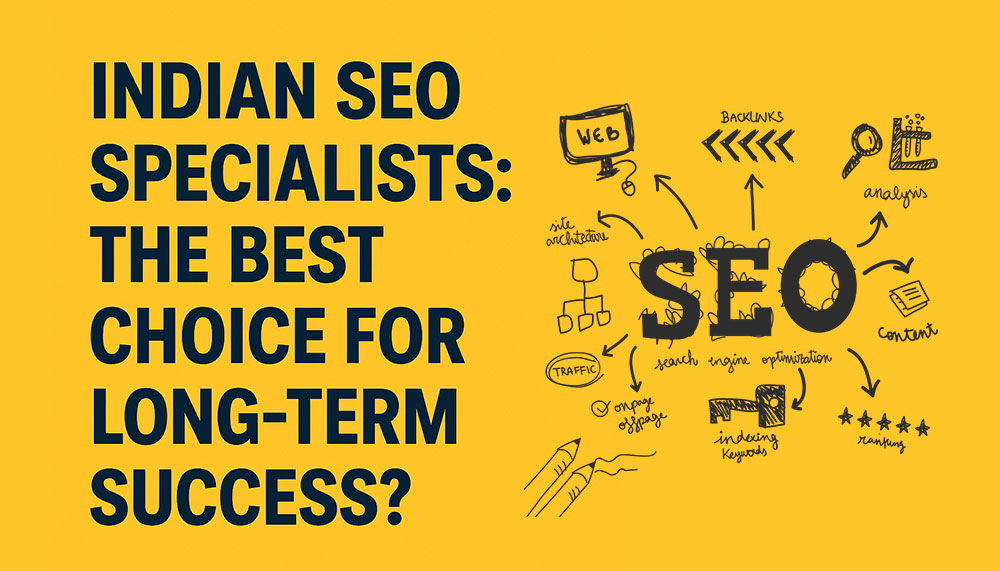
Indian SEO Specialists: The Best Choice for Long-Term Success?
Search engine optimization is no longer a “nice-to-have.” It is the backbone of sustainable digital growth. As competition increases across every industry, businesses are asking a crucial question:
Who should manage our SEO for the long run?
In recent years, Indian SEO specialists have emerged as a global favorite. From startups and e-commerce brands to enterprise companies and agencies abroad, more organizations are choosing to work with an SEO company in India or directly hire an SEO expert in India.
But is this choice truly the best for long-term success?
This article takes a deep, honest, humanized look at why Indian SEO specialists dominate the global SEO ecosystem, how they work, what makes them effective over the long term, and what businesses should realistically expect when partnering with them.
The Global SEO Landscape Has Changed
SEO today is vastly different from what it was even five years ago.
Algorithms evolve constantly. Search intent is more complex. Users demand better experiences. Content must demonstrate expertise and trust. Technical SEO has become deeply intertwined with website performance and user behavior.
In this environment, businesses no longer need someone who just “knows keywords.” They need strategic thinkers who understand:
- User psychology
- Search intent and semantic relevance
- Technical site architecture
- Content quality and authority
- Conversion and lead generation
This is exactly where Indian SEO specialists have carved out a powerful position.
Why Indian SEO Specialists Are in High Demand
The rise of India as a global SEO hub did not happen by accident. It is the result of multiple structural and cultural advantages that support long-term SEO success.
1. Deep Technical Expertise
India has one of the largest pools of technical talent in the world. Many SEO professionals here come from backgrounds in:
- Computer science
- Web development
- Data analysis
- Engineering
This technical foundation allows Indian specialists to go beyond surface-level SEO. They understand how search engines crawl, render, and index websites.
That’s why many businesses prefer working with a combined SEO company in India and website development company in India rather than splitting responsibilities across vendors.
2. Experience Across Multiple Industries
Indian SEO specialists often work with clients from multiple countries and industries simultaneously. It is common for one specialist to handle projects in:
- E-commerce
- B2B services
- SaaS platforms
- Healthcare
- Real estate
- Local service businesses
This exposure builds pattern recognition. Specialists quickly identify what works, what fails, and what scales.
Over time, this cross-industry experience becomes a massive advantage for long-term SEO strategy.
3. Cost Efficiency Without Cutting Corners
One of the most obvious reasons companies choose Indian SEO professionals is cost efficiency.
But here’s the important distinction:
Lower cost does not mean lower quality.
Due to differences in operational costs, an SEO expert in India can often deliver the same—or better—output than counterparts in Western markets, at a fraction of the cost.
This allows businesses to:
- Invest in long-term SEO instead of short campaigns
- Scale content production consistently
- Run continuous technical improvements
- Maintain SEO momentum even during slow quarters
SEO is a marathon. Indian specialists make it financially viable to stay in the race.
How Indian SEO Specialists Approach Long-Term SEO
Short-term SEO tactics rarely survive algorithm updates. Indian specialists who succeed globally focus on sustainability rather than shortcuts.
1. Strong Emphasis on Technical SEO
Technical SEO is often neglected by inexperienced marketers. Indian professionals treat it as a foundation.
This includes:
- Site speed optimization
- Mobile-first performance
- Clean URL structures
- Indexation control
- Schema markup implementation
- Core Web Vitals optimization
Because many SEO specialists work closely with a web development company in India, technical fixes are implemented faster and more accurately.
2. Content Built Around Search Intent
Modern SEO is not about stuffing keywords. It is about understanding why users search.
Indian SEO professionals excel at building content strategies based on:
- Informational intent
- Commercial intent
- Transactional intent
- Navigational intent
This approach leads to content that ranks longer, attracts qualified traffic, and supports lead generation instead of vanity metrics.
3. Structured Internal Linking and Topic Clusters
One of the most underutilized SEO techniques is internal linking.
Indian specialists use:
- Topic clusters
- Pillar pages
- Semantic linking structures
This helps search engines understand topical authority while improving user navigation and time on site.
It is one of the reasons SEO managed by experienced teams ages well instead of collapsing after updates.
The Role of Indian SEO Specialists in Lead Generation
SEO success is meaningless if it does not contribute to business growth.
Modern Indian SEO specialists work closely with conversion optimization and lead funnels.
SEO Meets Conversion Strategy
Instead of focusing only on rankings, they analyze:
- User behavior
- Landing page performance
- Form completion rates
- CTA effectiveness
This integrated approach ensures SEO traffic converts into leads and revenue.
That is why many businesses see Indian SEO teams collaborating seamlessly with:
- Web design agencies
- UX teams
- Sales teams
SEO Company in India vs Hiring In-House
Many businesses struggle with the decision between building an internal SEO team or outsourcing to an SEO company in India.
Advantages of Indian SEO Agencies
- Access to a full team (technical, content, outreach)
- Lower cost compared to in-house salaries
- Faster execution
- Experience across multiple markets
- Scalability
When In-House Makes Sense
- Large enterprises with complex internal workflows
- Highly regulated industries
- Need for real-time internal coordination
For most small and mid-sized businesses, outsourcing to India offers better long-term ROI.
Challenges to Be Aware Of
No SEO partnership is perfect. Businesses should be aware of potential challenges and how to mitigate them.
1. Communication Gaps
Time zone differences can slow feedback loops.
Solution:
- Clear reporting schedules
- Defined communication channels
- Weekly or bi-weekly check-ins
2. Over-Promising Agencies
Some agencies promise instant rankings.
Red flags include:
- Guaranteed #1 positions
- Unrealistic timelines
- Lack of transparency
Reputable Indian SEO specialists focus on steady, measurable growth.
3. One-Size-Fits-All Strategies
SEO must be customized.
A trustworthy SEO expert in India will:
- Audit your business model
- Understand your audience
- Align SEO goals with revenue goals
How to Choose the Right Indian SEO Specialist
The difference between success and frustration often lies in selection.
What to Look For
- Clear process documentation
- Case studies with long-term results
- Strong technical understanding
- Content quality over quantity
- Transparent reporting
Questions to Ask
- How do you handle algorithm updates?
- What metrics do you prioritize?
- How do you approach content planning?
- How do you measure SEO ROI?
Indian SEO Specialists and the Future of SEO
SEO is moving toward:
- AI-assisted workflows
- Experience-based ranking signals
- Entity-based search
- Brand authority over keyword manipulation
Indian SEO professionals are well-positioned to adapt because of:
- Strong technical adaptability
- Experience with automation tools
- Continuous learning culture
Many are already integrating AI into content research, technical audits, and performance forecasting.
Final Verdict: Are Indian SEO Specialists the Best Choice for Long-Term Success?
For most businesses, the answer is yes.
Indian SEO specialists offer:
- Technical depth
- Strategic thinking
- Cost efficiency
- Long-term mindset
- Scalable execution
When chosen carefully, a partnership with an SEO company in India or a skilled SEO expert in India becomes a growth asset—not an expense.
SEO is not about quick wins. It is about building digital equity over time.
And for businesses willing to commit to the long game, Indian SEO specialists continue to prove that they are not just a good option — they are often the smartest one.