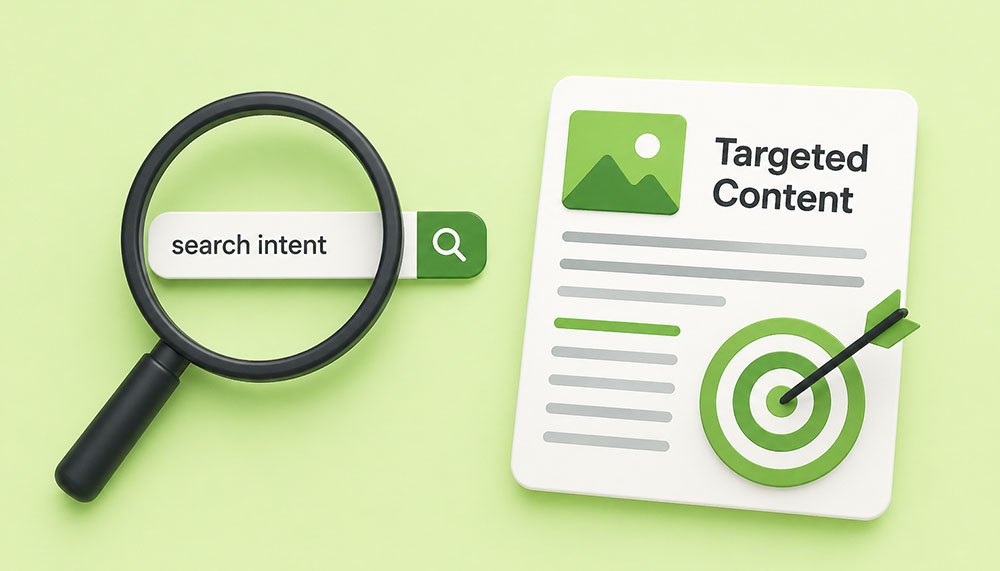
In digital marketing, creating content without understanding what users truly want is like sailing without a compass. Businesses often publish blogs, landing pages, and service pages hoping to attract traffic, but traffic alone does not guarantee leads or conversions. What matters most is attracting the right audience with the right message at the right stage of their journey. This is where search intent data becomes one of the most valuable tools in modern SEO.
Search intent refers to the reason behind a user’s search query. When someone types a keyword into Google, they usually have a specific goal. They may want to learn something, compare options, find a business, or make a purchase. If your content aligns with that purpose, search engines are more likely to rank your page, and users are more likely to engage with it.
For businesses competing online, especially service providers such as an SEO company in India, understanding search intent can help create content that attracts qualified visitors and converts them into customers. Instead of producing generic content, brands can build pages that answer precise needs and solve real problems.
This guide explains how to use search intent data to create targeted content that ranks well, builds trust, and drives results.
What Is Search Intent?
Search intent, sometimes called user intent, is the purpose behind an online search. Every query entered into Google reflects a need. Search engines analyze behavior, context, and language patterns to deliver the most relevant results.
For example:
- “What is local SEO?” – The user wants information.
- “Best SEO tools for agencies” – The user wants comparisons.
- “Affordable SEO services near me” – The user is considering a purchase.
- “Contact SEO company in India” – The user is ready to take action.
When you understand intent, you stop chasing keywords blindly and start creating meaningful content.
Why Search Intent Matters for SEO
Search engines are designed to deliver the most relevant and useful results for every query. Their goal is not simply to match keywords, but to understand what the user truly wants and present pages that best satisfy that need. This is why search intent has become one of the most important factors in modern SEO.
If your page closely matches what users expect to see when they search, it has a much stronger chance of ranking well. On the other hand, even a technically optimized website with strong backlinks can struggle if the content does not align with user intent.
For example, if someone searches for “best SEO tools” and your page is a hard-selling service page instead of a comparison guide, users may leave quickly. Search engines notice these signals and may reduce your rankings over time.
Intent alignment helps search engines trust that your content deserves visibility because it solves the problem behind the search.
Benefits of Using Search Intent Data
Higher Rankings in Search Results
When your content matches the purpose behind a keyword, Google is more likely to rank it above pages that only target the phrase without satisfying the user. Relevant pages often outperform keyword-stuffed content.
Lower Bounce Rates
If visitors land on a page that immediately answers their question or meets their need, they are more likely to stay rather than return to search results. This creates stronger engagement signals.
Longer Time on Page
Users spend more time reading content that feels useful and relevant. This can improve user experience metrics and create more opportunities for conversions.
Improved Click-Through Rates
Titles and descriptions that clearly reflect search intent attract more clicks. Users are more likely to choose a result that appears to match exactly what they are looking for.
Better Lead Quality
Intent-focused SEO attracts visitors who are genuinely interested in your product or service. This means fewer unqualified clicks and more meaningful inquiries.
Higher Conversions
When the right audience lands on the right page at the right stage of the buying journey, conversions naturally improve. Transactional users convert faster when pages meet their expectations.
More Effective Content Strategy
Understanding intent helps businesses create smarter content instead of publishing random topics. Every page can be mapped to awareness, consideration, or decision stages.
Competitive Advantage
Many websites still focus only on keyword volume and content quantity. Businesses that focus on intent often outperform competitors producing large volumes of low-value content because their pages are more useful, targeted, and conversion-driven.
In today’s SEO landscape, relevance wins over volume. Search intent helps brands build content that not only ranks, but also drives real business results.
The Four Main Types of Search Intent
Understanding search intent becomes easier when it is divided into clear categories. While some keywords may overlap, most searches fall into four primary intent types. Each type represents a different stage of the user journey and requires a different style of content.
When you identify the correct intent behind a keyword, you can create pages that satisfy users faster, improve rankings, and increase conversions.
1. Informational Intent
Informational intent occurs when users want to learn, understand, or solve a problem. They are searching for knowledge rather than trying to buy something immediately.
These users may be beginners exploring a topic, professionals researching solutions, or potential customers at the awareness stage of the buying journey.
Examples:
- How does SEO work?
- What is keyword research?
- Benefits of content marketing
- How to improve website traffic
- What is local SEO?
What users expect:
- Clear explanations
- Step-by-step guidance
- Useful examples
- Actionable tips
- Trustworthy information
Best content formats:
- Blog posts
- Long-form guides
- Tutorials
- FAQs
- Explainer videos
- Checklists
SEO Tip: Focus on answering the main question quickly, then expand with deeper insights and related questions.
2. Navigational Intent
Navigational intent happens when users already know the brand, website, or platform they want to visit. They use search engines as a shortcut rather than typing the full URL.
These searches usually indicate brand awareness and familiarity.
Examples:
- Google Search Console login
- HubSpot blog
- OpenAI ChatGPT
- Facebook business manager
- Canva homepage
What users expect:
- The official website
- Login or dashboard pages
- Specific tools or sections
- Fast access to trusted destinations
Best content formats:
- Homepage
- Brand pages
- Support pages
- Login pages
- Help center pages
SEO Tip: Ensure your branded pages are optimized with clear titles, descriptions, and structured navigation so users can find the correct destination quickly.
3. Commercial Investigation Intent
Commercial investigation intent appears when users are considering a purchase but need more information before deciding. They are comparing providers, reading reviews, evaluating pricing, or looking for the best option.
This is a highly valuable stage because users are close to converting.
Examples:
- Best SEO agency for ecommerce
- Top digital marketing companies
- SEO pricing comparison
- Best CRM software for startups
- SEO freelancer vs agency
What users expect:
- Comparisons
- Pros and cons
- Pricing details
- Testimonials
- Case studies
- Proof of results
Best content formats:
- Comparison pages
- Case studies
- Service pages
- Reviews
- Listicles
- Buyer guides
SEO Tip: Build trust with data, reviews, examples, and transparent information. Users at this stage want confidence before taking action.
4. Transactional Intent
Transactional intent means the user is ready to act now. They may want to buy, book, request a quote, schedule a call, or contact a service provider.
These searches often have the highest conversion potential because the decision stage is already near.
Examples:
- Hire SEO expert now
- Book SEO consultation
- SEO company in India
- Buy email marketing software
- Request website audit
What users expect:
- Clear service details
- Pricing or package information
- Strong trust signals
- Simple contact options
- Fast-loading pages
- Easy calls-to-action
Best content formats:
- Landing pages
- Pricing pages
- Contact pages
- Lead generation pages
- Consultation booking pages
SEO Tip: Remove friction. Make it easy for users to contact you, request a quote, or make a purchase immediately.
Why These Four Types Matter
Every keyword usually reflects one of these intent categories. If you match the wrong content type to the keyword, rankings and conversions can suffer.
For example:
- Using a sales page for an informational keyword may increase bounce rate.
- Using a blog post for a transactional keyword may lose leads.
- Using weak comparison content for commercial queries may reduce trust.
When businesses align content with intent, they create a smoother journey from discovery to decision.
How to Collect Search Intent Data
Creating targeted content begins with understanding what users truly want when they search. Search intent data helps uncover the purpose behind keywords so you can build pages that match user expectations and improve SEO performance.
The good news is that search intent can be identified using a combination of search engine analysis, keyword tools, user behavior data, and real customer insights. When these sources are combined, they provide a clear picture of what type of content should be created.
1. Analyze Google Search Results
The easiest and often most accurate way to understand search intent is to manually search the keyword in Google and study the top-ranking results. Search engines have already analyzed user behavior and determined which pages best satisfy that query.
By reviewing the first page results, you can identify strong intent patterns quickly.
Ask yourself:
- Are the top results blog posts, landing pages, product pages, or service pages?
- Do pages focus on education, comparison, or direct conversion?
- Are videos ranking in the results?
- Are listicles such as “Top 10” or “Best Tools” common?
- What questions appear in featured snippets?
- Are local businesses appearing in map packs?
- Do results come from brands, publishers, or ecommerce stores?
Example:
If you search “best SEO tools,” and most top results are comparison blogs, the dominant intent is commercial investigation. If you search “hire SEO expert,” and service pages dominate, the intent is transactional.
Google’s search results often reveal intent more clearly than any software tool because rankings reflect real user behavior.
2. Use Keyword Research Tools
Keyword research platforms such as Ahrefs, SEMrush, Ubersuggest, Moz, and Google Keyword Planner help uncover related keywords, search volume, and valuable modifiers that indicate intent.
These tools are especially useful for finding secondary keywords and hidden opportunities around a core topic.
Examples of intent modifiers:
- Informational: how, why, guide, tutorial, tips, examples
- Commercial: best, top, compare, review, alternatives
- Transactional: buy, hire, pricing, quote, order, book
- Navigational: brand names, company names, platform names
Example:
- How to do SEO = informational
- Best SEO agency for startups = commercial
- SEO pricing packages = transactional
- SEMrush login = navigational
These patterns help you understand not only what users search, but what they expect next.
3. Review Search Console Data
Google Search Console is one of the most valuable free sources of intent data because it shows the exact queries users already use to find your website.
This data often reveals opportunities that businesses overlook. You may discover pages ranking for unexpected keywords, informational searches reaching service pages, or pages getting impressions but low clicks.
What to review:
- Queries with high impressions but low click-through rate
- Keywords sending traffic to the wrong page
- Pages ranking on page two or three
- Branded vs non-branded queries
- Informational queries with conversion potential
Example:
If a service page ranks for “what is local SEO,” it may need educational content added or a dedicated guide page created.
Search Console helps align your existing pages with real user behavior.
4. Analyze Customer Questions
Some of the best search intent insights come directly from your audience. Sales calls, inquiry forms, emails, WhatsApp chats, live chat transcripts, and support tickets reveal the real language people use when looking for solutions.
Unlike SEO tools, customer conversations often expose emotional intent, pain points, urgency, and objections.
Examples:
- How long does SEO take to work?
- Do you offer affordable monthly plans?
- Can you help a local business rank on Google Maps?
- What makes your agency different?
- How soon can we start?
These questions can become blog topics, FAQs, service page sections, and lead magnets.
Often, customer language is more powerful than tool-generated keyword suggestions because it reflects real buying intent.
5. Monitor Competitor Content
Your competitors can reveal what search engines currently reward in your niche. By studying their top-performing pages, you can understand how they match search intent and where gaps exist.
Look for patterns such as:
- Which keywords they rank for
- What content types perform best
- How long their pages are
- Whether they use comparisons, videos, or case studies
- How they structure headings and calls-to-action
- What topics they have missed completely
Example:
If multiple competitors rank with pricing pages for a keyword and you only have blogs, it may indicate stronger transactional intent than expected.
Competitor research helps you create better content rather than copying blindly.
Additional Ways to Discover Search Intent
While keyword tools and Google search results are powerful starting points, there are several additional methods that can help uncover deeper user intent. These sources often reveal hidden questions, emotional triggers, objections, and search behavior that standard SEO tools may miss.
Using multiple data sources gives you a clearer picture of what users really want and helps you create content that is more accurate, useful, and conversion-focused.
Use Google Autocomplete
Google Autocomplete suggestions appear when users begin typing a search query. These predictions are based on real searches made by users and can provide valuable clues about what people commonly want to know next.
Autocomplete is especially useful for identifying long-tail keyword opportunities and variations in search intent.
Example:
- SEO company
- SEO company pricing
- SEO company near me
- SEO company for small business
- SEO company in India
Each variation reflects a different type of intent such as local, transactional, or comparison-based searches.
Use these suggestions to create dedicated pages, FAQs, or blog topics that directly answer what users are searching for.
Study “People Also Ask”
The “People Also Ask” section in Google search results contains related questions users frequently ask around a topic. These questions are extremely valuable because they show follow-up intent and deeper informational needs.
When users search one keyword, they often need additional answers before taking action. People Also Ask helps reveal that journey.
Example for SEO queries:
- How long does SEO take?
- Is SEO worth it for small businesses?
- How much does SEO cost?
- What is the difference between SEO and PPC?
These questions can be used as subheadings, FAQ sections, blog topics, or supporting content clusters.
Review Analytics Behavior
Your website analytics can reveal whether your content currently matches user intent. If visitors land on a page and leave quickly, it may indicate that the content is not meeting expectations.
Behavioral metrics provide real-world feedback on how users respond after clicking through to your site.
Signals to monitor:
- High bounce rates
- Low average engagement time
- Poor scroll depth
- Low click-through on calls-to-action
- Weak conversion rates
- High exit rates on important pages
If a page receives traffic but performs poorly, review whether the keyword intent and page purpose are aligned.
Check Social Media Discussions
Communities on Reddit, Quora, LinkedIn, Facebook groups, and industry forums can reveal real conversations happening around your niche. These discussions often expose problems, frustrations, buying signals, and common questions in natural language.
Unlike keyword tools, social discussions often show emotional context and urgency.
Examples:
- Why is my website traffic suddenly dropping?
- Can SEO help a new business?
- How do I choose the right agency?
- Is monthly SEO worth paying for?
This language can help you create relatable content that connects directly with user concerns.
Turn Data into Action
Collecting search intent data is only the first step. Real SEO success comes from applying those insights to create the right content format for each type of query.
Once you understand what users want, match the intent with the correct page type.
Guides for Informational Queries
Create educational blog posts, tutorials, how-to articles, checklists, and beginner guides for users who are researching or learning.
Comparison Pages for Commercial Searches
Use reviews, alternatives pages, pricing comparisons, and “best of” lists for users evaluating options before making a decision.
Service Pages for Transactional Terms
Build optimized landing pages, pricing pages, quote request pages, and consultation pages for users ready to hire or buy.
Brand Pages for Navigational Searches
Ensure homepage, about pages, contact pages, login pages, and branded service pages are easy to find and fully optimized.
Why This Matters
The more accurately you understand intent, the more targeted and effective your SEO content becomes. Instead of guessing what users need, you create pages based on real behavior and real demand.
This leads to stronger rankings, better engagement, higher-quality leads, and more conversions over time.
How to Map Search Intent to the Buyer Journey
Search intent becomes far more valuable when it is connected to the buyer journey. Not every visitor is ready to purchase immediately. Some users are only beginning to understand their problem, while others are actively comparing providers or ready to make a decision today.
When businesses align content with each stage of the funnel, they create a smoother path from discovery to conversion. Instead of pushing the same message to every visitor, you can deliver the right content at the right moment.
The buyer journey is commonly divided into three main stages:
- Top of Funnel (Awareness)
- Middle of Funnel (Consideration)
- Bottom of Funnel (Decision)
Each stage reflects a different level of intent and requires a different type of content.
Top of Funnel (Awareness)
At the awareness stage, users are learning, researching, and identifying problems. They may know something is wrong, but they are not yet sure of the best solution. These searches are usually informational in nature.
Users at this stage are asking questions, looking for explanations, and trying to understand opportunities or challenges.
Examples:
- Why is my website traffic dropping?
- What is technical SEO?
- How does SEO work?
- Why am I not ranking on Google?
- What affects website speed?
What users need:
- Clear explanations
- Problem diagnosis
- Educational guidance
- Industry trends
- Actionable beginner advice
Create:
- Educational blogs
- Industry insights
- Beginner guides
- How-to articles
- Checklists
- Explainer videos
Goal: Build trust, educate the audience, and introduce your brand as a helpful authority.
SEO Tip: Use internal links from awareness content to deeper comparison or service pages so users can continue their journey naturally.
Middle of Funnel (Consideration)
At the consideration stage, users understand their problem and are now exploring possible solutions. They are comparing providers, services, strategies, and pricing models.
These searches usually show commercial investigation intent. Users are interested, but they need proof and confidence before choosing.
Examples:
- SEO freelancer vs agency
- Best SEO company in India
- SEO services for ecommerce brands
- How much does SEO cost?
- Top digital marketing companies
What users need:
- Comparisons
- Case studies
- Testimonials
- Service details
- Pricing guidance
- Proof of expertise
Create:
- Comparison pages
- Case studies
- Testimonials
- Service explainers
- Industry-specific landing pages
- FAQ pages
Goal: Differentiate your business, remove doubts, and show why your solution is the best fit.
SEO Tip: Use trust signals such as client logos, reviews, before-and-after results, and measurable outcomes.
Bottom of Funnel (Decision)
At the decision stage, users are ready to contact, purchase, request a quote, or schedule a consultation. These searches usually have strong transactional intent and high conversion potential.
Users already know what they need. They now want the fastest and safest path to action.
Examples:
- Hire SEO company in India
- SEO pricing packages
- Book SEO consultation
- Request SEO audit
- Affordable monthly SEO plans
What users need:
- Clear service offers
- Transparent pricing
- Simple contact methods
- Strong trust signals
- Fast-loading pages
- Clear next steps
Create:
- Landing pages
- Consultation pages
- Pricing pages
- Strong CTA pages
- Contact forms
- Quote request pages
Goal: Remove friction and make conversion as easy as possible.
SEO Tip: Use clear calls-to-action such as “Book a Free Call,” “Get a Quote,” or “Start Today.”
Why Funnel Mapping Matters
Many businesses lose leads because they show the wrong content to the wrong audience. Sending awareness-stage users directly to aggressive sales pages can reduce trust. Sending ready-to-buy users to long educational blogs can slow conversions.
Mapping search intent to funnel stages helps you meet users where they are.
- Awareness content builds trust
- Consideration content builds confidence
- Decision content drives action
Build a Full Content Ecosystem
Instead of relying on one page, create connected content across the entire buyer journey.
Example for an SEO business:
- Top Funnel: What is local SEO?
- Middle Funnel: Local SEO freelancer vs agency
- Bottom Funnel: Hire local SEO company in India
This structure attracts users at every stage and increases the chance of long-term conversions.
Final Insight
The most successful SEO strategies do not just target keywords. They guide people from curiosity to confidence to conversion. When search intent is mapped to the buyer journey, content becomes more strategic, more relevant, and more profitable.
How to Create Targeted Content Using Search Intent Data
Once you understand what users want when they search, the next step is turning that insight into content that ranks, engages, and converts. Search intent data helps you move beyond generic keyword targeting and create pages designed for specific user needs.
Targeted content performs better because it matches expectations. When users find exactly what they were hoping for, they stay longer, trust the brand more, and are more likely to take action.
Instead of creating one-size-fits-all pages, build content based on the dominant intent behind each keyword.
1. Choose One Primary Intent Per Page
Every page should have one clear purpose. Trying to target multiple conflicting intents on the same page can confuse both users and search engines.
For example, a page that tries to educate readers while aggressively selling services may fail at both goals. Visitors looking for guidance may feel pushed, while ready-to-buy users may have to dig through unnecessary information.
Keep the page focused:
- Blog post = Informational
- Service page = Transactional
- Comparison article = Commercial
- Homepage = Navigational / Brand trust
Best Practice: If a keyword has mixed intent, create separate supporting pages rather than forcing everything into one page.
2. Match the Format Users Expect
Search engines reward pages that satisfy users in the format they prefer. If the top-ranking results are long guides, users likely want in-depth education. If service pages dominate results, users are probably looking to hire or contact a provider.
Always study the search results before creating content.
Examples:
- If users expect a guide, create a stronger and more useful guide.
- If users expect comparisons, create a better comparison page.
- If users expect pricing details, publish transparent pricing content.
- If users expect service pages, do not publish a blog instead.
Tip: Matching intent is often more important than word count.
3. Use Intent-Based Headlines
Your headline is one of the first things users see in search results. It should instantly show that your page matches their goal.
Strong intent-based headlines improve click-through rates and help users feel confident they are clicking the right result.
Examples:
- How to Improve Organic Rankings in 2026
- Best SEO Strategies for Ecommerce Stores
- Affordable SEO Company in India for Small Businesses
- SEO Pricing Guide for Startups
- Hire an SEO Expert for Local Business Growth
Headline Tips:
- Use action words
- Be specific
- Reflect the intent clearly
- Include numbers or years where relevant
- Avoid clickbait that misleads users
4. Solve the Core Problem Fast
Modern users want quick answers. If they click your page and cannot find value immediately, they may return to search results.
Start by addressing the main problem near the top of the page rather than using long generic introductions.
Examples:
- If the query is “How to rank on Google Maps,” begin with the key ranking steps.
- If the query is “SEO pricing packages,” show package ranges early.
- If the query is “Best SEO agency,” explain evaluation criteria immediately.
Tip: Use summaries, quick answers, and clear headings so users can scan efficiently.
5. Add Supporting Elements
Strong content is not just text. Supporting elements improve trust, readability, and conversion potential.
Useful additions include:
- FAQs
- Statistics
- Case studies
- Real examples
- Screenshots
- Charts or visuals
- Testimonials
- Clear CTAs
These elements help users feel informed and confident while increasing page quality signals.
Using Search Intent for Service Businesses
Service businesses can benefit significantly from intent-focused SEO because users search with different needs at different stages of the buying journey.
Instead of relying on one generic service page, create multiple targeted pages for different intents.
For example, an SEO company in India can create:
- What does an SEO agency do? – Informational
- SEO agency vs in-house team – Commercial
- SEO pricing in India – Commercial / Transactional
- Hire SEO company in India – Transactional
- Best SEO services for ecommerce brands – Commercial
This creates a complete content ecosystem that attracts users from awareness to conversion.
Why This Works
- Informational pages build trust
- Comparison pages build confidence
- Transactional pages generate leads
- Internal links connect the journey
Examples of Intent-Based Content Strategy
Keyword: Local SEO Services
Likely Intent: Transactional
Users searching this term are usually looking to hire a provider or request services.
Create:
- Dedicated service page
- Pricing overview
- Case study
- Local results examples
- Contact CTA
Keyword: How to Rank on Google Maps
Likely Intent: Informational
Users want to learn the process before hiring anyone.
Create:
- Step-by-step guide
- Checklist
- Video tutorial
- Common mistakes section
- Optional consultation CTA
Keyword: Best SEO Company in India
Likely Intent: Commercial Investigation
Users are comparing providers and looking for proof.
Create:
- Authority page with proof
- Awards and certifications
- Testimonials
- Results and case studies
- Industry expertise sections
- Consultation CTA
Build Content Around Real Needs
The best SEO content is not built around keywords alone. It is built around user expectations, motivations, and readiness to act.
When you create pages that solve the right problem in the right format, rankings improve naturally and conversions become easier.
Final Insight
Search intent data turns content creation from guesswork into strategy. Instead of asking “What should I write about?” ask “What does the user need right now?”
That shift is what creates targeted content that drives real business growth.
How to Optimize Existing Content with Intent Data
You don’t always need to create brand-new pages to improve your SEO performance. In many cases, your existing content already has authority, backlinks, and rankings—but it may not fully align with what users expect when they search. By using search intent data, you can refine underperforming pages, improve user engagement, and increase conversions without starting from scratch.
Updating old content is often faster and more cost-effective than producing new articles. It also helps preserve the SEO value that existing pages have already built over time.
Check Pages with High Impressions but Low Clicks
If a page receives many impressions in Google Search Console but has a low click-through rate, it usually means users are seeing your page in results but choosing another option. This often happens when your title tag or meta description does not match search intent.
For example, if users search for a guide and your title sounds overly promotional, they may skip it. If they want a service provider and your title appears too informational, they may click a competitor instead.
To improve these pages:
- Rewrite titles to match user expectations
- Use action-driven and benefit-focused language
- Add current year where relevant
- Make meta descriptions clearer and more compelling
- Match the tone of top-ranking competitors
Check High Traffic but Low Conversion Pages
Some pages bring plenty of traffic but generate few leads or sales. This is often a sign that intent and page purpose are mismatched.
For instance, an informational blog may attract visitors researching a topic, but if it pushes aggressive sales messaging too early, users may leave. Similarly, a service page ranking for educational keywords may attract the wrong audience.
To improve these pages:
- Identify whether the traffic is informational, commercial, or transactional
- Adjust calls-to-action based on funnel stage
- Add trust signals such as reviews or case studies
- Offer downloadable guides or consultations
- Create smoother pathways to service pages
Rewrite Headers and Structure
Many older pages rank but fail to satisfy modern search expectations. Updating headings and page structure can significantly improve readability and relevance.
Search engines and users both rely on headers to understand content quickly. If your structure is weak, users may bounce before finding answers.
Best practices include:
- Use clear H2 and H3 headings based on common questions
- Answer the main query near the top of the page
- Break large text blocks into readable sections
- Add bullet points, tables, or step lists
- Improve mobile readability with shorter paragraphs
Add Internal Links by Funnel Stage
Internal linking helps guide users naturally from one stage of the buyer journey to another. Someone reading an informational article may later need a comparison guide, then a pricing or contact page.
Examples:
- Blog post → Case study
- Beginner guide → Service page
- Comparison article → Consultation page
- FAQ page → Contact page
Well-placed internal links improve user experience, reduce bounce rate, and help distribute authority across your website.
Common Mistakes to Avoid
1. Targeting Keywords Without Intent
Many marketers focus only on keyword volume. High-volume keywords may bring traffic, but if the intent is wrong, that traffic may never convert.
Always ask: What does the user want when searching this phrase?
2. Forcing Sales on Informational Queries
If someone searches for advice or education, they are not always ready to buy immediately. Overly sales-heavy pages can create friction.
Provide value first, build trust, and guide users naturally toward the next step.
3. Ignoring SERP Changes
Search intent can shift over time. A keyword that once showed blogs may now show product pages or videos. Google constantly adapts results based on user behavior.
Review target keywords regularly to ensure your content format still matches current results.
4. Creating Duplicate Pages for Similar Intent
Publishing multiple pages targeting nearly identical intent can confuse search engines and split rankings. This is known as keyword cannibalization.
Instead, create one strong page or consolidate overlapping content.
5. Overusing Keywords
Repeating keywords unnaturally no longer helps rankings. Search engines now understand context, synonyms, and related terms.
Focus on clarity, depth, and usefulness rather than keyword density.
Advanced Tips for Better Results
Use Semantic Keywords
Semantic keywords are related words and phrases that support the main topic. They help search engines understand context while making content more natural.
For example, an article about SEO may also include terms like rankings, backlinks, organic traffic, search visibility, and keyword strategy.
Study “People Also Ask”
The “People Also Ask” section in Google reveals common follow-up questions users have. These questions provide valuable insight into deeper intent.
Use them to build subheadings, FAQ sections, and supporting content.
Segment by Device
User behavior often changes by device. Mobile users may want quick answers, fast-loading pages, and simple navigation. Desktop users may spend longer comparing options.
Optimize page layout, CTAs, and formatting based on device behavior.
Use Analytics Signals
Metrics such as scroll depth, bounce rate, average engagement time, form submissions, and assisted conversions can reveal whether your content matches intent.
If users leave quickly, the page may not be meeting expectations.
Refresh Old Content Regularly
Search trends, language, and user needs evolve constantly. Updating old content with fresh statistics, examples, visuals, and improved structure can revive rankings.
Even small updates can make a major difference over time.
Intent-based optimization is not a one-time task. It is an ongoing process of understanding user behavior, refining content, and adapting to changing search patterns.
Why Search Intent Is the Future of SEO
Modern search engines use AI, natural language processing, and user behavior data. They understand context more than ever before. This means keyword stuffing and outdated tactics are losing value.
Brands that understand audience motivation will win. Search intent bridges the gap between SEO and customer psychology. It transforms content from mere traffic bait into a conversion tool.
Final Thoughts
If you want stronger rankings, better engagement, and more qualified leads, search intent should be at the center of your content strategy. Instead of asking, “What keyword should I target?” start asking, “What does the user truly want?”
When you answer that question effectively, rankings often follow naturally.
Whether you run an ecommerce store, local business, SaaS brand, or an SEO company in India, intent-driven content helps you reach the right people at the right moment.
Focus on understanding users, matching their expectations, and guiding them to the next step. That is how targeted content creates lasting SEO success.



Related items

Baymard Institute’s 2026 benchmark found that 52% of desktop sites and 62% of mobile sites
Depending on which 2026 survey you read, somewhere between 34% and 77% of US shoppers have
Ahrefs studied one million random web pages and found that only 1.74% of newly published p
