
There is a point in the growth of almost every successful online business when traditional SEO starts to reach its limits. A company may have a strong website, a well-researched keyword strategy, useful blog content, technically sound pages, and a capable SEO team, yet there are still thousands of highly relevant searches that remain untouched. The problem is not always a lack of ideas. More often, it is a problem of scale.
Imagine a real-estate platform operating across hundreds of cities and thousands of neighborhoods. It may want to create useful pages for property buyers searching for homes in Delhi, apartments in Gurgaon, luxury properties in Mumbai, flats for sale in Noida, rental properties in Bangalore, and hundreds of other combinations. Creating every page manually would take an enormous amount of time. Even if a team could produce hundreds of pages every month, the process would quickly become expensive, difficult to maintain, and increasingly repetitive.
This is where programmatic SEO changes the equation.
Programmatic SEO allows businesses to create large numbers of search-engine-optimized pages using structured data, reusable templates, intelligent content systems, and carefully designed website architecture. Instead of treating every page as a completely separate editorial project, businesses create a scalable system capable of producing genuinely useful pages for specific searches.
When implemented correctly, programmatic SEO is not simply a method for producing thousands of pages. It is a way of building an SEO infrastructure that can grow alongside a business.
A well-designed programmatic SEO system can take information from a database, combine it with carefully developed templates, add unique contextual information, apply appropriate metadata, generate internal links, create relevant page structures, and publish thousands of landing pages without requiring an SEO professional to manually build each page.
However, there is an important distinction between scalable SEO and mass-produced SEO spam. Simply creating thousands of pages by replacing a city name or keyword inside the same paragraph is not a sustainable strategy. Search engines have become increasingly sophisticated at recognizing pages that provide little independent value. Users are equally good at recognizing them. If ten thousand pages look almost identical and offer nothing useful beyond a changed keyword, the website may end up with thousands of URLs but very little meaningful organic visibility.
The real power of programmatic SEO comes from combining automation with quality.
For businesses working with an experienced SEO company in India or a professional SEO agency, programmatic SEO can become one of the most powerful ways to expand organic search coverage. It can help businesses target location-based searches, service variations, product combinations, industry-specific queries, directories, comparison searches, marketplace queries, and many other search patterns that would be impractical to address manually.
This article explores how programmatic SEO works, why businesses need it, how scalable landing-page architectures are designed, how databases and templates work together, what makes programmatic pages genuinely valuable, what common mistakes businesses should avoid, and how companies can build a programmatic SEO strategy capable of supporting thousands or even millions of pages.
Understanding Programmatic SEO
Programmatic SEO can sound highly technical at first, but the underlying idea is relatively simple. Instead of manually creating every page on a website, a business creates a repeatable system that can generate pages based on structured information.
Consider a business directory containing information about thousands of companies. Each company may have a name, location, category, services, contact details, operating hours, description, ratings, and other attributes. Rather than manually designing an individual webpage for every company, the website can use a standard page template that pulls the relevant information from its database.
The same concept can be applied to SEO landing pages.
A website may have a database containing cities, neighbourhoods, services, industries, products, property types, destinations, or other entities. A page-generation system can combine these data points according to predefined rules and create relevant landing pages around them.
For example, an SEO agency serving businesses across India might have service data and location data that allow it to create genuinely useful pages such as website design company in Delhi, ecommerce development company in Mumbai, SEO services in Bangalore, WordPress development company in Hyderabad, and many other combinations.
The objective is not simply to create a page for every possible combination. The objective is to identify combinations that represent real user demand and then build useful pages around them.
This distinction is fundamental.
Programmatic SEO should be thought of as a system for matching structured user intent with structured business information. Automation is merely the mechanism that makes the system scalable.
Why Traditional SEO Eventually Runs Into a Scaling Problem
Traditional SEO often begins with a relatively straightforward process. An SEO team conducts keyword research, identifies important topics, creates a content brief, writes a page, optimizes the title and headings, adds internal links, publishes the page, and monitors its performance.
This works extremely well when a business has a manageable number of important topics.
Suppose a company needs twenty service pages. A content team can research and write twenty pages. If the company needs fifty pages, the project is still manageable. Even one hundred pages can be handled with sufficient resources.
The challenge appears when the opportunity contains thousands of closely related but individually valuable searches.
A real-estate platform might theoretically need pages for thousands of locations. A travel website might need destination pages for hundreds of cities combined with thousands of hotel or activity categories. A job portal may need pages for different combinations of job titles, locations, industries, experience levels, and employment types. An ecommerce marketplace may need pages for products, brands, categories, specifications, and combinations of filters.
Manually producing all of these pages becomes inefficient.
The problem is not only writing. Every page requires planning, formatting, publishing, optimization, linking, indexing, monitoring, updating, and maintenance. As the number of pages increases, the operational burden grows quickly.
This is where programmatic SEO provides leverage.
Instead of adding SEO pages one by one, a business can create a framework capable of generating many pages from the same underlying data architecture. The SEO team can then spend more time defining the strategy, improving templates, enriching the data, evaluating search intent, and monitoring quality.
In other words, programmatic SEO shifts SEO from a page-production model to a system-building model.
The Difference Between Programmatic SEO and Automatically Generated Spam
One of the biggest misconceptions about programmatic SEO is that it means generating thousands of pages automatically and filling them with AI-written or duplicated text.
That is not what successful programmatic SEO looks like.
A page can be technically unique while still being practically useless. Changing “Delhi” to “Mumbai” in an otherwise identical paragraph does not necessarily create a valuable Mumbai page. Similarly, replacing “apartments” with “villas” in a generic description does not automatically create a useful property page.
High-quality programmatic SEO requires meaningful differentiation.
A location page should contain information that is actually relevant to that location. A product page should contain meaningful product information. An industry page should address the specific needs of that industry. A service-location page should explain how the service applies in that particular market.
The page should answer a question the user genuinely has.
This is why the database behind a programmatic SEO system matters so much. The quality of the final pages can never consistently exceed the quality of the information feeding the system.
If the database contains rich, accurate, structured information, the website has the raw material needed to create useful pages. If the database contains only a list of city names and a generic paragraph, the resulting pages are likely to be thin regardless of how sophisticated the automation appears.
Where Programmatic SEO Works Best
Programmatic SEO is particularly effective when a business has a large number of entities or combinations that follow a predictable structure.
Location-based businesses are one of the clearest examples. A company may operate in dozens, hundreds, or thousands of locations and want to establish organic visibility for searches related to each market.
Directories are another natural fit. A directory may contain thousands of companies, professionals, restaurants, hotels, properties, schools, or other entities. Each entity can have its own optimized page populated from structured data.
Marketplaces can also benefit significantly. A marketplace may have tens of thousands of products or listings, each with attributes such as brand, category, price, specification, location, availability, and condition.
Job portals are another excellent example. Users may search for combinations such as software developer jobs in Delhi, digital marketing jobs in Mumbai, remote Python developer jobs, senior finance jobs, or entry-level marketing positions. The underlying database naturally contains the variables needed to create useful landing pages.
Travel websites can create destination pages, hotel pages, attraction pages, neighborhood pages, activity pages, and combinations of these entities.
Real-estate websites can create pages based on location, property type, price range, bedroom count, furnishing status, project type, developer, and other meaningful attributes.
The common thread is structured information combined with predictable search demand.
The Role of Search Intent in Programmatic SEO
Before creating a programmatic SEO architecture, a business needs to understand why people are searching for the pages it wants to create.
Search intent should determine the page structure, not simply the keyword.
For example, someone searching for “apartments for rent in Gurgaon” probably expects to see available apartments, neighbourhood information, price ranges, property details, and filters. A generic 700-word article about Gurgaon real estate would not satisfy the same intent as effectively.
Similarly, someone searching for “SEO company in India” may want to understand SEO services, compare agencies, review expertise, examine industries served, understand pricing considerations, and ultimately contact a provider. A page built around that intent should be structured accordingly.
Programmatic SEO becomes much stronger when the architecture mirrors the way users search.
The first question should therefore not be “How many pages can we generate?” It should be “Which distinct searches deserve their own useful experience?”
That question prevents one of the most common programmatic SEO mistakes: generating pages simply because a combination exists in a database.
Building the Database Behind a Programmatic SEO System
The database is the foundation of a scalable SEO architecture.
A website might have a locations table containing countries, states, cities, neighborhoods, postal regions, or other geographic entities. It might have a services table containing the products or services offered by the company. It could also have industries, product categories, property types, job categories, or other variables depending on the business model.
These entities can then be connected through relationships.
For example, a digital marketing company might maintain structured information about its services and locations. The service database could contain SEO, PPC, content marketing, website development, ecommerce development, and social media marketing. The location database could contain Delhi, Mumbai, Bangalore, Hyderabad, Chennai, Pune, Ahmedabad, and other cities.
But simply combining every service with every city would create an enormous number of URLs. Some combinations may have no meaningful search demand or business relevance.
A better system stores additional information such as target keyword, search volume, competition, business availability, service relevance, location relevance, unique content elements, page status, indexing priority, and canonical rules.
This allows the SEO system to make intelligent decisions about which pages should exist.
The database therefore becomes more than a content repository. It becomes part of the SEO decision-making infrastructure.
Creating the Page Template
Once the data architecture is established, the next major component is the page template.
A programmatic template defines the structure shared by a group of pages. It can contain a page title, introduction, service description, location information, relevant statistics, FAQs, related services, testimonials, internal links, calls to action, structured data, and other components.
The template provides consistency while the data provides differentiation.
For example, a location-service page might have a structure containing an introduction to the service in the target location, an explanation of relevant local requirements, available services, industries served, examples of work, local considerations, FAQs, and related locations.
The important point is that not every section has to be identical.
Some sections can be shared structurally while their content changes according to the database. Other sections can appear only when relevant information exists.
This creates a dynamic page experience rather than a simple mail-merge document.
How a Database-Backed Page Is Generated
Imagine a real-estate platform with 5,000 target locations.
Each location in the database might contain a location name, geographic coordinates, property inventory, average prices, popular neighbourhoods, property types, nearby landmarks, transportation information, local market trends, and available listings.
The programmatic page template can pull this information dynamically.
When a user visits a page for a specific location, the website retrieves the relevant information and assembles the page. The title references the location. The introduction discusses the local market. Property listings are drawn from that location. Neighborhood information is specific to the area. Internal links point to nearby locations and relevant property categories.
Although the page follows a common design system, its actual usefulness is derived from the underlying data.
At this point, programmatic SEO becomes much more than automated content generation. It becomes automated information architecture.
Why Unique Content Matters at Scale
One of the most difficult aspects of programmatic SEO is producing sufficient uniqueness without creating meaningless variations.
Uniqueness should not be measured only by whether sentences are technically different. The more important question is whether the page contains unique information, context, and value.
A location page can be unique because its listings, market statistics, neighborhoods, local regulations, transport information, and recommendations are different.
A product page can be unique because the specifications, compatibility information, images, pricing, reviews, and use cases are different.
An industry page can be unique because the challenges, terminology, workflows, regulations, and examples are different.
This is why businesses should invest in structured data rather than relying exclusively on automated text.
Data creates genuine differentiation.
Using AI Without Destroying Programmatic SEO Quality
Artificial intelligence can play a useful role in programmatic SEO, but it should not be treated as a shortcut for creating thousands of generic pages.
AI can help transform structured information into readable explanations. It can assist with summaries, FAQs, descriptions, comparisons, category introductions, metadata, and other editorial elements.
However, the AI layer should be controlled by the quality of the underlying information.
For example, an SEO agency could maintain a database of industries it serves, including industry-specific challenges, customer types, compliance considerations, common marketing channels, and relevant case studies. AI could then help create readable explanations from those structured inputs.
This is far more reliable than asking an AI system to independently invent thousands of industry pages.
The best approach is generally data first, editorial logic second, automation third.
Programmatic SEO for Location Pages
Location SEO is one of the most common applications of programmatic SEO.
A business may serve customers across an enormous geographic area. Creating individual pages for every location can be commercially valuable, but manually producing them can be extremely expensive.
Suppose an SEO agency serves businesses across India. It may want to target searches involving major cities, emerging cities, industrial areas, business districts, and specific local markets.
Instead of creating generic location pages with almost identical content, the agency can build a location data system containing information about each target market.
Pages can then include local business context, industries commonly found in the area, services that have greater relevance locally, nearby areas served, examples of projects, local search considerations, and other useful information.
This makes the page more meaningful than simply inserting a city name into a generic paragraph.
Programmatic SEO for Industry Pages
Another powerful opportunity is industry-based SEO.
A company may provide the same core service to many different industries, but the customer’s needs can vary significantly.
An SEO strategy for a dental clinic is not identical to an SEO strategy for a real-estate developer. A manufacturing company may need a completely different content and lead-generation approach from a SaaS business.
Programmatic industry pages can address these differences.
A database might contain industry-specific challenges, target audiences, buying cycles, search behavior, relevant services, case studies, common keywords, compliance considerations, and conversion goals.
The page template can then assemble this information into a meaningful industry-specific experience.
For an SEO agency, this can create a scalable way to establish topical relevance across multiple verticals without manually rebuilding the entire page architecture each time.
Combining Location and Industry
The most interesting programmatic SEO opportunities often emerge when multiple dimensions are combined.
A business may serve different industries in different locations. This can create combinations such as digital marketing for healthcare companies in Delhi, SEO for real-estate companies in Mumbai, ecommerce development for retailers in Bangalore, or website development for manufacturing companies in Ahmedabad.
However, combining variables creates a significant quality challenge.
Just because a database allows a combination does not mean the resulting page deserves to exist.
A scalable architecture should therefore use eligibility rules.
A page might only be generated when the company genuinely serves that industry and location, enough search demand exists, relevant content is available, and the page can provide information that is meaningfully different from related pages.
This filtering layer is one of the most important components of a sophisticated programmatic SEO system.
The Importance of URL Architecture
Programmatic SEO requires careful URL planning because thousands of pages can quickly become difficult to manage.
URLs should be predictable, readable, stable, and logically organized.
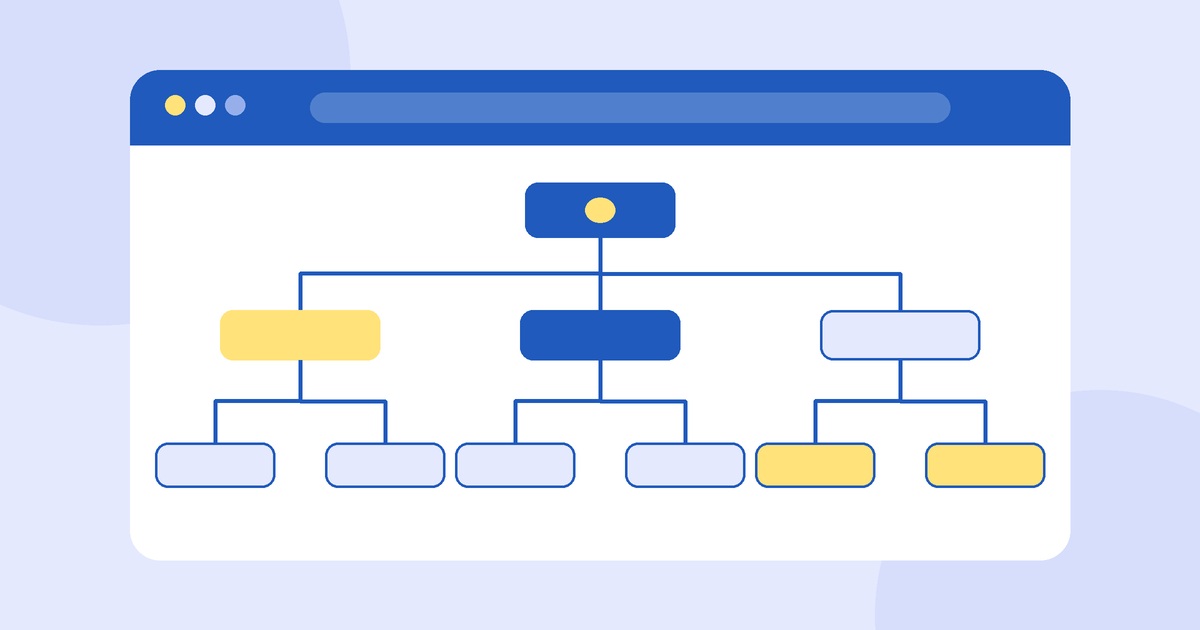
A website might use structures based on locations, services, categories, or combinations of entities. The exact architecture depends on the business, but the underlying principle remains the same: users and search engines should be able to understand the relationship between pages.
A clear hierarchy also makes internal linking easier.
For example, a website might have a primary service section, location pages beneath it, and related service-location pages beneath those. Alternatively, a marketplace might organize pages around categories, brands, and products.
The architecture should reflect how users navigate the information rather than being designed solely around database tables.
Internal Linking at Programmatic Scale
Internal linking becomes even more important when a website contains thousands of pages.
Publishing pages without connecting them properly can create large sections of a website that search engines struggle to discover or understand.
A programmatic SEO system can automate many internal linking relationships.
A location page can link to neighboring locations. A service page can link to related services. A product can link to its category, brand, alternatives, and accessories. A property page can link to its city, neighborhood, property type, and related listings.
These links can be generated from database relationships.
However, automated linking should still follow editorial logic. Linking every page to every other page creates clutter rather than useful navigation.
The goal is to create meaningful pathways through the website.
Indexing Thousands of Pages
Creating pages is only one part of programmatic SEO. Search engines must also discover, crawl, evaluate, and index those pages.
This becomes increasingly important as the number of URLs grows.
A website with 5,000 pages should not necessarily treat all 5,000 pages as equally important. Some pages may target high-value commercial queries. Others may be supporting pages. Some may be experimental. Some may not deserve indexing at all.
A strong programmatic architecture therefore includes indexing controls.
The website can identify which pages should be indexable, which should remain accessible but non-indexable, and which should not be generated at all.
This helps prevent unnecessary crawl activity and reduces the risk of filling the search index with low-value URLs.
XML Sitemaps and Large Websites
XML sitemaps are particularly important for large websites because they provide search engines with structured information about URLs the website considers important.
A programmatic SEO platform should ideally be capable of generating and maintaining sitemaps dynamically.
When new pages become eligible for indexing, they can be added to the appropriate sitemap. When pages are removed, discontinued, or made non-indexable, sitemap data should be updated accordingly.
Large websites may require multiple sitemap files organized by content type, location, category, or other logical groups.
The sitemap architecture should be treated as part of the overall SEO infrastructure rather than as an afterthought.
Canonical URLs and Duplicate Content
Programmatic websites can accidentally generate duplicate or near-duplicate URLs very easily.
For example, a filtering system might create multiple URLs representing the same underlying content. Tracking parameters, sorting options, pagination, filters, and combinations of attributes can dramatically increase the number of URLs a search engine can discover.
Canonicalization helps communicate which URL represents the preferred version of a page.
But canonical tags are not a substitute for good architecture.
If a website creates millions of unnecessary URLs and relies on canonical tags to clean up the mess, the underlying problem still exists.
The better strategy is to decide which combinations deserve independent pages before generating them.
Faceted Navigation and Programmatic SEO
Faceted navigation is a particularly important consideration for ecommerce websites, marketplaces, property portals, travel websites, and directories.
Users may want to filter results by price, brand, location, category, rating, size, availability, or other attributes. These filters can create an enormous number of URL combinations.
Some of those combinations can represent valuable search intent and deserve indexable landing pages.
Others may be useful only for users and should not necessarily become search-engine landing pages.
The SEO team must distinguish between useful search-driven combinations and arbitrary filter combinations.
This is one of the areas where an experienced SEO company in India can add significant value because the challenge requires both technical understanding and search-demand analysis.
The 5,000-Page Real-Estate Example
Consider a real-estate platform that wants to expand its organic visibility across thousands of locations.
The platform already has property listings, location information, neighborhood data, property categories, price ranges, and other structured information.
Instead of manually producing location pages, the company develops a database-backed programmatic SEO architecture.
The system identifies 5,000 locations that have sufficient property inventory and meaningful search demand. Each location receives a dedicated page built using a carefully designed template.
The template includes local property information, available listings, neighborhoods, property types, pricing context, frequently asked questions, related locations, and other relevant information.
The pages are integrated into the website’s internal linking architecture, included in appropriate XML sitemaps, and monitored through search performance data.
In the example provided for this strategy, the real-estate platform deployed 5,000 highly optimized location pages and captured approximately 60,000 additional organic visits per month.
The important lesson is not the specific traffic number. The deeper lesson is the relationship between scale and search coverage.
Thousands of relevant locations created thousands of opportunities to appear for searches that would have been impractical to target manually.
When each page satisfies a distinct search need and the underlying data is genuinely useful, the combined effect can become substantial.
Why the Example Matters
It would be easy to look at the example and conclude that creating 5,000 pages automatically produces 60,000 visits.
That would be the wrong takeaway.
The result depends on several factors, including the strength of the domain, quality of the pages, search demand, competition, technical implementation, internal linking, availability of useful data, and the relevance of the pages to users.
The number of pages itself is not the growth strategy.
The strategy is expanding useful search coverage through scalable architecture.
Measuring Programmatic SEO Performance
Programmatic SEO should be measured differently from a small content campaign.
Instead of looking only at individual keyword rankings, businesses should evaluate performance at the page-set level.
For example, an SEO team might compare all location pages against all service pages or compare pages generated during one programmatic rollout with pages generated during another.
Important metrics can include impressions, clicks, click-through rate, indexed pages, ranking distribution, organic conversions, engagement, revenue, leads, and crawl behavior.
Conversion performance is particularly important.
A page receiving thousands of visitors but generating no meaningful business activity may not be as valuable as a page receiving a few hundred highly qualified visitors.
The objective is not to maximize URLs or traffic in isolation. The objective is to create profitable organic visibility.
Using Google Search Console Data
Google Search Console can be particularly useful for evaluating programmatic SEO.
Once a large page set is published, the SEO team can identify which templates and page categories are gaining impressions and clicks.
If hundreds of pages receive impressions but very few clicks, the team can investigate titles, snippets, search intent, content quality, and competition.
If pages are not receiving impressions at all, the problem may involve indexing, internal linking, search demand, page quality, or technical issues.
Performance data can therefore be used to improve the programmatic system itself.
This creates an important feedback loop.
Instead of publishing thousands of pages and forgetting about them, the business learns from how those pages perform and continually improves the architecture.
Template Optimization
One of the biggest advantages of programmatic SEO is that improving a template can improve hundreds or thousands of pages at once.
Suppose a page template has a weak introduction, poor internal links, missing FAQs, or an ineffective call to action. Fixing the template can potentially improve every page using it.
This is one of the strongest forms of SEO leverage available to large websites.
However, it also introduces risk.
A mistake in a template can propagate across thousands of pages just as quickly as an improvement can.
This is why changes should be tested carefully before being deployed globally.
Testing Programmatic Templates
A mature programmatic SEO system should include staging, quality checks, and controlled releases.
Before generating thousands of production URLs, the business should test a smaller sample of pages.
The team should inspect whether titles are correct, descriptions are meaningful, headings make sense, structured data validates, internal links work, images load correctly, canonical URLs are accurate, and pages contain sufficient unique information.
It is also useful to inspect pages manually.
Automation should never become an excuse to stop looking at the actual user experience.
Content Quality at Scale
Content quality becomes more complicated as the number of pages increases.
A page that looks acceptable in isolation may become repetitive when viewed alongside one hundred similar pages.
This is why quality audits should examine groups of pages rather than individual pages alone.
An SEO team should compare pages within the same template and ask whether the content actually changes in meaningful ways.
Are location-specific sections genuinely different?
Are product specifications accurate?
Are FAQs relevant?
Are internal links useful?
Does each page serve a distinct intent?
Does the page contain enough information to justify its existence?
These questions help separate scalable SEO from mass page generation.
Programmatic SEO and E-E-A-T
Trust matters even when pages are generated programmatically.
Websites operating in competitive or sensitive industries should make it clear who is responsible for the information, where data comes from, and how frequently it is updated.
Business information should be accurate. Product information should be current. Local information should not be misleading. Reviews and ratings should be handled responsibly.
Where appropriate, pages should include author information, company information, editorial policies, sources, credentials, and other trust signals.
Automation should never make a website feel anonymous.
The Technical SEO Layer
Programmatic SEO sits at the intersection of content strategy, database architecture, development, and technical SEO.
This means that an SEO team cannot look only at keywords.
Developers need to understand URL structures, server-side rendering, page generation, database queries, caching, pagination, structured data, sitemaps, redirects, canonicalization, performance, and deployment processes.
SEO professionals need to understand how those technical decisions affect crawling, indexing, ranking, and user experience.
This is why large programmatic SEO projects often require close collaboration between an SEO agency, developers, content specialists, and business stakeholders.
Server-Side Rendering and JavaScript
Depending on the technology stack, programmatic pages may be rendered on the server, generated statically, or assembled through client-side JavaScript.
For large SEO-driven websites, rendering strategy deserves careful consideration.
Search engines have become much better at processing JavaScript, but relying unnecessarily on client-side rendering can introduce additional complexity.
For pages where organic search visibility is critical, businesses should ensure that important content, links, metadata, and structured information are available in a crawlable form.
The exact implementation depends on the platform and framework, but the principle is universal: search engines and users should receive a reliable page experience.
Website Performance at Scale
Thousands of pages can also create performance challenges.
A page template that performs well with one hundred records may behave differently when a database contains millions of records.
Database queries need to be optimized. Images need appropriate sizing and caching. APIs need sensible response times. Page caching can reduce repeated processing. Content delivery networks can improve asset delivery for geographically distributed audiences.
Performance should be considered before scaling rather than after the website becomes slow.
A programmatic SEO strategy that generates excellent landing pages but creates an unstable website is not a successful strategy.
Managing Database Quality
Data quality is one of the least glamorous but most important parts of programmatic SEO.
If location names are inconsistent, the problem can appear across thousands of pages. If a product specification is wrong, the error can be replicated everywhere. If an outdated service is marked as active, the website may generate pages that no longer represent the business.
Businesses therefore need processes for data validation.
Structured fields should have defined formats. Duplicate records should be identified. Missing values should be handled intentionally. Outdated information should be flagged. Important changes should trigger page updates.
The database should be treated as an editorial asset.
Programmatic SEO for Ecommerce
Ecommerce businesses often have enormous programmatic SEO potential.
A store may have thousands of products across dozens of categories and brands. Users can search by product type, brand, use case, specification, compatibility, material, size, price range, and other attributes.
Not every filter combination deserves an indexable page, but many do.
For example, a category page targeting a specific product type and brand may have strong commercial intent. A page combining a category with a highly searched specification may also be valuable.
The ecommerce SEO challenge is identifying which combinations represent meaningful search demand and then ensuring that those pages contain enough useful information to stand independently.
Programmatic SEO for SaaS Businesses
SaaS companies can use programmatic SEO in several ways.
They can create industry pages, integration pages, use-case pages, comparison pages, location pages, solution pages, and templates.
Integration SEO is particularly interesting.
A software platform may integrate with hundreds of other tools. Instead of creating a generic integrations page, the company can create individual pages explaining how the integration works, what users can accomplish with it, how setup works, and what workflows it supports.
If the information is genuinely useful, each integration page can become an independent organic acquisition channel.
Programmatic SEO for Travel
Travel websites have naturally scalable datasets.
A travel platform may contain destinations, hotels, attractions, activities, restaurants, neighborhoods, airports, routes, and travel experiences.
These entities can be connected to create useful destination experiences.
However, travel SEO also demonstrates the danger of thin pages. A page for a destination with no meaningful information, no available inventory, and generic text is unlikely to provide a strong user experience.
Programmatic travel SEO works best when pages contain genuinely useful information such as available hotels, activities, attractions, travel details, local context, and practical recommendations.
Programmatic SEO for Job Portals
Job portals are almost perfectly suited to programmatic architecture because their data is naturally structured.
A job listing can have a title, location, salary, employer, industry, experience level, employment type, skills, and publication date.
Search demand also follows predictable patterns.
Users frequently combine job titles with locations, experience levels, employment types, and other criteria.
A job platform can create landing pages around meaningful combinations while ensuring that the pages contain actual jobs and useful information.
Freshness becomes especially important because job pages can become obsolete quickly. A programmatic system must therefore handle expired listings intelligently rather than leaving thousands of dead pages online indefinitely.
Programmatic SEO for B2B Businesses
B2B companies sometimes overlook programmatic SEO because they assume their markets are too specialized.
In reality, specialized B2B markets can provide excellent opportunities when search intent follows structured patterns.
A manufacturer may serve multiple industries and regions. A software provider may support specific business sizes, industries, or use cases. A logistics company may provide different services across multiple cities and transportation routes.
Structured landing pages can help these businesses capture highly specific searches.
Because B2B searches often have lower volume but higher commercial intent, even relatively small amounts of organic traffic can have significant business value.
Programmatic SEO and Local SEO
Programmatic SEO can complement local SEO, but businesses should be careful not to confuse scalable location pages with genuine local business profiles.
A location page can explain that a business serves a particular city or region, but the content should accurately represent the company’s actual presence and service coverage.
Creating pages for locations where a business has no meaningful connection can result in poor user experiences and weak commercial credibility.
Good local programmatic SEO combines accurate location data, genuine service coverage, relevant local information, and appropriate conversion paths.
When You Should Not Use Programmatic SEO
Programmatic SEO is powerful, but it is not appropriate for every website.
A small local business serving one city and offering three services may not need hundreds of automated landing pages. Creating them simply because technology makes it possible can create unnecessary complexity.
Programmatic SEO is most valuable when the business has a large set of meaningful search opportunities and enough structured information to create useful experiences around those opportunities.
If the website does not have sufficient data, search demand, or meaningful differences between page variations, manually curated content may be the better approach.
The Cost Advantage of Programmatic SEO
One reason businesses invest in programmatic SEO is efficiency.
Creating thousands of pages manually can require a large content and development team. A well-built system can reduce the repetitive work involved in producing and maintaining those pages.
This does not mean programmatic SEO is cheap.
The initial architecture can require significant investment in research, database design, development, SEO strategy, content systems, quality assurance, and analytics.
But once the infrastructure exists, the marginal cost of expanding the page set can become dramatically lower than manual production.
This is the key economic advantage.
Programmatic SEO as an SEO Growth Engine
Traditional content marketing often resembles a publishing operation. A team identifies a topic, creates an article, publishes it, and moves on to the next topic.
Programmatic SEO resembles a product.
The team designs a system, launches it, measures how it performs, improves the system, and scales it.
This mindset changes the role of the SEO team.
Instead of asking how many articles can be published this month, the team starts asking how many valuable search experiences can be created, how efficiently they can be maintained, and how the system can improve over time.
The Role of an SEO Agency
Programmatic SEO often requires expertise across several disciplines, which is why businesses may choose to work with an experienced SEO agency.
An effective agency should not simply recommend creating thousands of pages. It should first determine whether programmatic SEO is appropriate, identify the right page types, research search demand, define the database structure, design the URL architecture, develop templates, establish indexing rules, plan internal linking, and create quality-control processes.
The agency should also work closely with developers.
SEO requirements must be translated into technical specifications that developers can implement reliably.
The strongest results usually come from treating SEO as a cross-functional project rather than a content-only campaign.
Building a Programmatic SEO Roadmap
A successful programmatic SEO project should begin with discovery.
The business needs to identify its entities, datasets, search patterns, commercial priorities, geographic coverage, customer segments, and existing website architecture.
The next step is opportunity mapping.
This involves identifying page types that could capture meaningful organic demand. The team may find opportunities around locations, services, products, categories, industries, comparisons, use cases, or other combinations.
After that comes architecture.
The team defines databases, relationships, URL structures, templates, internal links, metadata rules, schema, indexing policies, sitemaps, and technical requirements.
A small pilot should usually follow.
Instead of immediately generating 50,000 pages, the business can launch several hundred or another manageable sample, monitor results, identify quality issues, and improve the system.
Once the model proves effective, it can be expanded.
Starting With a Pilot
The pilot phase is one of the most valuable parts of a programmatic SEO project.
It allows the business to test assumptions before making a large investment.
Suppose a website wants to create 10,000 location pages. Rather than generating all 10,000 immediately, the team could begin with a few hundred locations representing different markets and levels of search demand.
The pages can then be monitored for indexing, impressions, rankings, clicks, engagement, and conversions.
If the pages perform well, the architecture can be expanded.
If they do not, the business can investigate the reasons before scaling the problem.
Quality Assurance for Thousands of Pages
Quality assurance should be automated wherever possible, but manual inspection should remain part of the process.
Automated checks can identify missing titles, duplicate metadata, broken links, empty fields, invalid schema, missing canonical tags, incorrect URLs, and other technical problems.
Human review can evaluate whether the pages actually make sense.
A strong QA process combines both approaches.
The larger the page set, the more important this becomes.
Handling Pages That Stop Being Useful
One of the realities of programmatic SEO is that some pages will eventually become obsolete.
A job category may no longer have listings. A product may be discontinued. A property may no longer be available. A service may be retired. A location may no longer be served.
The system should have rules for handling these situations.
Depending on the circumstances, the page may be updated, redirected, removed, consolidated, or kept available with useful alternative information.
Leaving thousands of outdated pages online indefinitely can reduce the overall quality of the website.
Programmatic SEO and Content Freshness
One of the strengths of a database-backed architecture is that content can update automatically when the underlying information changes.
A property page can display updated availability. A product page can show current pricing. A job page can reflect current listings. A restaurant directory can update operating information.
This makes programmatic SEO particularly powerful for businesses whose information changes frequently.
Fresh data can make pages more useful while reducing the manual maintenance burden.
Using Structured Data
Structured data can help search engines understand what different entities and pages represent.
Depending on the page type, structured data may describe products, organizations, businesses, events, articles, breadcrumbs, reviews, or other supported entities.
Programmatic systems can generate structured data dynamically from the same database that powers the page.
However, structured data must accurately represent the visible content and should not be treated as a mechanism for manipulating search results.
Programmatic SEO and Conversion Optimization
Organic traffic is only one part of the equation.
A programmatic landing page should ultimately help the visitor take the next appropriate action.
For a real-estate website, that might mean viewing listings, requesting information, scheduling a visit, or contacting an agent.
For an SEO agency, it might mean requesting an SEO consultation, viewing a case study, contacting the team, or requesting a proposal.
For an ecommerce website, it might mean purchasing a product.
Calls to action should therefore reflect the page’s intent.
Programmatic pages should not all end with the same generic CTA simply because the template makes it easy.
Balancing Automation With Human Expertise
The strongest programmatic SEO strategies are neither completely manual nor completely automated.
They combine both.
Automation handles scale, repetitive operations, data processing, internal linking, page generation, metadata patterns, and technical consistency.
Humans provide strategy, judgment, editorial direction, quality control, business context, and creativity.
This balance is particularly important when using AI.
Technology can help a team move faster, but speed without judgment can produce thousands of low-value pages just as quickly as it can produce valuable ones.
Common Programmatic SEO Mistakes
One common mistake is starting with the number of pages rather than search intent.
A business may say it wants 10,000 pages without first establishing whether 10,000 useful opportunities actually exist.
Another mistake is relying on a single generic paragraph across every page. This creates pages that are technically different but practically interchangeable.
A third mistake is ignoring internal linking. Thousands of pages cannot perform effectively if they are isolated from the rest of the website.
Another mistake is indexing every possible URL combination generated by filters.
Technical problems can also become serious when templates are deployed without testing.
Finally, businesses sometimes assume that publishing the pages is the end of the project. In reality, programmatic SEO requires continuous monitoring and optimization.
How an SEO Company in India Can Approach Programmatic SEO
An experienced SEO company in India can approach programmatic SEO as a combination of search strategy, content architecture, development, and performance measurement.
The first stage should involve understanding the business model and identifying where scale exists naturally.
The team should then research search demand and determine which variables matter to customers.
Once the opportunity is clear, the agency can work with developers to create the database and page architecture.
The content strategy should define what information each page needs to provide and which sections can be dynamically populated.
After implementation, the agency should monitor indexing, search visibility, user behavior, conversions, and technical health.
This process allows the programmatic system to evolve rather than becoming a static collection of automatically generated pages.
The Future of Programmatic SEO
Search is becoming increasingly complex.
Users are searching through traditional search engines, AI-powered interfaces, maps, marketplaces, social platforms, and specialized vertical search systems.
Businesses therefore need structured information that can be understood and reused across different discovery environments.
This makes well-structured databases even more valuable.
A company that has carefully organized its products, services, locations, expertise, use cases, customer segments, and other entities is better positioned to create useful digital experiences across multiple channels.
Programmatic SEO is therefore evolving beyond automated webpage creation.
It is increasingly becoming an approach to structuring and distributing business knowledge.
Programmatic SEO Is Not About Publishing More Pages
The biggest lesson is simple: more pages do not automatically mean more SEO traffic.
A website with 100 excellent pages can outperform a website with 100,000 weak pages.
The purpose of programmatic SEO is to identify opportunities where scale and usefulness can exist together.
When a business has thousands of real locations, products, services, categories, industries, listings, or other entities, creating a unique manually written page for every opportunity may not be realistic.
Programmatic SEO provides a way to solve that operational problem.
But the system must be designed around users first.
Creating a Sustainable Programmatic SEO Architecture
A sustainable architecture begins with data.
The business should understand what information it owns, what information it can reliably obtain, how frequently the information changes, and which data points are useful to customers.
The next layer is intent.
The business should understand which combinations of entities correspond to meaningful searches.
The third layer is experience.
Each page should provide a useful answer or pathway for the user.
The fourth layer is technology.
The system needs reliable templates, databases, APIs, caching, rendering, URLs, sitemaps, structured data, and monitoring.
The fifth layer is optimization.
Performance data should feed back into the system so that page templates and content rules continuously improve.
When these layers work together, programmatic SEO becomes a powerful growth engine rather than a page-generation trick.
Final Thoughts
Scaling SEO is not simply a matter of hiring more writers and publishing more articles. For businesses with thousands of potential search opportunities, the real challenge is building an infrastructure capable of turning those opportunities into useful experiences.
Programmatic SEO provides that infrastructure.
By combining structured databases, carefully designed templates, meaningful search intent, automated internal linking, technical SEO controls, quality assurance, and continuous optimization, businesses can create thousands of pages without sacrificing usability or strategic direction.
The real-estate example of deploying 5,000 optimized location pages and generating approximately 60,000 additional organic visits per month demonstrates the potential scale of this approach. But the underlying lesson is more important than the headline number. Growth came from creating useful pages around thousands of legitimate search opportunities, not from simply increasing the number of URLs.
For an ecommerce marketplace, the opportunity may exist in product and category combinations. For a travel platform, it may exist across destinations and experiences. For a job portal, it may exist across roles, locations, industries, and employment types. For a B2B company, it may exist across services, industries, locations, and use cases. For an SEO agency, it may involve building scalable service, industry, and location experiences for its own website or for clients.
The common principle remains the same: find the structured patterns in the market, understand the search intent behind them, and build a system that can serve those searches at scale.
That is where programmatic SEO becomes genuinely powerful.
When executed thoughtfully, it allows a business to move from asking, “How can we create another page?” to asking a much more valuable question: “How can we build a system that creates the right page whenever a valuable search opportunity exists?”
That shift in thinking can fundamentally change the way a business approaches organic growth.
And for companies with thousands of locations, products, services, industries, categories, or other structured opportunities, that shift can turn SEO from a manual publishing exercise into a scalable digital growth infrastructure.



Related items

Ahrefs studied one million random web pages and found that only 1.74% of newly published p

If you are new to websites, deciding how many pages to build can feel surprisingly high-st


It is Monday morning, and a new proposal has landed in your inbox. It includes a fresh lin