
The allure of programmatic SEO (pSEO) is intoxicating. In theory, you build a single, elegant data architecture, map your database fields to a dynamic content template, flip a switch, and watch thousands of hyper-targeted landing pages flood search engine results pages (SERPs). For years, this was the ultimate growth hack for marketplaces, directories, and SaaS platforms. You could spin up thousands of variations of “Best [Service] in [City]” or “[Software A] vs [Software B] Alternative” overnight, capturing long-tail search volume with minimal editorial overhead.
Then came Google’s Clean Core updates.
Over the last several algorithmic cycles, Google has fundamentally re-engineered how its ranking systems evaluate massive web footprints. The algorithmic machinery behind the Helpful Content System, SpamBrain, and core quality updates has evolved from simple keyword and backlink evaluation to sophisticated entity validation and template pattern recognition. Today, publishing 10,000 pages built on flat, uninspired templates is no longer just ineffective—it is an existential risk to your entire domain’s search visibility. When Google triggers a site-wide quality penalty due to “index bloat” or “scaled content abuse,” recovery can take years.
Does this mean programmatic SEO is dead? Absolutely not. But the era of lazy automation is over. To scale to 10,000 pages and beyond without getting burned, you must shift your mindset from content spinning to enterprise-grade data architecture. You must build landing pages that treat data as a utility, blending robust relational database mapping with strict crawl safety protocols and programmatic “humanization” engines. This guide provides the exact architectural blueprint to achieve sustainable, algorithm-proof scale.
1. The Post-Update Paradigm: Why Traditional Templates Get Decimated
To build a resilient programmatic engine, we must first understand exactly what Google’s Clean Core updates are hunting. Google’s primary objective with recent quality updates is to eliminate search degradation caused by automation. The algorithm doesn’t necessarily penalize content because it was generated programmatically; it penalizes content because it fails the Information Gain test.
When an algorithm reviews a cluster of 10,000 programmatic pages, it looks for structural and semantic fingerprints. If page 1,402 (e.g., “Web Development Services in Austin”) shares 95% of its sentence structure, paragraph order, and asset distribution with page 8,911 (e.g., “Web Development Services in Boston”), changing only the geographic nouns, Google views this as a single piece of content stretched across thousands of URLs. This is categorized as thin, repetitive content designed solely to manipulate search rankings.
Furthermore, Google’s systems now analyze user interaction signals and programmatic layout configurations at scale. If your pages feature blocks of text that offer zero proprietary insight, lack real-world data points, or fail to satisfy the searcher’s intent immediately, the site is flagged for index devaluation. To combat this, your generation engine must move away from flat text files and simple string replacements, shifting instead toward complex relational data layers that mirror real human analysis.
2. Designing a Defensible Data Architecture: Moving Beyond Flat CSVs
Most failed programmatic projects start the same way: a massive, messy CSV spreadsheet uploaded to a basic WordPress plugin. This approach lacks the relational complexity required to build truly distinct pages. A defensible pSEO strategy requires a multi-tiered database structure where every landing page is assembled dynamically from distinct, interconnected data nodes.
The Relational Schema Blueprint
Instead of relying on a single row of data per page, your architecture should pull from a web of relational tables. Consider an enterprise directory or localized service engine. Your database should be normalized across several tables, including:
- Core Entities Table: Contains the baseline, immutable target definitions (e.g., industries, service verticals, core software components).
- Geographic / Matrix Entities Table: Holds verified, localized data that goes far beyond postal codes. This includes local economic data, regional demographic metrics, climate info, or localized business regulations.
- Proprietary Variables Table: Houses your unique data points—such as internal pricing indices, user-generated review aggregates, real-time availability metrics, or proprietary platform usage statistics.
- Semantic Context Table: Stores dynamically mapped content blocks, editorial conditional statements, and contextual alternatives categorized by programmatic intent triggers.
By executing cross-table joins rather than simple row reads, your content delivery engine can construct structurally varied pages. For instance, if a specific local service node detects a high density of enterprise businesses in its geographic entity table, the page layout can dynamically pivot to display enterprise case studies, higher-tier pricing tiers, and compliance data, completely altering the semantic fingerprint of that page compared to a consumer-focused variant.
3. Mapping Data to Hyper-Localized Landing Pages with High Information Gain
To satisfy Google’s Clean Core requirements, every page among your 10,000 deployed URLs must provide distinct value that cannot be found anywhere else on the web. This is achieved through strict programmatic mapping that prioritizes factual, hyper-localized, or niche-specific utility.
Dynamic Structural Variation
Do not use a rigid HTML layout for every page. Instead, build your CMS templates using modular content blocks that render conditionally based on your underlying database values. Below is an example of how you can think about the structural assembly of a high-value programmatic page:
<!-- Modular Programmatic Page Construction -->
<div class="programmatic-page-wrapper">
    <header class="dynamic-hero">
        <!-- Unique data-driven title and dynamic contextual subtitle -->
        <h1>{Database.Entity_Name} Solutions in {Database.Location_Name}</h1>
        <p class="lead">Analyzing {Database.Local_Market_Volume} providers with real-time capacity scoring.</p>
    </header>

    <section class="proprietary-data-utility">
        <!-- Custom data grids that provide immediate information gain -->
        <h2>Current {Database.Location_Name} Market Overview</h2>
        <table>
            <tr>
                <th>Average Project Cost</th>
                <td>${Database.Avg_Price_Metric}</td>
            </tr>
            <tr>
                <th>Regulatory Compliance Standard</th>
                <td>{Database.Local_Compliance_Code}</td>
            </tr>
        </table>
    </section>

    <section class="conditional-editorial-block">
        <!-- Content blocks populated via dynamic semantic selection -->
        {RenderDynamicEditorialParagraph(Database.Entity_ID, Database.Location_ID)}
    </section>
</div>
Injecting Proprietary Utilities
Text alone is highly vulnerable to algorithmic filters. You must anchor your pages with functional user utilities. If your database includes pricing data, embed a dynamic JavaScript calculator that calculates projected localized expenses natively on the client or server side. If you are building a B2B comparison matrix, generate dynamic charts using inline SVG elements based on your proprietary database columns. These elements change the document’s code-to-text ratio and drastically improve user dwell time—a signal that tells Google your page is a functional tool, not SEO spam.
4. Crawl Safety and Indexation Engineering: Protecting Your Domain
You can build the most useful 10,000 pages on the internet, but if your internal linking architecture is poorly constructed, your server will collapse under crawler strain, or worse, Googlebot will flag your site for erratic crawl patterns and refuse to index your content.
The Danger of “Index Bloat” and Crawl Budget Depletion
Google allocates a finite amount of processing power to crawl any given website. If you launch 10,000 new pages all at once and place them all in a single, unsegmented flat XML sitemap, Googlebot will attempt to parse them rapidly. If it encounters slow server response times, unoptimized database queries, or repetitive templates, it will dramatically slow its crawl rate, leaving the vast majority of your critical pages completely unindexed.
Building a Resilient Internal Linking Matrix
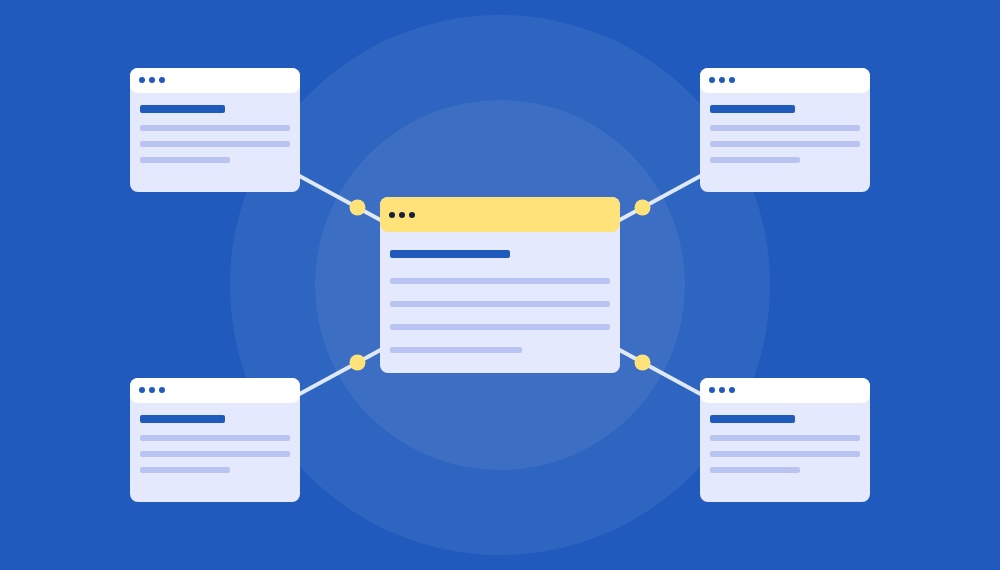
To guide search spiders safely through a massive architecture, you must deploy a structured Hub-and-Spoke internal linking framework. Never link all 10,000 pages from a single footer or a massive, unorganized directory page.
- The Root Hubs: Create high-level categorical index pages (e.g., Directory by State or Taxonomy by Core Feature). These pages should be static, hand-curated, and heavily optimized.
- The Regional/Vertical Spokes: Sub-hub pages that list a maximum of 50 to 100 hyper-localized child pages using smart, paginated navigation or categorical sorting matrices.
- Horizontal Cross-Linking: Allow child pages to link only to semantically adjacent child pages. For instance, a page dedicated to *”Logistics Software in Seattle”* should link to *”Supply Chain Software in Seattle”* or *”Logistics Software in Tacoma”*, but never blindly to *”Accounting Software in Miami”*. This preserves topical authority and contains the crawl path within predictable clusters.
Optimizing Performance for Search Spiders
When scaling to thousands of pages, database calls can kill your server response times (TTFB). If your WordPress site queries the database live for every single bot request, a heavy crawl will trigger 503 Service Unavailable errors. Implement aggressive server-side caching or, ideally, utilize Static Site Generation (SSG) or Incremental Static Regeneration (ISR). Rendering your programmatic database into flat HTML files cached at the CDN edge ensures that Googlebot receives lightning-fast sub-100ms response times, signaling an enterprise-grade infrastructure.
5. The “Humanization Engine”: Breaking Template Fingerprints
To survive Google’s core quality systems, your pages must pass programmatic fingerprinting analyses. If the structural syntax across your 10,000 pages is completely uniform, the algorithm will group them as duplicates. You must introduce controlled variance into your content delivery workflow.
Dynamic Noun Arrays and Synchronic Content Selection
Instead of hardcoding standard sentences with placeholder variables, implement a dynamic variations engine within your content fields. This technique draws from an array of semantically identical but structurally distinct phrases. For example, instead of writing:
"Our platform provides excellent web development services in [City]."
Your rendering script should evaluate a randomized, seeded matrix of sentences:
| Variation Selector | Rendered Structural Output |
|---|---|
| Array Option A | “Scaling a digital presence requires robust technical engineering; our specialized teams in [City] deliver tailored enterprise web architectures.” |
| Array Option B | “For organizations operating within the [City] corridor, optimizing application performance is paramount. We engineer high-throughput web systems optimized for local market demands.” |
| Array Option C | “Navigating web deployment challenges requires local technical expertise. Our engineering cohort based in [City] designs secure, scalable custom web applications.” |
By leveraging seeded randomization based on the page’s unique ID, the text remains persistent for human visitors and search engines upon repeat visits, yet differs radically from page to page across your domain’s wider footprint.
Programmatic Conditional Logic
Incorporate strict logic checks within your generation script to dictate layout density. If a particular data set lacks deep proprietary metrics, programmatically strip out sections that would otherwise appear as empty tables or repetitive placeholder text. It is far better to have a highly concise, data-rich 400-word localized page than an inflated 1,500-word page stuffed with generic, non-specific filler text that sets off quality alarms.
6. Executing Safely: Partnering with Advanced Search Architects
Deploying programmatic systems at this scale is an intricate blend of high-performance software engineering, deep data manipulation, and cutting-edge semantic SEO strategy. One wrong configuration in your canonical tagging logic, database indexing, or internal link routing can completely dismantle your search footprint.
For organizations looking to scale without the internal overhead of building these proprietary systems from scratch, collaborating with a premier enterprise SEO company in India can bridge the gap between high-level data architecture and localized content execution. Top-tier offshore engineering groups offer the rare combination of technical backend development capabilities, database normalization expertise, and sophisticated understanding of Google’s modern quality thresholds. This allows you to deploy high-performance, edge-rendered programmatic frameworks at a fraction of Western development costs, ensuring your infrastructure is built securely from day one.
7. The Pre-Launch Programmatic Quality Checklist
Before moving your staging environment to production and opening the floodgates to search engine crawlers, you must validate your infrastructure against this strict quality assurance framework:
- Verify Canonical Isolation: Ensure every single programmatic URL contains a self-referential canonical tag unless it is an explicit parameter-driven duplicate page. Cross-domain or broken canonical arrays will instantly halt your indexation pipeline.
- Enforce Robbins Rules for Near-Empty Nodes: Run a database query to identify rows that contain sparse or incomplete information. If a page cannot populate at least three unique data points, programmatically inject a
noindex, followmeta tag until the data layer is enriched. - Implement Dynamic Schema Markup: Do not use static JSON-LD structures. Your schema generator must map data fields dynamically, outputting hyper-specific
LocalBusiness,ProductModel, orItemPagestructured data that perfectly mirrors the text on the page, giving Google’s entity parsers clear context. - Monitor Log Files Daily: Set up automated real-time log file parsing. Track Googlebot’s behavior precisely. If you see an spike in 4xx or 5xx response codes, or notice search spiders getting stuck in a loop on pagination parameters, instantly implement crawl-delay or block the offending paths via your
robots.txtfile.
Conclusion: The Ultimate Metric is Utility
Scaling to 10,000 pages in a world governed by Google’s Clean Core updates is entirely achievable, provided you abandon the outdated mentality of content mass-production. Modern programmatic SEO isn’t an exercise in copywriting; it is an exercise in data curation, database normalization, and technical crawl optimization.
By transforming your architecture into a collection of relational, high-utility nodes, you provide searchers with instant, actionable information gain. Focus on building pages that act as tools rather than text documents. When your programmatic framework delivers genuine structural and informational uniqueness, you don’t have to fear Google’s core updates—you can leverage them to dominate your market at scale.



Related items

Google’s fourth spam update of 2026 is live. The pattern across all four says more than th

What internal links are, how to plan them, and how to find and fix the problems already on

The Quick Take: Most B2B companies aren’t struggling to generate leads — they’re strugglin
