
Search engine optimization has changed dramatically over the past decade. There was a time when SEO could be approached largely as a keyword exercise. Businesses would identify valuable search terms, place those terms in page titles and headings, create content around them, build links, and monitor rankings. While keywords remain important, that approach on its own is no longer enough for businesses that want to build lasting organic visibility.
Modern search engines are far better at understanding relationships between words, concepts, entities, questions, products, services, and topics. A page does not exist in isolation. It exists within a larger subject area, and the depth and consistency of a website’s coverage can influence how clearly search engines understand its expertise.
This is where topic clustering becomes increasingly important.
Topic clustering is the practice of organizing content around a central subject and connecting it with a group of closely related subtopics through a deliberate internal linking and information architecture strategy. Instead of publishing individual articles that each target an isolated keyword, a website builds a connected body of information designed to comprehensively address a broader area of user interest.
The difference may sound subtle, but strategically it is enormous.
Imagine a company trying to rank for a competitive term such as SEO company in Delhi. A traditional keyword-focused approach might create one service page optimized around that phrase and perhaps a few supporting blog posts. A topic-cluster approach asks a much larger set of questions. What does SEO involve? How does local SEO work in Delhi? What should businesses look for when selecting an SEO provider? How does technical SEO affect performance? How does content strategy contribute to rankings? What does ecommerce SEO involve? How should B2B companies approach SEO? How can businesses measure SEO results? What role does Google Search Console play? How do backlinks affect authority? How should businesses approach keyword research?
Each of these questions represents a related piece of the broader SEO topic.
When those pieces are researched, written, structured, internally linked, and maintained strategically, the website begins to demonstrate depth rather than simply repeating a keyword.
This is the real purpose of topic clustering.
It is not about producing more content for the sake of producing more content. It is about building a coherent knowledge structure that helps users and search engines understand a subject thoroughly.
For businesses competing in crowded search markets, topic clustering can become one of the most effective ways to move beyond individual keyword rankings and build genuine search authority.
What Is Topic Clustering?
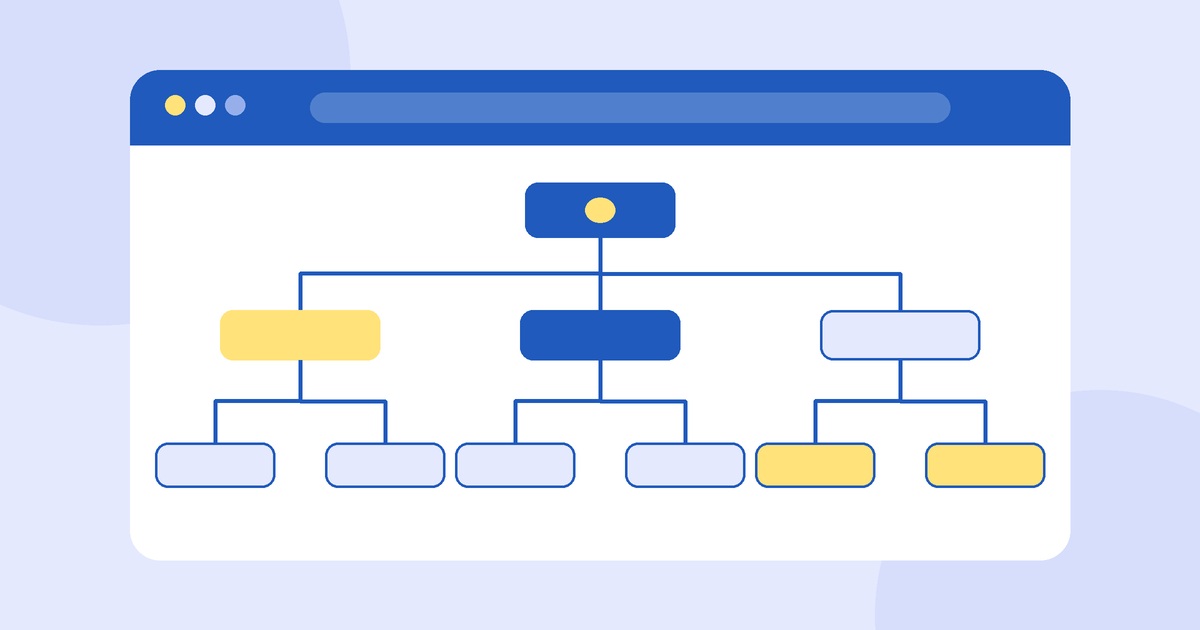
At its simplest, topic clustering organizes website content around a central topic known as the pillar topic, with supporting content covering related subtopics.
The pillar page provides a broad and authoritative overview of the main subject. Supporting pages then explore specific aspects of that subject in greater detail.
These supporting pages are connected to the pillar page and, where relevant, to one another through contextual internal links.
For example, a digital marketing company might create a comprehensive pillar page about search engine optimization. Supporting pages could explore technical SEO, local SEO, ecommerce SEO, SEO content strategy, link building, keyword research, SEO audits, Core Web Vitals, international SEO, SEO reporting, and other closely related subjects.
The result is not simply a collection of articles. It is a structured topic ecosystem.
The user can start with a broad explanation and then move deeper into areas relevant to their needs. Search engines can also discover the relationships between these pages through internal links, consistent terminology, topical relevance, and the overall structure of the website.
Why Keywords Alone Are No Longer Enough
Keywords remain fundamental to SEO because they provide clues about what people search for. The problem arises when keywords become the entire strategy.
A keyword is a representation of a search query. It is not necessarily a complete representation of the user’s information need.
Consider someone searching for “SEO company in Delhi.” That phrase could represent several different intentions. The person might be looking for an agency, comparing service providers, researching SEO pricing, searching for local expertise, looking for a company specializing in a particular industry, or simply trying to understand what services are available.
If a website focuses exclusively on repeating the exact phrase “SEO company in Delhi,” it may fail to address many of the questions surrounding the decision.
A stronger website understands the broader topic.
It can explain SEO services, local search strategy, technical optimization, content marketing, link acquisition, analytics, reporting, industry-specific approaches, campaign processes, and expected outcomes. It can also demonstrate experience through case studies and explain how businesses should evaluate an SEO provider.
The keyword remains part of the strategy, but it is no longer the strategy itself.
Search Intent Is the Foundation of Topic Clustering
A successful topic cluster begins with search intent.
Before deciding which articles to create, a business should understand what users are trying to accomplish when they search for information related to the subject.
Some searches are informational. The user wants to understand something.
Some are navigational. The user wants to find a particular website, company, product, or resource.
Some are commercial. The user is researching options before making a decision.
Others are transactional. The user is ready to take an action such as purchasing, booking, requesting a quotation, or contacting a service provider.
A topic cluster should ideally accommodate multiple stages of this journey.
For an SEO company, informational content might explain how SEO works. Commercial content might compare SEO services or explain how to choose an agency. Transactional pages might focus on specific SEO services and encourage businesses to request a consultation.
This creates a natural progression from learning to evaluation to action.
The Pillar Page: The Center of the Cluster
The pillar page is the central resource around which the topic cluster is organized.
A good pillar page should provide a comprehensive overview of the primary subject without attempting to answer every possible question in exhaustive detail.
Its job is to establish the context and guide users toward deeper resources.
For example, a pillar page titled “Complete Guide to SEO” could explain the fundamentals of SEO, its major components, the importance of technical optimization, content, links, local search, measurement, and strategy.
Each major section could then link to a more detailed supporting article.
The supporting page about technical SEO might explore crawling, indexing, structured data, site architecture, page speed, JavaScript rendering, canonicalization, and other technical subjects.
The pillar page provides breadth. The supporting pages provide depth.
That relationship is central to topic clustering.
Supporting Content: Where Topical Depth Is Built
Supporting content should answer specific questions or explore specific subtopics that naturally belong within the larger subject.
The key word here is “naturally.”
Not every remotely related keyword deserves its own article.
Creating pages simply because a keyword tool produces a list of related phrases can lead to bloated websites containing repetitive or low-value content.
Supporting content should exist because users have a meaningful reason to consume it.
If a business is building an SEO cluster, an article explaining technical SEO makes sense. An article explaining local SEO makes sense. A guide to SEO audits makes sense. A page explaining SEO reporting makes sense.
An article about an unrelated marketing topic simply because it contains a keyword with the word “SEO” does not necessarily strengthen the cluster.
Topic Clusters Versus Keyword Clusters
It is useful to distinguish between topic clustering and keyword clustering.
Keyword clustering groups similar search terms based on semantic similarity or search-result overlap. This can help determine which keywords can be targeted by the same page.
Topic clustering goes further.
It considers the broader subject ecosystem and determines which distinct pages are needed to cover meaningful subtopics.
For example, several keywords such as “SEO agency Delhi,” “SEO company Delhi,” “SEO services Delhi,” and “SEO firm Delhi” might represent variations of the same underlying commercial intent. Creating a separate page for each phrase could create unnecessary duplication.
A stronger strategy may target the underlying intent with one authoritative service page while using supporting content to cover related questions.
The objective is not to maximize the number of URLs targeting similar keywords.
The objective is to maximize useful topical coverage.
Understanding Semantic Relationships
Modern search systems evaluate language in context.
When a website consistently discusses a subject using relevant terminology and connected concepts, it becomes easier for search engines to understand what the site is about.
For example, a comprehensive SEO resource might naturally discuss crawling, indexing, rankings, search intent, backlinks, internal linking, structured data, content quality, local search, analytics, conversions, and technical performance.
These concepts form a semantic network.
Writing naturally about the subject allows these relationships to emerge without forcing keywords into every paragraph.
This is one reason experienced SEO professionals increasingly focus on topical relevance instead of keyword repetition.
How Topic Authority Is Built
Topic authority is not a switch that can simply be turned on.
It develops through consistent, useful coverage of a subject.
A website demonstrates expertise by answering important questions, covering related concepts, providing original insights, maintaining accurate information, linking related resources, and demonstrating real-world experience.
This does not mean a website must publish hundreds of articles before it can rank.
Quality matters more than an arbitrary content count.
A smaller cluster with excellent content can be more valuable than a huge collection of shallow articles.
Mapping a Topic Before Creating Content
One of the most important stages of topic clustering happens before writing begins.
The SEO team needs to map the subject.
This involves identifying the main topic, related entities, subtopics, questions, user intents, commercial pages, supporting resources, and internal relationships.
For an SEO company in Delhi, the topic map might include SEO services, local SEO, technical SEO, ecommerce SEO, B2B SEO, enterprise SEO, content strategy, keyword research, link building, SEO audits, SEO reporting, SEO pricing, and industry-specific SEO.
Each subject can then be evaluated for relevance and business value.
Some topics may deserve dedicated service pages. Others may work better as educational articles. Some may belong inside a comprehensive guide. Some may not deserve a page at all.
This planning stage prevents content duplication and creates a logical architecture.
Keyword Research Still Matters
Moving beyond keywords does not mean abandoning keyword research.
Keyword research remains useful for understanding language, demand, competition, and user behavior.
The difference is how the information is interpreted.
Instead of asking only, “What keyword should this article rank for?” the strategist can ask, “What user need does this keyword represent, and how does that need fit into our broader topic architecture?”
This produces more meaningful content decisions.
Keyword research can reveal questions people ask, variations in terminology, commercial modifiers, geographic intent, comparison searches, and emerging areas of interest.
These insights can then be organized into a topic map.
Search Result Analysis for Topic Clustering
Search results themselves provide valuable information about how a topic is structured.
When several related searches consistently return similar types of pages, that can indicate that Google interprets them as having closely related intent.
Conversely, if different queries produce very different search results, they may represent distinct intents and deserve separate pages.
This is an important technique for avoiding keyword cannibalization.
Instead of automatically creating a page for every variation of a keyword, the SEO team can examine whether those searches genuinely require different experiences.
Keyword Cannibalization and Topic Clusters
Keyword cannibalization occurs when multiple pages on the same website compete for overlapping search intent.
This can happen when businesses publish several articles that are slightly different versions of the same topic.
For example, an SEO website might create separate pages titled “What Is SEO?”, “How Does SEO Work?”, “SEO Basics,” “SEO Guide,” and “Introduction to SEO,” with all five pages targeting almost the same intent.
Instead of strengthening authority, this can divide the website’s relevance across multiple URLs.
A topic cluster encourages clearer differentiation.
The pillar page can target the broad topic while supporting pages focus on genuinely distinct subtopics.
This makes the purpose of each URL clearer.
Internal Linking: The Connective Tissue
Internal linking is one of the most important elements of a topic-cluster strategy.
Without internal links, supporting content may remain isolated.
With thoughtful internal linking, pages become part of a connected information system.
The pillar page should link to important supporting resources. Supporting pages should link back to the pillar when contextually appropriate. Related supporting pages can also link to one another when doing so helps the reader.
The links should feel natural.
A sentence discussing local SEO can link to a detailed local SEO guide. A section discussing technical audits can link to a technical SEO audit resource. A paragraph about keyword research can reference a deeper keyword research guide.
This creates a useful journey for users and a clearer topical relationship among pages.
Anchor Text and Internal Links
Anchor text provides context about the page being linked to.
Instead of using generic phrases such as “click here,” descriptive anchor text can explain what the user will find.
For example, a sentence about optimizing a website for local searches could naturally link to a page about local SEO strategies.
However, internal linking should not become an exercise in stuffing exact-match keywords into every anchor.
Natural language is usually more useful for both readers and search engines.
Content Depth Versus Content Length
Topic authority is sometimes misunderstood as a word-count competition.
A 5,000-word article is not automatically more authoritative than a 1,500-word article.
What matters is whether the content adequately satisfies the intent.
Some subjects require extensive explanations, examples, definitions, and technical detail. Others can be answered effectively in a shorter format.
Content should therefore be as comprehensive as necessary, not as long as possible.
Artificially increasing word count can make articles harder to read and can dilute the most important information.
Creating Humanized Content for Topic Clusters
Topic clustering should never result in robotic writing.
Readers want explanations that sound natural, clear, and useful.
Humanized content uses examples, context, transitions, practical observations, and language appropriate to the audience.
For a business audience, that may mean explaining how SEO affects sales pipelines, procurement decisions, lead quality, or customer acquisition rather than simply defining technical terms.
For consumers, the same subject might be explained through simpler examples.
Understanding the audience allows the topic cluster to become more than a collection of optimized pages.
It becomes a knowledge resource.
Topic Clusters and the Customer Journey
A sophisticated topic cluster can support customers at multiple stages of their journey.
At the awareness stage, users may be looking for educational information.
During consideration, they may compare approaches, providers, technologies, or costs.
At the decision stage, they may want case studies, testimonials, service details, pricing information, or direct contact options.
A website that connects these stages can guide visitors naturally from learning to action.
For an SEO company in Delhi, this might mean connecting an educational article about SEO fundamentals to a deeper guide about local SEO, then to a service page explaining the agency’s SEO process, and finally to a case study demonstrating results.
That is a much stronger customer journey than sending every visitor directly to a generic contact page.
Topic Clustering for Local SEO
Local businesses can use topic clustering to build authority around their geographic markets without creating hundreds of thin location pages.
A business might create a central page explaining its services in a particular city and then develop supporting content around local customer needs, industry considerations, local search behavior, and relevant services.
The content should reflect genuine local expertise.
For an SEO company in Delhi, for example, useful supporting content might discuss local SEO for Delhi businesses, SEO considerations for businesses in different sectors, local search optimization, Google Business Profile strategy, local landing pages, and the challenges businesses face when competing in Delhi’s crowded market.
The location becomes part of the subject rather than merely a keyword inserted into page titles.
Topic Clustering for B2B Companies
B2B companies can benefit significantly from topic clustering because their buyers often require extensive information before making a decision.
A manufacturer might build a content cluster around a specific manufacturing technology.
The pillar page could explain the technology and its applications. Supporting pages could discuss materials, specifications, industries, maintenance, comparison with alternative technologies, implementation considerations, and common buyer questions.
This creates an information environment that can support technical buyers, procurement professionals, engineers, and decision-makers.
Topic Clustering for Ecommerce
Ecommerce websites can build topic clusters around product categories, applications, buyer needs, and product education.
For example, a website selling professional photography equipment might have a pillar category for studio lighting and supporting educational content about choosing lights, color temperature, lighting modifiers, studio setups, and maintenance.
The product pages then sit within this broader ecosystem.
This allows informational content to support commercial pages while helping visitors move from research toward purchasing decisions.
Topic Clustering for SaaS Companies
SaaS companies have extensive opportunities for topic clustering because their products often solve multiple problems for different audiences.
A software platform might create clusters around use cases, industries, integrations, workflows, implementation, security, and comparisons.
For example, a CRM platform could create a central CRM guide supported by content about lead management, sales automation, customer segmentation, reporting, CRM integrations, CRM implementation, and industry-specific CRM use cases.
These pages can support users throughout the buying journey.
Topic Clustering for Professional Services
Law firms, consulting companies, financial advisors, marketing agencies, IT companies, architects, and other professional service providers can also use topic clusters.
Professional services often involve high-consideration purchases, meaning potential customers may consume substantial educational content before contacting a provider.
A well-designed cluster allows the company to demonstrate expertise before the sales conversation begins.
That can make the eventual enquiry more informed and potentially more qualified.
Building an SEO Cluster Around “SEO Company in Delhi”
Consider a hypothetical website whose commercial objective is to attract businesses searching for an SEO company in Delhi.
The central commercial page would explain the company’s SEO services, approach, expertise, industries served, process, reporting, and conversion options.
Supporting content could address topics such as local SEO in Delhi, technical SEO, ecommerce SEO, B2B SEO, SEO audits, keyword research, content strategy, link building, SEO reporting, SEO pricing, common SEO mistakes, and selecting an SEO provider.
The cluster can also include case studies demonstrating how SEO strategies have been applied to specific businesses or industries.
These pages should not simply repeat the same sales pitch.
Each page should answer a distinct question and provide a logical pathway toward relevant commercial resources.
Why Industry-Specific Content Strengthens a Cluster
SEO strategies can vary substantially between industries.
A local restaurant, manufacturing company, ecommerce store, SaaS company, hospital, real-estate developer, and B2B distributor may all require different approaches.
Industry-specific supporting content can therefore demonstrate a deeper understanding of the subject.
For an SEO company targeting Delhi businesses, creating useful resources around industries served can make the overall website more commercially relevant.
Instead of saying that the agency “works with all industries,” the website can demonstrate what SEO considerations look like in different environments.
Entity-Based SEO and Topic Clusters
Entities are another important part of modern search.
An entity can be a person, company, place, product, organization, concept, or other identifiable subject.
Topic clusters often naturally connect multiple entities.
An SEO website might discuss Google Search Console, Google Analytics, WordPress, ecommerce platforms, search engines, content management systems, local business profiles, and various SEO concepts.
The relationships among these entities help establish context.
Well-structured content can explain how the entities relate to the central topic rather than simply mentioning them.
Topical Relevance and Backlinks
Backlinks remain an important part of SEO, but topical relevance can make link acquisition more meaningful.
When a website publishes genuinely useful resources, those resources may attract references from other websites.
A comprehensive guide can become a resource that journalists, bloggers, industry publications, educators, and businesses reference.
Supporting pages can also provide specific information that earns links independently.
This creates an additional benefit of topic clustering: a well-developed knowledge ecosystem creates more potential assets worthy of citation.
Topic Clusters and Link Building
Link-building campaigns can become more strategic when they are connected to topic clusters.
Instead of building links only to the homepage or one commercial service page, a business can develop authoritative resources that deserve external references.
These resources can then strengthen the broader topic ecosystem through internal linking.
The strategy becomes a combination of external authority and internal relevance.
Updating Existing Content
Building topic authority does not mean continuously creating new pages while ignoring existing ones.
Older content may become outdated, overlap with newer pages, or fail to address changes in user behavior.
Regular content audits can identify pages that need updating, merging, redirecting, expanding, or removing.
This process is particularly important for topic clusters because the relationships among pages can change as the website grows.
A cluster that was well organized two years ago may become fragmented after hundreds of new articles are published.
Content Pruning and Consolidation
Sometimes the best SEO action is not creating another article but consolidating several existing ones.
If five pages address almost the same search intent, combining them into one stronger resource may produce a better result.
The outdated or redundant URLs can then be redirected where appropriate.
This reduces duplication and concentrates relevance.
Content pruning should be based on evidence rather than deleting pages simply because they receive little traffic. Some pages may support the cluster, attract links, or serve users even if their direct organic traffic is modest.
Measuring Topic Cluster Performance
Topic clusters require a broader measurement approach than individual keyword tracking.
Businesses should look at the performance of the cluster as a whole.
Organic impressions across the topic, clicks, ranking distribution, traffic to pillar and supporting pages, internal-link engagement, conversions, assisted conversions, backlinks, and growth in relevant search visibility can all provide useful insights.
The most important metric will depend on the business.
A B2B company may care primarily about qualified leads. An ecommerce store may focus on revenue. A publisher may focus on organic sessions and engagement.
Rankings remain useful, but they should be treated as one signal rather than the final business objective.
Using Search Console to Find Cluster Opportunities
Search performance data can reveal queries that a website already appears for but does not fully address.
A page might receive impressions for several related questions even though its content focuses on only one of them.
This can reveal opportunities for new supporting pages or content improvements.
For example, an SEO agency might discover that its page targeting SEO services is receiving impressions for searches related to local SEO pricing, technical audits, ecommerce SEO, and SEO reporting.
Instead of forcing all of those topics into one page, the agency can evaluate whether separate resources would provide a better experience.
This makes search data a source of content strategy rather than simply a ranking report.
Using Customer Questions to Build Clusters
Some of the best topic ideas do not come from keyword tools.
They come from customers.
Sales teams hear questions during consultations. Support teams hear recurring problems. Account managers hear objections. Product teams hear feature requests.
These questions represent real information needs.
Turning them into useful content can make a topic cluster more practical and more human.
For example, potential SEO clients may repeatedly ask how long SEO takes, how SEO pricing works, whether businesses should hire an agency or an in-house team, how results are measured, or whether local SEO is necessary.
Each question can potentially become part of a broader educational ecosystem.
Using Competitor Research Carefully
Competitor analysis can help identify gaps in topical coverage.
If competing websites consistently address certain subjects that a business has ignored, those subjects may deserve investigation.
However, copying competitor content is not a strategy.
The goal is to understand the information landscape and identify opportunities to provide something better, clearer, more original, or more useful.
A competitor may have ten pages on a topic, while your business could create one exceptionally useful guide supported by carefully chosen resources.
Content Gaps Versus Content Opportunities
A content gap is not automatically an opportunity.
A competitor may rank for a topic that has little relevance to your customers.
Similarly, a keyword may have significant search volume but very little commercial value for your business.
Topic clustering should therefore prioritize relevance and business value rather than chasing every possible gap.
Creating a Logical Information Architecture
Topic clusters work best when the website’s navigation and hierarchy support them.
A user should be able to understand how content is organized.
Important commercial pages should connect naturally to relevant educational resources.
Educational resources should guide users toward related services where appropriate.
The hierarchy should not become so complicated that users cannot find what they need.
Good information architecture balances breadth, depth, and simplicity.
Categories, Tags, and Topic Clusters
CMS features such as categories and tags can help organize content, but they should not be confused with a complete topic-cluster strategy.
Creating a tag for every keyword can generate hundreds of thin archive pages.
Categories should represent meaningful content groups, while internal links should communicate specific contextual relationships.
The strategy should begin with information architecture rather than with whatever taxonomy options happen to exist in the CMS.
Topic Clusters and Programmatic SEO
Topic clustering can also work alongside programmatic SEO when a website has thousands of structured pages.
A marketplace, directory, or large B2B website may use programmatic pages to cover products, locations, industries, or categories while using editorial topic clusters to explain broader concepts.
For example, a real-estate website might have thousands of programmatically generated property and location pages supported by editorial guides about buying property, mortgage considerations, neighbourhood selection, property types, and investment strategies.
The programmatic layer captures specific search demand while the editorial layer establishes topical depth.
These approaches can complement each other when carefully designed.
Avoiding Thin Supporting Content
One of the biggest dangers of topic clustering is creating supporting pages that do not deserve to exist independently.
An article should not be created merely because the cluster has an empty slot.
Every page should have a clear purpose.
It should answer a distinct question, provide useful information, or serve a meaningful stage of the customer journey.
If two topics are too similar to justify separate pages, they may be better combined.
How Many Pages Should a Topic Cluster Have?
There is no universal number.
A simple topic may require only a handful of supporting resources.
A broad and commercially important subject may support dozens or even hundreds of pages.
The correct number is determined by the breadth of the topic, user demand, business relevance, and the ability of the company to produce genuinely valuable content.
Trying to reach a predetermined article count can encourage unnecessary content.
A better question is whether the important user needs have been adequately addressed.
Topic Clustering for Competitive Keywords
Highly competitive keywords often require more than a single optimized page.
Competition can be strong because many authoritative websites are addressing the same subject.
A topic cluster allows a business to demonstrate depth across related areas.
Instead of publishing one page and waiting for rankings, the business builds an ecosystem of resources that supports the broader subject.
This does not guarantee rankings, but it creates a much stronger strategic foundation.
Why Topical Authority Takes Time
Topic authority is built over time.
Search engines need to discover pages, process their content, understand their relationships, evaluate their usefulness, and observe how the website performs.
Users also need time to discover and trust the resources.
Businesses should therefore avoid expecting immediate results from a topic-cluster strategy.
The most sustainable approach is to build systematically and evaluate performance over time.
The Role of Experience in Topic Authority
Information alone does not always differentiate content.
Real-world experience can.
An SEO company discussing SEO strategy can strengthen its content by sharing practical observations, campaign lessons, implementation challenges, examples, and original insights.
A manufacturer can discuss its own engineering experience. A software company can explain implementation lessons. A consultant can discuss recurring client challenges.
Experience makes content more credible and less interchangeable.
Original Data as a Topic Authority Asset
Original research can be particularly valuable.
A company may have access to internal performance data, customer surveys, industry observations, product statistics, or other information that can support unique content.
Original data can make a page more useful and more likely to attract references from other websites.
For example, an SEO company could publish an anonymized analysis of search trends across a group of industries, provided the methodology and data are appropriate for public use.
This type of resource can become an authority asset within a cluster.
Topic Clustering and Brand Authority
Topical authority can also strengthen brand perception.
When a prospective customer repeatedly encounters useful resources from the same company while researching a subject, familiarity develops.
By the time the customer reaches a commercial page, the company may already be perceived as knowledgeable.
This is particularly valuable for professional services, where customers often buy expertise rather than a physical product.
Building Trust Through Consistency
Consistency matters across a topic cluster.
Definitions should not contradict one another. Terminology should be used consistently. Statistics should be accurate. Links should remain functional. Outdated claims should be corrected.
A cluster that contains contradictory information can undermine trust.
Content governance therefore becomes increasingly important as a website expands.
Topic Clusters and Conversion Paths
Educational content should not become disconnected from the commercial purpose of the website.
At appropriate points, supporting articles can link to relevant services, products, case studies, or contact pages.
The links should be contextually relevant.
A reader learning about technical SEO may reasonably be interested in an SEO audit service. Someone reading about ecommerce SEO may benefit from seeing an ecommerce SEO service page or relevant case study.
This creates a natural bridge between information and business value.
Calls to Action Within Educational Content
Calls to action should be subtle and appropriate to the reader’s stage.
A visitor reading a beginner’s guide may not be ready to request a proposal.
A softer CTA such as exploring related resources can be more appropriate.
Someone reading a detailed service comparison may be closer to a commercial decision and may respond better to an enquiry option.
Topic clusters make these journeys easier to design because the content itself provides context about user intent.
Topic Clustering and Local Competition
Local search can be extremely competitive in major business markets.
Companies competing for terms such as SEO company in Delhi need more than a location name on a homepage.
They need to demonstrate why they understand the market, the services, and the needs of local businesses.
A well-built topic cluster can help establish that depth.
Local SEO resources, industry-specific guides, case studies, service pages, technical resources, and practical educational content can all contribute to a stronger overall presence.
Creating a Cluster Strategy for an SEO Agency
An SEO agency can structure its website around several major content ecosystems.
The primary commercial topic might be SEO services. Supporting clusters could cover local SEO, technical SEO, ecommerce SEO, content marketing, link building, analytics, industry-specific SEO, and SEO strategy.
Each cluster can have a pillar resource and a carefully selected set of supporting pages.
Commercial pages can sit alongside educational resources without every page attempting to sell directly.
This allows the website to attract users at different stages of awareness.
Why the SEO Agency’s Own Website Matters
An agency that sells SEO should ideally demonstrate its expertise through its own website.
A potential client searching for an SEO company in Delhi is likely to examine not only the service page but also the quality of the website’s resources.
A website with thoughtful content, clear expertise, useful case studies, strong architecture, and a professional user experience can reinforce the company’s positioning.
The website becomes part of the pitch.
Using Case Studies Within Topic Clusters
Case studies provide an important bridge between educational content and proof.
An article might explain a particular SEO concept, while a case study demonstrates how that concept was applied in practice.
Internal links can connect the two.
This gives readers both theory and evidence.
For an SEO company, this can be especially persuasive because potential clients want to know whether the agency can apply its knowledge to real businesses.
Topic Clusters and Thought Leadership
Thought leadership should not simply mean expressing opinions.
Strong thought leadership combines expertise with evidence, experience, original observations, and useful analysis.
A topic cluster provides a natural environment for this.
The pillar page establishes the fundamentals. Supporting articles can explore emerging trends, practical lessons, industry changes, and original perspectives.
This can help differentiate the brand from websites that simply reproduce generic information.
Updating Clusters When Search Behavior Changes
Search behavior is not static.
New technologies emerge. Industries change. Regulations evolve. Products are introduced. Users adopt new terminology.
A good topic-cluster strategy should therefore be flexible.
New supporting pages may need to be created. Existing pages may need updates. Some content may become obsolete.
The cluster should evolve with the subject.
AI Search and Topic Clustering
The rise of AI-powered search makes structured topical knowledge even more relevant.
Users increasingly expect search systems to understand questions and provide synthesized answers rather than simply matching exact words.
Businesses cannot control exactly how AI systems discover or present information, but they can control the quality and structure of the information they publish.
Clear explanations, well-organized content, consistent terminology, trustworthy sources, structured information, and strong internal relationships create a better foundation for machine understanding.
This is another reason to think beyond isolated keywords.
Topic Clustering Is an Information Architecture Strategy
At a deeper level, topic clustering is not just a content-marketing tactic.
It is an information architecture strategy.
It determines how knowledge is organized, how pages relate to one another, how users navigate the website, and how search engines interpret the subject matter.
When approached this way, SEO becomes integrated into the design of the website rather than being something added after content has been published.
The Relationship Between Navigation and Clusters
Main navigation should expose the most important commercial areas of the website.
Not every supporting article needs to appear in the main navigation.
Internal links, related-resource sections, contextual references, breadcrumbs, and category pages can provide access to deeper content without making the primary navigation overwhelming.
This keeps the website usable while maintaining strong relationships between pages.
Breadcrumbs and Topic Relationships
Breadcrumbs can help users understand where a page sits within the website structure.
They are especially useful for larger websites containing multiple content levels.
A breadcrumb might show a visitor that they are reading an article within an SEO resources section or viewing a service within a broader digital marketing category.
This provides another layer of contextual information.
Topic Clusters and Structured Data
Structured data can support the technical understanding of pages where appropriate.
Depending on the content type, websites may use relevant schema markup to describe articles, organizations, products, services, breadcrumbs, and other entities.
Structured data does not replace good content or guarantee enhanced search visibility.
Its role is to help communicate what a page represents in a machine-readable format.
Content Templates and Consistency
Templates can help maintain consistency across supporting pages.
A template might include an introduction, key concepts, practical considerations, examples, related resources, FAQs, and a relevant CTA.
However, templates should not force every article into exactly the same shape.
The structure should adapt to the topic.
An article explaining a technical process may require diagrams and implementation details, while a comparison guide may benefit from side-by-side analysis.
Consistency should support quality rather than eliminate individuality.
Building Topic Clusters With Existing Content
Businesses do not always need to start from scratch.
Many websites already contain valuable content that is simply poorly organized.
An audit can identify existing pages that belong to the same topic.
These pages can then be grouped, internally linked, updated, consolidated, or reorganized around a pillar page.
This can sometimes produce significant improvements without requiring hundreds of new articles.
Finding Orphan Pages
An orphan page is a page that receives little or no internal linking from other parts of the website.
Large websites can accumulate orphan pages over time.
Topic-cluster audits should identify these pages and determine whether they should be integrated into relevant clusters.
If a page is valuable but isolated, adding appropriate internal links can make it easier for users and search engines to discover.
Cluster Health Audits
Topic clusters should be audited periodically.
The audit can examine whether every page has a clear purpose, whether internal links are logical, whether important pages receive sufficient internal authority, whether content overlaps, whether information remains accurate, and whether gaps remain.
The goal is not simply to count pages.
The goal is to assess whether the cluster still provides a coherent and useful experience.
Content Quality Signals
High-quality content typically demonstrates clarity, accuracy, relevance, useful detail, appropriate sourcing, and a strong understanding of the audience.
For businesses, original experience can strengthen the content further.
A topic cluster should therefore avoid generic articles that could have been written by any website.
The more a business can incorporate its genuine expertise, examples, processes, data, and observations, the more differentiated the content can become.
Why Generic AI Content Can Weaken Topic Clusters
AI can help content teams research, structure, draft, summarize, and improve material.
But publishing large volumes of generic AI-generated content can create a website where every page sounds similar.
This can weaken the perceived value of the cluster.
AI-generated drafts should therefore be reviewed, fact-checked, edited, and enriched with genuine expertise.
The goal should be to use technology to improve the publishing process rather than replacing editorial judgment.
Human Expertise as a Competitive Advantage
Human expertise becomes particularly valuable when many competitors have access to similar content-generation technologies.
If everyone can generate a generic article about technical SEO in seconds, generic technical SEO articles become less differentiating.
What cannot be easily replicated is genuine experience.
Specific examples, original research, expert interviews, campaign lessons, customer questions, proprietary processes, and practical insights can make content substantially more valuable.
Topic Clusters and Brand Voice
A large content ecosystem should still feel like it belongs to one company.
Brand voice can provide consistency across pages while allowing different subjects to have appropriate levels of technical depth.
An SEO agency can communicate with a professional but approachable tone. A technical manufacturer may use more specialized terminology. A consumer brand may use a more conversational style.
The voice should reflect the audience and the company’s positioning.
Making Complex Subjects Easy to Understand
Authority does not require unnecessary complexity.
In fact, one of the clearest signs of expertise is the ability to explain complicated concepts simply.
A topic-cluster strategy should therefore prioritize clarity.
Technical terms should be explained where necessary. Examples should be practical. Long explanations should have logical transitions.
The reader should never feel that complexity was added merely to make the article appear authoritative.
The Role of Visual Content
Images, diagrams, screenshots, charts, videos, and other visual resources can strengthen certain topic clusters.
Visual explanations can make technical concepts easier to understand and can give users a reason to stay engaged with a page.
For example, an SEO technical guide could use diagrams to explain crawling and indexing. An ecommerce resource could show product architecture. A local SEO guide could illustrate how local search results work.
Visual assets should support the content rather than exist merely for decoration.
Topic Clusters and Featured Search Experiences
Search engines increasingly present information through enhanced result formats and direct answers.
Well-structured content can make it easier for search systems to identify definitions, explanations, questions, and relationships.
There is no guarantee that a particular page will receive a featured result, but clear organization and direct answers can improve the usefulness of the content regardless.
Building Authority Without Keyword Stuffing
One of the most important benefits of topic clustering is that it reduces the temptation to repeat exact keywords excessively.
If a website genuinely covers a subject comprehensively, related terminology appears naturally.
A page targeting SEO company in Delhi does not need to repeat that exact phrase in every paragraph.
It can naturally discuss SEO services, search optimization, local search, organic visibility, technical optimization, content strategy, rankings, leads, conversions, and Delhi-based businesses.
This creates a more natural reading experience while still communicating the subject clearly.
Topic Clustering and Long-Tail Search
Long-tail searches often reveal highly specific user needs.
While individual long-tail queries may have lower search volume, collectively they can represent significant demand.
Supporting pages within a topic cluster can capture these specific searches.
For example, users researching SEO may search for questions about pricing, timelines, technical audits, local SEO, ecommerce SEO, or specific industry applications.
A well-designed cluster can address these needs without creating a separate page for every tiny variation.
How Topic Clusters Improve Content Efficiency
Topic clustering can actually reduce wasted content production.
Without a strategy, content teams may publish articles based on isolated keyword lists, only to discover later that several articles overlap.
A cluster map makes those relationships visible before writing begins.
This allows the team to combine overlapping topics, prioritize important gaps, and create content that serves a clear role.
The result can be fewer but stronger pages.
Building a Content Calendar Around Clusters
A content calendar can be organized around topic clusters rather than random keywords.
A team might spend a month developing the foundation of one major cluster and then move to another.
Alternatively, it may gradually build several clusters in parallel.
The approach depends on resources and business priorities.
The important part is that every new content piece has a defined relationship to the broader website strategy.
Prioritizing Commercially Valuable Topics
Not all topics have equal business value.
A topic may attract enormous traffic but generate no customers.
Another may have relatively low traffic but attract highly qualified decision-makers.
Businesses should therefore prioritize topics based on relevance, intent, competition, conversion potential, and strategic importance.
For an SEO company in Delhi, for example, content related to choosing an SEO provider may have stronger commercial value than a broad article about the history of search engines.
Building Clusters Around Customer Problems
A particularly effective approach is to organize clusters around problems rather than services alone.
Customers may not initially search for a company’s service. They may search for the problem they are experiencing.
A business might search for why its website is losing traffic, why product pages are not ranking, why local leads have declined, or why its website is not appearing for important searches.
Content that addresses these problems can introduce the business to potential customers earlier in their journey.
Connecting Problem-Based Content to Services
Once a problem-based article establishes the issue and explains possible solutions, it can naturally introduce relevant professional services.
A technical SEO problem guide might link to an SEO audit service.
A local visibility guide might link to local SEO services.
An ecommerce search problem might link to ecommerce SEO services.
This creates a natural transition from education to commercial intent.
Topic Clusters and Conversion Quality
Visitors arriving through supporting content may be earlier in the buying journey than visitors arriving directly at a service page.
That is not a weakness.
It is an opportunity to build familiarity and trust.
If the content is useful, visitors may return later, explore additional resources, subscribe to updates, or eventually contact the business.
Analytics should therefore consider assisted conversions rather than attributing every conversion solely to the last page visited.
Topic Clustering and Reputation
A website that consistently publishes high-quality resources can become associated with expertise in its field.
This reputation can extend beyond search engines.
Sales teams can use the content during conversations. Customers can share resources internally. Industry professionals can reference research. Prospective employees can evaluate the company’s expertise through its website.
A strong content ecosystem can therefore contribute to the broader brand.
Building Authority in a Competitive Market
Competitive markets require differentiation.
For an SEO company in Delhi, simply claiming to provide SEO services is unlikely to distinguish the business from dozens or hundreds of competitors.
A stronger approach is to demonstrate expertise across the areas that matter to prospective clients.
The website can explain methodology, discuss technical considerations, present case studies, address industry-specific challenges, explain reporting, discuss local search, and answer difficult questions honestly.
This creates evidence of expertise rather than relying solely on promotional language.
Topic Clusters and Trust Signals
Trust can be reinforced throughout the cluster.
Author information, company details, references, original data, case studies, client examples, transparent methodology, and accurate claims all contribute to credibility.
Commercial pages can then reinforce those signals with appropriate testimonials and proof of experience.
Maintaining a Consistent Internal Link Strategy
As a website grows, internal links can become inconsistent.
New articles may fail to link to older resources. Older articles may never link to new pages.
A regular internal-link audit can identify these gaps.
The goal is not to add links everywhere.
The goal is to ensure that important relationships between pages are reflected in the website architecture.
Cluster Depth and Website Structure
There is a balance between broad and deep content.
A website that covers hundreds of unrelated subjects may struggle to establish strong authority around any one of them.
A website that focuses too narrowly may miss important related searches.
Topic clustering helps create controlled depth.
The business chooses strategic subjects and builds enough supporting content to address meaningful subtopics without wandering into irrelevant areas.
Topic Clusters and Website Redesigns
Website redesigns provide an excellent opportunity to reorganize content around topic clusters.
Old URLs can be mapped to new structures. Overlapping pages can be consolidated. Internal links can be redesigned. Service pages can be strengthened. Supporting resources can be grouped more logically.
This can transform a website without necessarily requiring every piece of content to be replaced.
Technical Migration Considerations
When restructuring a website around topic clusters, URL changes should be handled carefully.
Relevant redirects should be implemented where URLs change. Internal links should be updated. XML sitemaps should reflect the new structure. Canonical tags should be reviewed. Important pages should remain accessible.
A strong content strategy can be undermined by a poorly executed migration.
Topic Clustering for Multi-Location Businesses
Businesses operating across multiple locations can combine topic clustering with carefully controlled local landing pages.
Instead of creating generic city pages, the website can develop location-specific resources that genuinely reflect services, markets, and customer needs.
These can be connected to broader service clusters.
For example, an SEO company might have a central SEO services page, a local SEO cluster, and location-specific pages that provide genuine local context.
The architecture should avoid creating repetitive pages solely to target geographic variations.
Topic Clusters and International SEO
International businesses can use similar principles across markets and languages.
Each market may have distinct search behavior, terminology, regulations, customer expectations, and competitive environments.
A simple translation of the same article may not provide sufficient local relevance.
Topic clusters should therefore account for market-specific intent where appropriate.
Content Localization
Localization involves more than changing a city or country name.
Useful localization can include regional terminology, examples, regulations, customer expectations, currencies, market data, and local case studies.
This creates a genuinely different experience for the target market.
Topic Clusters and Voice Search
Conversational searches often take the form of questions.
Topic clusters can naturally accommodate question-based content because supporting pages can answer specific user needs.
A page might address “How long does SEO take?” while another explains “How much does SEO cost?” and another discusses “What does an SEO audit include?”
These questions can be connected to the broader service topic.
The result is useful regardless of whether the user searches through text, voice, or another interface.
Creating Better FAQs
FAQs are most useful when they address real concerns.
They should not simply be generated to add keyword variations.
Questions can come from sales calls, support tickets, search data, customer interviews, and industry research.
Answers should be direct and honest.
This improves the content for users and gives the website additional opportunities to address specific information needs.
Topic Clustering and Evergreen Content
Evergreen resources can form the foundation of a cluster.
These are pages that remain useful over a long period with periodic updates.
Definitions, comprehensive guides, methodologies, educational resources, and foundational explanations often work well as evergreen content.
They can then be supported by more time-sensitive articles when the subject evolves.
Supporting Evergreen Pages With Fresh Content
Fresh content can keep a cluster active and relevant.
For example, an evergreen SEO guide might be supported by articles discussing changes in search behavior, emerging technologies, new SEO practices, or industry developments.
These newer pages can link back to the foundational resource while adding current context.
Topic Clusters and News Content
News should not be forced into every cluster.
However, industries that change rapidly can benefit from timely analysis connected to evergreen resources.
An SEO website might publish analysis of important search developments and link to its foundational guides explaining the underlying concepts.
This creates both freshness and depth.
How an SEO Agency Can Build Topic Authority for Clients
An experienced SEO agency should begin by understanding the client’s business rather than immediately producing a keyword list.
The agency needs to understand products, services, customers, sales cycles, industries, competitors, geographic markets, and commercial priorities.
Only then can it build a useful topic map.
The agency can identify pillar topics, supporting resources, commercial pages, content gaps, internal-link relationships, and conversion paths.
This approach creates a content strategy aligned with the business rather than a disconnected publishing calendar.
Auditing a Client’s Existing Topic Coverage
An SEO audit can identify where a website already has authority and where it lacks depth.
The agency can group existing URLs by topic, analyze search performance, identify overlap, evaluate internal links, and find important missing subjects.
This allows the strategy to build upon existing assets rather than starting from zero.
Topic Clustering and SEO Reporting
Clients often want to know whether content investments are producing results.
Reporting should therefore connect content activity to meaningful outcomes.
Instead of saying that twenty articles were published, an SEO agency can report how the relevant topic cluster’s impressions, clicks, rankings, leads, and conversions changed.
This makes the strategy easier for business stakeholders to understand.
Setting Realistic Expectations
Topic clustering is a long-term strategy.
It should not be sold as a guaranteed shortcut to rankings.
Competition, domain authority, content quality, technical performance, search intent, links, brand reputation, and many other factors influence organic visibility.
The value of topic clustering is that it creates a strong foundation for sustained growth rather than relying on isolated optimization tactics.
The Importance of Patience
Search authority compounds over time.
A useful article can attract traffic, links, internal engagement, and references for years.
As more high-quality resources are connected, the overall website can become increasingly valuable.
This compounding effect is one of the reasons businesses should view content as an asset rather than a monthly publishing expense.
Topic Clusters and Long-Term SEO Strategy
A long-term SEO strategy should evolve based on evidence.
Initial topic research provides the foundation, but search performance and customer feedback reveal where further opportunities exist.
A cluster that performs strongly can be expanded carefully.
A cluster that underperforms may need a different approach, consolidation, stronger content, better internal links, or a reconsideration of search intent.
The strategy should remain adaptable.
The Biggest Mistake: Publishing Without a Map
Many businesses produce content consistently but still struggle to build authority because every article exists independently.
There is no central resource. Internal links are inconsistent. Topics overlap. Important subtopics are missing. Commercial pages are disconnected from educational content.
The result is a website that contains information but lacks structure.
Topic clustering solves this by giving content a destination and a relationship.
The Second Biggest Mistake: Treating Every Keyword as a Page
Not every keyword requires a separate URL.
Similar queries can often be addressed by one strong page.
Creating too many pages around the same intent can weaken the website by introducing duplication and cannibalization.
The right question is whether the user would benefit from a separate page.
The Third Biggest Mistake: Ignoring Commercial Intent
Some content strategies focus entirely on informational traffic.
Traffic is useful, but businesses need revenue.
Educational content should connect naturally to relevant commercial pages.
A visitor should be able to move from learning about a problem to understanding possible solutions and, when ready, exploring the company’s services.
The Fourth Biggest Mistake: Ignoring Existing Content
Creating new articles is often easier than improving old ones, but old content may contain significant value.
Before publishing dozens of new pages, businesses should examine what they already have.
Updating, consolidating, and internally linking existing resources can sometimes produce faster improvements than continuously adding URLs.
The Fifth Biggest Mistake: Measuring Only Rankings
Rankings matter, but they do not represent the entire business outcome.
A page can rank well for a low-value query and generate little business.
Another page can rank moderately for a highly commercial search and generate valuable leads.
Topic-cluster reporting should therefore connect search visibility with user behavior and business outcomes.
A Practical Topic Cluster Framework
A practical framework begins with one commercially important subject.
The business then identifies the major questions and subtopics surrounding it.
Those subtopics are grouped according to search intent and distinctness.
A pillar page is created to establish the broad subject.
Supporting pages are developed for important subtopics.
Internal links connect the resources naturally.
Commercial pages are connected to relevant informational resources.
Performance is monitored and the cluster is refined over time.
The process is straightforward in principle, but the quality of the research and execution determines the result.
Building a Topic Map for SEO
A topic map can begin with the central subject and branch into related concepts.
For an SEO company in Delhi, the central topic might be SEO services.
Major branches could include local SEO, technical SEO, ecommerce SEO, B2B SEO, content SEO, link building, SEO audits, analytics, reporting, and industry-specific SEO.
Each branch can then be divided into specific questions and resources.
The map should also identify which pages are commercial and which are educational.
This makes the content strategy much easier to manage.
Prioritizing Topics by Opportunity
Once the topic map exists, priorities can be assigned.
High-priority subjects generally have strong relevance to the business, meaningful search demand, clear user intent, and reasonable potential for conversion or authority.
Lower-priority subjects can be addressed later.
This prevents content teams from spending their limited resources equally across topics that have very different commercial value.
Creating Content Briefs Around Search Intent
Each supporting page should have a clear brief.
The brief can identify the primary intent, important concepts, related questions, target audience, internal links, commercial connections, examples, evidence requirements, and desired outcome.
This gives writers a strategic framework without forcing them to produce unnatural keyword-heavy copy.
Editorial Quality Control
Every page should be reviewed before publication.
Editors should check accuracy, clarity, originality, intent alignment, internal links, headings, metadata, calls to action, and factual claims.
For technical or specialized subjects, subject-matter review may also be appropriate.
This is especially important when content is used to demonstrate professional expertise.
Refreshing the Pillar Page
The pillar page should be treated as a living resource.
As supporting content expands, the pillar page can be updated with new insights and links.
Sections can be improved based on user questions and search data.
This ensures that the central resource continues to represent the best overview of the subject.
Refreshing Supporting Pages
Supporting pages also need periodic reviews.
Information can become outdated. Search intent can shift. Competitors can publish better resources. New industry developments can create additional questions.
A regular refresh schedule can help maintain relevance.
Topic Clustering as a Compounding Strategy
The greatest advantage of topic clustering is its compounding nature.
A well-written page can remain useful for years. When it links to other useful pages, those relationships increase the value of the broader website.
As the cluster expands, the business develops a deeper library of resources that can attract new visitors, support existing customers, generate leads, earn links, and strengthen brand recognition.
This is much more sustainable than constantly chasing isolated keyword opportunities.
From Ranking for a Keyword to Owning a Topic
This is ultimately the shift that topic clustering represents.
The old mindset asks, “How do we rank for this keyword?”
The stronger question is, “How can we become one of the most useful sources of information about this subject?”
The first question is tactical.
The second is strategic.
A website that genuinely becomes a trusted resource around a topic can capture a much broader range of searches than it could by optimizing isolated pages.
Why This Matters for an SEO Company in Delhi
The market for SEO services is crowded, particularly in major business centers.
Businesses searching for an SEO company in Delhi can choose from numerous agencies, consultants, freelancers, and digital marketing firms.
A website needs to communicate more than availability.
It needs to demonstrate expertise.
Topic clustering provides a way to demonstrate that expertise through useful information.
A company can explain how it approaches technical SEO, local search, ecommerce SEO, content strategy, reporting, analytics, link acquisition, and industry-specific challenges.
When these resources are connected intelligently, the website itself becomes evidence of the company’s knowledge.
Search Authority Is Bigger Than Rankings
Search authority should not be interpreted simply as having the number-one position for one keyword.
A genuinely authoritative website may rank for hundreds or thousands of relevant queries across a subject.
It may attract visitors at different stages of the buying journey.
It may earn references from other websites.
It may become a resource that sales teams rely on.
It may receive branded searches because people remember the company after encountering its content.
These broader outcomes are what make topical authority valuable.
The Future of SEO Is Contextual
As search systems become better at understanding language, context, entities, and user intent, SEO strategies built around isolated keyword repetition become increasingly limited.
The future belongs to websites that can demonstrate expertise clearly and consistently.
Topic clustering is one of the most practical frameworks for building that kind of website.
It provides a way to organize information around how people actually learn and search.
Final Thoughts
SEO has moved far beyond the simple practice of placing keywords on webpages.
Keywords still matter. Search demand still matters. Rankings still matter. But sustainable organic visibility increasingly depends on how well a website understands and covers the broader subject behind those searches.
Topic clustering provides a framework for doing exactly that.
By creating strong pillar pages, developing genuinely useful supporting resources, organizing content around search intent, connecting pages through contextual internal links, demonstrating real expertise, and continuously improving the information ecosystem, businesses can build a website that is more useful to visitors and easier for search engines to understand.
The strategy is especially powerful for competitive commercial searches.
A company targeting SEO company in Delhi should not expect one service page to carry the entire weight of its organic strategy. The website can demonstrate expertise through related resources covering local SEO, technical optimization, ecommerce SEO, content strategy, link building, audits, reporting, industry-specific challenges, and practical SEO questions.
Each page serves a purpose. Together, they tell a much bigger story.
That story is one of expertise.
The goal is not to create the largest website in a particular industry. It is to create one of the most useful and trustworthy information ecosystems for the audience the business wants to serve.
When content is organized around real questions rather than arbitrary keyword lists, when internal links reflect genuine relationships rather than artificial optimization, and when pages demonstrate experience instead of repeating generic information, SEO becomes more than a ranking exercise.
It becomes a way of building digital authority.
That is the fundamental idea behind mastering topic clustering.
Instead of chasing one keyword at a time, businesses can build connected bodies of knowledge that address an entire subject. Instead of asking whether another article should be published, they can ask whether an important user need remains unanswered. Instead of measuring success solely through rankings, they can evaluate whether their website is becoming a trusted resource that attracts the right audience and supports real business outcomes.
In an increasingly competitive search environment, that shift in thinking can make a profound difference.
The companies that succeed over the long term will not necessarily be the ones that publish the most content or repeat the most keywords. They will be the ones that understand their audiences deeply, organize information intelligently, demonstrate genuine expertise, and build digital experiences that deserve to be discovered.
Topic clustering is the framework that brings these ideas together.
It transforms a collection of webpages into an interconnected knowledge system.
It turns keyword targeting into topic ownership.
And ultimately, it moves SEO beyond the question of how to rank for a phrase toward the much more valuable question of how to become an authority on the subject behind that phrase.



Related items

Ahrefs studied one million random web pages and found that only 1.74% of newly published p

If you are new to websites, deciding how many pages to build can feel surprisingly high-st


It is Monday morning, and a new proposal has landed in your inbox. It includes a fresh lin